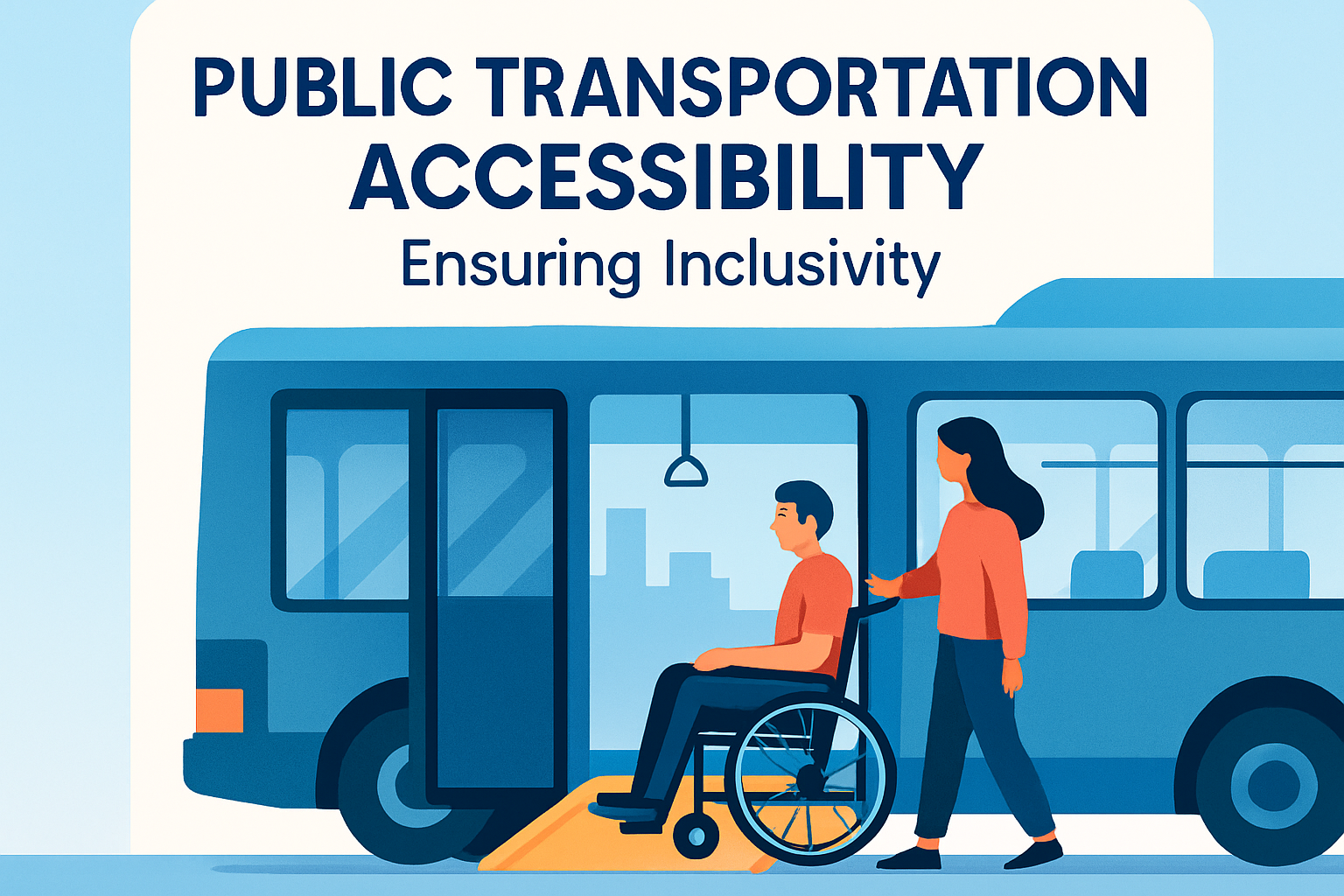
Public transportation plays a critical role in the mobility of individuals across the globe. It not only facilitates daily commutes but also ensures everyone, regardless of their physical or cognitive abilities, can access essential services and opportunities. As urban areas continue to grow, the quest for accessible public transportation has become increasingly urgent. But what does “accessibility” truly mean within this context? And why does it matter so profoundly?
Accessibility in public transportation refers to the ease with which all individuals, including those with disabilities, the elderly, children, and those with temporary physical limitations, can use transportation systems. When designed inclusively, accessible public transportation systems provide seamless and efficient service to all segments of the population. This inclusivity is not just a matter of convenience but one of basic human rights, as outlined in various international frameworks and legislations.
The importance of accessibility in public transportation cannot be overstated. It enables individuals to seek employment, pursue education, access healthcare facilities, and participate in cultural and recreational activities. Moreover, it fosters a more equitable, inclusive, and socially cohesive society where everyone can contribute and engage meaningfully.
The Legislative Framework for Accessibility
Several legal and policy frameworks exist to promote accessibility within public transportation. In many countries, legislation mandates this inclusivity. For example, the Americans with Disabilities Act (ADA) in the United States requires that all new transportation vehicles and facilities be accessible to people with disabilities. This act sets the standard for other nations, highlighting the significance of laws in guiding accessibility advancements.
Real-world examples of legislation-driven improvements are seen in the seamless integration of ramps, tactile guidance paths, and audible signals in public transport systems across cities like New York and Washington, D.C. Such regulations are fundamental in laying the groundwork for changes necessary to ensure accessibility.
Designing Accessible Public Transportation Systems
Design constraints often challenge the path to creating universally accessible public transportation systems. However, innovative engineering and inclusive design practices have increasingly tackled such obstacles. Essential features include low-floor buses and trains, platform screen doors, wide entry gates, visual and audible announcements, and information in Braille at stations.
An exemplary system is found in the city of Singapore. Their public transportation network has widely adopted universal design principles, effectively providing seamless access to all. Stations are equipped with elevators, boisterous signages, and a step-free path from the street to the train, ensuring convenience for everyone.
Technology and Accessibility
Technology has revolutionized the accessibility landscape in public transportation. Applications on smartphones, real-time tracking systems, and assistive technologies offer new prospects for enhancing the experience of every commuter. GPS technologies and apps such as Moovit or Google Maps now provide step-by-step navigation that includes accessibility information.
Consider how in London, the mobile application “TfL Go” allows users to plan journeys that specifically avoid stairs and track the real-time location of accessible transit options. By utilizing these technologies, transport systems become more user-friendly and accessible, encouraging more users to adopt public transportation.
Economic Implications of Accessibility
Investment in accessible transportation may initially seem costly, yet the long-term benefits vastly outweigh these expenses. Transport systems that welcome all passengers boost ridership and fare incomes, promoting economic growth. Additionally, a more workforce-inclusive transportation system encourages greater workforce participation from individuals with disabilities.
A prime example is in Japan, where accessible transportation investments contributed to an increase in workforce participation among people with disabilities, ultimately fostering a larger consumer base and contributing positively to the economy.
Challenges and Opportunities Ahead
Public transportation systems face numerous challenges in becoming fully accessible, such as retrofitting old infrastructure and managing financial constraints. Nonetheless, these challenges provide opportunities for innovation. Public awareness and support can facilitate investment in accessibility solutions, underscoring the need for ongoing advocacy and community involvement.
For instance, the City of Sydney has embarked on a comprehensive accessibility upgrade program, which includes retrofitting older train stations with elevators and increasing funding for accessible transport options. This commitment exemplifies how perseverance and political will can bring substantial improvements over time.
| City | Key Accessibility Feature | Impact |
|---|---|---|
| New York | Tactile guidance paths | Improved navigation for the visually impaired |
| Singapore | Step-free platform access | Seamless travel experience |
| London | Real-time journey planning app | Enhanced mobility and convenience |
| Sydney | Elevator retrofitting at stations | Increased access for wheelchairs and strollers |
Community and Stakeholder Engagement
Engaging the community and involving stakeholders is essential in crafting accessible transportation networks. Collaborative efforts between government agencies, disabled communities, transport planners, and civil society organizations can lead to more inclusive and responsive solutions.
Consider how the city of Vancouver involves citizens in its transportation planning processes through public consultations and workshops. This participatory model ensures that diverse voices are heard, resulting in transportation systems that reflect the needs of the entire community.
Summarizing Key Takeaways
Creating accessible public transportation systems is indispensable for fostering an inclusive society. By adhering to legislative frameworks, investing in innovative design and technology, engaging with communities, and recognizing the economic benefits, we can ensure transportation systems serve all users equitably and effectively. Accessibility is not merely a legal obligation or a moral imperative, but a pivotal element in societal development and inclusivity.
The journey towards accessible transportation is ongoing and collective, requiring continued efforts and advocacy. As we move forward, we must prioritize inclusion in every aspect of future transportation planning and development. By doing so, we empower everyone to participate fully in societal activities, breaking down barriers, and creating a more unified and prosperous community.
We invite readers to become advocates for accessibility by engaging with community planning, supporting inclusive policies, and promoting awareness within their networks. Let’s all work together to champion a future where public transportation is accessible for everyone, everywhere.
Frequently Asked Questions
1. What is meant by ‘public transportation accessibility’?
When we talk about ‘public transportation accessibility,’ we’re delving into how public transit systems are designed and implemented to be usable by individuals with a range of needs and abilities. This includes people with physical disabilities, cognitive impairments, the elderly, children, and even those temporarily impaired due to injury or illness. Accessibility encompasses everything from station layouts, vehicle designs, signage, audio announcements, to digital interfaces for planning and ticketing. Essentially, accessibility means creating a transportation system where physical barriers are eliminated or mitigated, ensuring that all people can use public transport easily, safely, and without unnecessary inconvenience.
2. Why is it important to ensure inclusivity in public transportation?
Inclusivity in public transportation is not just a matter of ethical responsibility but a social and economic imperative. Ensuring every individual can access reliable transportation means enabling a large section of the population to participate fully in society, whether it be for work, education, healthcare, or leisure. When public transportation is inclusive, it fosters independence among those with disabilities and reduces dependency on caregivers. Moreover, inclusiveness in public transportation can significantly boost the local economy by improving access to job opportunities and education for typically underrepresented groups, thereby harnessing a wider range of talents and workforce participation. Lastly, inclusive systems improve community cohesion and contribute to the overall quality of urban life.
3. What are some barriers to public transportation accessibility?
Barriers to accessibility in public transportation are diverse and can include physical obstacles such as steep stairs, high gaps between platforms and trains, and narrow doorways that prevent easy access for wheelchair users and strollers. There are also sensory barriers, where signage and announcements might not be adequate for those with visual or hearing impairments. Cognitive barriers exist too—complicated networks and schedules can be difficult for someone with mental impairments to comprehend. Additionally, technological barriers, like poorly designed apps and websites that are not screen-reader friendly, compromise accessibility for those relying on digital assistance tools. Addressing these barriers is often complex, requiring a blend of technological innovation, infrastructural upgrades, and policy interventions.
4. How can public transportation systems improve accessibility for all users?
Improving accessibility in public transport systems involves a multi-faceted approach. Physical infrastructure needs to be audited and redesigned to accommodate all forms of mobility, which might mean installing elevators, ramps, and tactile paving, as well as ensuring vehicles are wheelchair accessible. Audio and visual systems must be made clear and multilingual where needed. Furthermore, investing in comprehensive staff training to assist those in need, be it by lending a hand or communicating effectively with technology, can greatly enhance accessibility on the ground level. Leveraging technology plays a significant role as well – from developing mobile apps that are intuitive and inclusive to provide real-time updates on services, ensuring everyone can plan their journey with confidence. Lastly, involving the community in the planning phase is crucial, as feedback from those who use the system frequently can provide invaluable insights into creating a more inclusive system.
5. Is it feasible for cities to make public transportation systems fully accessible, and if so, how can they sustainably achieve this?
While making an entire public transportation network fully accessible is a challenging feat, it is undoubtedly feasible with commitment and strategic planning. Cities aiming to achieve this should view accessibility as an ongoing journey rather than a single destination. The process can start small, addressing the most critical areas such as major commuter routes and busy transit hubs, with adaptations expanding progressively outward. Funding is a clear necessity, and this often requires tapping into public budgets, grants, and public-private partnerships while prioritizing accessibility in urban development agendas. Sustainable achievements come through regular reviews and modifications, embracing scalable technological solutions, and fostering an engaged public dialogue where feedback directly influences improvements. As cities learn from pilot projects and peer cities leading in this space, they can create vibrant, inclusive communities where public transportation serves as a backbone of equality and opportunity for all citizens.