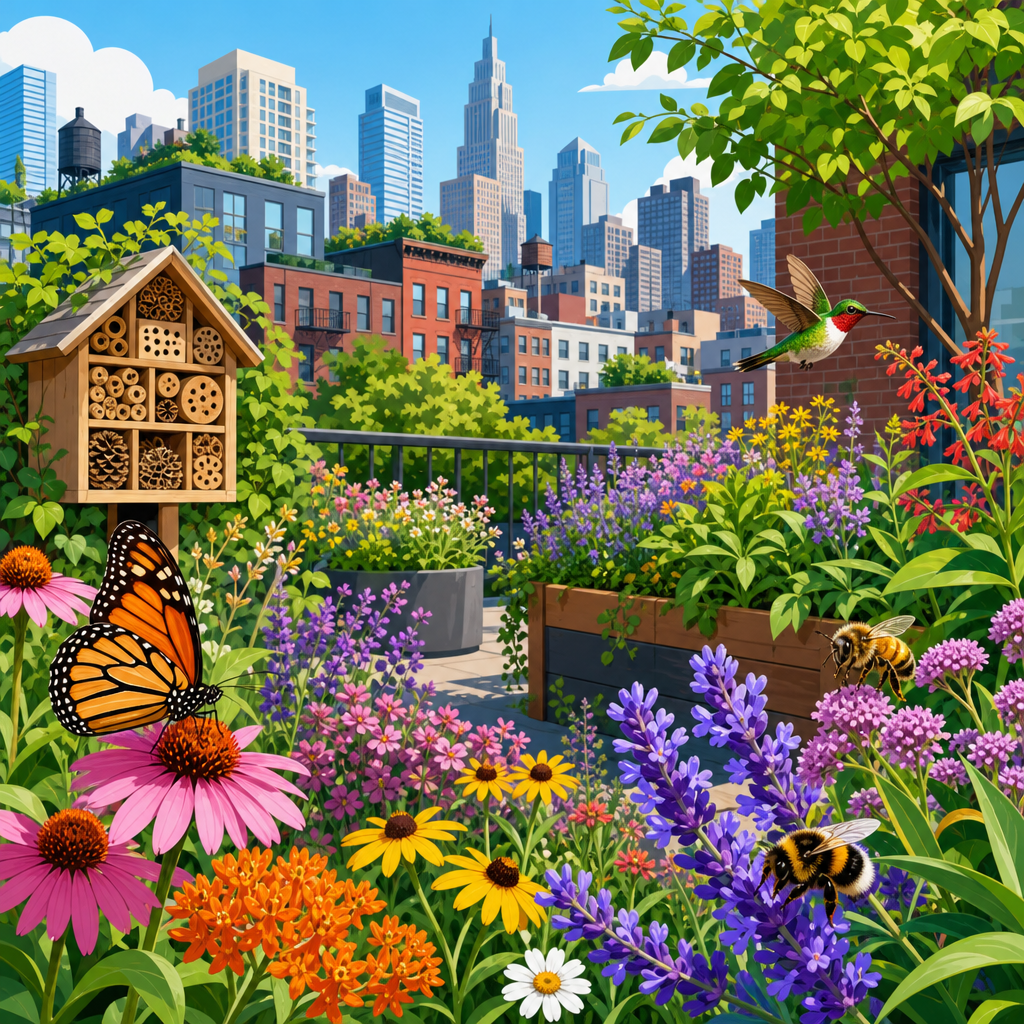
Pollinator-friendly landscapes in dense urban areas are designed spaces that provide food, shelter, water, and safe movement for bees, butterflies, moths, beetles, flies, birds, and other species that transfer pollen between flowers. In practical terms, that means replacing sterile paving, ornamental monocultures, and heavily managed lawns with layered plantings, longer bloom periods, reduced pesticide exposure, and nesting habitat that functions within the limits of city sites. The topic matters because dense cities often combine high heat, fragmented green space, polluted runoff, and constant disturbance, yet they also hold enormous untapped habitat potential in rooftops, medians, courtyards, schoolyards, sidewalks, and pocket parks. I have worked on urban planting plans where a strip only one meter wide, if planted correctly, supported native solitary bees within one season. Pollinators are not decorative extras. They support urban biodiversity, improve fruit set in community gardens, strengthen food webs for songbirds, and signal whether a landscape is ecologically functional rather than merely attractive.
Urban pollinator habitat must be judged by performance, not intention. A flowering bed fails if it blooms for only three weeks, offers no host plants for larvae, or is treated with systemic insecticides. A successful landscape supplies nectar and pollen from early spring through late fall, includes native species where possible, protects exposed soil or stems for nesting, and connects with other green patches so insects can move through the city. Dense urban areas impose tradeoffs: security concerns can limit vegetation height, underground utilities restrict rooting volume, and maintenance crews often default to tidy practices that remove habitat. Good design works with these constraints. It uses durable species, simple maintenance rules, visible edges, and plant communities matched to sun, shade, soil depth, and stormwater patterns. When city agencies, property managers, designers, and residents treat pollinator support as core infrastructure, not a niche amenity, even highly built neighborhoods can become biologically productive.
What Pollinators Need in Cities
The first question most planners ask is simple: what makes a landscape genuinely useful to pollinators? The answer has four parts. First, pollinators need continuous floral resources. Different species emerge at different times, so landscapes need early, midseason, and late blooms. Willows, serviceberries, and spring bulbs support early foraging; coneflowers, mountain mint, salvias, and asters carry summer and fall. Second, they need nesting and breeding sites. About 70 percent of native bees nest in the ground, while many others use hollow stems, wood cavities, or pithy canes. Third, they need protection from pesticides, especially neonicotinoids and broad-spectrum pyrethroids that contaminate pollen or kill non-target insects directly. Fourth, they need access. A beautiful roof garden isolated by glass towers may help, but connected habitat patches work far better than ecological islands.
Dense cities complicate all four needs. Narrow tree pits dry quickly. Reflected heat from façades can push summer temperatures well above surrounding neighborhoods. Wind exposure on podium decks can desiccate blooms and reduce insect flight. Night lighting interferes with moth navigation and can alter plant-pollinator interactions. In my experience, the best urban pollinator landscapes begin with an honest site audit: hours of sun, wind tunnel conditions, available soil depth, existing pesticide contracts, irrigation reliability, and nearby habitat nodes such as parks, cemeteries, rail corridors, or waterfront edges. Designers who skip this step often specify ideal species that fail after one harsh season. The strongest projects map floral gaps across the calendar, identify where nesting can be protected from routine maintenance, and set clear stewardship rules before installation. Pollinator value is built as much through operations as through planting design.
Planting Design for Small, Hardworking Spaces
In dense urban areas, every square meter must do more than one job. A curb extension may need to manage stormwater, maintain sightlines, tolerate road salt, and still support insects. A school courtyard may need shade, durability, teaching value, and low-allergen species. The most reliable strategy is layered planting. Use a structural layer of shrubs or small trees, a matrix of grasses or sedges that covers soil, and repeated drifts of flowering perennials that bloom in sequence. Repetition matters because pollinators forage efficiently when the same flower type appears in visible clusters rather than as isolated specimens. Research and field observation both support this: grouped plantings increase visitation because insects expend less energy moving among scattered blooms. In practical design terms, that means planting blocks, not botanical stamp collections.
Species selection should be regionally adapted and function-led. Native plants generally outperform exotic ornamentals for specialist bees and larval host relationships, but the best city landscapes are not ideological about origin. They prioritize ecological function, resilience, and noninvasive behavior. For example, in many North American cities, mountain mint, asters, goldenrods, little bluestem, penstemons, and prairie dropseed are dependable performers. In shaded sites, heuchera, woodland phlox, and sedges can maintain cover and bloom. On green roofs with shallow substrate, alliums, thyme, chives, and drought-tolerant natives often work better than thirstier meadow species. Avoid double-flowered cultivars that reduce nectar access, and be cautious with breeding focused on color or compactness at the expense of pollen production. Maintenance teams should know that leaving some stems standing through winter supports cavity nesters and overwintering insects.
| Urban site type | Common constraints | Recommended habitat strategy | Example plants or features |
|---|---|---|---|
| Sidewalk verge | Salt, compaction, dog traffic, low soil volume | Dense matrix planting with visible edging | Salvia, yarrow, sedges, allium, mulch-free groundcover |
| Pocket park | Heavy foot traffic, safety visibility, budget limits | Layered beds with clustered blooms and clear paths | Serviceberry, inkberry, coneflower, aster, bee balm |
| Green roof | Wind, heat, shallow media, irrigation limits | Drought-tolerant flowering palette plus nesting boxes where appropriate | Stonecrop mixes, chives, thyme, native alliums, sand patches |
| Schoolyard | Wear, seasonal maintenance gaps, education goals | Durable pollinator garden linked to outdoor learning | Milkweed, black-eyed Susan, grasses, signage, log habitat |
| Stormwater planter | Alternating flood and drought, sediment, debris | Resilient wet-dry species with long bloom sequence | Blue flag iris, joe-pye weed, switchgrass, sneezeweed |
Connecting Habitat Across the Urban Fabric
A single pollinator garden helps, but a network changes outcomes. Urban ecology consistently shows that connectivity improves species persistence in fragmented landscapes. For pollinators, connectivity does not always require continuous green corridors; it can come from stepping-stone habitats spaced closely enough to support movement. Street trees underplanted with flowering perennials, transit medians, utility easements, green schoolyards, balcony planters, and vegetated rooftops can together form a citywide resource web. I have seen industrial districts with very little conventional park space become surprisingly active for pollinators once loading dock edges, fence lines, and detention basins were planted systematically. The key is reducing dead zones where insects encounter long stretches of sterile hardscape with no forage or refuge.
Municipal standards can either accelerate or block this network effect. Mowing frequency is a major example. If every roadside and open lot is cut short before flowering, habitat disappears at the landscape scale. Lighting standards also matter. Shielded, warmer-spectrum lighting reduces impacts on nocturnal pollinators compared with bright, blue-rich fixtures. Transportation departments influence habitat through median design, bridge planters, and maintenance timing. Housing authorities influence it through courtyard retrofits and pesticide contracts. Business improvement districts can support pollinator corridors by coordinating seasonal container plantings instead of buying purely decorative annual mixes with little nectar value. The strongest urban programs define target outcomes: bloom coverage by month, minimum habitat area per district, and protection rules for nesting features. Without measurable goals, pollinator landscaping remains scattered and symbolic rather than structural.
Water, Soil, and Chemical Management
Pollinator-friendly landscapes fail quickly when basic site systems are ignored. Soil is usually the first hidden problem in dense urban projects. Imported fill can be compacted, alkaline, low in organic matter, and nearly impermeable. Tree pits may be surrounded by concrete and starved of oxygen. Before planting, test texture, pH, drainage, and contamination risk, especially on former industrial land. Healthy soil supports microbial life, improves water infiltration, and sustains flowering through summer stress. It also affects nesting. Many ground-nesting bees prefer bare or lightly vegetated well-drained patches, so covering every surface with fabric and mulch can eliminate habitat. I routinely recommend selective exposure of mineral soil in sunny spots where foot traffic is controlled. That single adjustment often adds nesting opportunity without increasing cost.
Water management should support plants without creating maintenance burdens. Bioswales, rain gardens, and stormwater bump-outs can double as pollinator habitat when species are chosen for periodic inundation followed by dry periods. Drip irrigation is usually better than overhead spray because it reduces foliar disease and avoids disrupting foraging activity. Once established, the goal is not lushness but resilience. Overfertilization drives soft growth and can reduce floral quality. Chemical management is even more critical. Integrated pest management should be the default: monitor, identify pests accurately, set action thresholds, and use cultural or mechanical controls first. If treatment is necessary, avoid spraying open blooms, avoid systemics that move into pollen and nectar, and schedule applications when pollinators are inactive. Many commercial maintenance contracts still rely on prophylactic treatments. That practice is incompatible with meaningful pollinator support and should be removed from specifications.
Governance, Maintenance, and Community Adoption
Most urban pollinator projects succeed or fail after installation. Maintenance crews, residents, and property managers decide whether stems are cut in fall, whether weeds are distinguished from intentional seedlings, and whether pesticides are used when aphids appear. For this reason, governance is design. Planting plans should be paired with maintenance manuals written in plain language, with seasonal tasks, photographs, and explicit do-not-do instructions. A good manual tells crews when to cut back, what to leave standing until spring, where nesting patches are located, and how to manage invasive species without blanket herbicide use. Signage also matters. In dense urban neighborhoods, visible explanation reduces complaints that habitat-rich planting looks untidy. A simple sign stating that stems are left for overwintering bees can change public perception immediately.
Community participation strengthens long-term performance when it is structured properly. Volunteer stewardship works best with recurring support, not one-off planting days. Schools can monitor bloom timing and pollinator visits as part of science programs. Apartment residents can adopt terrace planters and avoid pesticide foggers. Businesses can sponsor street-level habitat and gain measurable environmental reporting benefits. Cities should also track outcomes. Useful metrics include flowering months covered, plant survival after two summers, pesticide use reduction, and counts from standardized pollinator surveys such as transects or timed observations. Perfection is not the standard. Improvement is. Dense urban areas will always involve disturbance, but landscapes can still become more permeable, more seasonally diverse, and more biologically active. The practical path forward is to treat pollinator habitat as essential green infrastructure, embed it in every project type, and maintain it with the same seriousness given to stormwater, shade, and public safety.
Pollinator-friendly landscapes in dense urban areas are most effective when they are planned as interconnected habitat systems rather than isolated beautification projects. The fundamentals are straightforward: provide continuous bloom across the growing season, protect nesting and overwintering spaces, build healthy soil, manage water intelligently, and eliminate routine pesticide practices that undermine the very species the landscape is meant to support. The design response must fit urban realities. Small spaces need layered planting, repeated flower groups, durable species, and clear maintenance rules. Public agencies and private owners both matter because sidewalks, roofs, schoolyards, medians, and courtyards all contribute to the same ecological network. When these pieces work together, cities can support a surprising range of bees, butterflies, hoverflies, moths, and birds.
The central benefit is not abstract conservation alone. Better pollinator habitat improves urban resilience, strengthens community gardens, supports broader biodiversity, and turns ordinary sites into productive living infrastructure. It also creates visible, local environmental progress that residents can understand and help maintain. If you manage, design, or influence urban land, start with one audit: identify where your site lacks bloom, nesting, soil quality, or chemical safety, then correct those gaps with a clear planting and maintenance plan. Small sites matter, connected sites matter more, and the best time to begin is with the next landscape decision you control.
Frequently Asked Questions
1. What makes a landscape truly pollinator-friendly in a dense urban area?
A pollinator-friendly urban landscape does much more than add a few flowering plants. In dense city settings, the goal is to create a small but functional habitat system that supports pollinators through multiple life stages and across as much of the year as possible. That means providing reliable nectar and pollen sources, shelter from heat and wind, safe nesting or egg-laying sites, shallow water access, and a layout that allows pollinators to move through the space without being exposed to unnecessary risks such as pesticide drift, reflective heat, or constant disturbance.
In practical terms, a strong design usually includes layered planting rather than a flat, ornamental look. Groundcovers, perennials, grasses, shrubs, vines, and, where space allows, small flowering trees can all contribute to habitat value. A good pollinator landscape also emphasizes bloom succession, so something is flowering from early spring through late fall instead of producing one short burst of color. This is especially important in cities, where pollinators often have to survive in fragmented habitat patches.
Plant selection matters as much as layout. Native species are often the backbone because many native bees, butterflies, and other insects are adapted to them, but the most successful urban landscapes are often regionally appropriate and seasonally diverse rather than narrowly defined. Avoiding heavily doubled flowers is important because many ornamental varieties are difficult for pollinators to access. Equally critical is what the landscape does not include: frequent pesticide use, excessive mulching that blocks ground-nesting bees, sterile turf-dominated areas, and hardscape that leaves no room for habitat. In short, a truly pollinator-friendly urban landscape is intentionally designed to function ecologically, even when space is limited.
2. Which plants work best for supporting pollinators when space is limited?
The best plants for compact urban sites are those that provide high ecological value in a small footprint, bloom reliably, and tolerate local city conditions such as reflected heat, compacted soils, wind tunnels, and irregular moisture. In most cases, that means choosing a mix of perennials, compact shrubs, native grasses, and container-suitable flowering species rather than relying on one plant type alone. The most effective small-space planting plans include early-, mid-, and late-season bloomers so pollinators can find resources over a long period.
For many regions, excellent choices include coneflowers, asters, goldenrod, mountain mint, salvia, penstemon, joe-pye weed in compact forms, milkweed species suited to the site, coreopsis, bee balm, blazing star, and black-eyed Susan. Shrubs such as blueberry, viburnum, native spirea, buttonbush, and certain hydrangea species can also be useful depending on climate and light conditions. Herbs like thyme, oregano, chives, lavender, and basil are especially valuable in balconies, courtyards, and rooftop planters because they combine ornamental appeal with strong pollinator support. If the site can accommodate vines, native honeysuckle or other nectar-rich climbers may add another layer of habitat vertically.
The key is not simply choosing “pollinator plants,” but matching them to the exact site. Sun exposure, container depth, roof load limits, irrigation access, and winter survival all matter. It is also wise to plant in clusters rather than single specimens, because larger patches are easier for pollinators to find and use efficiently. Repeating a few high-value plants is often more effective than creating a visually busy collection of one-offs. For city landscapes, plant performance and habitat value need to work together, so the best plant palette is one that is ecologically useful, durable, and realistic to maintain.
3. How can apartment buildings, rooftops, courtyards, and small lots be designed to help pollinators?
Even highly constrained urban spaces can contribute meaningfully to pollinator health if they are designed with habitat function in mind. Rooftops can support pollinators through lightweight growing systems, modular planters, flowering sedum mixes supplemented with nectar-rich perennials, and wind-buffering elements that make the site more usable for insects. Courtyards can become excellent habitat pockets by reducing paved area where possible, softening edges with planting beds, and using walls, trellises, and railings for vertical greening. Small lots and narrow side yards can support pollinators through layered strips of vegetation, pocket meadows, flowering hedges, and container groupings that create concentrated forage.
Connectivity is a major design principle in dense urban environments. A single courtyard or roof may be small, but if it offers dependable bloom and sits within flight range of other green spaces, it becomes part of a larger habitat network. Designers can improve this function by including plants that flower at different times, minimizing barriers, and placing flowering resources where they receive adequate light and are visible to pollinators. On balconies and terraces, repeating the same plant species in several containers can create a stronger signal than scattering isolated blooms among decorative foliage.
Habitat features should go beyond flowers alone. Leaving a bit of bare, undisturbed soil for ground-nesting bees, incorporating hollow stems or small bundles of pithy stems for cavity nesters, and retaining some leaf litter in discreet areas can all improve habitat quality. Water can be supplied through shallow dishes with stones for landing, as long as they are maintained to avoid mosquito issues. At the same time, designers should reduce hazards by limiting night lighting near habitat areas, avoiding mirrored or confusing reflective surfaces where possible, and eliminating routine pesticide use. The best urban pollinator spaces are often simple, repeatable, and integrated into the everyday architecture of the site.
4. Is it possible to maintain a pollinator-friendly landscape without making it look messy or unmanaged?
Yes, and this is one of the most important points for urban property owners, managers, and designers. Pollinator-friendly does not have to mean neglected. In fact, the most successful urban habitats often use a deliberate “cues to care” approach, where ecologically rich planting is paired with visible signs of maintenance and intentional design. Clean path edges, defined planting beds, orderly repetition, attractive signage, trimmed sightlines, and clear transitions between habitat zones and pedestrian areas all help people understand that the space is purposeful rather than abandoned.
Maintenance strategies should shift from intensive cosmetic management to ecological stewardship. Instead of frequent mowing and seasonal plant replacement, urban pollinator landscapes benefit from selective weeding, occasional cutbacks timed to avoid disturbing active pollinators, soil improvement, mulch use that does not smother nesting areas, and periodic replanting to maintain diversity. Leaving seed heads and stems through winter can support wildlife, but they can be arranged within a tidy overall framework. Similarly, meadows or naturalistic plantings can look sophisticated when they are contained by borders, fences, or hardscape edges.
Public perception also improves when landscapes are visibly functional. Educational signs explaining bloom succession, bee nesting habits, or pesticide-free management can help residents and visitors understand why the site looks different from a conventional lawn. For multifamily housing, schools, offices, and civic spaces, this can be especially valuable. A well-designed pollinator landscape balances ecological complexity with urban legibility. It can be lush, seasonal, and alive with insects while still looking professional, intentional, and compatible with dense city life.
5. What are the biggest mistakes to avoid when creating pollinator habitat in cities?
One of the biggest mistakes is focusing only on appearance and not on ecological performance. Many urban landscapes are labeled pollinator-friendly because they include bright flowers, but if those plants bloom only briefly, produce little nectar or pollen, or have been bred into forms that are inaccessible to insects, the habitat value may be limited. Another common mistake is relying on a narrow plant palette. A few popular flowering species are helpful, but pollinators need a steady sequence of resources across seasons, and different species use plants in different ways.
Pesticide use is another major problem. Even occasional applications of insecticides, especially systemic products, can undermine the purpose of a pollinator landscape. Herbicide overuse, mosquito fogging practices, and fungicide programs may also have unintended ecological effects. Equally damaging is over-maintenance: cutting everything back too early, removing all leaf litter, covering every inch of soil with mulch, or replacing diverse planting with seasonal annual displays. These practices can eliminate nesting opportunities and reduce food sources at critical times.
Design oversights also matter. Installing pollinator plants in places with poor light, inadequate soil volume, or extreme heat stress can lead to weak performance and short plant life. Ignoring water needs during establishment is a frequent cause of failure, especially on rooftops and in containers. Some projects also miss the opportunity to support habitat connectivity by treating each site as isolated decoration rather than part of a larger urban ecosystem. The most effective approach is to think long term: choose resilient plants, reduce chemical exposure, provide shelter and nesting features, plan for bloom succession, and manage the landscape in ways that keep it functioning year after year. Avoiding these common mistakes makes even a small city site far more valuable to pollinators.