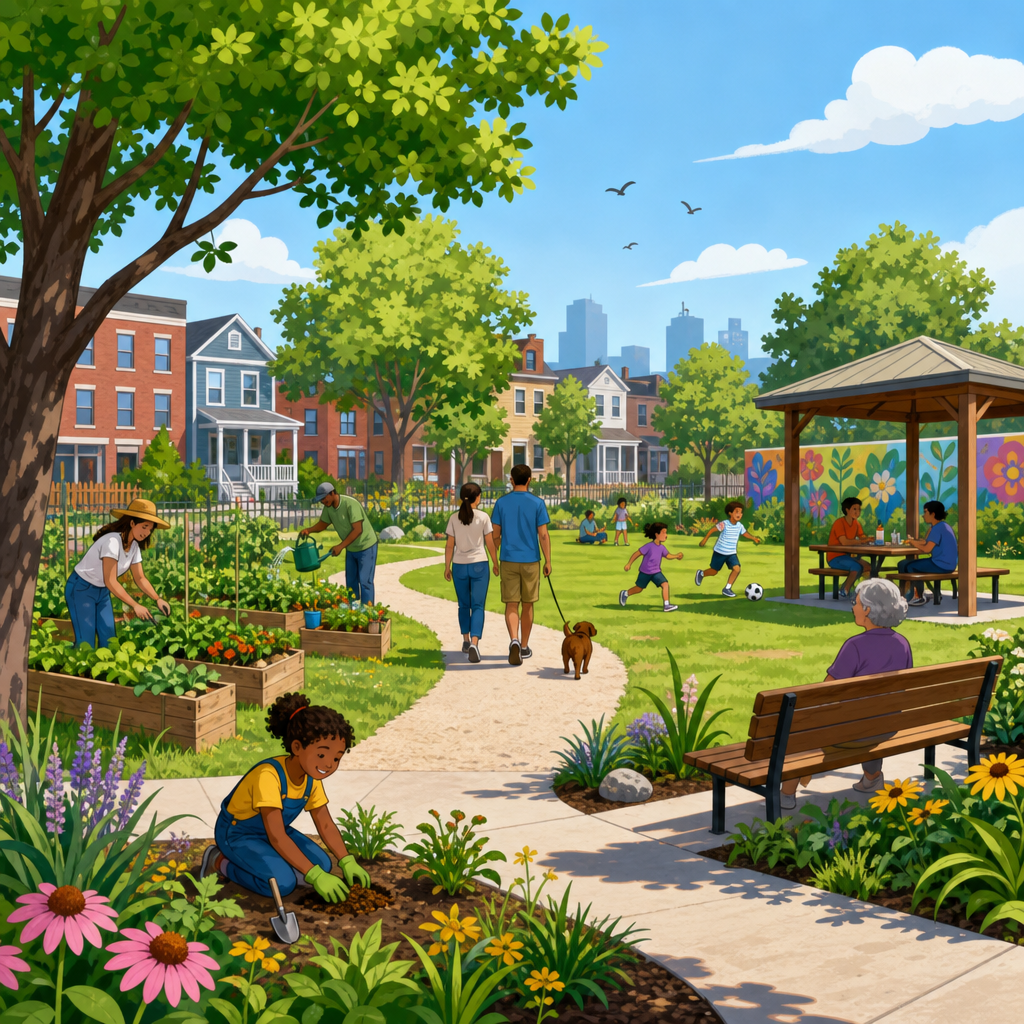
Converting vacant lots into useful neighborhood open space is one of the most practical ways cities can improve daily life without waiting for major redevelopment. A vacant lot is any parcel that sits unused or underused, often after demolition, tax foreclosure, disinvestment, or stalled construction. Neighborhood open space includes pocket parks, community gardens, play areas, stormwater landscapes, shaded seating zones, flexible plazas, and habitat patches that residents can access easily. I have worked on planning and site activation efforts where a neglected lot changed from a dumping ground into a place for gathering, cooling, and safer walking routes. The reason this topic matters is simple: empty land affects health, property conditions, public safety, neighborhood identity, and municipal budgets. When designed well, open space can deliver visible benefits quickly while preserving options for future development. In dense areas, even a small lot can add trees, reduce runoff, create recreation space, and give neighbors a shared asset within a short walk of home.
Vacant lots are not all the same, so successful conversion starts with clear definitions and realistic expectations. Some parcels are publicly owned through a land bank or city department. Others remain in private hands and require lease agreements, purchase, easements, or maintenance partnerships. Site conditions vary widely: one lot may be flat and clean, while another has compacted soils, illegal fill, poor drainage, invasive plants, or contamination from prior industrial use. Zoning, title issues, utility easements, setback rules, and accessibility standards also shape what can be built. Open space in this context does not always mean a traditional park with expensive amenities. It can mean low-cost, high-use interventions such as benches under shade trees, a rain garden with walking paths, or a fenced lawn for informal play. The central planning challenge is matching community needs, site constraints, and long-term stewardship. When those three pieces align, vacant lot reuse becomes a durable neighborhood improvement rather than a short-lived beautification project.
Why vacant lot conversion matters for neighborhoods and cities
Vacant lots create costs even when nothing appears to happen on them. Municipal crews respond to dumping, overgrowth, fire risk, illegal parking, and drainage complaints. Neighbors often perceive unmanaged parcels as signs of neglect, which can depress block confidence and reduce foot traffic. Researchers studying greening programs in cities such as Philadelphia have found that stabilizing vacant land can be linked to reduced gun violence, lower stress, and improved perceptions of safety. The mechanism is not mysterious. Clean, visible, maintained places encourage legitimate use and increase informal surveillance. They also remove opportunities for concealment, dumping, and nuisance activity. From a public health standpoint, open space supports physical activity, social connection, and urban heat mitigation, especially where tree canopy and park access are limited.
Economic value also matters. Converting lots into neighborhood open space is usually cheaper and faster than full building redevelopment, yet it can raise surrounding confidence and support future investment. A simple intervention like grading, fencing, planting, lighting, and seating can cost a fraction of a capital park project while producing immediate visible change. In storm-prone neighborhoods, greened lots can absorb runoff and reduce pressure on combined sewer systems. In hotter neighborhoods with little canopy, shade trees and permeable surfaces lower surface temperatures and make streets more walkable. Cities including Detroit, Cleveland, and New Orleans have used side-lot programs, community stewardship agreements, and green infrastructure grants to turn scattered vacancy into local assets. The best projects are not decorative leftovers. They are part of a broader sustainable urban development strategy that improves resilience, equity, and neighborhood function parcel by parcel.
Choosing the right open space use for each lot
The most common mistake in vacant lot reuse is assuming every site should become the same kind of space. In practice, the right use depends on size, location, ownership, demand, environmental conditions, and operating capacity. A corner parcel on a school walking route may work best as a shaded sitting space with safe visibility, durable paving, and bike racks. A larger interior lot with good sun exposure might be ideal for a community garden with tool storage and water access. A flood-prone parcel may be unsuitable for intensive recreation but excellent for bioswales, native planting, and a boardwalk path. The goal is not to force a park template onto every parcel. The goal is to select a use residents will actually use, the site can physically support, and a responsible party can maintain over time.
I usually begin with four questions: Who will use it, what problems need solving, what constraints cannot be ignored, and who will maintain it in year three, not just at ribbon cutting? Answers quickly narrow the options. If neighbors ask for play space but the lot is too small for a compliant playground, a painted play surface and movable equipment may be more realistic. If contamination is present, raised beds, capping, and non-dig landscaping may be safer than food production directly in soil. If ownership remains uncertain, temporary activation with planters and seating can test demand before permanent capital spending. Good planning treats vacant lots as a network, not isolated parcels. One lot can serve as a garden, another as a stormwater feature, and another as flexible open lawn, together creating a neighborhood system of open space within a ten-minute walk.
| Lot condition | Best-fit open space use | Why it works |
|---|---|---|
| Small corner lot, high visibility | Pocket park or seating grove | Supports passive use, safety, and quick daily stops |
| Sunny parcel with water access | Community garden | Enables food growing, education, and stewardship |
| Flood-prone or poorly drained site | Rain garden or bioswale park | Manages runoff and reduces infrastructure stress |
| Larger parcel near homes | Flexible lawn and shade trees | Allows informal play, events, and cooling |
| Contaminated or capped lot | Low-disturbance landscape with paths | Provides access while minimizing soil exposure |
Planning, design, and regulatory issues that determine success
Every useful neighborhood open space project sits on a foundation of due diligence. Ownership must be verified through title review, and any liens, tax issues, or deed restrictions must be understood early. Zoning determines whether open space is allowed by right or requires a permit. Accessibility is not optional; routes, surfaces, entrances, and seating should follow ADA requirements so older adults, wheelchair users, and caregivers with strollers can use the site. Utility locates are essential because underground gas, electric, and water lines can limit tree planting and excavation. If the lot has an industrial history, environmental site assessment is necessary before public use. In many projects I have seen, the budget problem was not design ambition but underestimating survey work, soil testing, legal agreements, and site preparation.
Design should respond to how the space will feel and function on an ordinary weekday, not just in a rendering. Visibility from the street matters more than decorative complexity. Entrances should be obvious, edges should feel welcoming rather than defensive, and materials should match maintenance capacity. For example, custom furnishings and delicate plant palettes often fail where mowing, irrigation, and vandalism pressures are high. Native and climate-adapted plantings can reduce long-term costs, but they still require establishment care, mulching, and seasonal management. Lighting can improve usability and perceived safety, though it must be balanced with operating costs and nearby residential concerns. CPTED principles, including sightlines, clear boundaries, and activity support, help reduce conflict without making a site feel over-policed. Strong design is not the most expensive design. It is the design that fits local behavior patterns, regulations, budget, and climate while still giving residents dignity and comfort.
Funding, stewardship, and long-term operations
Converting a vacant lot is often financially possible; keeping it useful is the harder part. Capital funds can come from municipal budgets, federal community development programs, stormwater grants, health initiatives, philanthropy, or developer contributions. The operating model determines whether those capital dollars create lasting value. Maintenance includes mowing, litter pickup, tree care, irrigation checks, repairs, snow clearance where relevant, insurance, and programming. Community-led stewardship can be powerful, but it should not become a substitute for public responsibility. Volunteer energy rises and falls. The strongest model pairs community involvement with a clear baseline maintenance commitment from a city, nonprofit, conservancy, or contracted operator. Written agreements matter because they define who does what when enthusiasm fades or leadership changes.
Several proven governance structures exist. Land banks can transfer side lots or lease parcels to neighborhood groups under maintenance conditions. Parks departments can adopt small sites if standards and budgets are adjusted for distributed assets. Community development corporations often manage gardens and small open spaces effectively because they already work block by block. Conservancies can raise funds and organize programming, but they usually need public partners for infrastructure and liability. I have found that a simple annual operations plan prevents many failures: list tasks by season, assign responsibility, estimate costs, and create a reporting method for repairs and complaints. If there is no plan for water access, trash removal, and replacement planting, the site will decline quickly. Useful open space is not produced by design alone. It is produced by reliable care.
Equity, community participation, and measuring results
Vacant lot conversion should improve life for current residents, not merely make an area more marketable to future buyers. That means community participation has to happen before a concept is finalized, and it must include renters, youth, seniors, nearby businesses, and people who speak languages other than English. Public meetings alone are usually insufficient. Better engagement includes door-to-door outreach, intercept surveys at transit stops, school partnerships, multilingual materials, paid resident ambassadors, and prototype events on the site itself. People often respond more clearly to temporary seating, chalked play lines, or sample planting beds than to abstract plan drawings. The aim is not to ask residents to design every detail. The aim is to understand daily routines, local concerns, desired uses, and likely stewards so the project fits real neighborhood life.
Measuring outcomes is equally important because open space projects compete for limited public dollars. Useful metrics include reduction in illegal dumping complaints, stormwater captured, tree canopy added, park access within a ten-minute walk, user counts, resident satisfaction, and maintenance response time. In some cases, cities also track crime trends, public health indicators, and adjacent property stabilization, while being careful not to claim causal effects too broadly. Equity analysis should examine whether neighborhoods with the least park access, highest heat exposure, and highest vacancy rates are receiving investment first. A successful hub strategy connects individual lot projects to broader goals in sustainable urban development: climate resilience, safer streets, public health, biodiversity, and community wealth. When cities treat vacant lots as strategic land assets instead of leftover problems, they unlock a scalable method for neighborhood improvement. If your community has empty parcels, start by mapping ownership, listening to residents, and testing one high-need site that can prove the value of open space done well.
Frequently Asked Questions
What does it mean to convert a vacant lot into useful neighborhood open space?
Converting a vacant lot into useful neighborhood open space means taking land that is sitting idle, neglected, or only partially used and redesigning it so nearby residents can benefit from it every day. In practical terms, that can mean turning a weed-filled parcel into a pocket park, a simple sitting area with shade and benches, a community garden, a play space, a small plaza for neighborhood gatherings, or a stormwater landscape that reduces flooding while also improving the look and feel of the block. The goal is not just to “green” the site, but to give it a clear public purpose that matches neighborhood needs.
This kind of reuse is especially valuable because vacant lots often create a sense of abandonment. They can attract illegal dumping, overgrown vegetation, standing water, and other conditions that make a street feel less safe and less cared for. Even modest open-space improvements can change that dynamic quickly. A clean, maintained, visible, and accessible space signals investment and invites positive activity. In many neighborhoods, small-scale open space can deliver immediate quality-of-life benefits long before a large development project would ever be financed or completed.
Useful open space also does not have to mean expensive or permanent construction. Some of the most successful lot conversions begin with low-cost interventions such as mowing and grading, adding paths, seating, planters, lighting, fencing where needed, and a few durable landscape features. Over time, if community use is strong, the site can evolve into a more fully programmed place. In that sense, vacant lot conversion is both a practical land-use strategy and a flexible neighborhood improvement tool.
What kinds of open space uses work best on small or irregular vacant lots?
Small or oddly shaped vacant lots can still become highly effective neighborhood assets if the design is matched to the site’s size, location, and surrounding uses. Pocket parks are one of the most common and successful options because they can fit on relatively small parcels and provide immediate value through seating, trees, planting beds, and a safe place to pause. On residential blocks, community gardens also work well, especially where residents want opportunities to grow food, flowers, or native plants. These spaces often strengthen local stewardship because people develop an ongoing relationship with the site.
Other strong uses include play areas for young children, shaded seating zones for seniors and caregivers, flexible lawn areas for informal recreation, and mini-plazas that support pop-up events or neighborhood meetings. In areas with frequent drainage problems, stormwater-focused landscapes such as rain gardens and bioswales can be especially effective. These improvements help absorb runoff, reduce puddling, and improve environmental performance while still functioning as attractive public space. In some cases, habitat patches with pollinator plants and native landscaping can also be appropriate, particularly where active recreation is less feasible.
The best use depends on how people already move through and use the area. A corner lot near stores or bus stops may be ideal for seating, shade, and a small plaza. A mid-block parcel in a residential area may work better as a garden or play space. A lot next to schools, libraries, or community centers may support programming and regular activity. The most successful projects are not chosen from a generic template. They respond directly to neighborhood patterns, maintenance capacity, safety visibility, and resident priorities.
How can cities and neighborhoods decide what a vacant lot should become?
The strongest decisions usually come from combining local input with practical site analysis. Residents often know things that planners and designers cannot see from maps alone, such as where children already play, where flooding happens after storms, which corners feel unsafe, or what amenities the neighborhood lacks most. That is why community engagement should happen early, before a design is finalized. Good engagement can include walking tours, block meetings, multilingual surveys, pop-up events on the lot itself, youth participation activities, and conversations with nearby property owners, schools, and community groups.
At the same time, each lot needs to be evaluated for basic physical and legal conditions. Decision-makers should understand ownership status, zoning, title issues, tax foreclosure history, utility access, environmental conditions, prior uses, soil quality, drainage patterns, and whether contamination testing is needed. A lot that once held industrial activity may require a different strategy than one left vacant after demolition of a house. Safety, accessibility, and maintenance also matter. A space that cannot be maintained consistently may struggle even if the design is popular on paper.
In many cases, the smartest approach is phased development. A city or neighborhood group can start with temporary cleanup and simple improvements, observe how the site is used, and then make more permanent investments based on real-world feedback. This reduces risk and allows the project to adapt over time. Ultimately, the right decision is the one that balances resident demand, site constraints, available funding, and long-term stewardship. A beautiful design alone is not enough; the space has to be realistic to build, maintain, and keep active.
What are the biggest benefits of turning vacant lots into neighborhood open space?
The benefits are broad and often felt quickly. At the most visible level, converting a vacant lot improves neighborhood appearance and removes signs of neglect. That can help build pride, reduce dumping, and make a block feel more stable and inviting. When residents have access to nearby open space, even in small amounts, they gain places to sit, gather, garden, exercise lightly, supervise children, and interact with neighbors. Those everyday experiences matter because they strengthen social ties and make communities feel more connected.
There are also important public health and environmental benefits. Trees, landscaping, and permeable surfaces can reduce heat, manage stormwater, improve air quality, and increase biodiversity. Green spaces can support mental well-being by giving people a calm, restorative setting close to home. In neighborhoods that lack parks within walking distance, even a modest converted lot can meaningfully improve access to nature and outdoor activity. When designed with shade, visibility, and comfortable seating, these spaces can become especially valuable for older adults, families with young children, and residents without private yards.
Economically, lot conversions can be a smart interim investment. They are often faster and less expensive than large-scale redevelopment, yet they can still raise perceptions of neighborhood care and encourage surrounding reinvestment. In some cases, they help stabilize property conditions while communities plan for longer-term land use. Importantly, useful open space is not just a “placeholder.” If designed well and supported by residents, it can become a long-term neighborhood asset in its own right, delivering social, environmental, and civic value year after year.
What challenges should communities expect when converting vacant lots, and how can they address them?
One of the most common challenges is ownership and site control. A lot may be privately owned, tied up in tax delinquency, held by a land bank, or subject to unclear title issues. Without a clear right to use the land, even simple improvements can become complicated. Early coordination with local government, land banks, redevelopment agencies, or property owners is essential. Communities should also confirm whether permits, insurance, or formal agreements are needed before work begins. These legal and administrative details can shape what is possible and how quickly a project can move forward.
Another major challenge is long-term maintenance. Many lot conversions look promising at launch but struggle later because nobody is clearly responsible for trash removal, watering, repairs, landscape care, or seasonal upkeep. That is why maintenance planning should be treated as a core part of the project, not an afterthought. A smaller, simpler design with reliable upkeep is usually better than a more elaborate space that cannot be sustained. Partnerships between residents, nonprofits, neighborhood groups, and public agencies can help, but roles should be defined clearly from the start.
Cost, safety, and environmental conditions also require attention. Some lots need grading, drainage work, soil remediation, or demolition debris removal before they are safe for public use. Good lighting, clear sightlines, durable materials, and active edges can help support comfort and security. It is also important to manage expectations. Not every lot can become every kind of amenity, and not every project can happen all at once. The most resilient conversions succeed because they are tailored to the site, phased realistically, backed by community support, and designed for upkeep over the long term rather than just a one-time visual improvement.