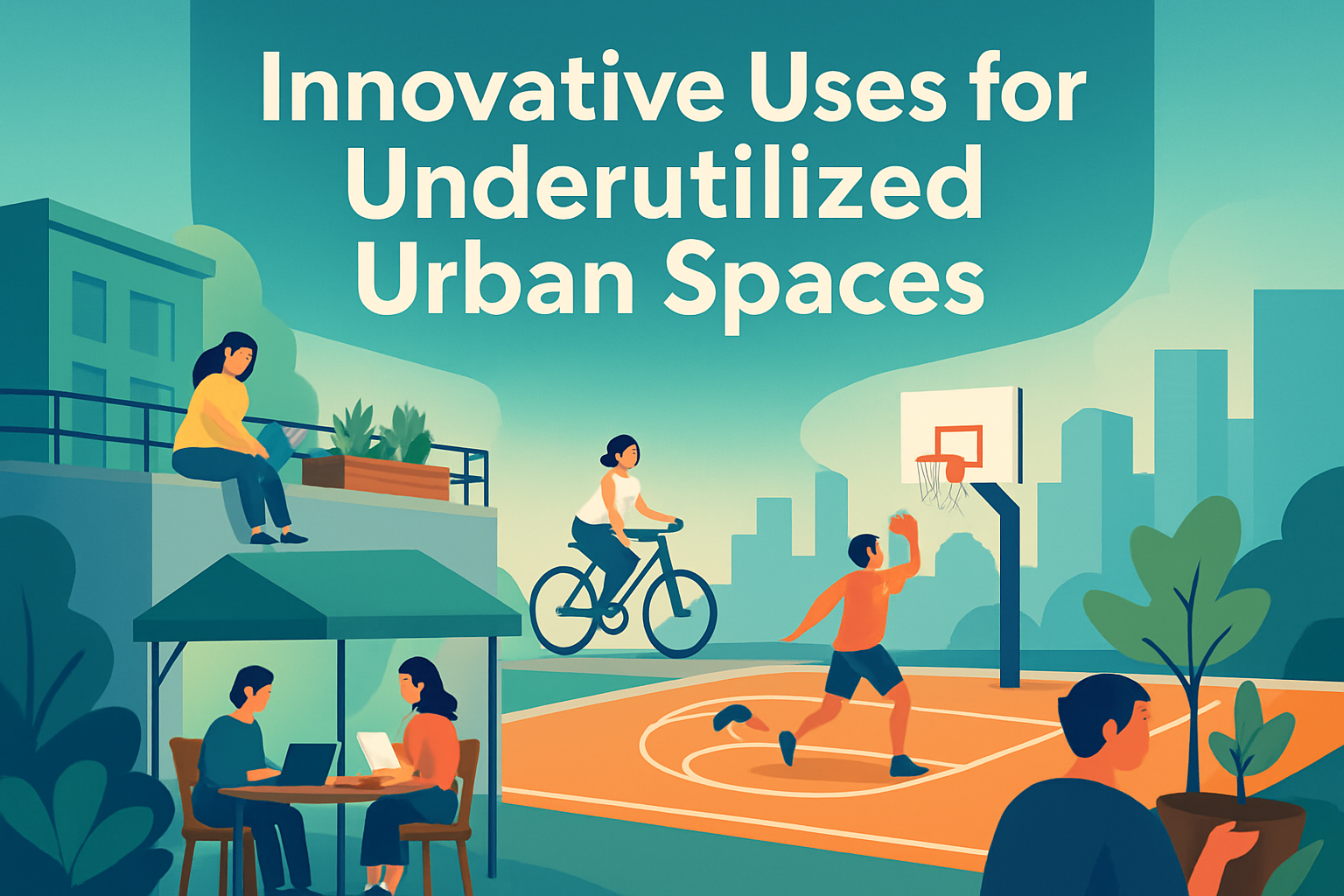
As cities continue to grow and evolve, urban spaces are becoming more densely populated, leading to a variety of challenges. However, within these bustling urban environments, there persist spaces that remain underutilized—vacant lots, old industrial buildings, rooftops, and even alleyways. Such spaces are often seen as mere gaps or forgotten sectors in the urban landscape, but innovative thinkers are finding new ways to transform these neglected areas into vibrant, productive parts of the community.
This article explores how underutilized urban spaces can be creatively reimagined to improve the quality of life for city dwellers, promote environmental sustainability, and foster economic growth. The dynamic possibilities for these spaces underscore the importance of reevaluating what is perceived as ‘waste’ in city planning. This introducing potential solutions to pressing urban problems and cultivating a world where usable space is maximized for the benefit of all.
Converting Vacant Lots Into Urban Farms
Vacant lots can be found in nearly every city across the globe. Once earmarked for development projects that never materialized, these spaces frequently become overgrown and unsightly. But with urban farming gaining popularity, these empty plots can be transformed into productive agricultural sites.
Urban farms not only provide fresh produce for local communities but also create economic opportunities and educational experiences. For example, in Detroit, Michigan, urban agriculture has taken root in areas that have long been abandoned by traditional industries. These initiatives promote local sustainability and offer fresh food to areas often referred to as food deserts, where access to healthy food options is limited.
The benefits are threefold: reducing carbon footprints by providing locally sourced produce, enhancing food security by providing access to fresh fruits and vegetables, and offering educational opportunities about agriculture and sustainability. As we continue to face global environmental challenges, converting vacant city lots into urban farms stands as an innovative solution to multiple issues.
Revitalizing Abandoned Industrial Buildings as Cultural Hubs
Old warehouses and factories, once the powerhouses of industrial economies, often fall into disuse as industries evolve or relocate. These structures can be repurposed to serve as cultural hubs, providing space for art studios, galleries, and performance venues.
A prime example of this rebirth is the Wynwood Arts District in Miami, Florida. Once a neglected warehouse district, it has been transformed into a burgeoning center for the arts. The buildings now house a plethora of art galleries, eateries, and shops, all while maintaining the industrial aesthetic that offers a unique character to the neighborhood.
This transformation not only preserves the historical aspects of these urban environments but also fuels economic growth through increased tourism and local business opportunities. By fostering creativity and culture, such projects invigorate urban communities and strengthen social connections among residents.
Repurposing Rooftops for Green and Social Spaces
Rooftops in urban areas can be much more than just a top story with a view. They represent an often-overlooked potential for green space in concrete-heavy environments. Cities are now transforming these spaces into gardens, community gathering spots, and even tiny ecosystems that help counteract urban heat and pollution.
In cities like New York, rooftop gardens and parks are incorporated to provide greenery and communal spaces in areas otherwise dominated by high-rises. These areas allow for escape from the urban grind, offering residents spaces to relax and recharge.
Not only do green rooftops improve the beauty and aesthetic of city skylines, but they also mitigate the urban heat island effect, reduce stormwater runoff, and help with air filtration. As urban areas continue to rise in temperature, these green spaces atop buildings can significantly contribute to urban resilience against the effects of climate change.
Transforming Alleyways into Pedestrian-Friendly Zones
Alleyways often serve as mere passageways or fall host to waste disposal. By transforming these narrow corridors into pedestrian-friendly zones, cities can reclaim these spaces for public use.
A notable project is the Laneway Project in Melbourne, Australia, where alleyways have been reimagined as vibrant public spaces filled with street art, outdoor cafes, and boutiques. These revitalizations encourage foot traffic and create new venues for social interaction, art, and leisure.
Revitalized alleyways become part of a broader pedestrian network, reducing reliance on vehicles and encouraging more sustainable transport methods. Furthermore, they enhance neighborhood safety and surprise urban explorers with unexpected bursts of color and innovation.
| Urban Space | Innovative Use | Example City |
|---|---|---|
| Vacant Lots | Urban Farms | Detroit |
| Industrial Buildings | Cultural Hubs | Miami |
| Rooftops | Green & Social Spaces | New York |
| Alleyways | Pedestrian Zones | Melbourne |
Implementing Pop-Up Markets in Community Spaces
Pop-up markets have become an innovative way to utilize open or unused urban spaces temporarily. These short-term markets bring together local artisans, farmers, and entrepreneurs, fostering a sense of community and supporting local economies.
For instance, in London, pop-up markets are frequently organized in public squares and unused lots, providing a platform for small businesses to showcase their products. These efforts not only utilize otherwise inactive spaces but also offer city dwellers diverse shopping and dining experiences.
Moreover, pop-up markets diminish the rigidity of permanent retail structures by offering more flexibility for business owners and allowing for more dynamic use of urban space. They can transform underused urban areas into bustling centers of activity, promoting local culture and commerce.
Utilizing Public Transport Infrastructure for Artwork and Events
Public transport stations and corridors have frequently been overlooked when it comes to cultural integration. However, these spaces can serve as dynamic canvases for art installations and host local community events.
In Stockholm, for example, the metro stations are celebrated as the world’s longest art gallery, featuring the work of over 150 artists. These installations transform the transit experience, adding vibrancy and culture to daily commutes and making transportation hubs attractive and interactive.
Leveraging underutilized transport areas not only beautifies the city but heightens the quality of life for residents by integrating art into everyday routines. It serves as a reminder that creativity can be seamlessly incorporated into the essential frameworks of urban living.
Summary and Next Steps
Underutilized urban spaces represent a vast potential for innovation, offering cities the opportunity to address various social, environmental, and economic challenges. By reimagining these areas, communities can improve their quality of life and create a more balanced urban ecosystem.
Key takeaways include the ability to turn vacant lots into productive agricultural hubs providing fresh produce, repurishing abandoned industrial sites as centers for culture and creativity, and using rooftops and alleyways creatively to enhance urban aesthetics and livability. Pop-up markets and integrating artwork into public infrastructure further illustrate the potential to transform our cities into thriving, adaptable spaces.
The main benefit remains clear: repurposing underutilized spaces fosters sustainability, community engagement, and economic development. As our urban environments continue to expand, embracing these innovative solutions will help ensure a more sustainable and inclusive future for all.
Get involved in local initiatives, advocate for creative space utilization in your city, and encourage policymakers to consider the vast opportunities that lie within these forgotten urban spaces. Together, we can imagine and build cities that reflect our values and aspirations.
Frequently Asked Questions
1. What are some common examples of underutilized urban spaces?
Urban areas often have spaces that don’t see much activity or development. These can include vacant lots where buildings once stood or were never built, old industrial buildings that are no longer in use due to changes in manufacturing processes, rooftops that sit bare or are simply used for utilities, and alleyways that are often neglected. These areas might be considered eyesores or forgotten spaces. However, they possess incredible potential for transformation. Whether it’s turning a vacant lot into a community garden, converting a rooftop into a solar power hub, or transforming an alleyway into a bustling market, these underutilized spaces are ripe for innovation and redevelopment.
2. How can vacant lots be innovatively utilized in urban areas?
Vacant lots are an exciting canvas for urban innovation because they offer open space in densely populated environments. One popular reuse of vacant lots is to create community gardens or urban farms. These not only add green space to a city but also provide fresh produce to local residents, often in areas that may be food deserts. Vacant lots can also be transformed into pop-up parks or event spaces, offering a place for community gatherings and festivities. Additionally, they can serve as sites for temporary art installations, thereby enriching the cultural fabric of the neighborhood. The key is to identify the needs of the local community and implement projects that enhance the quality of life for the residents.
3. In what ways can old industrial buildings be repurposed?
Old industrial buildings have a unique charm and history that can be preserved and celebrated through adaptive reuse. One common approach is to convert these buildings into loft apartments or creative offices. Their large, open spaces and unique architectural features make them ideal for such uses. These buildings can also be turned into cultural venues like museums, galleries, or performance spaces, providing a community-centered hub that draws people together. Furthermore, they can serve as co-working spaces or startup incubators, supporting the local economy by offering affordable, flexible workspaces. Repurposing industrial buildings often preserves historical aspects while contributing to the modern urban environment.
4. How can rooftops be used more efficiently in cities?
Rooftops are an often overlooked resource in urban environments but offer vast opportunities for innovative use. One of the most beneficial uses of rooftops is for green roofs, which involve planting vegetation to absorb rainwater, provide insulation, and reduce the urban heat island effect. Green roofs can improve air quality and biodiversity within the city as well. Additionally, rooftops are ideal locations for solar panels which can contribute to sustainable energy production for the building or even the wider community. Some rooftops are being transformed into urban farms, producing fresh produce and bringing urban agriculture to city-dwellers. Moreover, rooftops can also become social spaces, with gardens, restaurants, or leisure areas that provide a unique viewpoint of the urban landscape.
5. What are the benefits of transforming alleyways into vibrant urban spaces?
Alleyways are often underlooked spaces in cities, seen as back routes or difficult-to-maintain passages, but they present an excellent opportunity for revitalization. Transforming alleyways can reduce crime and increase safety in the area by activating what would otherwise be neglected spaces. These areas can be reimagined as pedestrian walkways, lined with cafes, shops, or food stalls, contributing to local business growth. Alleyways can also be adorned with art installations or murals, making them canvas spaces reflecting the community’s culture and history. Additionally, by converting alleyways into shared community spaces with seating, plantings, and lighting, the functionality of the entire neighborhood can improve, creating social hubs and enhancing aesthetic appeal.