In an era where urbanization is sprinting forward at an unprecedented pace, ensuring the sustainability of cities has never been more important. In the quest for greener, more self-reliant urban environments, urban farming emerges as a stellar solution. Urban farming isn’t just a quaint notion of rooftop gardens and community plots; it’s a sophisticated, multifaceted movement that’s capable of playing a significant role in meeting the food demands of future city populations.
Understanding urban farming entails diving deep into innovative techniques that transform gray cityscapes into verdant lifelines. This is crucial not just for food security but also for enhancing urban biodiversity, improving local economies, and promoting social inclusivity. While the concept of planting and growing food in urban areas is simple, the methods employed to make it effective and sustainable are impressively varied and complex.
Therefore, this article aims to explore and elucidate a spectrum of innovative urban farming techniques specifically tailored for sustainable cities. Are you ready to green your urban thoroughfare and contribute to a sustainable future? Let’s dig into the world of vertical farming, hydroponics, aquaponics, rooftop gardens, community-supported agriculture, and more, each playing a critical role in shaping tomorrow’s urban hubs.
Vertical Farming
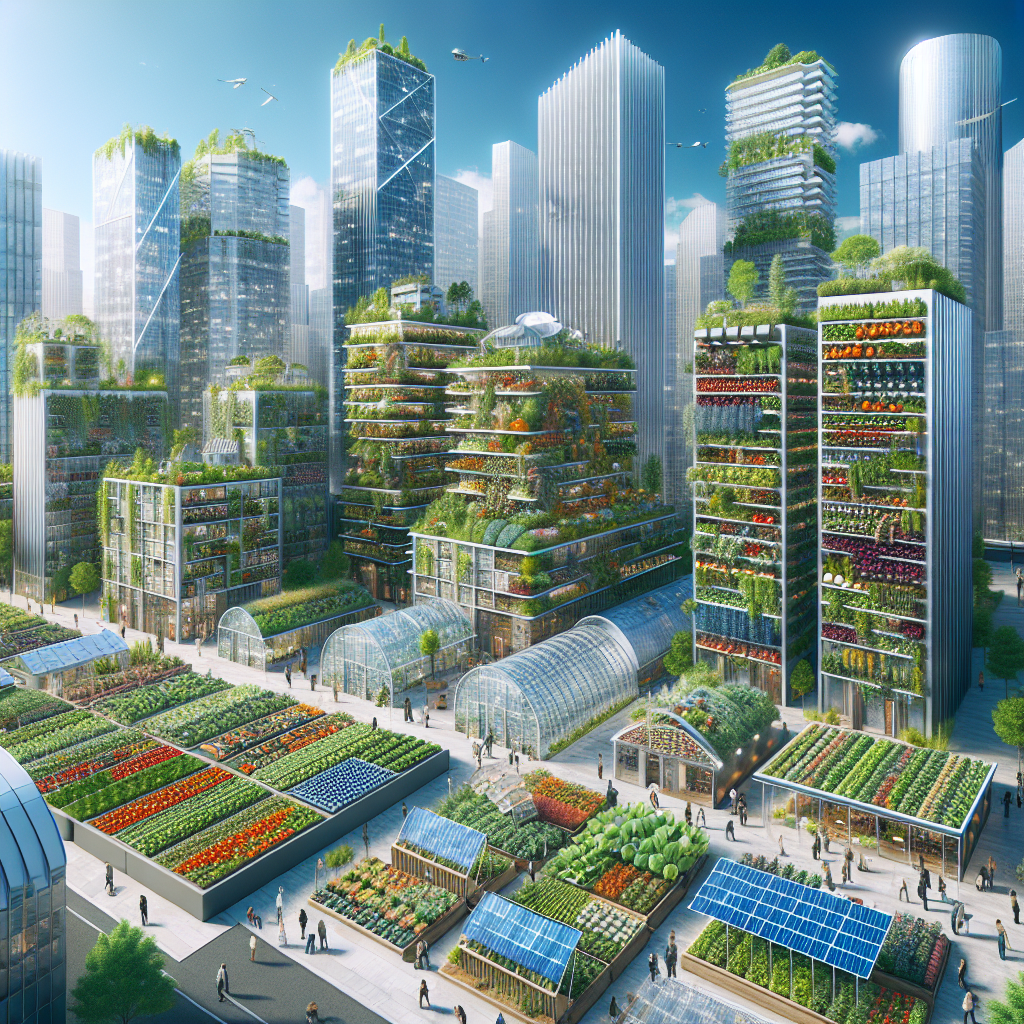
Vertical farming is a revolutionary method that maximizes agricultural output on minimal land space by growing crops in vertically stacked layers. Much like high-rise apartment buildings for plants, vertical farms use controlled-environment agriculture (CEA) technology to optimize light, temperature, water, and nutrients. This innovative technique can dramatically increase food production without expanding urban footprints.
The benefits of vertical farming extend beyond efficient space utilization. By controlling the growing environment, pests and diseases can be more easily managed without the heavy use of chemical pesticides. Additionally, vertical farming consumes significantly less water than traditional farming methods—up to 95% less—making it an attractive option for cities in arid regions.
Several urban projects globally have already adopted vertical farming. For instance, in cities like Singapore and Tokyo, where space is at a premium, vertical farms have emerged as local solutions to address food security. These farms not only supply fresh produce but also create jobs, reduce food miles, and decrease carbon footprints. Investing in vertical farming technology can be a game-changer for sustainable urban agriculture.
Hydroponics and Aquaponics
Hydroponics is a soilless farming technique where plants are grown in nutrient-rich water. This method is particularly effective in urban environments where quality soil is scarce. Hydroponic systems can be set up in various urban spaces, including rooftops, balconies, and even inside buildings. The controlled conditions under which plants grow result in faster growth rates and higher yields compared to traditional soil cultivation.
Although hydroponics is impressive on its own, aquaponics takes this innovation a step further by integrating aquaculture with hydroponics. In an aquaponic system, fish and plants are grown together in a symbiotic environment. Nutrient-rich water from the fish tanks provides the essential minerals for plant growth, while the plants help filter and clean the water, which is cycled back to the fish tanks.
This closed-loop system exemplifies sustainability by minimizing waste and maximizing resource efficiency. Urban farms utilizing aquaponics can produce both fish and vegetables, providing a diversified food source for city dwellers. Projects in places like Milwaukee and Berlin are leading examples of how aquaponics can contribute to sustainable urban food production.
Rooftop Gardens
Rooftop gardens are another practical solution for urban agriculture, transforming neglected spaces into productive green patches. Utilizing rooftops for farming has numerous benefits, from reducing the urban heat island effect to enhancing building insulation, thus contributing to energy savings. Rooftop gardens can vary from simple container gardens to more sophisticated green roofs.
One innovative approach within rooftop gardening is the use of lightweight, modular green roof systems. These systems make it easier to install gardens on buildings not originally designed to support such weight. Furthermore, implementing drip irrigation and rainwater harvesting systems can significantly improve water efficiency.
Cities like New York and Toronto have pioneered rooftop gardening projects that inspire other urban centers worldwide. Rooftop gardens also foster community engagement by offering shared spaces for residents to connect, learn, and collaborate on urban sustainability projects.
Community-Supported Agriculture (CSA)
Community-supported agriculture (CSA) redefines the relationship between food producers and consumers by creating a direct connection. In a CSA model, urban residents invest in local farms by purchasing shares of the harvest in advance. This investment helps farmers plan their production and manage their resources more effectively, while consumers receive fresh, locally-grown produce throughout the season.
CSAs are not restricted to rural areas; they are increasingly being incorporated into urban settings as well. Urban CSAs can operate through partnerships with nearby peri-urban farms or be entirely city-based, utilizing vacant lots and urban gardens. This model supports local economies, reduces food miles, and ensures food traceability.
Moreover, CSAs often include educational components, such as farm tours, workshops, and volunteer opportunities, which foster a deeper understanding of sustainable agriculture among city dwellers. Cities like San Francisco and London are seeing a rise in urban CSAs, encouraging citizens to partake in the urban farming movement actively.
Permaculture Principles in Urban Farming
Permaculture is a holistic design system that integrates land, resources, people, and the environment through mutually beneficial synergies. When applied to urban farming, permaculture principles emphasize sustainability, self-sufficiency, and working with natural processes. Techniques such as companion planting, polycultures, and natural pest control are commonly used in permaculture to create resilient urban agricultural systems.
One of the key aspects of permaculture in urban farming is the design of edible landscapes. These landscapes can be incorporated into parks, community gardens, and even private yards, providing city residents with fresh produce while enhancing biodiversity and beautifying urban spaces. Vertical gardens, green walls, and other innovative planting strategies are often utilized to maximize space and productivity.
Urban gardens designed with permaculture principles prioritize resource efficiency, such as utilizing rainwater harvesting, composting organic waste, and planting drought-resistant species. These gardens serve as living laboratories for sustainable practices, offering educational opportunities for residents to learn about ecological stewardship and sustainable living.
Smart Technologies and Urban Farming
The advent of smart technologies has the potential to revolutionize urban farming, making it more efficient and sustainable. The use of sensors, IoT (Internet of Things) devices, and data analytics allows for precise monitoring and management of urban farms, optimizing factors such as water use, nutrient delivery, and lighting conditions.
Automated irrigation systems, for example, can ensure that plants receive the right amount of water at the right time, reducing wastage. Similarly, smart lighting systems can mimic natural sunlight, providing optimal growing conditions for plants even in indoor settings. Drones and robotic harvesters also streamline labor-intensive tasks, increasing the overall efficiency of urban farms.
Urban farming initiatives across the globe are beginning to adopt these smart technologies. For instance, indoor vertical farms in cities like Dubai and Tokyo leverage advanced monitoring systems to maintain ideal growing conditions year-round. By harnessing the power of technology, urban farms can achieve higher yields, reduce resource consumption, and contribute to the resilience of urban food systems.
Conclusion
As cities continue to grow and face challenges such as food security, climate change, and resource scarcity, innovative urban farming techniques stand out as viable solutions for sustainable development. Vertical farming, hydroponics, aquaponics, rooftop gardens, community-supported agriculture, permaculture, and smart technologies each offer unique benefits and opportunities for transforming urban environments into productive, resilient, and sustainable spaces.
Embracing these innovative practices not only helps address the immediate food needs of urban populations but also promotes environmental stewardship, social cohesion, and economic empowerment. By integrating urban farming into the fabric of cities, we can create greener, healthier, and more self-sufficient urban communities.
The future of sustainable cities lies in our ability to innovate and adapt. Urban farming represents a crucial step forward in this journey, offering a blueprint for how cities can thrive sustainably in the face of growing challenges. As individuals, communities, and policymakers, we have the power to drive this transformation and contribute to building a better, more sustainable future for all.
Frequently Asked Questions
1. What are some innovative urban farming techniques that can be used in sustainable cities?
Innovative urban farming techniques are evolving to meet the demands of modern cities, and they offer several exciting and sustainable options. Vertical farming is one of the most intriguing techniques, using towering structures to grow crops on multiple levels, perfect for dense urban areas with limited space. Hydroponics and aquaponics are also gaining popularity; these methods use nutrient-rich water solutions allowing for soil-less cultivation with increased efficiency and lower resource use. Urban greenhouses can be integrated into residential or commercial architecture, enabling year-round production regardless of climate. Moreover, rooftop gardens, taking advantage of unused urban spaces, and indoor farming, harnessing advanced LED lighting technologies, are outperforming traditional methods in terms of sustainability. These techniques maximize output, minimize environmental impacts, and promise fresh, locally-grown produce, which drastically reduces the carbon footprint of food transportation to cities.
2. How do hydroponics and aquaponics contribute to sustainability in urban farming?
Hydroponics and aquaponics are revolutionary in their approach to sustainable urban farming. Hydroponics operates by growing plants in water-based, nutrient-rich solutions instead of traditional soil. With this method, urban farmers can achieve a much smaller ecological footprint. Plants receive precisely what they need directly to their roots, dramatically reducing water consumption by up to 90% compared to conventional soil farming. It also minimizes pesticide use, as the controlled environment limits pests and diseases.
On the other hand, aquaponics combines aquaculture (raising fish) with hydroponics in a mutualistic environment. Fish waste provides an organic nutrient source for the plants, and as the plants utilize these nutrients, they, in turn, purify the water that goes back to the fish tanks. This closed-loop system enhances resource efficiency, reducing water usage, and helping create a self-sustaining ecosystem. Such systems align perfectly with urban sustainability goals by fostering resilience and self-reliance in urban food production.
3. What benefits do vertical farming systems offer to urban environments?
Vertical farming is transformative for urban food production due to its ability to maximize yield while minimizing space usage. By using vertically stacked layers, vertical farms utilize less land, making it ideal for densely populated urban areas where horizontal space is a premium. This method significantly enhances food security by offering a stable supply of fresh, local produce irrespective of weather conditions, contributing to the resilience of urban areas.
Furthermore, vertical farms can operate using 90% less water than traditional farming. They incorporate cutting-edge technologies, like LED lighting and climate control, which ensure optimal growing conditions, boosting crop productivity and quality. In addition, these farms can be integrated within city architecture, like skyscrapers or warehouses, thus reducing the distance food must travel from farm to table, lowering transportation emissions. Their contribution to local economies is also noteworthy as they create jobs and can stimulate associated sectors such as technology and agriculture.
4. How can urban greenhouses be integrated into city planning to enhance sustainability?
Urban greenhouses present a versatile solution for boosting sustainability and can be seamlessly woven into urban planning strategies. Cities can incentivize property owners to incorporate greenhouses into existing structures, such as rooftops or unused buildings, transforming them into productive agricultural spaces. Properly designed urban greenhouses can function year-round by leveraging modern technology like automated climate control to maintain optimal conditions for a consistent crop yield.
The integration of these greenhouses not only increases local food production but can also positively impact urban air quality, serving as carbon sinks. The ‘green’ aspect of these structures can help regulate building temperatures, potentially reducing the need for energy-intensive air conditioning. Additionally, urban greenhouses foster communal benefits by engaging local communities in food production efforts, educating residents about sustainable practices, and encouraging a hands-on approach to environmental stewardship.
5. What role do rooftop gardens play in promoting sustainable urban lifestyles?
Rooftop gardens are an essential component of sustainable urban lifestyles, connecting city dwellers with nature. These gardens provide a host of environmentally friendly benefits such as reducing urban heat island effects, where densely built areas experience higher temperatures. Rooftop vegetation can absorb heat, improving building insulation and lowering energy costs for heating and cooling.
From a food production standpoint, they allow for fresh produce to be grown in proximity to consumers, thereby cutting down on food miles and promoting a diet that’s both local and seasonally diverse. Rooftop gardens also improve urban biodiversity, offering habitats for pollinators like bees and butterflies crucial for enhancing the urban ecosystem. Moreover, they provide community benefits; rooftop gardens can serve as communal spaces, fostering city resilience and encouraging social interaction, cultural exchange, and a deeper understanding of healthy lifestyles through community-based gardening activities. The aesthetic value added by these gardens contributes to higher property values and improved mental well-being of urban residents through increased access to green spaces.