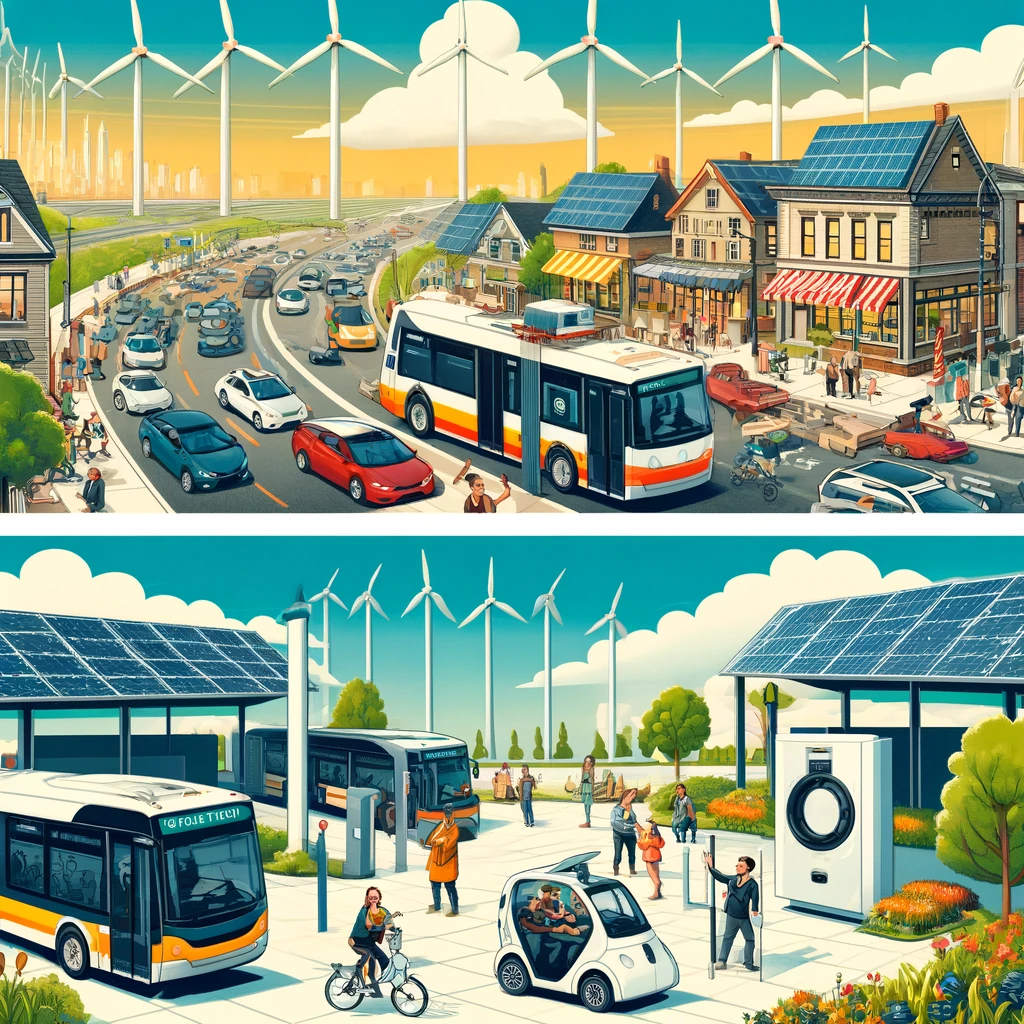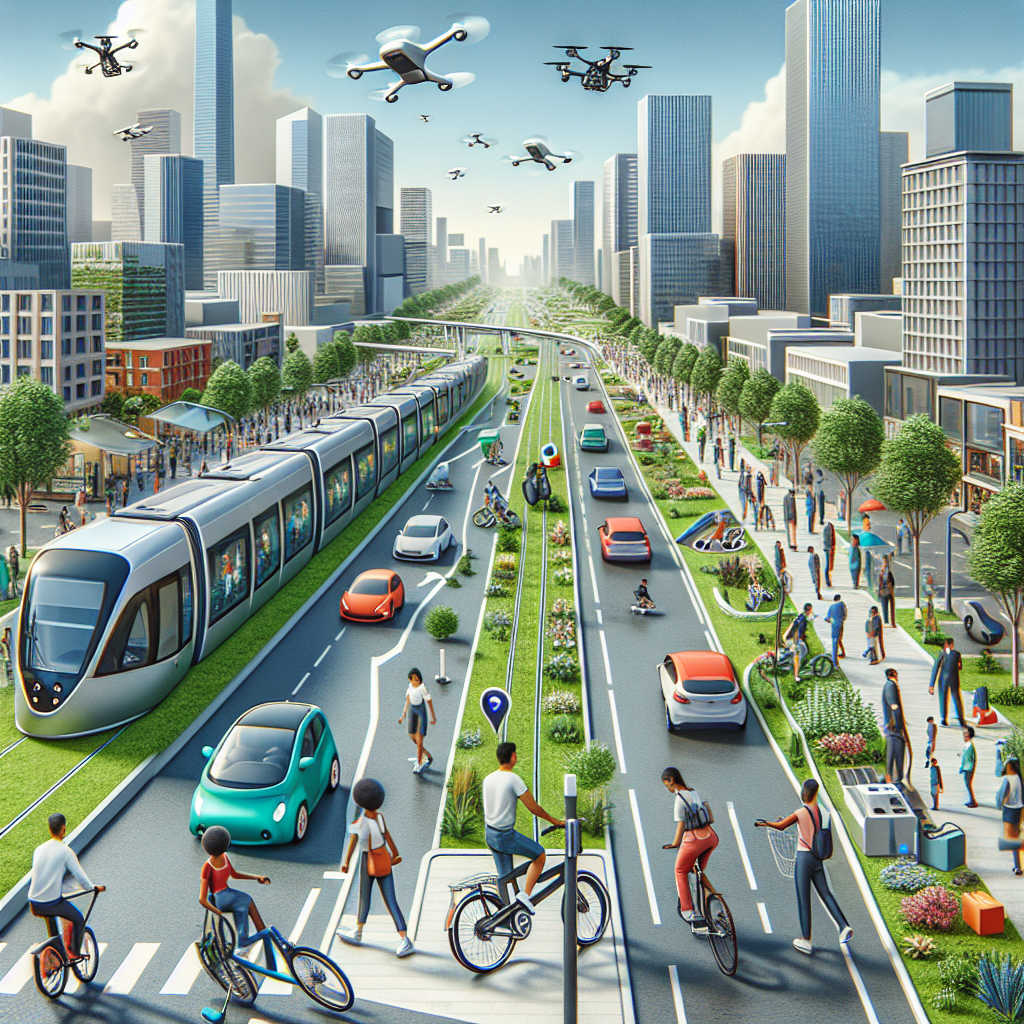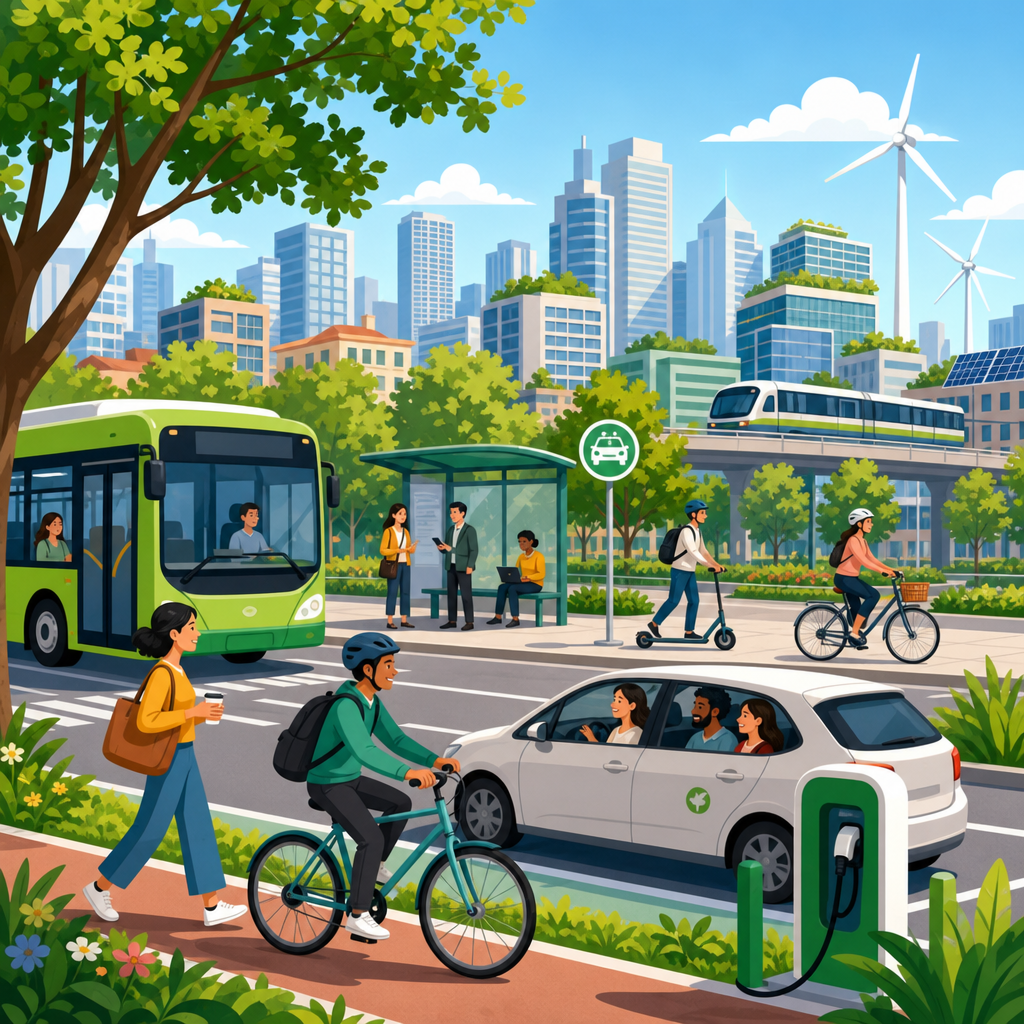
Transportation demand management is one of the most practical ways cities can reduce congestion, lower emissions, and make daily travel more efficient without relying only on expensive road expansion. In urban planning, transportation demand management, often shortened to TDM, refers to policies, pricing, programs, and design choices that influence when, how, and why people travel. Instead of focusing solely on moving more cars, TDM aims to move more people with fewer vehicles, shorter trips, and better use of existing infrastructure. Sustainable urban development uses this same logic across land use, housing, utilities, and mobility: cities should grow in ways that improve quality of life while reducing environmental harm and long-term public cost.
I have worked with TDM strategies in downtown redevelopment plans, campus mobility programs, and employer commute initiatives, and the pattern is consistent. Where cities coordinate transit, parking policy, walking access, cycling networks, and mixed-use zoning, travel behavior changes measurably. Commute peaks flatten. Parking demand drops. Transit ridership becomes more reliable. Streets become safer because vehicle volumes and speeds are easier to manage. These outcomes matter because transport is a major source of urban greenhouse gas emissions, local air pollution, road injury risk, and household expense. In many cities, transportation is also the largest barrier to equitable access, especially for workers, older adults, students, and households that cannot afford multiple cars.
As a hub topic within sustainable urban development, transportation demand management connects directly to transit-oriented development, complete streets, parking reform, active transportation, climate action planning, and public health. It is not a single project. It is a decision framework that helps local governments, developers, institutions, and employers align transportation systems with broader urban goals. The central question is simple: how can a city provide access to jobs, services, schools, and public space with less traffic, less energy use, and less land devoted to vehicle storage? The strongest TDM programs answer that question by combining pricing, infrastructure, employer incentives, development standards, and clear performance measurement.
Understanding how transportation demand management fits into sustainable urban development is important because many city goals succeed or fail based on daily travel behavior. A housing plan that places homes far from jobs increases car dependence. A climate plan without parking pricing usually underperforms. A new rail station surrounded by surface parking captures less value than one embedded in walkable mixed-use development. TDM closes these gaps. It gives planners and decision-makers tools to shape demand before congestion, emissions, and land consumption become harder and more expensive to fix. For growing cities, that makes TDM not an optional add-on but a core urban development strategy.
What transportation demand management includes in practice
Transportation demand management includes any measure that changes travel choices by shifting trips to different modes, times, routes, or destinations, or by reducing the need to travel altogether. Common tools include transit pass subsidies, employer shuttles, carshare parking, bicycle facilities, staggered work hours, telework policies, congestion pricing, market-rate parking, unbundled residential parking, school travel plans, and pedestrian-first street design. In practice, the most effective programs combine several of these tools because travel decisions are shaped by cost, convenience, reliability, and urban form at the same time.
A useful way to think about TDM is that it manages access rather than traffic alone. A downtown office district does not need every employee to drive if reliable transit, safe walking routes, secure bicycle parking, and employer incentives are available. Universities have demonstrated this for decades. Stanford and the University of Washington both used transit pass programs, parking pricing, and active transportation investments to reduce drive-alone commuting. In city governments, the same logic appears in travel demand requirements attached to major developments, where developers provide mobility benefits instead of adding more parking supply.
TDM also works at multiple scales. At the site level, a mixed-use building near frequent transit can provide fewer parking spaces, offer tenant transit benefits, and include showers, lockers, and bike rooms. At the corridor level, bus priority lanes and parking management can increase person-throughput without widening roads. At the regional level, integrated fare systems, commuter rail coordination, and road pricing can shift larger travel patterns. The point is not to eliminate cars entirely. The point is to reserve car use for trips that benefit most from it while making other choices genuinely competitive.
Why TDM is essential to sustainable urban development
Sustainable urban development depends on using land, energy, and public investment more efficiently. TDM supports all three. First, it reduces the need for road and parking expansion, which is costly and often induces additional traffic. Research associated with induced demand has repeatedly shown that adding road capacity in urban areas can fill quickly as travel patterns adapt. Second, TDM lowers emissions by reducing vehicle miles traveled and supporting lower-carbon modes such as transit, walking, cycling, and shared mobility. Third, it improves the productivity of urban land by shrinking the space devoted to parking lots and wide roadways, allowing more room for housing, jobs, parks, and civic uses.
There is also a fiscal argument. Structured parking is expensive, commonly costing tens of thousands of dollars per space depending on design and local conditions. When those costs are embedded in housing or commercial development, everyone pays whether or not they drive. I have seen projects regain viability when local rules allowed parking reductions in exchange for strong TDM commitments. That can mean lower development costs, less impervious surface, and a better street edge. It also supports infill development, which is usually more sustainable than outward expansion because existing infrastructure and public services are already nearby.
Equity is another reason TDM matters. Traditional transport systems often subsidize driving most heavily, even though lower-income households are less likely to benefit equally from those subsidies. Free parking requirements, underpriced curb space, and roadway spending can privilege car ownership while underfunding transit and active travel. Well-designed TDM can rebalance this by improving affordable access. However, the design details matter. Pricing tools should be paired with high-quality alternatives and, where appropriate, income-sensitive discounts. Sustainable urban development is not just about lower emissions; it is about fair access to opportunity, and TDM can help deliver that.
Core TDM strategies and how they perform
The strongest TDM programs usually combine pricing, service improvements, and land use measures. Pricing works because travel behavior responds to cost more consistently than to education campaigns alone. Parking cash-out programs, for example, let employees who do not use a subsidized parking space receive equivalent cash or mobility benefits. California has long recognized this tool, and it remains one of the clearest ways to reduce solo driving where parking subsidies distort choices. Congestion pricing follows the same principle at the network scale by charging for scarce road space during peak periods, as seen in London, Stockholm, and Singapore.
Service improvements are equally important because people will not switch modes unless alternatives are reliable. Frequent transit, all-day service, protected bike lanes, safe intersections, wayfinding, and sidewalks that meet accessibility standards are not cosmetic extras. They are the operational backbone of TDM. On several redevelopment projects I have advised, mode shift happened only after the city fixed the last half-mile problem between stations and destinations. A train stop on its own does not create sustainable mobility. A comfortable, direct, and safe path to the front door does.
Land use measures make those investments durable. Mixed-use zoning, higher density near transit, limited parking minimums, and complete neighborhoods reduce trip lengths and allow more daily needs to be met without driving. This is where transportation demand management fits tightly into sustainable urban development rather than sitting beside it. The transportation system and the development pattern are inseparable. If a city approves isolated housing, office parks, and retail pods, no amount of employer marketing will produce large mode shifts. If it builds compact, connected districts, TDM tools become much more effective.
| Strategy | Primary mechanism | Urban development benefit | Example |
|---|---|---|---|
| Market-rate parking | Raises the cost of peak car use | Reduces parking oversupply and supports infill | Downtown districts using priced curb management |
| Transit pass programs | Lowers rider cost and simplifies access | Increases transit mode share for workers and residents | Universal pass programs on university campuses |
| Unbundled parking | Separates housing cost from parking cost | Improves affordability and reveals true demand | Apartment projects near rail stations |
| Protected cycling networks | Improves safety and comfort | Supports short urban trips without car ownership | Citywide bike plans in Paris and Seville |
| Telework and flexible schedules | Shifts or removes peak trips | Delays infrastructure pressure and smooths congestion | Public agencies with hybrid work policies |
How TDM supports climate, health, and livability goals
Transportation demand management delivers environmental benefits mainly by reducing vehicle miles traveled and increasing the share of trips made by lower-emission modes. That matters because tailpipe standards and vehicle electrification, while essential, do not solve congestion, crash exposure, sedentary travel patterns, or the land demands of car-oriented growth. A city with more electric cars can still have unsafe streets and excessive parking. TDM addresses the demand side by reducing unnecessary driving and improving alternatives, which complements technology-based decarbonization rather than competing with it.
Public health gains are often underestimated. Walking to transit, cycling for short trips, and calmer streets improve daily physical activity and can reduce injury severity when paired with lower vehicle speeds. Air quality improves locally when fewer car trips are concentrated in dense corridors near homes, schools, and shops. Noise pollution can also decline in districts where traffic volumes fall and public space is redesigned around people rather than through-movement. I have seen businesses initially worry about parking changes, then benefit from improved foot traffic after sidewalks, bike access, and curb management were upgraded together.
Livability is the broader result. TDM can free curb space for loading zones, trees, outdoor dining, bus stops, and accessible pick-up areas. It can reduce the amount of land consumed by surface parking, creating opportunities for housing or civic space. In sustainable urban development, these are not side benefits. They are the visible signs that a city is choosing access over traffic saturation. Residents experience that choice through shorter and cheaper trips, safer routes for children, and neighborhoods that feel connected rather than cut apart by vehicle storage and high-speed roads.
Implementation, measurement, and common mistakes
Successful transportation demand management requires governance, data, and enforcement. Cities need clear mode-share or trip-reduction targets, consistent monitoring, and a process for adjusting programs when results fall short. Development-related TDM plans should identify baseline conditions, expected trip generation, required measures, reporting intervals, and accountability. Standard references such as the Institute of Transportation Engineers trip generation framework can help, but practitioners should not treat default rates as destiny, especially in walkable and transit-rich districts where local context changes behavior. Good measurement uses person trips, mode share, parking occupancy, and vehicle miles traveled, not just intersection delay.
A common mistake is treating TDM as a brochure instead of an operating system. Information campaigns alone rarely shift behavior if parking remains free, sidewalks are unsafe, and transit is infrequent. Another mistake is requiring measures without maintaining them. I have reviewed projects where bike rooms were locked, transit displays were outdated, and commute coordinators disappeared after opening day. The best programs include ongoing funding, annual reporting, and performance triggers. If drive-alone rates remain high, parking prices can rise, transit benefits can expand, or additional mobility services can be required.
Political resistance usually centers on pricing and parking reform, yet these are often the most effective tools. The solution is not to avoid them but to phase them carefully and communicate clearly. Show how revenue will improve local mobility. Protect access for disabled users, service vehicles, and low-income travelers. Coordinate parking policy with visible improvements in transit, streetscape, and public space. When people see that the goal is not punishment but better access and a more functional city, support becomes easier to build. Cities that measure honestly and reinvest locally tend to sustain TDM over time.
Where this hub connects across sustainable urban development
Transportation demand management is a hub topic because it links almost every other element of sustainable urban development. It supports transit-oriented development by increasing ridership and reducing parking needs around stations. It supports housing affordability by limiting hidden parking costs and enabling compact infill. It supports complete streets by strengthening the case for sidewalks, bus priority, bike facilities, and safer intersections. It supports climate adaptation by reducing paved area and heat-retaining asphalt while making neighborhoods more resilient and accessible during fuel price shocks or service disruptions.
It also connects to economic development. Districts with strong TDM often perform better because they can accommodate more workers and visitors without proportional increases in road congestion or land devoted to parking. For employers, this widens the labor pool by making access possible for people who do not drive. For cities, it increases the value of prior investments in transit, streets, and public space. If you are building a content cluster around sustainable urban development, this page should anchor related articles on parking reform, transit-oriented development, active transportation, mobility hubs, complete streets, mixed-use zoning, and urban decarbonization strategies.
The core lesson is straightforward: transportation demand management fits into sustainable urban development because both are about access, efficiency, and long-term resilience. Cities do not become sustainable by adding isolated green features while preserving auto-dependent travel patterns. They become sustainable by shaping daily movement in ways that reduce emissions, save land, improve public health, and expand opportunity. Start by examining parking policy, transit quality, walking conditions, cycling safety, and land use around major destinations. Then build a TDM program that is measurable, funded, and tied to broader city goals. That is how mobility planning becomes urban development strategy.
Frequently Asked Questions
What is transportation demand management, and why is it important for sustainable urban development?
Transportation demand management, or TDM, is a planning approach that helps cities shape travel behavior so people can move more efficiently without depending entirely on road widening or highway expansion. Instead of asking how to fit more cars into limited street space, TDM asks how to move more people with fewer vehicles, fewer unnecessary trips, and better use of existing transportation systems. It does this through a mix of strategies such as parking management, transit incentives, carpool and vanpool programs, flexible work schedules, pricing tools, safer walking and cycling access, and land use decisions that shorten the distance between homes, jobs, schools, and services.
Its importance in sustainable urban development is hard to overstate. Growing cities face a basic reality: road space is limited, budgets are constrained, and vehicle-dependent growth creates long-term costs in congestion, air pollution, traffic injuries, infrastructure maintenance, and greenhouse gas emissions. TDM offers a practical way to respond by reducing pressure on the transportation network while improving access. That makes it a strong fit for sustainability goals because it supports cleaner air, lower energy use, more efficient infrastructure investment, and more equitable mobility options for residents who do not drive or cannot afford to drive regularly.
Just as importantly, TDM connects transportation policy with broader urban outcomes. When paired with compact development, mixed-use neighborhoods, and reliable transit, it helps create places where daily needs are closer together and travel choices are more flexible. In that sense, TDM is not just a transportation toolkit. It is part of how cities become more resilient, affordable, healthy, and livable over time.
How does transportation demand management reduce congestion and emissions without building more roads?
TDM reduces congestion and emissions by changing travel patterns rather than simply adding roadway capacity. In most cities, congestion is not spread evenly throughout the day. It tends to be concentrated during peak periods, when many people are trying to reach the same areas at the same time, often in single-occupancy vehicles. TDM strategies address that mismatch directly by encouraging some trips to shift in time, change mode, combine purposes, or be avoided altogether when a trip is not necessary.
For example, employers may offer transit benefits, telecommuting options, compressed workweeks, or flexible schedules that reduce rush-hour demand. Cities may price parking more effectively so curb space turns over efficiently and driving alone becomes less heavily subsidized. Developers may include bike storage, shower facilities, transit pass programs, or reduced parking supply in walkable, transit-served locations. Schools, institutions, and business districts may promote carpooling, shuttle services, and first-mile or last-mile connections that make alternatives to driving more realistic. Each individual measure may seem modest, but together they can significantly reduce vehicle trips and peak-hour traffic volumes.
The emissions benefits follow from those same changes. Fewer car trips generally mean less fuel consumption and lower carbon emissions. Smoother traffic flow also reduces the stop-and-go conditions that waste energy and worsen local air pollution. In addition, when TDM helps people walk, bike, or use transit for shorter and more frequent trips, cities see compounding benefits over time: lower per-capita vehicle miles traveled, reduced demand for parking and road expansion, and more efficient land use patterns. That is why TDM is often considered one of the most cost-effective ways to improve environmental performance in urban areas.
What are the most common transportation demand management strategies cities use?
Cities use a broad range of TDM strategies, and the most effective programs usually combine several tools rather than relying on a single policy. One of the most common approaches is parking management. This can include pricing curb parking appropriately, reducing minimum parking requirements, unbundling parking costs from housing or office leases, and managing parking supply so that valuable urban land is not dominated by storage for private vehicles. These steps influence travel choices because free or oversupplied parking tends to encourage more driving.
Another major category is transit support. Cities and employers often provide subsidized transit passes, real-time travel information, shuttle connections, and infrastructure improvements that make buses and rail more convenient and reliable. Walking and cycling improvements are also central to TDM. Sidewalks, protected bike lanes, secure bicycle parking, traffic calming, and safer street crossings make short trips easier to complete without a car, which is especially important in dense urban areas where many trips are relatively short.
Employer- and institution-based programs are also very common. These may include commuter benefits, carpool matching, vanpool support, remote work policies, flexible scheduling, guaranteed ride home programs, and transportation coordinators who help employees or students understand their options. On the policy side, cities may use congestion pricing, low-emission zones, development review requirements, or transportation management plans tied to major projects. Land use planning is another key element. Mixed-use zoning, transit-oriented development, and neighborhood design that places housing near jobs and services can reduce the need for long car trips in the first place. In practice, TDM works best when these strategies are integrated into everyday planning, development, and operations rather than treated as add-on programs.
How does transportation demand management support equity and quality of life in cities?
TDM can support equity and quality of life by expanding mobility choices and reducing the costs that come with auto-dependent urban systems. In many cities, transportation is one of the largest household expenses after housing. When residents must own and operate a car just to reach work, school, groceries, health care, or childcare, those costs can be a serious burden, especially for lower-income households. TDM helps by making alternatives more practical, reliable, and affordable. Better transit access, safer walking routes, improved cycling infrastructure, and commuter support programs can all reduce the need for car ownership and widen access to opportunity.
Equity also matters in how TDM policies are designed. A well-designed program recognizes that different groups have different travel needs, schedules, and levels of access to transportation options. For example, pricing tools such as parking fees or congestion charges can improve system efficiency, but they should be paired with strong transit service, targeted discounts, community engagement, and investments in underserved neighborhoods so that the benefits are broadly shared. Similarly, reduced parking requirements can lower development costs and support affordability, but only if residents also have safe and realistic alternatives for getting around.
Quality of life improves when streets are less congested, neighborhoods are safer, and public space is used more productively. TDM can contribute to quieter streets, cleaner air, shorter commutes, and more active transportation, all of which have public health benefits. It can also support stronger local business districts by making urban areas easier to access without requiring large amounts of parking. In that way, TDM is not just about managing traffic. It is about creating cities where people have more choices, better access, and a daily environment that is healthier and more enjoyable.
How can cities measure whether transportation demand management programs are actually working?
Cities can measure TDM performance by looking beyond simple traffic counts and focusing on whether people are reaching destinations more efficiently and sustainably. One of the most common indicators is mode share, which shows how people travel by car, transit, walking, biking, carpooling, or other means. If a TDM program is successful, cities may see fewer drive-alone trips and a higher share of travel by more space-efficient or lower-emission modes. Vehicle miles traveled, or VMT, is another important metric because it captures the total amount of driving taking place and is closely linked to congestion, emissions, and infrastructure wear.
Other useful measures include peak-period trip reduction, parking occupancy, transit ridership, commute participation rates, travel time reliability, and greenhouse gas emissions. For employer and campus programs, surveys can reveal whether people changed travel habits because of incentives, schedule flexibility, or improved information. For development-related TDM programs, cities may track whether buildings are meeting targets for trip generation, parking demand, and transit use. Safety indicators, such as crash rates for people walking and cycling, can also show whether street design and mobility investments are making non-driving options more viable.
The most effective evaluation frameworks combine quantitative data with local context. A city may not eliminate congestion entirely, and that is not always the right benchmark. The better question is whether the transportation system is using limited space more efficiently, serving more people, and aligning with broader sustainability goals. When cities track TDM outcomes consistently over time and connect those findings to land use, climate, and equity objectives, they can refine programs, invest more strategically, and build a stronger case for transportation policies that improve urban development without defaulting to road expansion.