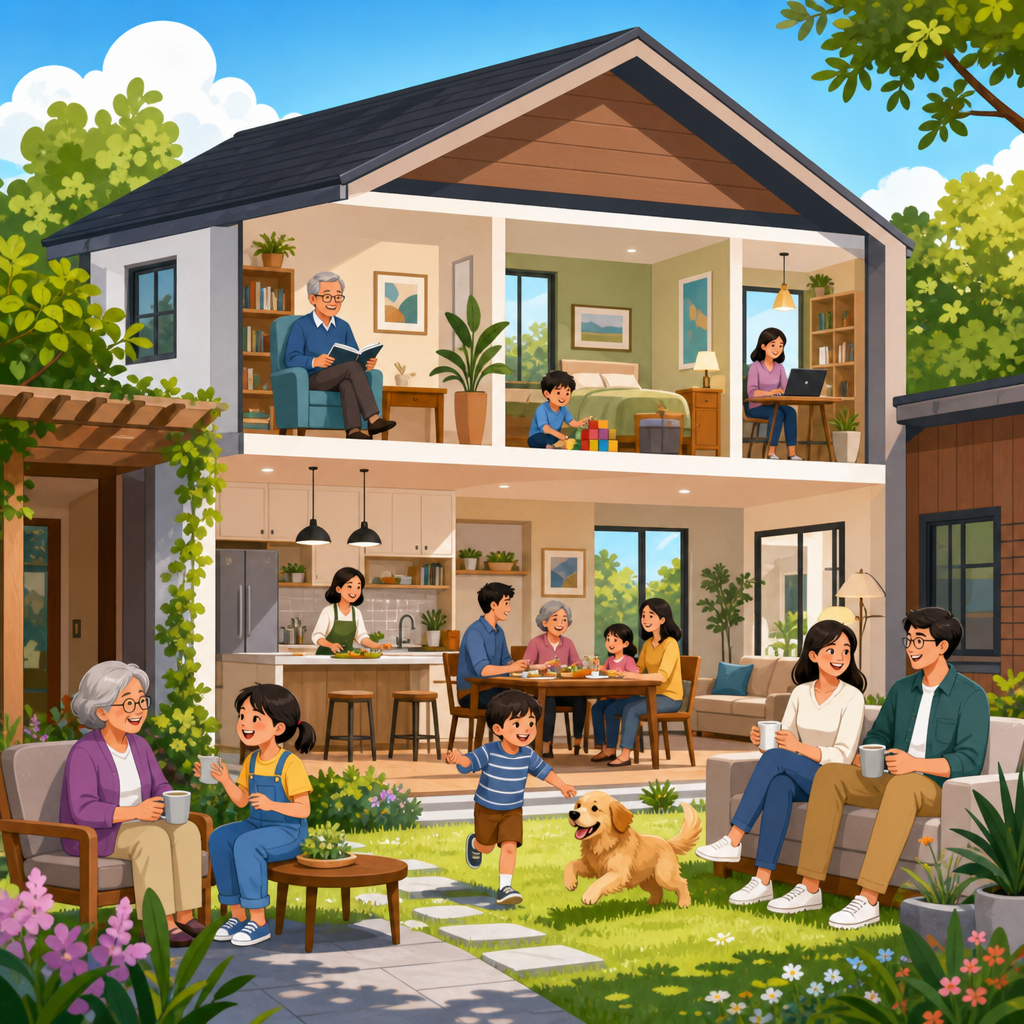
Housing design for multigenerational families is becoming a central topic in sustainable urban development because more households now include grandparents, parents, children, and sometimes extended relatives sharing one home or one property. Multigenerational housing design refers to planning homes that support different ages, mobility levels, privacy needs, and financial realities within a single living arrangement. In practice, that can mean a house with an accessory dwelling unit, a duplex-like layout under one roof, or a flexible floor plan with separate entrances, shared kitchens, and adaptable bedrooms. I have worked on housing briefs where the biggest mistake was assuming everyone wanted either complete separation or constant togetherness. Most families need both.
The topic matters for economic, social, and environmental reasons. Rising housing costs push families to pool resources. Aging populations increase demand for homes that allow older adults to live safely near support. Childcare pressures make proximity between generations valuable. At the same time, cities trying to reduce sprawl need housing types that increase occupancy without sacrificing livability. A well-designed multigenerational home can lower per-person energy use, reduce duplicate appliances, and make better use of urban land. It can also reduce loneliness and strengthen care networks, but only if the design respects autonomy.
Key terms help clarify the discussion. Universal design means spaces usable by people of different abilities without special adaptation. Aging in place means older residents can remain at home as needs change. Accessory dwelling unit, often shortened to ADU, describes a secondary self-contained residence on the same lot as a primary home. Visitability refers to basic accessibility features such as a step-free entrance, wider doors, and a usable ground-floor bathroom. Flex space means a room that can change function over time, from nursery to study to caregiver bedroom.
For a hub article, the goal is to explain the principles that connect every decision: site planning, floor plan strategy, accessibility, privacy, structure, building systems, and neighborhood context. The best housing design for multigenerational families is not a style. It is a performance standard. It must support daily routines, conflict reduction, health, safety, and long-term adaptability while staying code-compliant and financially realistic. Families rarely stay static for twenty years, so the home has to absorb life changes without expensive reconstruction.
What Multigenerational Families Need From a Home
The first design task is understanding how the household actually functions. I start with three questions: who needs support, who provides support, and what activities create friction. A grandmother who cooks daily may want immediate kitchen access but not a full private suite. An adult child working night shifts may need acoustic separation more than extra square footage. Teenagers often want independent entry and bathroom access. A home that looks generous on paper can fail if circulation routes force everyone through one shared zone.
Successful multigenerational homes usually balance four needs: privacy, connection, accessibility, and flexibility. Privacy means visual and acoustic separation, not emotional distance. Connection means shared spaces that invite everyday contact, such as a family dining area or courtyard. Accessibility includes zero-step entries, lever handles, non-slip flooring, good lighting, and bathrooms planned for future grab bars. Flexibility means rooms sized and positioned so they can shift between sleeping, work, care, and leisure uses. This is why oversized hallways, stacked plumbing walls, and structurally simple spans are often better investments than decorative upgrades.
Cultural context matters. In many households, shared meals, prayer, or caregiving rituals shape the plan more than resale logic. In others, financial contribution determines who wants a private kitchenette or separate utility meter. Designers should map patterns, not assumptions. Interview every adult resident if possible. Ask about waking times, cooking habits, guests, noise tolerance, medication storage, laundry routines, and future mobility needs. These details drive better design than generic labels such as in-law suite.
Floor Plan Strategies That Work in Real Life
Several floor plan models repeatedly perform well. The first is the shared core with private wings: one kitchen and main living space anchor the home, while bedroom clusters sit on opposite sides. This works for families who want strong daily interaction but need quiet sleeping zones. The second is the semi-independent suite model, where one generation has a bedroom, bath, sitting area, and sometimes a compact kitchenette. This is common for aging parents or returning adult children. The third is the stacked flat approach in urban areas, with one self-contained residence above another, sometimes connected internally for flexibility.
Layout quality depends on transitions. Good plans create gradations from public to semi-private to private spaces. For example, a ground-floor elder suite near the entry can reduce stair use and simplify caregiving, but it should not open directly into the busiest family room. A small vestibule, pocket door, or short corridor makes a major difference. Likewise, two living rooms are often more useful than one oversized open-plan room. Open layouts can look modern, yet they amplify television noise, cooking sounds, and conflicting schedules.
Bathrooms deserve extra attention. If three generations share one congested morning routine, stress rises quickly. A practical benchmark is at least one bathroom for every two to three adult-equivalent users, with one fully accessible shower on the main level. Kitchens also require honest planning. Some families need one large communal kitchen; others function better with a main kitchen plus a secondary prep zone to avoid bottlenecks. Separate refrigeration, labeled pantry storage, and durable easy-clean surfaces are not luxuries in busy multigenerational homes.
| Design approach | Best use case | Main benefit | Main caution |
|---|---|---|---|
| Shared core with private wings | Close-knit families with common meals | Strong connection without fully shared sleeping zones | Can still create noise spill if walls and doors are weak |
| Semi-independent suite | Aging parents, guests, adult children | Privacy and dignity with proximity to support | Needs careful code review for kitchenette, egress, and plumbing |
| Stacked flats | Urban lots and narrow parcels | Clear separation and efficient land use | Stairs can become a barrier unless a lift or accessible unit is planned |
| ADU on the same lot | Families wanting near-but-separate living | Maximum autonomy and future rental flexibility | Zoning, utility connections, and cost can be significant |
Accessibility, Safety, and Aging in Place
Accessibility should be integrated from the beginning, not added after a fall or diagnosis. The minimum practical package includes a step-free entrance, at least one no-threshold shower, blocking in bathroom walls for future grab bars, 32-inch clear door openings, lever hardware, and strong uniform lighting. These features help older adults, children, people carrying groceries, and anyone recovering from injury. The Center for Universal Design popularized principles that remain relevant because they improve everyday usability without making a home feel institutional.
Safety also includes visibility and response time. In homes where an older resident may need help, sight lines matter. A suite close to common areas can reduce unnoticed emergencies, but privacy still needs respect. Smart home systems can help when chosen carefully: video doorbells, leak sensors, induction cooktops with auto shutoff, smart thermostats, and motion-activated night lighting all reduce risk. I recommend avoiding overly complex controls. If residents cannot operate the system intuitively, the technology will be bypassed.
Stairs require realistic thinking. If the household intends to age in place, at least one complete bedroom-and-bath living arrangement should exist on the entry level. A future stacked closet designed for a residential elevator can be a wise long-term move in larger homes. Flooring should minimize trip hazards, and transitions between rooms should stay flush. Good design here is preventive health infrastructure as much as architecture.
Privacy, Acoustics, and Household Harmony
Most family conflict in shared housing comes from noise, unwanted interruption, and unclear territory. Acoustics therefore deserve a line item in the budget. Solid-core interior doors, mineral wool insulation in partition walls, resilient channels at media rooms, and careful placement of plumbing chases can dramatically improve comfort. Bedrooms should not share headboard walls where possible, and bathrooms should not back directly onto dining areas. Laundry rooms, often used early and late, benefit from vibration control and distance from sleeping spaces.
Privacy is also psychological. Residents need places to withdraw without signaling rejection. A covered porch, window seat, study nook, or small den can relieve pressure on common areas. Separate entrances are valuable when schedules differ or when one generation receives visitors more often. Mail storage, parking arrangements, and package delivery zones should be planned to avoid daily friction. In denser urban settings, outdoor privacy through fencing, planting, and screened balconies can matter as much as interior layout.
Clear household boundaries are easier to maintain when architecture supports them. Shared utility costs, guest policies, pet access, and food storage may seem outside design, but the floor plan either makes these rules workable or undermines them. Lockable storage, duplicate linen closets, and designated fridge zones often solve recurring disputes better than family meetings do.
Sustainability and Efficient Building Performance
Multigenerational housing aligns naturally with sustainability because it increases occupancy efficiency and shares resources. One high-performing building envelope serving six people typically uses less material and energy per person than two or three separate homes. The environmental gains are strongest when design reduces heating and cooling loads through insulation, airtightness, external shading, and efficient windows. In mixed-age households, thermal comfort varies, so zoning is essential. Separate HVAC zones or ductless mini-split systems let residents control temperatures without overheating or overcooling the entire home.
Water and energy systems should reflect actual household intensity. Larger families need durable high-recovery water heating, often with heat pump water heaters or central systems sized from realistic fixture demand. Low-flow fixtures, demand-controlled recirculation, and ENERGY STAR appliances reduce operating costs. Induction cooktops improve indoor air quality compared with unvented gas cooking, especially important where children or older adults spend long hours at home. Mechanical ventilation, such as balanced systems with heat recovery, supports healthier indoor air in tighter envelopes.
Material choices matter too. Durable flooring, washable finishes, low-VOC paints, and robust cabinet hardware stand up to heavy use and reduce replacement cycles. Outdoor areas can support sustainability and family life simultaneously through rain gardens, shade trees, edible planting, permeable paving, and shared clothes-drying zones. These are not cosmetic extras. They cut heat gain, manage stormwater, and expand usable living space.
Zoning, Codes, Finance, and Resale Reality
Even excellent ideas fail when they ignore regulation and financing. Zoning rules may limit ADUs, lot coverage, parking, and occupancy definitions. Building codes affect egress windows, fire separation, stair geometry, and whether a lower level can legally function as a bedroom suite. If a family wants a separate kitchen or independent entrance, local rules may classify the project differently. Early review with an architect, planner, or permit specialist saves time and redesign costs.
Financing can also shape design. Lenders may value an ADU differently from an unpermitted in-law space. Appraisers often respond best to legal, code-compliant square footage with clear market comparables. When I advise on long-term value, I emphasize reversible flexibility. A suite that can operate as guest space, caregiver quarters, rental unit where allowed, or home office generally holds broader resale appeal than a highly specialized setup. Separate electrical subpanels, lockable connecting doors, and plumbing rough-ins can add optionality without forcing immediate full build-out.
Resale concerns are legitimate, but they should not dominate design for current residents. The strongest market position usually comes from homes that function beautifully for multigenerational life while remaining understandable to future buyers. Clean circulation, good light, accessible bathrooms, and durable systems are universally valuable. Over-customization becomes risky only when it reduces basic usability.
Design Process and Decision-Making for Families
The most successful projects use a structured decision process before drawings begin. Start with a written brief covering household composition, budget, must-haves, non-negotiable privacy needs, accessibility goals, and a five- to ten-year change forecast. Then test scenarios: a grandparent stops driving, an adult child marries, a caregiver moves in, a teenager needs study space, or one unit becomes rental housing. Scenario planning reveals which design moves are resilient and which are short-term compromises.
Prototype daily routines. Mark who wakes first, who cooks, where shoes and mobility aids go, and how children move between homework, play, and sleep. This exercise often exposes circulation conflicts quickly. Use measured furniture layouts, not abstract room labels, because a bedroom that technically fits a bed may fail for a walker, crib, or desk. Bring contractors and code reviewers into the conversation early when renovation is involved, especially in older urban housing stock where structure and services can limit options.
Housing design for multigenerational families works best when it treats the home as social infrastructure. The right plan reduces costs, supports caregiving, improves resilience, and makes urban land work harder without sacrificing dignity. Prioritize accessibility, privacy, flexible layouts, efficient systems, and code-compliant adaptability. If you are planning a new build or renovation, start with a family brief and translate real routines into design choices that can serve every generation well for years ahead.
Frequently Asked Questions
1. What is housing design for multigenerational families?
Housing design for multigenerational families is the practice of planning and building homes that allow several generations to live together comfortably, safely, and with an appropriate balance of connection and independence. In many households, that includes grandparents, parents, children, and sometimes extended relatives sharing either one home or one property. Rather than treating the home as a one-size-fits-all structure, multigenerational design recognizes that people at different stages of life have different needs related to privacy, mobility, schedules, caregiving, work, and finances.
In practical terms, this type of housing may include features such as separate entrances, private bedroom suites, accessory dwelling units, duplex-style layouts, finished basements, flexible living rooms, wider hallways, ground-floor bedrooms, and bathrooms designed for easier accessibility. The goal is to create a home that supports everyday family life while reducing conflict and increasing long-term usability. A well-designed multigenerational home allows family members to share resources and support one another without sacrificing dignity or personal space.
This approach has become especially important in sustainable urban development because it can make more efficient use of land, reduce per-person housing costs, support aging in place, and strengthen informal caregiving networks. It also helps families adapt to changing life circumstances, such as adult children returning home, grandparents needing support, or caregivers balancing work and family responsibilities. When done well, multigenerational housing design is not just about fitting more people into a property; it is about creating a resilient, flexible home that can evolve with the family over time.
2. What are the most important design features in a multigenerational home?
The most important design features in a multigenerational home usually fall into four categories: privacy, accessibility, flexibility, and shared functionality. Privacy is often the top priority because even close families need personal space. Good design may include separate bedroom wings, sound insulation between floors or walls, private bathrooms, secondary living rooms, kitchenettes, or even a separate entrance for one part of the household. These features help reduce stress and allow family members to maintain routines that may differ by age, work schedule, or lifestyle.
Accessibility is equally important, especially when older adults or family members with mobility limitations are part of the household. Ground-floor bedrooms, step-free entries, wider doorways, lever-style handles, walk-in showers, non-slip flooring, and strong lighting all make the home easier and safer to use. Even if these features are not immediately necessary, including them during the design stage can prevent expensive renovations later. Universal design principles are particularly valuable because they make the home work better for children, adults, seniors, and guests alike.
Flexibility matters because family needs rarely stay the same for long. A room that serves as a nursery today may become an office, caregiver suite, or private lounge later. Sliding partitions, convertible dens, bonus rooms, and adaptable basement or garage conversions can help the home respond to life changes without requiring a move. Shared functionality is the final piece. Kitchens, laundry rooms, dining areas, and outdoor spaces should be planned to handle heavier daily use. Smart storage, durable materials, multiple refrigeration zones, and practical circulation paths can dramatically improve comfort in a larger household. The best multigenerational homes combine these features in a way that feels intentional, not crowded.
3. How can multigenerational housing balance shared living with privacy and independence?
Balancing shared living with privacy and independence is one of the most important challenges in multigenerational housing design, and it starts with thoughtful zoning of the home. Rather than relying on one central living area for everyone, successful layouts usually create distinct private, semi-private, and shared spaces. Private zones may include bedroom suites, small sitting areas, en-suite bathrooms, or a separate unit on the same property. Semi-private zones can include a family room for one branch of the household or a side patio used by grandparents. Shared spaces often include the main kitchen, dining area, laundry room, and outdoor gathering areas.
Separate entrances are one of the most effective ways to support independence, especially when adult children, older parents, or extended relatives want more control over their daily routines. Soundproofing is another feature that is often overlooked but makes a major difference. Better wall insulation, solid-core doors, acoustic floor underlayments, and careful placement of bedrooms away from noisy common areas can reduce tension and improve everyone’s quality of life. Storage also plays a role. When each household member or sub-group has designated storage for food, coats, linens, and personal items, the home feels more organized and respectful of boundaries.
Independence also depends on how the household functions socially and financially. Design can support healthy relationships by allowing people to come together by choice rather than by necessity. For example, a shared kitchen paired with a secondary kitchenette can offer flexibility for different meal schedules. A detached accessory dwelling unit can keep relatives close while preserving autonomy. Even small elements, such as lockable doors, dedicated workspaces, and separate thermostatic controls, can help family members feel secure and self-directed. The most effective multigenerational homes are designed around the idea that closeness works best when privacy is built in from the beginning.
4. Why is multigenerational housing considered a sustainable urban development strategy?
Multigenerational housing is increasingly seen as a sustainable urban development strategy because it addresses environmental, economic, and social goals at the same time. From a land-use perspective, housing more family members on one lot or within one structure can reduce pressure for additional sprawl, make better use of existing infrastructure, and support more efficient neighborhood growth. This is especially relevant in cities and suburbs where housing costs are rising and available land is limited. Accessory dwelling units, duplex layouts, and flexible conversions can add capacity without requiring entirely new subdivisions.
Environmentally, shared housing often lowers per-person energy and resource use. Multiple generations living together may share heating and cooling systems, appliances, transportation, and outdoor spaces, which can reduce total consumption compared with maintaining several separate households. Smaller independent suites attached to a main home are also often more energy-efficient than stand-alone houses. When multigenerational homes are designed with durable materials, good insulation, passive lighting strategies, and adaptable floor plans, they tend to perform even better over time.
Social sustainability is another major advantage. Multigenerational living can strengthen family support systems, reduce isolation among older adults, and make caregiving more practical and affordable. It can also help parents manage childcare while allowing seniors to age in place in a familiar environment. Economically, the arrangement may reduce housing and utility costs, improve resilience during job changes or health challenges, and create opportunities for shared ownership or rental income. In that sense, multigenerational housing is not only a design trend; it is a practical response to modern demographic and affordability pressures, with meaningful benefits for both families and communities.
5. What should families consider before building or renovating a home for multigenerational living?
Before building or renovating a home for multigenerational living, families should start by having clear, realistic conversations about lifestyle expectations, care needs, finances, and future plans. The most successful projects begin with an honest assessment of who will live in the home, how long the arrangement is expected to last, and what level of independence each person wants. Questions about cooking habits, guest policies, quiet hours, childcare, eldercare, parking, and household expenses may seem minor early on, but they often shape whether a design works in daily life. A home can only solve so much if the living arrangement itself has not been well discussed.
It is also essential to review zoning laws, building codes, permitting requirements, and homeowners association rules before making design decisions. Not every property allows an accessory dwelling unit, separate kitchen, detached conversion, or duplex-style setup. Families should consult local planning departments, architects, and contractors who understand multigenerational housing and can identify what is legally and structurally feasible. Budget planning should include not just construction costs, but also utility upgrades, accessibility improvements, soundproofing, long-term maintenance, and potential financing options.
Finally, families should plan for change. A smart multigenerational design is one that can adapt if an older parent develops mobility needs, if adult children move out, if caregivers move in, or if part of the home is eventually rented. Flexible layouts, universal design features, durable finishes, and independent utility considerations can all improve long-term value. It is wise to think in terms of both present comfort and future resilience. A carefully planned renovation or new build can create a home that supports family closeness, protects privacy, and remains functional for many years, even as the household evolves.