Adaptive architectural spaces are revolutionizing the way we think about buildings and urban environments. At its core, adaptive architecture refers to spaces that can change in response to their surroundings and the needs of their users. This approach is rooted in the desire to create environments that are not only functional but also sustainable and user-friendly. As our cities become more densely populated and our resources more strained, the need for adaptive architecture becomes increasingly pressing.
The concept of adaptability in architecture is multi-faceted. It encompasses flexibility in design, scalability in function, and resilience in performance. Adaptive buildings can transform themselves over time. This transformation might be in response to varying climatic conditions, different user requirements, or even public health crises like the recent COVID-19 pandemic. Therefore, the adaptive approach to designing spaces is not just beneficial but necessary for creating architectures that embody longevity and relevance.
Why does this matter? Our world is constantly changing, from the technological advancements altering how we work and live to the environmental pressures demanding sustainable solutions. Architecture that can keep pace with these changes can contribute significantly to solving many of today’s pressing challenges. Adaptive spaces are sustainable, they promote wellness, and they enhance the utility of the built environment, making them a vital aspect of modern architectural practice.
The Essence of Flexible Design
Flexible design refers to the ability of a space to be reconfigured to meet different needs without requiring significant physical alterations. The essence of flexible design lies in creating environments that can adapt quickly and efficiently to change. Whether driven by the necessity to accommodate diverse activities or the desire to maximize spatial utility, flexible design allows a singular space to serve multiple functions seamlessly.
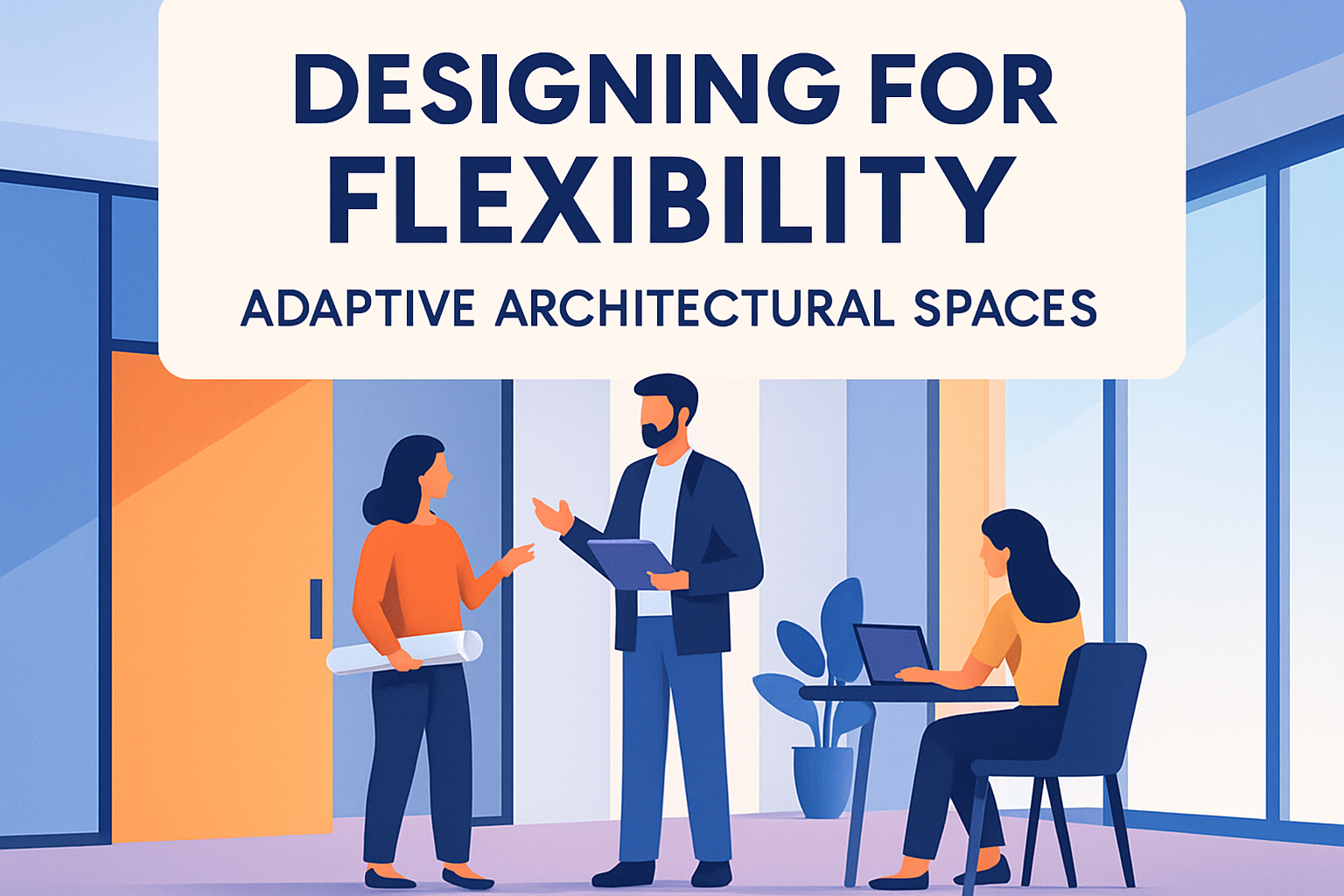
A prime example of flexible design in action can be seen in modern workspaces, where open floor plans invite adaptability. Consider a tech startup office with spaces designed to shift from collaborative workstations to private meeting areas with the change of lightweight partitions or movable furniture. This flexibility not only maximizes space efficiency but also ensures that the environment can adapt to the company’s evolving needs.
Achieving this level of adaptability often involves using modular elements that can be easily rearranged or repurposed. These include movable walls, adjustable lighting, and multifunctional furniture. By integrating such features into the architectural design, spaces become inherently capable of transformation, catering to a variety of functions with minimal effort and cost.
Sustainable and Resilient Spaces
Another critical dimension of adaptive architectural spaces is their focus on sustainability and resilience. A sustainable space is one that not only uses resources efficiently but also integrates seamlessly with its natural surroundings. Resilience, on the other hand, refers to a building’s capacity to withstand and recover from adverse conditions.
An excellent real-world example is the Bullitt Center in Seattle, often referred to as the “greenest commercial building in the world.” This building integrates photovoltaic panels, a rainwater capture system, and a composting toilet system to create a self-sustaining environment. The design allows the building to adjust to seasonal changes, optimizing energy use and reducing its carbon footprint.
The Bullitt Center also demonstrates resilience by employing locally sourced materials that withstand local weather conditions and seismic activity. This dual focus on sustainability and resilience not only exemplifies adaptive architecture but also sets a high standard for future designs. It shows that buildings can be made to adapt not just to human needs but also to the ecological and climatic conditions in their locales.
User-Centric Design and Adaptive Spaces
User-centric design plays a crucial role in adaptive architecture. At its heart, it involves tailoring spaces to the needs and behaviors of their users. Adaptive spaces that prioritize user-centric design are capable of increasing the comfort, productivity, and well-being of their occupants by creating an environment that responds directly to their requirements.
Take, for instance, smart home technologies that allow homeowners to control their environment in real time. Through integrations like smart thermostats, automated lighting systems, and voice-controlled assistants, homes become adaptive spaces. They adjust to occupants’ needs, whether it’s modifying temperature settings to reduce energy consumption or changing the lighting based on the time of day or mood.
By placing the user at the center of design, architects ensure that spaces are not only functional but also enjoyable and efficient. This approach leads to environments that foster positive interactions, enhance user satisfaction, and ultimately contribute to a better quality of life for those who interact with them.
Technological Integration in Adaptive Design
Technology plays a pivotal role in enabling adaptive architectural spaces. Through the integration of advanced technologies, buildings can achieve unprecedented levels of dynamism and responsiveness. These technological advancements include IoT devices, AI-driven building management systems, and real-time data analytics, which work together to create smart, adaptive environments.
One striking example is the Edge building in Amsterdam, which is recognized as one of the smartest buildings globally. It utilizes a comprehensive network of IoT devices to monitor and manage everything from lighting and climate control to space usage and energy efficiency. The building ’learns’ from the data it collects, helping optimize operations and reduce energy consumption.
- Automated climate control
- Real-time energy monitoring
- IoT-enabled maintenance systems
- User preference learning algorithms
The Edge showcases how technology not only supports the adaptability of spaces but also enhances their performance and sustainability. This technological integration ensures that buildings remain relevant and efficient, adapting fluidly to user needs and environmental conditions.
Community-Oriented Adaptive Spaces
Adaptive architecture often extends beyond individual buildings to encompass entire communities. Community-oriented adaptive spaces are designed to address collective needs, fostering social interaction, and enhancing community cohesion. These spaces adapt to the dynamic requirements of community life, providing flexible recreation, learning, and social interaction areas.
A prominent example is the transformation of the High Line Park in New York City. Originally a disused railroad track, it has been transformed into an elevated green park that adapts to the inhabitants’ needs. Featuring walkways, seating areas, and gardens, the park provides a multifunctional space that accommodates concerts, art installations, and wellness activities among others.
Through adaptive design, the High Line demonstrates how spaces can be reshaped to promote social well-being and community interaction. Such spaces serve as vital communal hubs, contributing to the social fabric and vitality of urban environments.
Challenges and Future Prospects
While the benefits of adaptive architectural spaces are clear, several challenges present themselves in their implementation. Designing adaptive spaces requires significant investment in initial planning, materials, and technology. This can be a hindrance for projects with limited budgets. Furthermore, the integration of advanced technology raises concerns about security and privacy, necessitating careful management to guard against unauthorized data breaches and intrusions.
Nevertheless, the continuous evolution of technology is likely to make adaptive architectural solutions more accessible and cost-effective in the future. Advances in building materials, energy systems, and digital innovations promise to make adaptability a standard feature of architectural design. As these technologies become more ubiquitous and affordable, a broader spectrum of projects will be able to leverage adaptive design principles, making adaptive spaces the norm rather than the exception.
Conclusion: Embracing Adaptive Design
The key takeaway from exploring adaptive architectural spaces is that adaptability is not just a desirable architectural feature but rather an essential one. Adaptive design approaches provide the flexibility, resilience, and user-centricity necessary to meet the rapidly changing demands of the modern world. By prioritizing sustainable and technologically integrated solutions, adaptive architecture offers a viable pathway to creating viable, future-proof spaces that benefit individuals and communities alike.
For architects, urban planners, and developers, the call to action is clear: embrace adaptive design strategies to foster environments that are not only architecturally innovative but also contribute positively to the environment and society. By investing in adaptive solutions today, we can create spaces that respond dynamically to the challenges of tomorrow, ensuring that our built environments stay relevant, sustainable, and beneficial for generations to come.
Frequently Asked Questions
1. What are adaptive architectural spaces?
Adaptive architectural spaces are redefining the traditional concept of buildings by integrating flexibility and sustainability into design. These are spaces specifically designed to adjust and transform according to environmental conditions, user needs, and technological advancements. Imagine a building that can alter its layout or even its usage throughout the day depending on how the space is being utilized. For example, a workspace might transform into a communal area for events in the evening. The core idea is to enhance functional utility amidst various changes while also being eco-friendly. Not only does this help in optimal space utilization, but it also ensures that the building remains relevant and functional over a long period. Adaptive architecture takes a proactive role in responding to challenges posed by urbanization and resource limitations, crafting environments that genuinely meet the dynamic demands of modern life.
2. Why is designing for flexibility important in urban environments?
In today’s framework of architecture and urban planning, designing for flexibility plays a pivotal role for several reasons. First and foremost, urban areas are experiencing a rapid influx of population, leading to increased demands for residential, commercial, and public spaces. By adopting flexible designs, city planners can maximize the functionality of spaces while ensuring that they remain adaptable for future needs. This ability to transform spaces can significantly alleviate concerns related to space constraints, as buildings can fulfill multiple roles throughout their lifecycle. Furthermore, adaptive architecture promotes sustainability by reducing the need for new constructions or major renovations, conserving resources, and minimizing waste. It allows for more efficient use of land and materials, which reduces the carbon footprint associated with the construction industry. On a community level, flexible architectural designs contribute to creating vibrant spaces that support diverse activities, fostering inclusivity while enhancing the overall quality of urban life.
3. How can technology be integrated into adaptive architectural spaces to enhance their effectiveness?
Technology acts as the backbone in advancing the capabilities of adaptive architectural spaces. By leveraging modern technological solutions, architects can design buildings that seamlessly respond to a variety of stimuli. For instance, smart building systems can employ sensors to adjust lighting, temperature, and ventilation based on occupancy and climatic conditions. Moreover, the integration of IoT devices allows for real-time data collection and analytics, optimizing the building’s environmental performance and user experience. Think about a workspace equipped with smart walls capable of shifting their position to create new configurations, or a home that can adapt energy consumption habits based on the occupant’s preferences and schedules. Additionally, cutting-edge technologies such as augmented reality (AR) and virtual reality (VR) provide architects with tools for immersive design experimentation, enabling highly customized and adaptable environments. The cooperation between architecture and technology not only increases the adaptability and efficiency of buildings but also ensures that spaces evolve in tandem with emerging tech trends.
4. What challenges might architects face when designing adaptive spaces, and how can they be addressed?
While adaptive architecture presents numerous benefits, architects might confront several challenges throughout the design and implementation process. One significant hurdle is the complexity of integrating technological systems with traditional construction methods, especially as they relate to existing infrastructures. Successfully achieving a cohesive balance can be technically demanding and may require close collaboration with engineers and IT specialists. In addition, ensuring user-friendliness of adaptable features is paramount; spaces that change should do so intuitively without causing confusion or inconvenience to the occupants. This requires careful user-centered design approaches, often involving feedback loops with the end user during the design phase. Financial constraints also present a challenge, as the initial investment for adaptive technologies may be higher compared to conventional construction. Mitigating these costs can involve sourcing sustainable materials and leveraging prefabricated modular systems that reduce both time and financial expenditure. Finally, architects must remain mindful of regulatory compliance and long-term maintenance requirements to ensure that adaptive spaces not only meet safety standards but can endure stressors over time.
5. How can adaptive architecture contribute to sustainability?
Adaptive architecture plays a critical role in propelling structures toward sustainability by promoting the efficient use of resources and reducing environmental impact. At its core, this approach encourages the sharing and multipurpose use of spaces, reducing the need for multiple buildings and consequently lowering material consumption. These designs often utilize renewable resources and sustainable construction practices, such as energy-efficient systems, materials sourced from eco-friendly suppliers, and reducing waste through modular and precise fabrication techniques. Additionally, adaptive buildings often incorporate green technologies like solar panels, rainwater harvesting systems, and green roofs, which help reduce the energy footprint. As buildings can evolve over time to meet new requirements without major renovations, this approach prolongs the utility and the life span of infrastructure, limiting the need for new constructions and the depletion of natural resources. Moreover, by maintaining a focus on the user and environmental adaptability, adaptive architecture complements broader sustainability goals, eventually fostering healthier, more resilient communities.