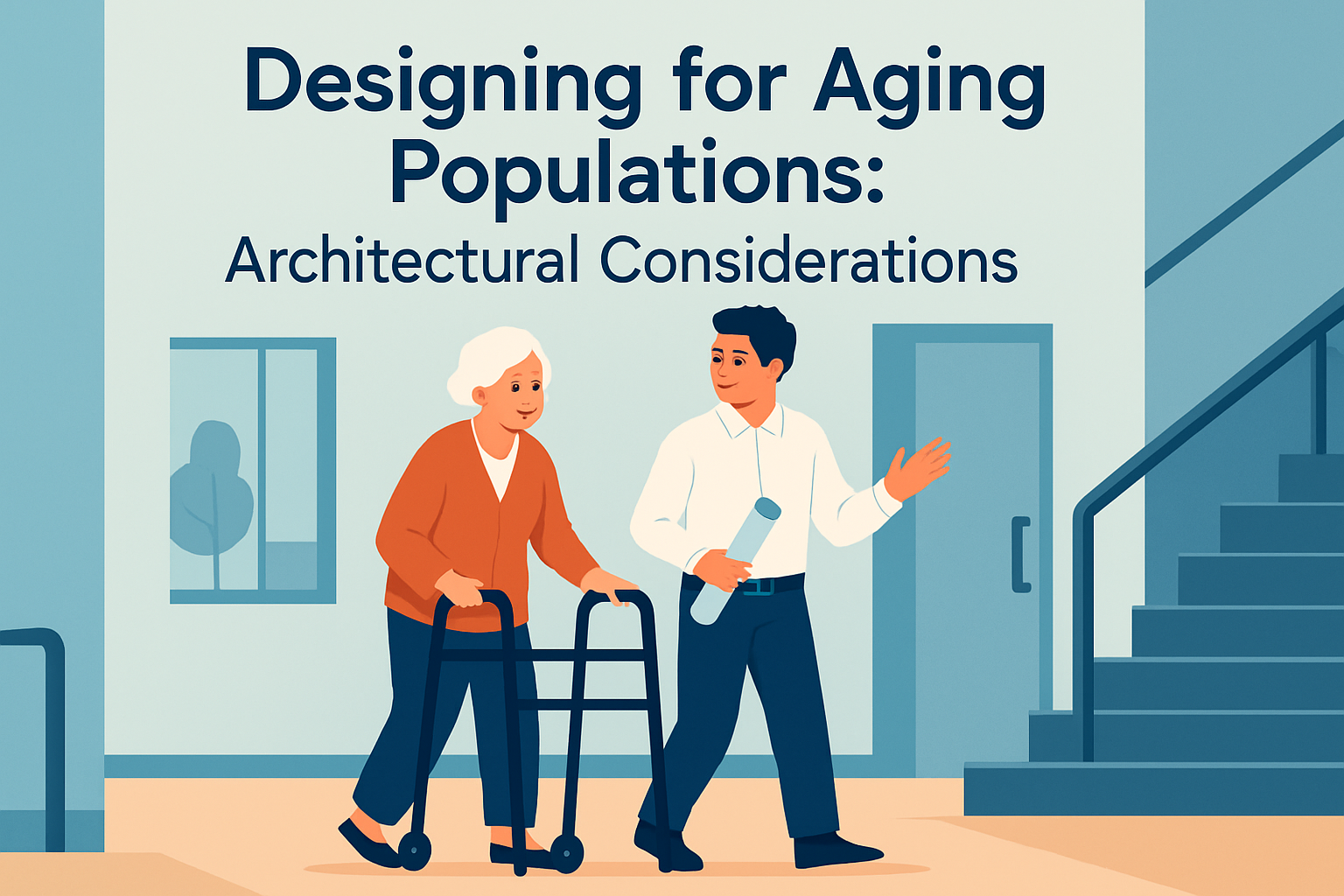
As the global population continues to age, architects and designers are increasingly challenged to create environments that accommodate the unique needs of older adults. Understanding the specific requirements and preferences of the aging population not only enhances their quality of life but also ensures their safety, comfort, and independence. This article outlines fundamental architectural considerations that should be prioritized when designing for aging populations, highlighting why these considerations are vital in today’s society.
Demographic trends indicate that the number of individuals aged 65 and older is expected to increase significantly in the coming decades. This shift underscores the importance of designing spaces that are elderly-friendly. Key terms such as “universal design”, “accessibility”, and “age-in-place” play crucial roles in this context. Universal design refers to creating buildings that are accessible to all people, regardless of age or ability, without the need for adaptation or specialized design. Accessibility ensures that environments provide ease of movement, reach, and operation. Age-in-place, a term increasingly used in modern discussions, signifies the ability of older individuals to live in their own homes and communities safely, independently, and comfortably, regardless of age, income, or ability level.
The significance of incorporating these concepts into architectural design cannot be overstated. Designing with the aging population in mind enhances the wellbeing of elderly individuals, minimizes the risk of accidents, and can delay or prevent the need for costly assisted living facilities. This not only benefits the individuals and their families but also alleviates the strain on healthcare and social systems. By thoughtfully integrating accessible and supportive design features into residential, institutional, and public spaces, architects can make meaningful contributions to society.
Principles of Universal Design
Universal design is a cornerstone of creating environments that accommodate aging populations. Its principles provide guidelines for creating spaces that are intuitive and accessible to people of all ages and abilities. For example, the principle of “equitable use” ensures that designs are useful and marketable to people with diverse abilities. In a real-world setting, this principle can be seen in the construction of a municipal library where book stacks are reachable by individuals in wheelchairs, and computer stations are adjustable for both seated and standing positions.
Another principle, “flexibility in use,” encourages designs that accommodate a wide range of individual preferences and abilities. An instance of this is a kitchen with adjustable countertops and cabinets that can be customized to different heights, allowing users to perform tasks comfortably whether they are standing or seated. Such innovations serve as practical applications of universal design, supporting users’ independence and ease of access.
Accessibility in Public Spaces
Public spaces must be accessible to individuals of all abilities, particularly as populations age. Accessibility in urban and suburban infrastructure can drastically improve the day-to-day lives of older adults. For example, a city’s public transportation system that incorporates audio announcements and visual displays ensures that all passengers, regardless of hearing or visual impairments, are informed of upcoming stops and route changes.
Real-world examples like the design of New York City’s subway system aim to enhance accessibility, with features such as elevators at key stations, tactile guide paths for visually impaired users, and priority seating for older adults and individuals with disabilities. By integrating these elements, cities not only comply with legal requirements but also foster a more inclusive environment.
Residential Communities and Age-In-Place
Designing residential spaces with age-in-place in mind allows older adults to maintain their independence in familiar environments. This approach focuses on creating homes that can adapt to the changing needs of their inhabitants. Features such as step-free entries, single-story layouts, and lever-style door handles instead of knobs are simple yet effective ways to enhance accessibility within homes.
The famous Florida-based retirement community, The Villages, exemplifies age-in-place concepts at a larger scale. It offers homes specifically designed for older adults, featuring supportive home environments alongside community amenities like fitness centers, medical facilities, and social clubs. This promotes an active and engaging lifestyle while ensuring that healthcare services are readily accessible.
Enhancements in Healthcare Facilities
Healthcare facilities, such as hospitals and rehabilitation centers, often cater predominantly to older adults. Therefore, incorporating aging-friendly design is critical in these settings. Features such as spacious hallways, non-slip flooring, and clearly visible signage significantly enhance navigability and safety for older patients.
For instance, the Cleveland Clinic has implemented a strategic design where patient rooms are equipped with better lighting, easy-to-use communication systems, and wheelchair-friendly bathroom facilities. These thoughtful design choices are crucial in fostering a supportive healthcare environment and demonstrating an institutional commitment to the needs of aging patients.
| Design Principle | Description | Example |
|---|---|---|
| Equitable Use | Designs useful to diverse abilities | Accessible library stations |
| Flexibility in Use | Accommodates preferences and abilities | Adjustable kitchen countertops |
| Simple and Intuitive Use | Easy to understand, regardless of experience | Clear subway system signage |
Technology Integration
Advancements in technology provide new opportunities to enhance designs for aging populations. Smart home technologies, like voice-activated assistants and home automation systems, can significantly improve the safety and convenience of living environments for older adults. These technologies ensure that tasks such as adjusting lighting, controlling heating, and managing home security are accessible without physical strain.
A practical example is the use of smart thermostats, which allow residents to easily control home environments through voice commands. This not only offers energy-saving benefits but also provides elder residents with a sense of control and security over their living conditions. By incorporating technology into architectural design, architects and designers can further support the autonomy and safety of older populations.
Outdoor Spaces and Recreational Areas
Designing outdoor spaces that cater to aging populations can greatly enhance quality of life and promote physical activity. Parks with smooth walking paths and ample resting areas, for instance, encourage exercise and social interaction among older adults. It is also essential to consider the accessibility of facilities, such as wide, flat park entrances and easily navigable paths.
An example of successful outdoor design is found in the urban parks of Copenhagen, where pathways are designed to be free of obstacles, ensuring safe passage for wheelchairs and mobility scooters. Additionally, the inclusion of exercise stations tailored for older users helps promote a healthy lifestyle and community engagement.
Conclusion and Call to Action
In summary, designing for aging populations requires a thoughtful approach that considers universal design principles, accessibility, and adaptability in residential, public, and healthcare environments. Architects and designers must prioritize these considerations to create spaces that support safety, independence, and quality of life for older adults. By implementing user-friendly and inclusive designs, we can significantly improve the lives of aging individuals and contribute to a more equitable society.
As a reader, consider how these architectural considerations can be applied to your own community or projects. Advocate for environments that accommodate all ages and abilities and collaborate with stakeholders to prioritize the needs of aging populations. By doing so, we can ensure that society is prepared to meet the challenges posed by an aging demographic and create a world that is welcoming and supportive for everyone.
Frequently Asked Questions
1. What are the key architectural considerations when designing spaces for aging populations?
Designing spaces for older adults involves several pivotal considerations to promote safety, comfort, and independence. Key factors include accessibility, safety, lighting, and sensory experiences. Accessibility is paramount, ensuring that spaces accommodate mobility aids like wheelchairs and walkers, with features such as wide doorways, ramps, and level surfaces to prevent falls. Safety enhancements include installing grab bars, slip-resistant floors, and clearly marked exits to accommodate those with impaired vision or mobility.
Lighting is another critical factor; it’s essential to balance natural and artificial light to reduce glare and shadows that can cause disorientation or accidents. Ensuring appropriate sensory experiences through color contrasts, textures, and auditory signals can also help in navigation and cognitive recognition. Comfortable temperature control and easy access to amenities are further considerations to enhance livability. Together, these elements foster environments that are adaptable to the aging process, promoting autonomy for as long as possible.
2. How can architectural designs promote independence among older adults?
Architectural designs can significantly foster independence by creating environments that enable aging individuals to perform daily activities without assistance. One approach is to integrate assistive technology within the home environment, such as voice-command systems to control lighting, temperature, and security. Adaptable bathrooms with roll-in showers and height-adjustable fixtures support privacy and self-care.
The layout of living spaces should also be intuitive, with a logical flow to encourage maneuverability. Open floor plans minimize barriers and allow for easy navigation, while strategically placed handrails offer additional safety without being obtrusive. Furthermore, providing space for personal hobbies or social gatherings within the design encourages older adults to remain active and engaged. By focusing on user-friendly and empowering design, architects can create settings that prolong independence and improve quality of life.
3. Why is lighting so crucial in environments for older adults, and what strategies should be employed?
Lighting plays a vital role in environments designed for older adults due to the eye’s natural aging process. As individuals age, they often require more light for daily activities, and their eyes become more sensitive to glare. Therefore, a well-thought-out lighting plan can significantly enhance safety, comfort, and mental well-being.
Strategies include maximizing natural daylight with large windows and skylights, which not only improves visibility but also supports circadian rhythms. Artificial lighting should be evenly distributed, with dimmable options allowing for adjustments based on the time of day or task at hand. Installing ample task lighting in areas such as kitchens, reading nooks, and bathrooms can aid in performing specific activities.
Moreover, avoiding harsh contrasts in lighting levels reduces the risk of falls and confusion. Nightlights or motion-sensor lights can also provide a secure path for nighttime navigation. Overall, thoughtful lighting design addresses visual comfort and enhances the overall environment’s functionality for older adults.
4. How do materials and finishes impact the safety and comfort of spaces for aging populations?
The choice of materials and finishes is crucial when designing for aging populations, impacting both safety and comfort. Non-slip flooring materials such as textured vinyl or rubber provide traction and help prevent falls, which is a significant concern for older adults. Soft yet durable materials can cushion falls and add comfort underfoot while remaining easy to clean and maintain.
Using non-reflective surfaces helps minimize glare, which can be disorienting and hazardous, especially for those with impaired vision. Acoustic considerations are also essential; materials that absorb sound can mitigate noise, creating a more restful and less stressful environment. Additionally, rounded edges on furniture and countertops reduce the likelihood of injury from bumps or falls.
Moreover, selecting hypoallergenic and non-toxic materials improves air quality, an essential factor for respiratory health. Ultimately, the thoughtful selection of materials and finishes ensures that spaces are not only functional but also pleasant and supportive for aging individuals.
5. What role does outdoor space play in architectural designs for older adults?
Outdoor spaces are incredibly beneficial and should be integral to architectural designs for older adults due to their positive impact on physical health, mental well-being, and social connectivity. Outdoor areas encourage physical activity, which can enhance mobility, reduce the risk of chronic diseases, and promote overall wellness. Features such as walking paths, landscaped gardens, and sitting areas motivate older adults to enjoy the fresh air and sunlight.
Gardens can be particularly therapeutic, offering a sensory-rich environment with opportunities for gardening activities that are both meditative and physically engaging. Moreover, communal outdoor spaces, designed with comfortable seating and shade, encourage social interaction, reducing feelings of isolation and loneliness among older adults.
Careful consideration of accessibility in these areas is crucial, with level terrain, ample seating, and clear pathways ensuring that outdoor spaces are welcoming for those using mobility aids. By integrating well-designed outdoor spaces, architects enhance the holistic well-being of older adults, making them an indispensible component of age-friendly environments.