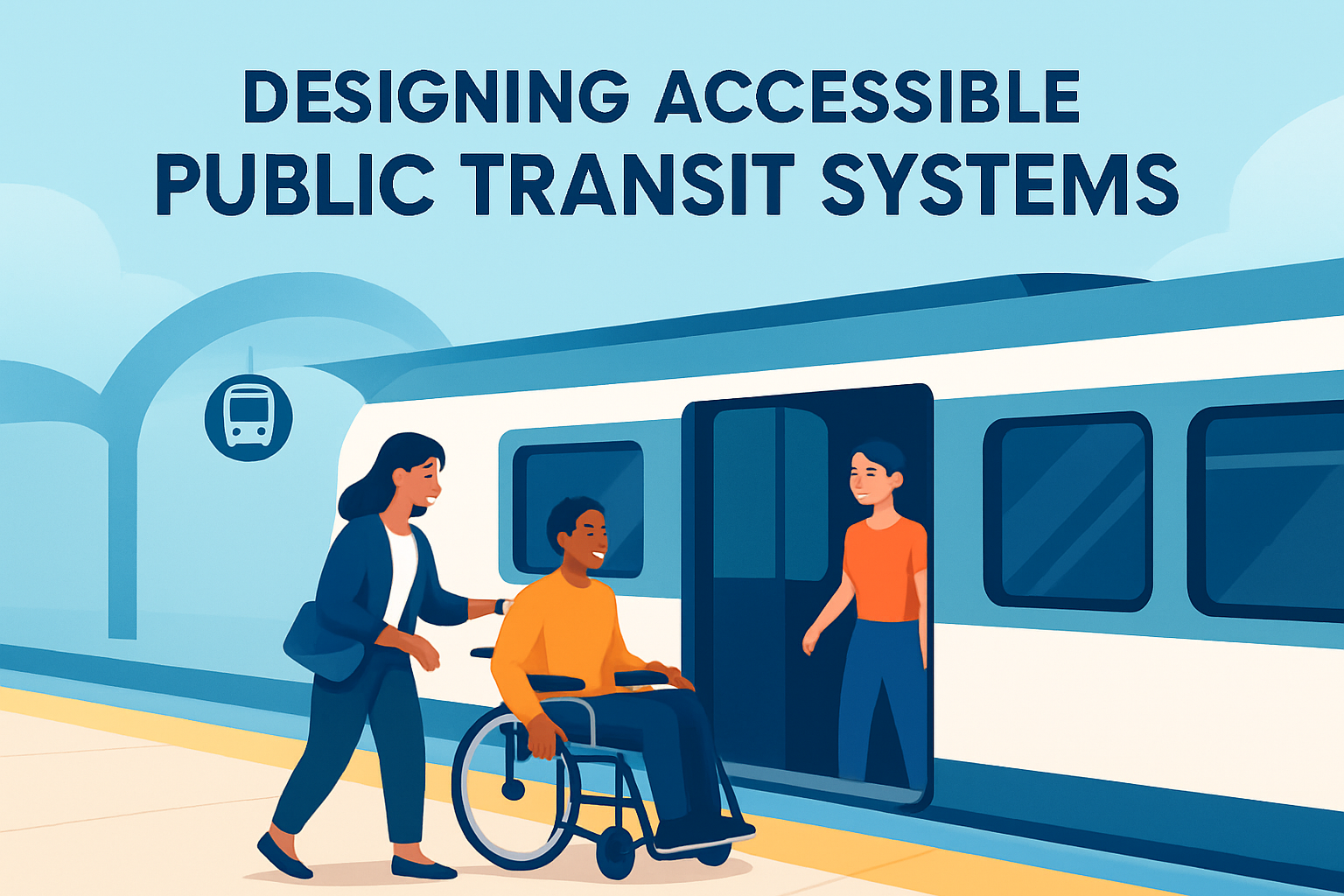
Designing accessible public transit systems is one of the clearest tests of whether a city serves all residents, not only the people who move, see, hear, think, and pay in conventional ways. Accessibility in transit means buses, trains, stations, sidewalks, ticketing, information, and staff practices are usable by people with disabilities, older adults, parents with strollers, travelers carrying luggage, and riders with temporary injuries. In practice, that includes step-free routes, audible and visual announcements, readable signs, predictable wayfinding, safe boarding gaps, equitable fares, and service design that respects different cognitive and sensory needs. When I have audited stations and bus corridors, the most common failure has never been a single missing ramp; it has been a broken chain of access where one obstacle makes an otherwise modern system unusable.
Accessible public transportation matters because access to mobility determines access to work, education, healthcare, and civic life. The World Health Organization estimates that more than 1.3 billion people live with significant disability worldwide, and populations are aging in most major economies. That means universal design is not a niche compliance exercise. It is core infrastructure planning. In the United States, the Americans with Disabilities Act sets baseline obligations for transit providers; in the United Kingdom, the Equality Act and Public Service Vehicle Accessibility Regulations shape requirements; internationally, the UN Convention on the Rights of Persons with Disabilities frames accessible transport as a rights issue. The best systems treat those standards as a floor, then design for dignity, reliability, and independence from the start.
A well-designed accessible transit system answers practical questions directly: Can I get from curb to platform without help? Will I know when my stop is coming if I cannot see the screen or hear the speaker? Can I buy a ticket without standing in a long line or navigating a confusing touchscreen? If an elevator fails, is there a clearly communicated alternative route? These are the questions riders ask, and they should guide planning, procurement, operations, and maintenance. Cities that get this right build stronger ridership, reduce paratransit pressure, and improve the experience for everyone.
Start with universal design, not retrofits
The strongest accessible transit systems are built around universal design, a framework that creates environments usable by the broadest possible range of people without requiring special adaptation. In transit, that means integrating access at the concept stage rather than adding accommodations after engineering decisions are locked in. I have seen agencies spend millions retrofitting elevators, warning strips, and stop announcements that would have cost far less if specified early. Universal design in stations usually includes level entries, wide fare gates, tactile walking surface indicators, non-glare lighting, high-contrast signs, and clear circulation paths free of visual clutter.
On vehicles, design details matter just as much. Low-floor buses reduce dwell time and support faster boarding for wheelchair users, older passengers, and parents with strollers. Rail cars need consistent door positions, priority seating with grab rails, slip-resistant flooring, and spaces that accommodate mobility devices without forcing riders to block aisles. Boarding gaps and platform heights must be controlled tightly; even a system with elevators and ramps can fail if horizontal and vertical gaps are unsafe. Agencies such as Transport for London and the Washington Metropolitan Area Transit Authority have shown that standardizing platform interface details and stop layouts improves both safety and operational consistency.
Universal design also applies to cognitive accessibility. Riders should not need to decode a maze of exceptions, hidden rules, and inconsistent maps. Route numbering, line colors, transfer logic, and ticketing language should follow predictable patterns. Plain language matters. A sign that says “Use west concourse for accessible egress to street level” is less effective than “Elevator to street this way.” Consistency across the network is what makes a system learnable.
Make the entire passenger journey step-free and legible
Accessible transit is a door-to-door journey, not a vehicle feature. A station with elevators is still inaccessible if the sidewalk to the entrance has missing curb ramps, broken pavement, or unsafe crossings. The passenger journey starts at trip planning and ends at the final destination. Designers should map every link: walking approach, station entry, fare purchase, vertical circulation, platform waiting area, boarding, in-vehicle travel, alighting, transfer, and onward travel. Each link needs an accessible path that is obvious, continuous, and dependable.
Wayfinding is where many systems underperform. Good wayfinding combines hierarchy, repetition, and redundancy. Hierarchy means the most important information is easiest to spot: line, direction, platform, and exits. Repetition means key decisions are confirmed before and after turning points. Redundancy means the same message is available visually, audibly, and physically through tactile cues. New York City’s ongoing accessibility improvements, for example, rely not only on elevator installations but also on better signage, digital status information, and station staff training because riders need confidence before they travel, not only once they arrive.
Reliability is part of legibility. If elevators fail frequently, riders cannot trust the network. Agencies should publish real-time elevator and escalator status in apps, on websites, and at station entrances, then provide alternative routing automatically. Maintenance targets should be treated as customer service metrics, not back-of-house engineering indicators. In every audit I have participated in, riders ranked outage communication almost as important as the repair itself because uncertainty can strand people or force expensive last-minute detours.
Design information systems for visual, auditory, and cognitive access
Information accessibility is as important as physical accessibility. A rider who cannot interpret schedules, hear announcements, or understand disruption notices does not have equal access. Best practice is multimodal communication: every critical message should appear in at least two formats, usually visual and audible, supported where possible by tactile or digital options. On platforms and vehicles, stop announcements should be automatic, synchronized, and easy to hear. Visual displays should use high contrast, mixed case text, legible fonts, and sufficient dwell time so riders are not forced to read at unreasonable speed.
Digital channels need the same discipline. Transit websites and mobile apps should follow WCAG standards, especially around screen reader compatibility, keyboard navigation, color contrast, and clear error messages. Journey planners should allow riders to filter for step-free routes, limited walking, elevator availability, and transfer complexity. This is not a luxury feature. For many riders, it is the difference between independent travel and not traveling at all. Agencies such as Transport for New South Wales and Bay Area Rapid Transit have improved rider confidence by making disruption alerts, elevator advisories, and platform changes available in accessible digital formats.
Cognitive accessibility deserves direct attention. Use plain language, avoid unexplained icons, and keep emergency instructions short and action-oriented. During incidents, staff should be trained to give one instruction at a time and verify understanding. Color should support, not carry, meaning on its own, since some riders are color-blind. Maps should prioritize decisions riders actually need to make rather than every operational detail engineers find interesting.
Operations, staff training, and maintenance determine real accessibility
Even the best capital design fails without disciplined operations. Accessibility is delivered daily by operators, dispatchers, station managers, cleaners, and maintenance teams. Bus operators need training on kneeling functions, ramp deployment, securement policies, and respectful communication. Rail staff need to know boarding assistance protocols, elevator fallback routes, and emergency evacuation procedures for riders with mobility, sensory, or cognitive disabilities. The most effective training programs include disabled people as paid trainers because lived experience exposes friction points that manuals miss.
Maintenance is not secondary work; it is the backbone of an accessible transit system. Elevators, ramps, tactile surfaces, hearing loops, annunciators, and platform displays require preventive maintenance schedules and spare-parts planning. A broken lift is not a minor defect. It is a service denial. Agencies should classify accessibility assets as critical equipment, set strict mean time to repair targets, and report performance publicly. When I review transit scorecards, the agencies making the fastest gains are usually the ones that assign executive accountability to accessibility reliability rather than treating it as a compliance office issue.
| Transit element | Common failure | User impact | Best-practice response |
|---|---|---|---|
| Elevators | Frequent outages | Riders stranded or forced to reroute | Real-time alerts, redundancy, rapid repair contracts |
| Bus ramps | Operator inconsistency or mechanical faults | Denied boarding | Routine inspections, refresher training, incident audits |
| Announcements | Low volume or missing stop calls | Missed stops and anxiety | Automated synchronized audio and text displays |
| Wayfinding | Inconsistent signs | Confusing transfers | Network-wide sign standards and user testing |
| Ticket machines | Touchscreens only or poor height placement | Independent purchase blocked | Accessible controls, audio guidance, cash and contactless options |
Service planning also affects accessibility. Excessively tight transfer windows, long walking connections, and unreliable headways penalize riders who need more time. Accessible scheduling should include realistic transfer allowances, platform staffing at complex interchanges, and accessible substitute service during planned works. If a line closes and the replacement bus is not wheelchair accessible, the agency has not provided continuity of service.
Use data, standards, and co-design to improve continuously
Accessible public transit systems improve fastest when agencies combine formal standards with direct rider input and operational data. Standards provide consistency: ADA guidance, ISO principles, local building codes, and transit design manuals define baseline dimensions and performance criteria. Data reveals where the lived experience diverges from the specification. Useful measures include elevator uptime, ramp failure rates, denied boarding incidents, complaint categories, transfer success rates, stop announcement accuracy, and the share of stations with step-free access. These metrics should be published in dashboards and reviewed the same way agencies review on-time performance and safety incidents.
Co-design is essential. Accessibility decisions made without disabled riders often solve the wrong problem. I have seen agencies invest in expensive interface redesigns while ignoring the fact that the most urgent issue was poor bus stop placement near hospitals and social service offices. Co-design means involving wheelchair users, blind and low-vision riders, Deaf and hard-of-hearing passengers, neurodivergent travelers, and older adults from concept through testing. Pay participants for their time, run site walks, prototype signage, and test ticketing flows under real conditions. The result is usually simpler and more robust than assumptions made in conference rooms.
Technology can help, but only when it supports resilient service. Beacons, indoor navigation, account-based ticketing, and AI-powered trip planning are useful if they complement physical design rather than replace it. A smartphone app cannot compensate for a missing curb ramp or a silent platform change. The winning strategy is layered accessibility: physical access, clear information, trained staff, dependable maintenance, and responsive feedback loops. Cities that follow this model build transit systems people can trust every day, not only in ideal conditions.
Designing accessible public transit systems requires agencies to think beyond compliance checklists and focus on the full rider experience. The essentials are clear: apply universal design from the beginning, create a continuous step-free journey, communicate every important message in multiple formats, and treat operations and maintenance as core accessibility work. When these elements align, transit becomes easier to use for disabled riders, older adults, families, visitors, and daily commuters alike.
The broader benefit is not only inclusion, though that is reason enough. Accessible transit improves reliability, reduces confusion, shortens boarding times, and expands the number of people who can choose buses and trains over private cars. That strengthens equity, economic participation, and environmental goals at the same time. The agencies that lead on accessibility usually lead on customer experience because they design for real human variation instead of an imagined average passenger.
If you are planning, upgrading, or managing a transit network, audit the journey end to end and fix the broken links first. Measure elevator uptime, review stop announcements, test ticket machines with assistive technology, and invite disabled riders into every design decision. Accessible public transportation is not a special feature. It is the standard a modern city should build toward now.
Frequently Asked Questions
What does accessibility in public transit actually include?
Accessibility in public transit includes far more than adding a wheelchair ramp to a bus or elevator to a station. A truly accessible system is designed so that people with different physical, sensory, cognitive, and financial needs can complete an entire trip safely, independently, and with dignity. That means accessible sidewalks leading to stops, curb ramps, step-free entrances, elevators that work reliably, boarding platforms aligned with vehicles, priority seating, secure spaces for mobility devices, and restrooms that meet accessibility standards where applicable.
It also includes communication and information design. Riders need clear signage, high-contrast wayfinding, audible stop announcements, visual display boards, accessible websites and mobile apps, readable maps, and ticket machines that can be used by people with low vision, limited dexterity, or cognitive disabilities. Staff practices are equally important. Operators, station attendants, and customer service teams should be trained to assist respectfully, communicate clearly, and respond appropriately when accessibility features fail. In other words, transit accessibility is not a single feature. It is a system-wide commitment that supports older adults, people with disabilities, parents with strollers, travelers with luggage, and anyone whose mobility or attention may be temporarily limited.
Why is accessible transit so important for cities and communities?
Accessible transit is essential because it determines who can participate fully in city life. When public transportation is easy to use for people with disabilities, older adults, and others with varied needs, it improves access to jobs, schools, healthcare, shopping, social activities, and civic participation. Without accessible options, many people are effectively excluded from everyday opportunities or forced to rely on costly alternatives, family support, or specialized transportation that may be less flexible and less available.
There is also a broader public benefit. Systems designed for accessibility tend to work better for everyone. Step-free boarding helps riders with strollers and luggage. Clear announcements and readable signage help tourists and people unfamiliar with the system. Safer sidewalks and better station layouts reduce confusion and improve the overall rider experience. From an economic perspective, accessible transit expands the customer base, supports workforce participation, and can reduce long-term social costs tied to isolation and unmet care needs. From an equity perspective, it signals that a city values all residents, not just those who move, see, hear, think, and pay in conventional ways. In practical terms, accessible transit is both smart infrastructure and a core public service responsibility.
What are the most important features of an accessible public transit system?
The most important features are the ones that make the full trip chain usable from start to finish. That begins before the rider even boards a vehicle. Sidewalks should be continuous, level, and obstacle-free, with curb ramps, safe crossings, adequate lighting, and sufficient space for wheelchairs and walkers. Bus stops and station entrances should be easy to locate and reach. Once inside, riders need step-free access through ramps, lifts, elevators, or level boarding solutions, along with doors and fare gates wide enough for mobility devices.
Inside stations and vehicles, good accessibility depends on multiple layers working together. Audible and visual announcements help riders who are blind, have low vision, are deaf or hard of hearing, or simply need clearer travel information. Signage should use plain language, strong contrast, and consistent symbols. Ticketing systems should offer multiple ways to pay, including accessible machines, contactless options, and alternatives for people without smartphones or bank cards. Seating, handrails, designated wheelchair spaces, and priority areas should be easy to identify and use. Just as important, accessibility features must be reliable. An elevator that is frequently out of service or a stop announcement system that does not work consistently can make a route effectively inaccessible. Strong maintenance, real-time service alerts, and trained staff are what turn accessible design into dependable daily access.
How can transit agencies make systems more accessible without rebuilding everything at once?
Transit agencies do not need to wait for a full system overhaul to make meaningful accessibility improvements. In many cases, the most effective approach is to prioritize the biggest barriers first and address them through phased, practical upgrades. For example, agencies can improve stop and station access by repairing sidewalks, adding curb cuts, increasing lighting, installing benches, improving shelter design, and making signage easier to read. They can upgrade communication systems by ensuring all vehicles have working audible and visual announcements, publishing plain-language service updates, and making websites and apps compatible with screen readers.
Operational changes can also have a major impact. Staff training in disability awareness, respectful assistance, and communication best practices is often relatively low cost and immediately valuable. Agencies can improve maintenance response times for elevators, lifts, and fare equipment, and they can create transparent reporting systems so riders know when accessibility features are unavailable. Involving disabled riders directly in planning, audits, pilot programs, and feedback sessions is especially important because it reveals barriers that designers and managers may miss. Over time, agencies can pair these quick wins with larger capital investments such as level boarding, station retrofits, and fleet modernization. The key is to treat accessibility as an ongoing priority woven into every budget, procurement decision, and service plan, rather than as a one-time compliance exercise.
How do cities know whether a public transit system is truly accessible?
A transit system is truly accessible when people with a wide range of needs can use it consistently, safely, and independently in real-world conditions, not just in theory or on paper. Compliance with legal standards is important, but it is only a starting point. Cities should evaluate accessibility across the entire rider journey, including trip planning, walking routes, station access, fare payment, boarding, travel information, transfers, and emergency procedures. They should also assess whether accessibility features are dependable day after day. A station may technically have an elevator, but if it is frequently broken, riders are still blocked from using the service.
Good measurement combines infrastructure data with lived experience. Cities and agencies should track metrics such as elevator uptime, lift reliability, stop announcement performance, paratransit integration, complaint resolution times, and the percentage of stations and stops with step-free access. They should also conduct rider testing with disabled people, older adults, and others who face mobility or communication barriers. Surveys, walkthroughs, journey mapping, and accessibility audits can uncover problems that raw statistics miss, such as confusing signage, inconsistent staff support, or ticketing systems that are difficult to understand. The clearest sign of success is whether riders who have historically been excluded can use the network with confidence, predictability, and dignity. If they still have to plan around failure points, rely on assistance, or avoid certain routes altogether, the system still has work to do.