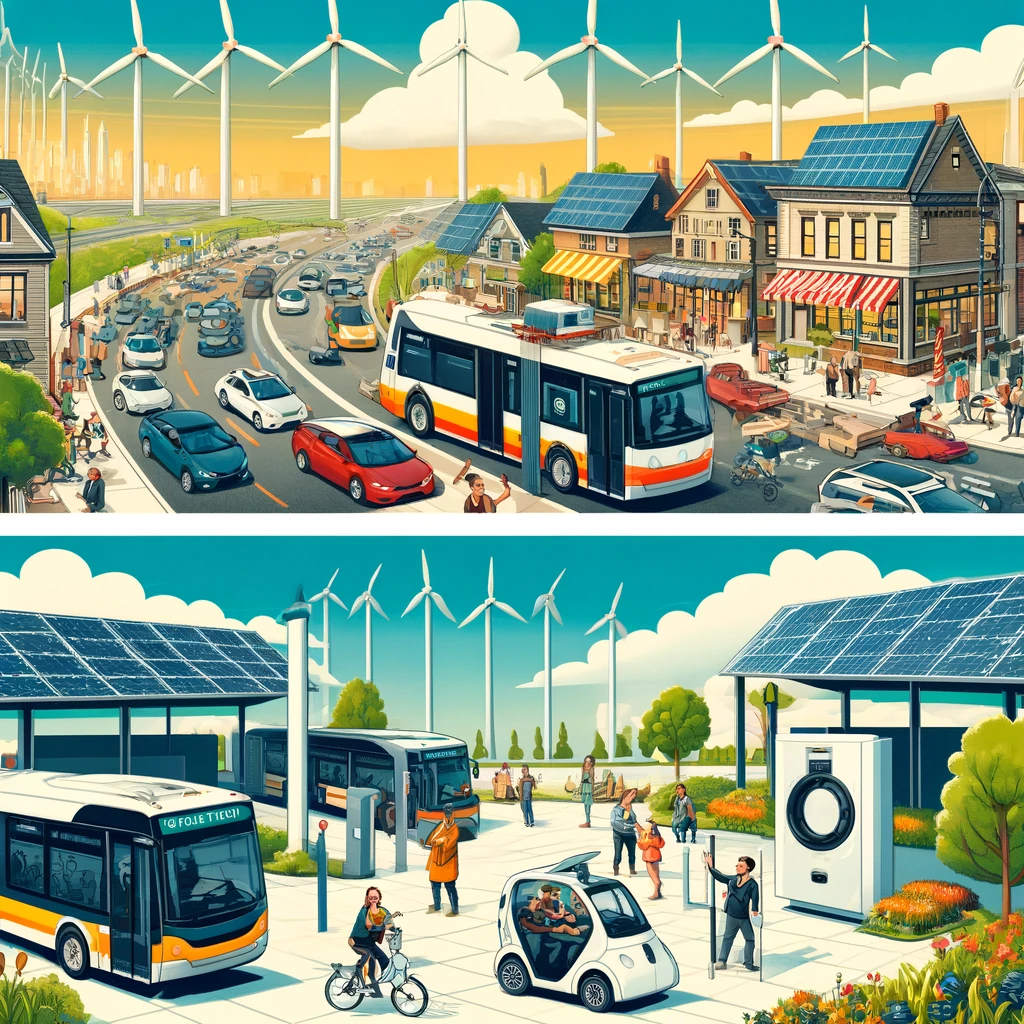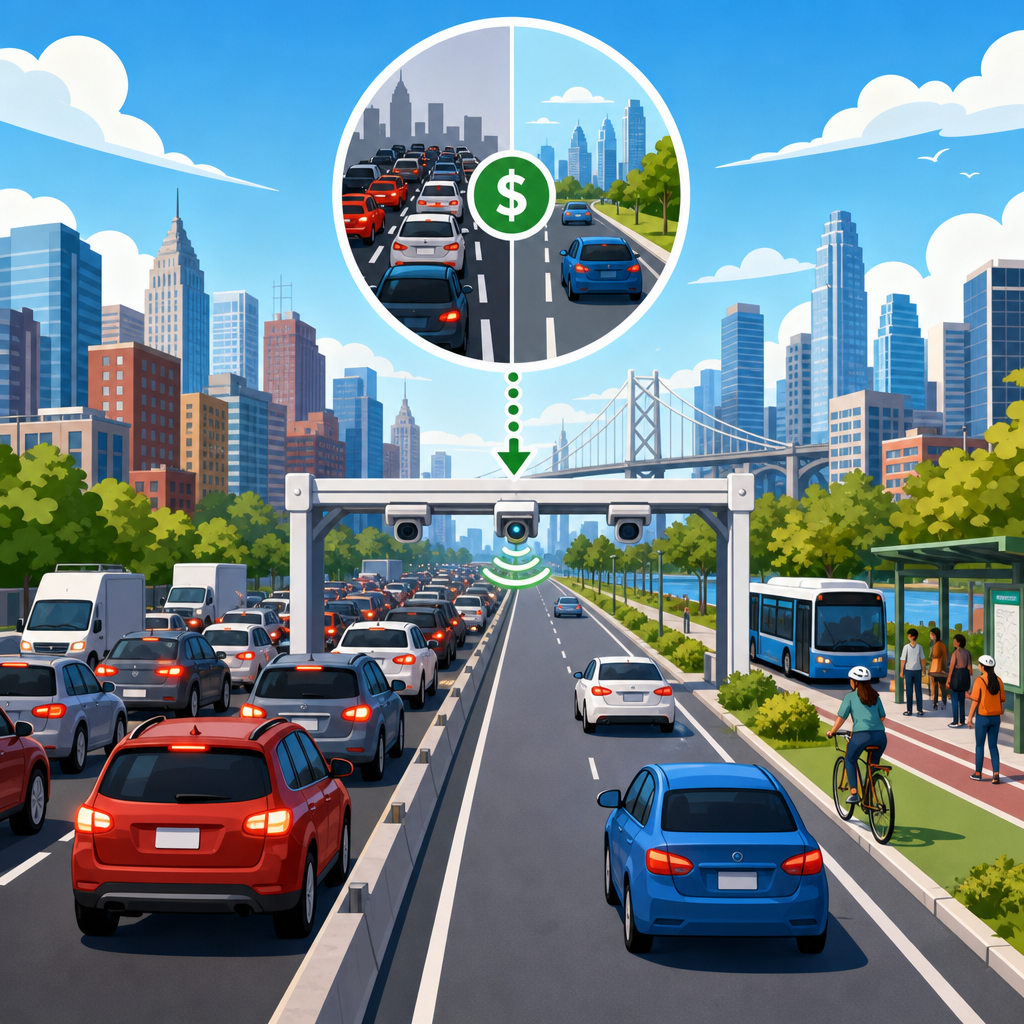
Congestion pricing is a transportation policy that charges drivers a fee to use busy roads in the most crowded places and time periods, with the goal of reducing traffic, improving travel reliability, and funding better transportation options. In practice, the term can describe cordon charges for entering a downtown zone, variable tolls on express lanes, or corridor pricing that rises when demand is high. For U.S. cities, congestion pricing matters because traffic delay is not just an inconvenience; it is a drag on economic productivity, air quality, street safety, and the daily reliability that residents and businesses need. I have worked on urban mobility strategy where the hardest part was never defining the concept, but explaining why charging for scarce road space is often fairer and more effective than pretending the space is free.
The basic economics are straightforward. Road capacity in a dense city is limited, especially at peak times, yet demand is concentrated into narrow windows such as weekday commutes, school drop-offs, freight deliveries, and event traffic. When too many vehicles try to use the same space at once, every trip slows down. A price signal can shift some trips to another time, route, mode, or destination, which relieves delay for the trips that still occur. The policy is best understood as demand management rather than punishment. Drivers already pay for congestion with wasted time, fuel, stress, and unpredictable arrival times; congestion pricing converts some of that hidden cost into a visible fee that can be managed and, ideally, reinvested into public benefits.
U.S. interest in congestion pricing has grown because cities face three pressures at once. First, downtown curb and road space is under strain from ride-hailing, e-commerce deliveries, and growing service traffic. Second, transit systems need stable funding for service, accessibility upgrades, and state-of-good-repair work. Third, climate and public health goals require reducing vehicle emissions in places where exposure is highest. A well-designed program can address all three, but only if officials define the problem precisely, choose the right pricing model, protect low-income travelers, and explain clearly how revenue will be used. That is why this topic deserves a hub article: the details determine whether a program is efficient, politically durable, and publicly trusted.
How congestion pricing works in practice
At a practical level, congestion pricing applies a fee to road use where congestion is worst and where alternatives exist. Cities typically choose one of several structures. A cordon charge applies when a vehicle crosses into a defined zone, as seen in London and Stockholm. Area pricing charges for driving within a district, not just entering it. Dynamic lane pricing, familiar in some U.S. metro areas, changes toll rates in real time to keep traffic moving at target speeds. Distance-based pricing can also be used, though it is more complex administratively. The right model depends on geography, travel patterns, and political goals. A downtown with bridges and tunnels lends itself to charging points. A freeway network may be better suited to priced express lanes.
Technology has made collection much easier than in the era of toll booths. Most modern systems rely on overhead gantries equipped with transponders, cameras for license plate recognition, and back-office systems that match trips to accounts and enforce payment. The critical operational standard is high accuracy with low friction. If account management is confusing, if invoices arrive late, or if error rates are high, public confidence erodes quickly. Agencies also need clear privacy rules governing how trip data is stored, who can access it, and how long it is retained. These are not side issues. In every pricing project I have seen, billing clarity and privacy protections mattered almost as much as the traffic outcome itself.
The strongest programs set measurable objectives before launch. Common goals include reducing vehicle entries into the pricing zone, increasing average travel speed, improving bus reliability, lowering emissions, and raising dedicated revenue for transportation improvements. Without predefined metrics, cities can be pulled into arguments based on anecdotes rather than outcomes. Stockholm is frequently cited because its pilot was paired with rigorous measurement and a referendum after residents saw the results. Traffic entering the inner city dropped significantly, travel times improved, and public support rose after implementation. That sequence matters. Congestion pricing often polls poorly in the abstract but performs better when residents experience shorter, more predictable trips and visible transit investment.
Why U.S. cities are considering it now
American cities have long managed traffic with parking rules, signal timing, and transit investment, yet these tools alone rarely solve peak-period congestion in dense centers. The reason is simple: when road use is underpriced at the exact moment demand exceeds supply, queues form. Expanding road capacity in downtowns is usually infeasible because of cost, land constraints, and induced demand. Cities therefore look to pricing when they need a scalable way to manage scarce street space. New York’s move toward a central business district tolling program brought the issue into the national mainstream, not because the idea was new, but because the scale and visibility made other cities reconsider what had once seemed politically impossible.
The policy case is especially strong where transit networks can absorb shifted trips. In cities with extensive subway, commuter rail, and bus service, a pricing program can encourage mode change without cutting access to jobs. In more auto-dependent metros, the case often begins with managed lanes or corridor pricing rather than a downtown cordon. Either way, pricing is now discussed alongside complete streets, curb management, transit priority, and freight planning as part of a broader urban mobility toolkit. It is not a silver bullet. It works best when paired with practical alternatives such as frequent buses, park-and-ride options, protected bike networks, employer commute programs, and loading management for deliveries.
There is also a fiscal reason for the renewed interest. Transportation agencies face rising construction costs, maintenance backlogs, and uncertain fuel-tax revenue as vehicle efficiency improves. Congestion pricing offers a user-based revenue stream that can be bonded against for capital projects or used directly for operations. The strongest public support usually comes when revenue is clearly dedicated. Voters and drivers are far more receptive when they can point to specific improvements: faster buses on named corridors, station elevators, signal modernization, bridge rehabilitation, or safer intersections near schools. If revenue disappears into a general fund, support weakens and claims of fairness become much harder to defend.
Major benefits and the most credible evidence
The primary benefit of congestion pricing is travel time reliability. Drivers may accept paying for a trip if they know that a twenty-minute journey will not unpredictably become forty-five minutes. Reliability also matters for buses, freight, emergency response, and tradespeople whose schedules depend on consistent travel times. London’s central charging zone reduced congestion in its early years and helped support bus improvements. Stockholm’s congestion tax produced sustained traffic reductions and lower emissions. Singapore, the longest-running example, has repeatedly updated its system to preserve network performance. These cases differ in design, but they share a common lesson: charging for the busiest road space changes behavior measurably when the fee is meaningful and enforcement is credible.
Environmental gains are real but should be described carefully. A pricing program can reduce vehicle miles traveled in the charged area, smooth stop-and-go traffic, and cut local pollutants such as nitrogen oxides and fine particulates. Greenhouse gas benefits depend on the amount of mode shift and route diversion, so cities should model both direct and indirect effects. Safety can improve as well if fewer vehicles enter the most crowded streets and if revenues are invested in safer street design. Still, no city should claim that congestion pricing alone solves climate goals or Vision Zero targets. It is one lever among many. Its value is that it influences demand immediately, unlike major infrastructure projects that take years to deliver.
Another overlooked advantage is better use of street space. Once a city recognizes that curb lanes, intersections, and bridge approaches are scarce assets, pricing can support smarter allocation across transit, freight, taxis, ride-hailing, cyclists, and pedestrians. That is why many transportation planners connect congestion pricing to curb pricing and loading reform. If downtown deliveries block travel lanes every morning, a cordon charge without freight curb management will underperform. If buses are stuck in the same traffic as general traffic, the city misses a chance to multiply the benefit. The evidence from successful programs is consistent: pricing is strongest when integrated with transit priority, freight policy, parking management, and street design improvements.
Fairness, equity, and common objections
The most common question is whether congestion pricing is regressive. The honest answer is that it can be if designed poorly, but it does not have to be. Equity analysis must examine who currently drives into the charged area, who has alternatives, who benefits from reduced congestion, and where revenues go. In many large downtowns, higher-income commuters are overrepresented among peak-hour drivers, while lower-income residents are more likely to use transit. That does not eliminate legitimate hardship cases. Some workers have off-hour shifts, disability-related travel needs, caregiving trips, or limited transit access. A credible program should include targeted discounts, exemptions where justified, and complementary transit upgrades in underserved corridors.
Equity is also geographic. If pricing pushes traffic into adjacent neighborhoods, residents there bear a cost unless the city responds with mitigation such as signal changes, traffic calming, parking controls, and bus service improvements. Small businesses often worry that customers will stay away, yet experience abroad suggests that fears are often overstated when downtowns remain accessible by transit, walking, cycling, and managed vehicle access. The real risk is poor rollout. If merchants receive little notice, loading rules are unclear, and invoices confuse occasional visitors, resentment grows. In project workshops I have found that businesses respond best to concrete operating plans: delivery windows, loading zones, customer parking strategy, and visible reinvestment in cleaner, safer streets.
| Concern | What cities should examine | Typical mitigation |
|---|---|---|
| Low-income burden | Who pays, trip purpose, transit access, work schedules | Targeted credits, better bus service, fare integration |
| Traffic diversion | Border neighborhood volumes, truck routes, school streets | Traffic calming, signal changes, turn restrictions |
| Business impacts | Customer travel modes, delivery patterns, parking use | Loading reform, clear wayfinding, phased rollout |
| Privacy and enforcement | Data retention, error rates, appeals process | Strict retention limits, audits, transparent dispute system |
Another objection is that pricing means paying twice because drivers already fund roads through taxes and fees. That argument misses the operational problem. Congestion is caused by excess demand at specific places and times, not by average annual road use. Fuel taxes and registration fees do not manage peak-hour scarcity. A similar logic applies to parking: a monthly tax bill does not reserve a curb space at noon on the busiest block. Pricing does not replace every transportation tax; it addresses a distinct problem that flat fees cannot solve. The policy is best framed as a peak-use charge for a scarce public asset, with revenues dedicated to improving the transportation system people rely on every day.
Design choices that determine success
Good congestion pricing design starts with the zone, the price, and the hours. If the boundary is too tight, drivers may circulate around it and create bottlenecks. If it is too broad, the political coalition can collapse. Pricing must be high enough to affect behavior but not so high that it appears arbitrary or punitive. Agencies usually model elasticity, compare time savings against fees, and test scenarios by time of day and vehicle class. Commercial fleets, buses, taxis, and ride-hail trips each require separate treatment because their operating patterns differ. A city also needs a clear policy on residents inside the zone, government vehicles, emergency access, and vehicles serving people with disabilities.
Implementation should be phased. The strongest approach is to improve alternatives first, run an intensive public information campaign, launch with a short warning period, and publish performance data early. Bus lanes, signal priority, all-door boarding, and frequent service on likely shift corridors can deliver visible benefits before fees begin. Account setup must be simple, multilingual, and accessible without a smartphone or bank account. Enforcement should include a fair appeals process and safeguards against disproportionate penalties for missed notices. Agencies that underestimate customer service needs make avoidable mistakes. A pricing system is as much a billing and communications program as it is a transportation policy.
Governance matters too. Cities need legal authority, interagency coordination, and transparent revenue rules. In U.S. regions, roads may be controlled by city departments, state agencies, bridge authorities, or toll operators, while transit is run by a separate authority altogether. If those institutions cannot align on goals, data sharing, and investment priorities, the program becomes harder to explain and harder to trust. Clear annual reporting is essential. Residents should be able to see how much revenue was collected, what traffic changed, what exemptions were granted, what administrative costs were incurred, and which projects were funded. Durable public acceptance comes from operational competence and visible accountability, not from slogans.
What this means for sustainable urban development
For sustainable urban development, congestion pricing is important because it links transportation efficiency with land use, public health, fiscal resilience, and quality of life. A city that reduces unnecessary vehicle trips into its most space-constrained districts creates room for faster buses, safer crossings, cleaner air, and more reliable freight access. Those gains support denser, mixed-use neighborhoods where people can reach jobs and services without depending on a car for every trip. Pricing also reinforces the principle that streets are valuable public space that should be managed intentionally, not left to first-come, first-served gridlock. That is a practical sustainability lesson, not an abstract one.
The key takeaway is that congestion pricing works when it is designed around local travel patterns, paired with strong alternatives, and governed transparently. It is not anti-car, and it is not a cure-all. It is a disciplined way to manage demand where congestion imposes the highest social cost. U.S. cities considering it should focus less on rhetoric and more on measurable objectives, equity safeguards, customer experience, and dedicated reinvestment. If you are evaluating mobility policy for your city, use congestion pricing as a framework for asking sharper questions about street space, access, and public value, then map the supporting transit and curb reforms needed to make it succeed.
Frequently Asked Questions
What is congestion pricing, and how does it work in U.S. cities?
Congestion pricing is a transportation policy that charges drivers a fee to use the busiest roads, lanes, or central city areas during the most crowded times of day. The basic idea is straightforward: when road space is scarce and demand is high, pricing helps manage that demand. Instead of allowing every driver to enter a congested area at the same time for free, a city or transportation agency uses tolls or access charges that rise or fall based on traffic conditions, location, and time period.
In U.S. cities, congestion pricing can take several forms. One common model is a cordon charge, where drivers pay to enter a defined downtown zone. Another is variable pricing on express lanes, where tolls increase when those lanes become more crowded in order to keep traffic moving at a reliable speed. A third approach is corridor pricing, which applies variable tolls to a busy highway or roadway segment when demand spikes. While the structure differs from place to place, the purpose is the same: reduce stop-and-go traffic, improve trip reliability, and encourage some travelers to shift routes, departure times, modes of transportation, or trip frequency.
For cities, this matters because congestion is more than an inconvenience. Heavy traffic slows buses, disrupts deliveries, increases fuel consumption, raises emissions from idling vehicles, and creates uncertainty for commuters and businesses. By using prices to better match demand with limited road space, cities can make transportation networks work more efficiently. In many cases, the revenue is also used to fund transit improvements, street safety projects, or other mobility options, which makes congestion pricing both a traffic management tool and a transportation funding strategy.
Why do cities consider congestion pricing instead of simply building more roads?
Many cities consider congestion pricing because expanding road capacity is often expensive, physically difficult, and not always effective over the long term. In dense urban areas, there may be little room to widen streets or highways without major property impacts, construction disruption, or environmental consequences. Even when new lanes are added, traffic congestion frequently returns as additional drivers begin using the expanded roadway, a pattern often described as induced demand.
Congestion pricing addresses the problem from a different angle. Rather than trying to build enough road space to accommodate the highest possible peak demand, it manages when and how that space is used. A relatively small reduction in traffic volume during the busiest periods can produce a noticeable improvement in speeds and travel reliability. That is why pricing can be so powerful: it does not require every driver to change behavior, only enough of them to ease the worst bottlenecks.
There is also a financial argument. Major highway expansions can cost billions of dollars and take years to complete, while pricing programs can sometimes be implemented faster using tolling technology, cameras, transponders, and enforcement systems. In addition, congestion pricing can generate dedicated revenue for transportation improvements, especially transit service, park-and-ride facilities, sidewalk upgrades, and bus priority measures. For many U.S. cities facing aging infrastructure and limited budgets, pricing is attractive because it can improve system performance while also helping pay for alternatives that give people more choices.
Does congestion pricing actually reduce traffic and improve travel times?
Yes, when it is well designed, congestion pricing can reduce traffic volumes in the most overloaded places and times, which often leads to faster and more predictable travel. The key benefit is not always dramatically shorter trips for every driver; often, it is improved reliability. In practical terms, that means fewer days when a trip that should take 20 minutes unexpectedly turns into 45 because traffic has broken down into severe stop-and-go conditions.
The reason this works is that urban road networks are highly sensitive near capacity. Once too many vehicles try to use the same roadway at the same time, speeds collapse and delays grow quickly. Pricing encourages some trips to shift outside the peak period, move to transit, use carpooling, or take alternative routes. Even a modest change in travel behavior can prevent the system from tipping into gridlock.
Evidence from pricing programs around the world and from variable toll lanes in the United States shows that pricing is particularly effective at maintaining flow in premium lanes and reducing pressure in congested corridors. Results vary depending on local geography, toll levels, transit availability, and exemptions, but the general pattern is consistent: pricing can help a transportation system operate more efficiently than a flat, free-access system during the busiest periods. It also benefits bus riders and freight operators, who gain from more dependable travel times. For employers, emergency services, and commercial deliveries, that reliability can be as valuable as raw speed.
Is congestion pricing fair, especially for lower-income drivers?
Fairness is one of the most important and most debated issues in any congestion pricing proposal. Critics often worry that charging for road access places a heavier burden on lower-income drivers. That concern is valid, and any serious congestion pricing plan needs to address it directly through thoughtful policy design rather than treating it as an afterthought.
At the same time, the fairness question is more complex than it first appears. Today’s congestion is not free. People already pay for it through lost time, unpredictable commutes, missed childcare pickups, higher delivery costs, wasted fuel, and bus delays. Lower-income travelers can be especially harmed by congestion if they rely on buses stuck in traffic or have less flexible work schedules. In that sense, unmanaged congestion also has equity impacts.
To make pricing fairer, cities can build in targeted protections and benefits. These may include discounts or credits for low-income drivers, exemptions for people with disabilities, investments in more frequent and reliable transit, improved bus service in affected corridors, and better first-mile and last-mile connections. Some cities may also choose to use revenue for reduced transit fares or transportation assistance programs. The strongest equity plans look not only at who pays, but also at who benefits, who has alternatives, and how the revenue is spent.
An equitable approach requires careful analysis of local travel patterns. If many lower-income workers must drive into a priced area at peak times because transit is inadequate, then the city needs to improve those options before or alongside implementation. Done well, congestion pricing can be paired with investments that expand mobility choices rather than simply adding a fee. That is why equity is not just about the toll itself; it is about the entire package of policy design, exemptions, reinvestment, and accountability.
What happens to the money collected from congestion pricing?
Revenue use is a major factor in whether congestion pricing gains public trust and delivers long-term value. In most proposals, the money collected is not intended to disappear into a general fund. Instead, it is typically dedicated to transportation-related improvements that support the goals of the program. That can include better public transit, roadway maintenance, bridge repairs, traffic operations technology, bus rapid transit, safer streets for walking and biking, and upgrades that improve access to stations and stops.
Many transportation experts argue that reinvesting revenue into transit is especially important in U.S. cities. If drivers are asked to pay more to enter a congested area or use a high-demand corridor, people need practical alternatives. Frequent buses, reliable rail service, better signal priority, cleaner stations, and more affordable fares make it easier for travelers to choose options other than driving alone. That not only supports equity and public acceptance, but also reinforces the traffic-reduction benefits of the pricing system itself.
Transparency matters just as much as the spending categories. Successful programs usually require clear reporting on how much money is collected, what administrative costs are deducted, and where the remaining funds go. Public confidence tends to increase when residents can see concrete benefits, such as faster buses, repaired infrastructure, or improved service in neighborhoods affected by congestion. In short, congestion pricing revenue can be a powerful tool, but its value depends on disciplined management, visible reinvestment, and a strong connection between the fees people pay and the transportation improvements they receive.