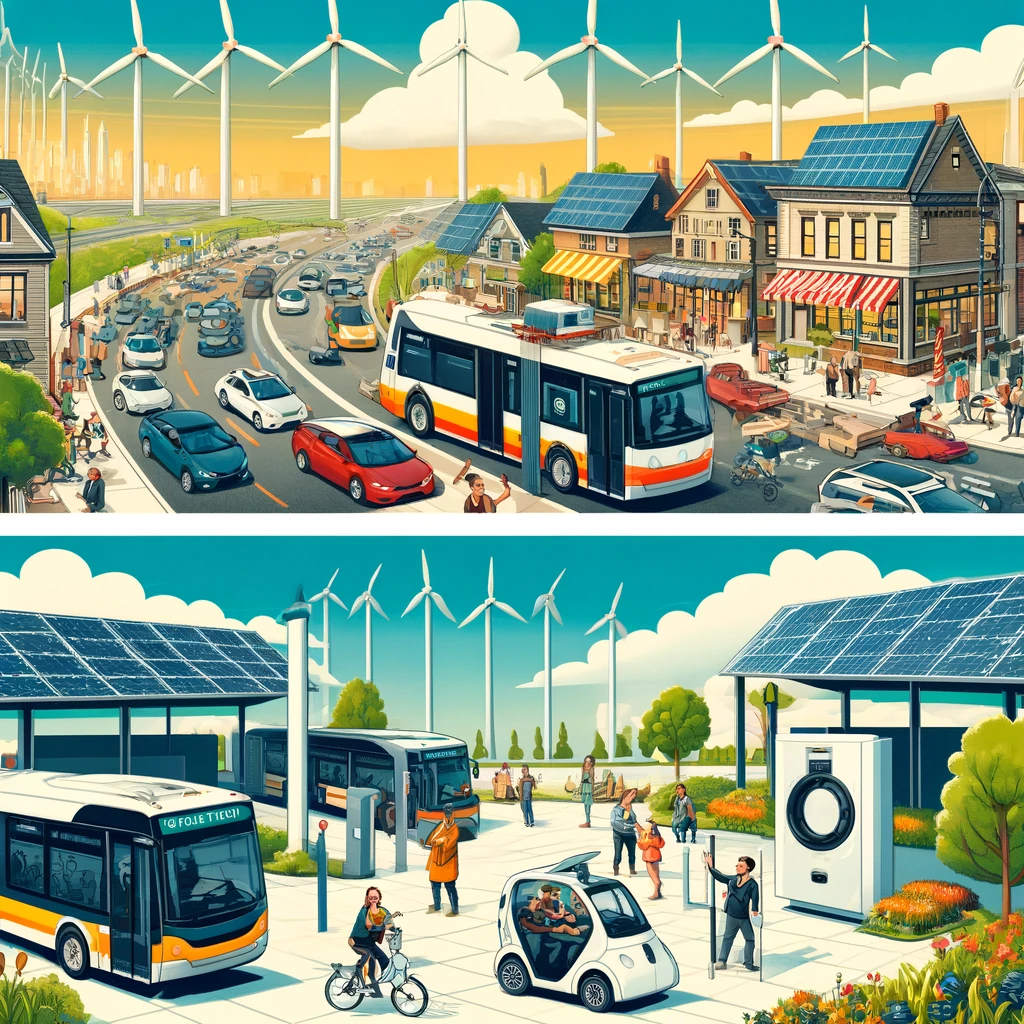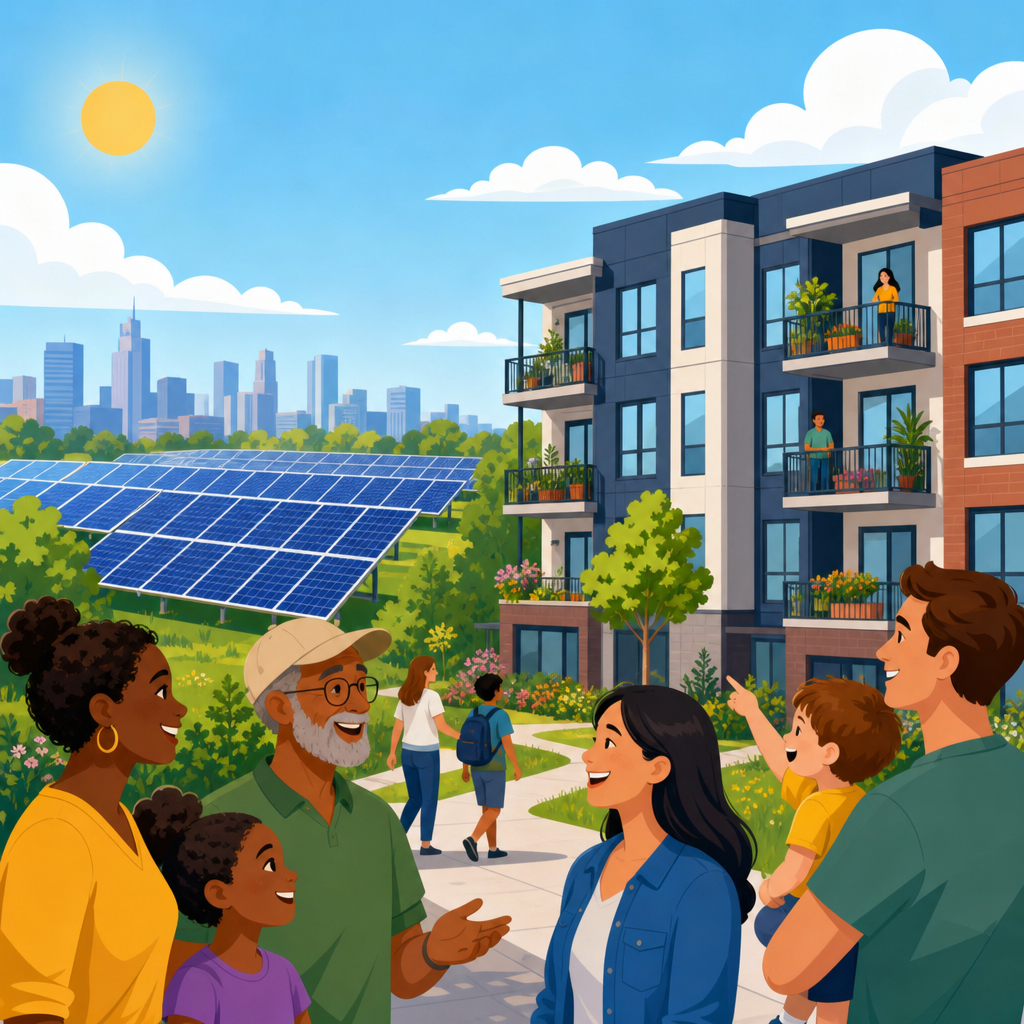
Community solar gives apartment renters, condo owners, and housing providers a practical way to access renewable electricity without installing panels on every roof. In simple terms, a community solar project is a shared solar array whose output is allocated to multiple subscribers, usually through bill credits on their utility accounts. For multifamily residents, project viability means more than whether panels can produce energy. It means the project can attract subscribers, comply with utility and state rules, deliver meaningful savings, manage tenant turnover, and operate reliably over many years. I have worked on urban clean energy programs where strong solar production alone did not guarantee success; subscriber economics, building operations, and regulatory design mattered just as much.
This matters because multifamily housing represents a large share of urban households, yet these residents have historically been excluded from rooftop solar. Renters often lack roof access, individual unit metering can be inconsistent, and property owners may hesitate to invest when tenants pay utility bills directly. Community solar addresses that split incentive by moving generation off-site or onto a shared site and distributing benefits across many customers. A viable project can reduce energy burdens, support city climate goals, improve resilience planning, and widen access to clean energy for low- and moderate-income households. A nonviable project, by contrast, can produce low enrollment, high attrition, weak savings, and administrative friction that erodes trust in the entire market.
To understand what makes a community solar project viable for multifamily residents, it helps to define the core moving parts. There is the generation asset itself, typically a ground-mount or large rooftop array. There is the subscriber model, which determines who receives bill credits and under what contract terms. There is the utility tariff, which governs credit valuation, billing, and transferability. There is the housing context, including tenant income levels, language access, lease structures, and common-area loads. Viability sits at the intersection of these factors. A project works when policy, finance, customer experience, and physical design align well enough to create durable participation and predictable value.
Urban housing adds complexity that developers cannot ignore. In multifamily properties, one building may contain master-metered common areas, individually metered units, retail spaces, and income-restricted apartments under compliance rules. Residents may move frequently, have thin credit files, or need flexible enrollment. Property managers may already juggle arrearage plans, efficiency retrofits, and utility allowance calculations. In this environment, the best community solar projects are built backward from resident realities. They simplify enrollment, preserve savings through turnover, coordinate with housing operations, and fit the legal structure of the utility territory. That practical foundation is what turns an appealing clean energy idea into a project that performs.
Policy design and utility rules determine whether savings are real
The first test of viability is the program structure created by state law, public utility commission orders, and utility billing systems. Community solar succeeds in multifamily housing only when subscribers can receive clear, durable bill credits worth enough to exceed subscription costs. The exact mechanism varies. Some states use virtual net metering, which allocates a share of project output to each account. Others rely on monetary credits tied to avoided-cost calculations or a distributed generation tariff. The difference is not academic. If credit values are unstable, delayed, or too low, resident savings disappear, and subscriber acquisition costs rise fast.
In practice, I look for four policy features before calling a project viable. First, crediting must be transparent on the utility bill, not buried in separate statements that residents struggle to reconcile. Second, transfer rules must allow subscribers to move within the same utility territory without losing participation. Third, low-income participation standards should be defined clearly, including how income eligibility is verified. Fourth, subscriber management must be administratively feasible at scale. Programs in states like New York, Massachusetts, Colorado, and Illinois have shown that strong tariff design can support broad participation, but each market also demonstrates how small rule changes can alter economics materially.
Utility operational capability is equally important. Billing systems need to handle hundreds or thousands of subscriber allocations accurately each month. When utilities cannot process enrollments or changes promptly, projects face delayed revenue, customer complaints, and elevated churn. This issue is especially acute in multifamily settings because move-outs are common. A project serving renters may need frequent account swaps. If the utility requires long lead times or manual corrections, the developer’s customer service burden increases and the housing partner loses confidence. The best programs standardize data exchange, automate subscriber updates, and publish clear timelines for bill credit application.
For affordable housing, policy details can also affect compliance. Utility allowance rules, housing subsidy calculations, and resident protections must be reviewed carefully. A project that reduces tenant electric bills may interact with existing affordability calculations in ways property owners need to understand. Viability therefore depends on legal and regulatory diligence, not just site control or panel pricing. When developers coordinate early with housing agencies, utilities, and community partners, they avoid the common mistake of promising savings that later become harder to realize in the billing system.
Subscriber economics must work for renters, owners, and housing operators
The next question is simple: who saves money, by how much, and how consistently? A viable community solar project for multifamily residents usually delivers a guaranteed discount on bill credits, often in the range of 5 to 20 percent depending on the market, contract structure, and incentive stack. Lower discounts can still work if enrollment is frictionless and credit values are stable, but in my experience multifamily residents respond best when monthly savings are easy to understand and visible on the bill. If customers need to perform complicated math to confirm value, trust drops and cancellations increase.
Project sponsors also need to account for customer acquisition and retention economics. Acquiring a single-family homeowner one by one is different from enrolling residents through a property portfolio, nonprofit partner, or housing authority. Multifamily can be more efficient because outreach can happen building by building, yet it also requires careful consent processes, multilingual materials, and coordination with property managers. Projects that budget too little for resident education often underperform. The strongest programs treat enrollment as an ongoing service function rather than a one-time sales event.
Housing operators need their own value proposition. In some cases, the project allocates subscriptions to common-area meters, reducing operating expenses for lighting, elevators, laundry rooms, or central HVAC systems. In other cases, the owner acts only as a channel partner helping residents subscribe. Either model can work, but viability improves when owners see direct operational benefit. Lower common-area costs can support cash flow, reserve planning, or capital needs in affordable properties. At the same time, owners must avoid becoming unofficial energy advisors without support. Clear roles, training, and resident communication plans are essential.
| Viability factor | Why it matters in multifamily housing | Practical benchmark |
|---|---|---|
| Subscriber savings | Residents stay enrolled only when value is obvious | Consistent discount visible on utility bill |
| Turnover management | Renters move often, causing vacant allocations | Fast reassignment within utility territory |
| Owner participation | Property teams influence outreach and trust | Common-area subscription or formal partnership role |
| Billing accuracy | Errors create complaints and cancellations | Automated utility crediting with defined timelines |
| Low-income access | Programs often target energy-burdened residents | Simple eligibility verification and consumer protections |
Financing ties these economics together. Tax credits, renewable energy certificates, state incentives, and debt terms all shape the subscription price a project can offer. Since passage of the Inflation Reduction Act, federal incentives such as the investment tax credit, adders for low-income communities, and direct pay options for certain entities have improved project feasibility in some cases. But incentives alone do not guarantee viability. Interconnection costs, subscriber acquisition expense, and merchant risk can still overwhelm a promising capital stack. Financial models need conservative assumptions about attrition, credit timing, and operating expenses, especially in portfolios serving lower-income households.
Site selection, building characteristics, and interconnection decide physical feasibility
Many people assume community solar for multifamily residents always means an off-site array, but viable projects come in several forms. Some are remote projects serving subscribers across a utility territory. Others are built on brownfields, warehouses, parking canopies, or underused land near cities. In dense urban markets, on-site shared solar atop a multifamily building may also function like community solar if output is allocated virtually among tenants and common meters. The physical model matters because it affects land cost, permitting, construction complexity, and resident visibility.
For urban multifamily, site selection begins with interconnection, not sunlight alone. A site may have excellent solar resource but require expensive feeder upgrades or long utility study timelines. I have seen projects with attractive roofs fail because structural reinforcement, fire access setbacks, and transformer constraints erased the economics. Ground-mounted sites can face wetlands issues, stormwater requirements, or local opposition. Viability improves when developers secure realistic interconnection cost estimates early and maintain alternatives if utility upgrade costs come back high.
Building characteristics shape whether a multifamily property should host generation, subscribe as a load, or both. Older buildings may have limited roof capacity, shaded exposures, or obsolete electrical rooms. High-rise towers often have small roof area relative to unit count, making on-site solar insufficient for meaningful resident participation. Garden-style apartments and mixed-use campuses may offer better on-site opportunities. Metering configuration is critical. Individually metered units can receive direct subscriber benefits, while master-metered buildings may deliver savings through owner operating costs unless submetering or virtual allocation is available. There is no universal answer; the viable configuration depends on the building’s electrical design and the local tariff.
Construction and operations must also fit urban realities. Access restrictions, crane staging, union labor requirements, parking impacts, and tenant disturbance can all increase soft costs. Projects near affordable housing need careful scheduling to avoid disrupting residents. Long-term operations and maintenance plans should cover inverter replacement, snow management where relevant, vegetation control for ground mounts, and performance monitoring. A project is physically viable only if it can be built safely, interconnected on schedule, and maintained without creating chronic issues for the host community.
Consumer protection, equity, and program design sustain long-term participation
For multifamily residents, especially renters with limited time and high mobility, contract simplicity can matter as much as headline savings. Viable projects avoid hidden fees, burdensome cancellation terms, and confusing credit true-ups. Best practice is straightforward: no upfront payment, no long lock-in for low-income customers, clear disclosure of expected savings, and accessible customer support. Consumer protection is not just a compliance box. It directly affects attrition, referrals, and program reputation. In urban neighborhoods, word of mouth travels quickly. One bad experience can suppress enrollment across an entire property or portfolio.
Equity considerations are central because community solar is often promoted as a tool to reach households left out of traditional clean energy programs. That promise is credible only when project design addresses real barriers. Marketing materials should be multilingual and written below the level of utility jargon. Eligibility checks should be streamlined, using existing affordable housing or public benefit enrollments where law permits. Customer service should account for residents who prefer phone support over web portals. When these basics are ignored, developers end up selecting for the easiest customers rather than the households the program was meant to serve.
Community partnerships improve viability substantially. Trusted messengers such as resident service coordinators, housing nonprofits, city sustainability offices, and legal aid organizations can explain how subscriptions work and flag concerns early. In my experience, enrollment rates are stronger when outreach is embedded in existing resident touchpoints, such as lease renewals, move-in packets, or community meetings. Partnerships also help with retention because residents know whom to contact when they move or see a bill they do not understand.
Data privacy and consent deserve equal attention. Subscriber management requires names, service addresses, account numbers, and in some programs income documentation. Housing providers should never pass sensitive information casually to third parties. Viable projects use documented consent flows, secure data transfer, and clear limits on how resident information is used. This builds trust and reduces legal exposure. Over the life of a project, trust is a financial asset. It lowers churn, reduces complaint handling costs, and supports expansion into additional buildings or neighborhoods.
How developers and housing partners evaluate viability before launch
The strongest projects rely on disciplined screening before anyone starts marketing subscriptions. First, quantify the addressable subscriber base by meter type, average usage, turnover rate, and eligibility segments. Second, model savings under conservative assumptions for bill credit timing and seasonal production. Third, test administrative workflows with the utility, including enrollment files, move-out scenarios, and customer service escalation. Fourth, review legal documents for consumer disclosures, housing compliance issues, and data sharing permissions. Fifth, plan the operating model: who handles outreach, who manages reassignments, and who is accountable when billing errors occur.
Developers should also track measurable indicators after launch. Useful metrics include enrollment conversion rate, time from signup to first credit, average monthly savings, attrition rate, vacant allocation days, complaint rate, and common-area cost reduction where applicable. These indicators reveal whether a project that looked viable on paper is actually performing in the field. If attrition spikes in a particular property, the cause may be language barriers, bill confusion, or move-related friction rather than poor economics. Data allows targeted fixes before performance deteriorates.
The core takeaway is that community solar viability in multifamily housing is never determined by one factor alone. It is the product of policy design, subscriber value, operational execution, site feasibility, and resident trust. Projects that perform well usually share the same discipline: they start with utility rules, ground decisions in real resident behavior, and build simple systems that survive turnover and complexity. That is why some portfolios expand smoothly while others stall after a promising pilot.
For cities, housing owners, and developers focused on sustainable urban development, community solar is worth pursuing because it can lower energy costs and extend clean power access to residents who cannot install rooftop systems themselves. The benefit is tangible when projects are designed around clear savings, flexible enrollment, reliable billing, and strong partnerships. If you are evaluating a project, start with a practical viability screen: confirm tariff strength, map the subscriber base, test utility operations, and design resident protections from day one. That groundwork is what turns shared solar from a concept into durable value for multifamily communities.
Frequently Asked Questions
1. What does “project viability” mean for a community solar project serving multifamily residents?
For multifamily community solar, viability means the project can succeed in the real world, not just on paper. A viable project must generate electricity reliably, but that is only one part of the equation. It also needs a structure that works for renters, condo owners, affordable housing residents, property managers, utilities, and developers. In practice, that means the project must be able to enroll enough subscribers, deliver meaningful bill savings, comply with state and utility program rules, and maintain smooth ongoing administration over time.
In multifamily settings, viability is often more complex than in single-family markets because households may move more frequently, utility accounts may be split across many units, and building ownership structures can vary widely. A project may look technically strong from a solar production standpoint but still struggle if residents are hard to reach, if utility billing systems do not support flexible crediting, or if subscription terms are confusing. The most successful projects are designed around customer realities as much as engineering realities.
Financial viability matters as well. The developer needs confidence that subscription revenue, incentives, tax benefits, and long-term operating assumptions will support the project. Residents and housing providers also need confidence that participation will be straightforward and that savings will outweigh any fees or administrative burdens. When people talk about a viable multifamily community solar project, they are really describing a project that is technically sound, financially durable, legally compliant, and easy enough for residents to join and stay enrolled in.
2. Why is subscriber enrollment so important to the success of community solar for apartment renters and condo owners?
Subscriber enrollment is one of the most important drivers of success because community solar projects depend on having enough participants to absorb the output of the shared solar array. If a project cannot consistently fill its subscription capacity, projected revenue becomes less certain and the economics can weaken quickly. For multifamily residents, this is especially important because a project may be counting on a large number of small subscriptions rather than a smaller number of large commercial accounts.
Enrollment is not just about quantity. It is also about matching the project to the right customer base. Apartment renters and condo owners often have different needs, income levels, lease terms, and levels of familiarity with energy programs. A viable project must explain the value proposition clearly: how bill credits work, how much subscribers are likely to save, whether there are cancellation fees, and what happens if they move. If those details are unclear, people may hesitate to enroll even if they support renewable energy in principle.
Retention is just as important as initial sign-up. Multifamily residents can be more mobile than homeowners, so the project needs processes for transfers, re-enrollment, waitlists, and replacing departing subscribers efficiently. Housing providers and community-based organizations can play a major role here by helping with resident outreach and education. In many cases, projects become more viable when they reduce friction—using simple contracts, multilingual communications, clear savings estimates, and customer support that can handle questions quickly. Strong enrollment and retention together create the stable subscriber base needed for long-term performance.
3. How do utility rules and billing arrangements affect whether a multifamily community solar project is workable?
Utility rules are central to project viability because community solar generally depends on a crediting mechanism that assigns a share of a solar project’s production to participating customers. If the utility’s billing system can accurately apply credits to individual resident accounts, the program becomes much easier to manage. If the billing process is limited, slow, or administratively burdensome, the project can become difficult to operate even when demand exists.
For multifamily residents, the details matter. Some residents may have individual utility accounts, while others may live in buildings with master-metered arrangements. In individually metered buildings, each subscriber may be able to receive credits directly on their electric bill. In master-metered properties, the structure can be more complicated, and the project may need a different allocation model or may not fit the rules of the local program at all. That is why developers and housing providers must evaluate account structures early in project planning.
State policy and utility program design also influence contract terms, subscriber eligibility, low-income participation requirements, geographic restrictions, and how excess generation is treated. A project may only be open to customers within a particular utility territory or load zone. It may also have rules governing how subscription shares are resized when a household’s electricity use changes. These operational details can determine whether a project is scalable and resident-friendly. In short, workable utility integration is not a back-office issue—it is a core element of whether multifamily community solar can deliver predictable savings and a good participant experience.
4. What role do housing providers, property managers, and community partners play in making a project viable?
Housing providers and property managers often make the difference between a project that struggles and one that performs well. They already have trusted relationships with residents, understand the building’s occupancy patterns, and can help identify whether the property’s residents are good candidates for community solar subscriptions. Their involvement can improve outreach, reduce confusion, and increase enrollment rates. In affordable housing and mixed-income properties especially, trusted messengers are often critical for helping residents understand that community solar does not require rooftop installation or homeownership.
Property managers can also support viability by coordinating communications, helping residents verify utility account information, and integrating program education into leasing, move-in, or resident services processes. This is particularly valuable in buildings with frequent turnover. Instead of treating each vacancy as a disruption, the project can build a repeatable system for onboarding new subscribers. That lowers attrition risk and supports steadier project performance.
Community-based organizations, local governments, and mission-driven partners can further strengthen viability by improving outreach to underserved households, offering language access, and building confidence in the program. These partners can also help ensure the project is designed equitably, with attention to contract transparency, consumer protections, and savings for low- to moderate-income participants. A technically sound project can still underperform if residents do not trust it or cannot easily navigate enrollment. Strong local partnerships help close that gap and make long-term participation more durable.
5. What financial and operational factors should be evaluated before deciding a multifamily community solar project is likely to succeed?
Several financial and operational factors need to align before a multifamily community solar project can be considered truly viable. On the financial side, the developer must evaluate construction costs, financing terms, subscriber acquisition costs, expected energy production, operating and maintenance expenses, and the revenue model created by subscriptions and bill credit policies. Incentives, tax credits, and state program benefits can materially improve project economics, but they do not eliminate the need for a stable subscriber base and realistic long-term assumptions.
Operationally, the project should be assessed for how easily it can enroll residents, manage account changes, process moves, handle customer service, and maintain compliance with program rules. These are not minor details. In multifamily markets, subscriber management can be a defining cost and performance issue. A project with excellent solar resources can still become difficult to sustain if administrative systems are weak or if customer turnover is high and unmanaged. Developers should also examine whether the target population is likely to see enough utility bill savings to stay engaged over time.
It is also important to evaluate risk. That includes regulatory risk if state rules change, subscriber churn risk in renter-heavy buildings, and reputational risk if savings are overstated or contracts are hard to understand. The strongest projects usually combine sound economics with simple participation terms, transparent disclosures, realistic savings projections, and a servicing model built for multifamily households. When financial assumptions, utility mechanics, resident experience, and long-term operations all support one another, the project is far more likely to succeed and deliver meaningful renewable energy access to people who otherwise could not benefit from rooftop solar.