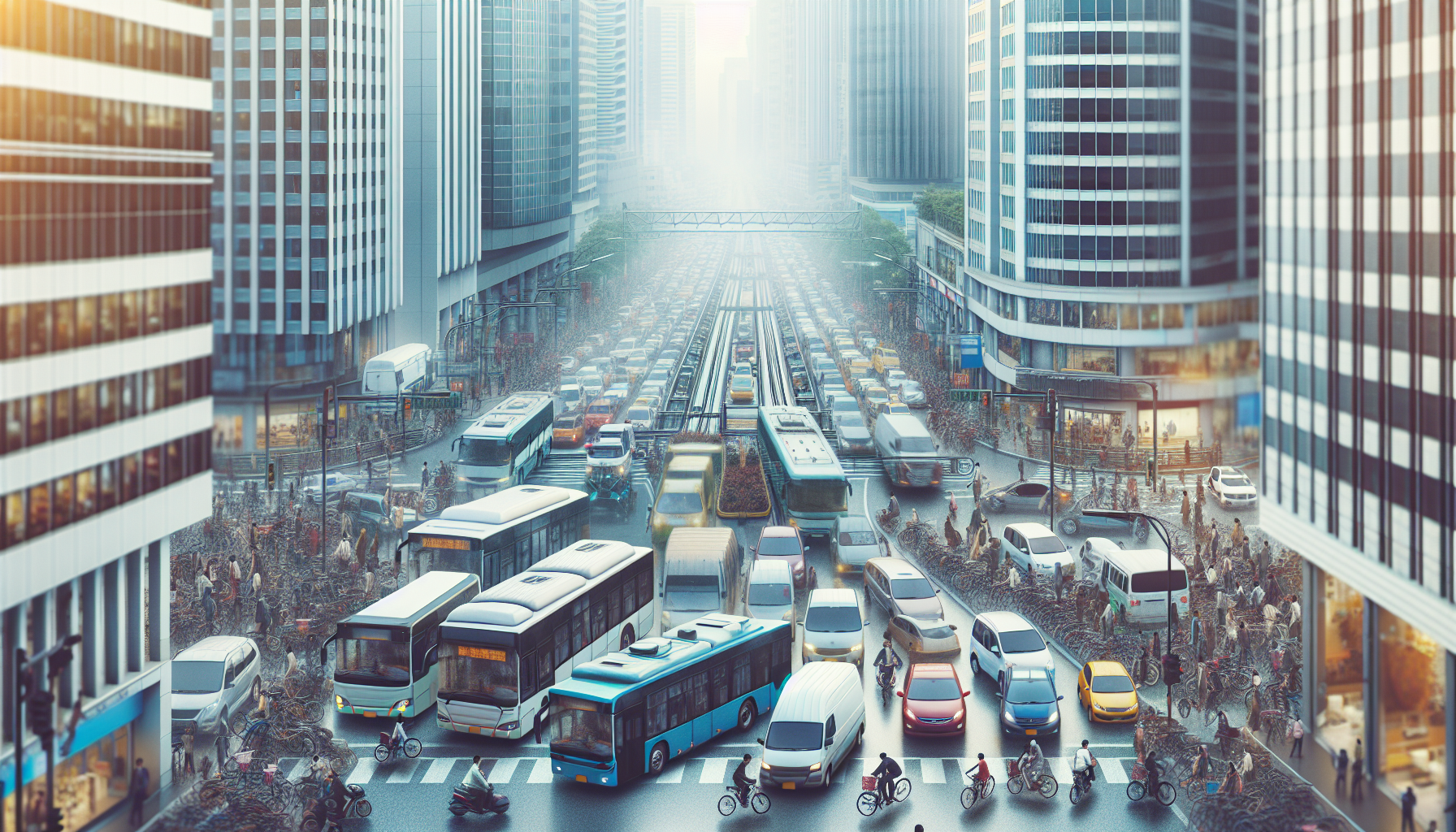
Urban mobility challenges in developing cities shape daily life, economic productivity, public health, and social inclusion more than almost any other urban issue. Urban mobility refers to how people and goods move through a city using roads, sidewalks, rail, buses, motorcycles, bicycles, ferries, and digital transport services. In developing cities, that movement is often constrained by rapid population growth, informal settlement patterns, weak transport governance, limited public investment, and infrastructure that has not kept pace with demand. I have worked on transport content and policy analysis across fast-growing cities, and the same pattern appears repeatedly: residents do not simply face congestion. They face unreliable travel times, unsafe streets, fragmented systems, unaffordable fares, and long journeys that reduce access to jobs, schools, and healthcare.
These challenges matter because mobility is not only a transport problem; it is a development issue. When a worker in Lagos spends three hours commuting, or a garment employee in Dhaka changes vehicles multiple times without integrated ticketing, the city loses productive time and households absorb hidden costs. When sidewalks in Nairobi are missing or unusable, low-income residents who walk are exposed to traffic injury risk and exclusion. When public transport in Manila or Jakarta is overcrowded and poorly coordinated, women, older adults, and disabled passengers bear disproportionate burdens. Efficient urban mobility improves labor market access, lowers logistics costs, reduces local air pollution, supports climate goals, and makes cities more competitive. Poor mobility does the opposite, reinforcing inequality and slowing growth.
Developing cities face a distinct mobility context. Motorization often rises faster than road capacity. Land use spreads outward before mass transit corridors are built. Informal transport fills service gaps but can create regulatory complexity. Freight competes with passenger traffic on constrained corridors. Data systems remain patchy, making planning reactive rather than evidence-based. The result is a transport ecosystem where every mode matters, but few modes are well integrated. Understanding these urban mobility challenges in developing cities is essential for city leaders, planners, businesses, and residents because the solutions are not one-size-fits-all. They require a practical mix of infrastructure, operations, governance, pricing, safety measures, and long-term planning that reflects how people actually travel, not how plans assume they travel.
Rapid urbanization, congestion, and network strain
The first challenge is speed. Many developing cities are urbanizing faster than transport systems can expand. New residents settle on the periphery where land is cheaper, but formal transit, paved roads, drainage, and pedestrian infrastructure arrive late or not at all. This creates spatial mismatch: jobs concentrate in central or industrial zones while housing expands outward. Commuters then depend on long, multi-leg trips that overload arterial roads and transfer points. Congestion becomes chronic because road networks are often sparse, with few alternate routes and numerous intersections that lack signal coordination. In cities with mixed traffic, buses, cars, trucks, motorcycles, bicycles, street vendors, and pedestrians share the same right-of-way, reducing corridor efficiency even when nominal road width appears adequate.
Congestion in developing cities is not merely an inconvenience. It undermines bus reliability, emergency response, freight delivery, and fuel efficiency. The World Bank and regional development agencies have repeatedly documented that congestion can cost large metropolitan economies several percentage points of gross domestic product through lost time, higher vehicle operating costs, and supply chain delay. In practice, the burden falls hardest on people with the least flexibility. Wealthier commuters may adjust schedules or use private vehicles; low-income workers often cannot. I have seen corridor studies where average peak-hour speeds for buses dropped below 10 kilometers per hour, making a trip that should take 35 minutes stretch to 90. At that point, the transport network stops functioning as connective infrastructure and starts operating as a barrier to opportunity.
Public transport gaps, informal systems, and weak integration
Public transport in developing cities is frequently available but poorly integrated. Formal systems may include municipal buses, bus rapid transit, suburban rail, metro lines, or regulated minibuses. Alongside them, informal or semi-formal services such as jeepneys, matatus, dala dalas, minibuses, motorcycle taxis, and auto-rickshaws provide critical last-mile access. These services are essential because they reach areas formal operators do not serve, operate with high frequency, and adapt quickly to demand. Yet without coordinated routes, fares, schedules, and passenger information, the overall system becomes fragmented. Riders must negotiate multiple operators, multiple payments, uncertain waiting times, and inconsistent service quality.
A city does not have a mobility system just because it has many vehicles. It has a mobility system when modes function as one network. That means route hierarchy, integrated fares, physical interchange design, unified branding, and enforceable service standards. Bogotá’s TransMilenio, while not without limitations, demonstrated how bus rapid transit can increase corridor capacity when dedicated lanes and station operations are managed properly. Dar es Salaam and Ahmedabad adapted similar principles with varying results. The lesson is clear: formalization works best when it improves reliability without destroying the flexible coverage informal operators provide. Poorly designed reform can remove livelihoods and reduce accessibility. Effective reform typically includes route rationalization, fleet upgrading, digital ticketing, operator consolidation, and negotiated transition programs for informal transport workers.
| Challenge | Typical Cause | Practical Response |
|---|---|---|
| Unreliable bus travel times | Mixed traffic and weak dispatching | Dedicated lanes, headway management, signal priority |
| Multiple fares per trip | Separate operators and payment systems | Integrated ticketing and fare capping |
| Peripheral areas underserved | Formal routes concentrated on core corridors | Feeder services and regulated paratransit partnerships |
| Unsafe transfers | Poor interchange design and weak lighting | Accessible stations, surveillance, lighting, staff presence |
| Low service accountability | Fragmented regulation and cash-based operations | Gross-cost contracts, digital data reporting, performance KPIs |
Affordability, exclusion, and unequal access
Another central urban mobility challenge in developing cities is affordability. Transport planning often measures supply, but residents experience mobility through household budgets. When transport costs consume a high share of income, people do not become less mobile by choice; they become excluded by necessity. Families respond by walking long distances, reducing trip frequency, skipping healthcare visits, limiting job searches, or sending fewer children to school. In many cities, the poorest residents live far from formal employment because land near economic centers is expensive. They therefore pay more in both time and money to reach opportunities. This is one reason accessibility, not speed alone, should be the core metric of transport success.
Affordability also intersects with gender, disability, and age. Women are more likely to make trip chains, combining work, caregiving, shopping, and school escort trips, which fragmented systems handle badly. Older adults and disabled passengers face steep barriers where buses have high steps, sidewalks are broken, crossings are unsafe, and stations lack ramps or tactile guidance. Universal design is not a premium feature; it is basic functionality. Cities that ignore it force people out of the transport network entirely. São Paulo, Cape Town, and Mexico City have all wrestled with affordability and access disparities, showing that fare policy, subsidy design, and service planning must align. A low fare on one mode is not enough if total trip cost remains high due to transfers or informal last-mile dependence.
Road safety, public health, and environmental pressure
Unsafe roads are among the most severe but underestimated mobility problems in developing cities. According to the World Health Organization, road traffic injuries remain a leading cause of death globally, with low- and middle-income countries carrying a disproportionate share despite having fewer vehicles than high-income countries. The risks are concentrated among vulnerable road users: pedestrians, cyclists, motorcyclists, and transit riders walking to stops. In practical terms, a city without safe crossings, traffic calming, lane discipline, helmet enforcement, and protected walking space is asking residents to trade personal safety for mobility. That is not a functioning system; it is managed exposure to risk.
Environmental pressure compounds the problem. Older diesel buses, high-emission minibuses, poorly maintained motorcycles, and stop-start congestion worsen particulate pollution and nitrogen oxide exposure. This affects respiratory health, especially for children and people living or trading near major corridors. Transport also contributes significantly to urban greenhouse gas emissions as motorization rises. However, the environmental solution is not simply electrification. Electric buses and two-wheelers help, but only when paired with reliable power supply, depot planning, charging strategy, and financing models. The bigger gains still come from mode shift: more people moving by quality public transport, walking, and cycling in safer street environments. Cities such as Guangzhou and Curitiba show that transit-oriented street design can improve mobility and air quality together when capacity, land use, and operations are aligned.
Governance, finance, technology, and the path forward
Many mobility failures in developing cities are governance failures before they are engineering failures. Responsibilities are often split across municipal departments, metropolitan authorities, traffic police, highway agencies, and private operators with overlapping mandates. Without a lead institution that can plan across modes and jurisdictions, projects become isolated interventions rather than network improvements. One corridor gets upgraded while feeder routes remain chaotic. A metro line opens without bus restructuring. A digital payment app launches without fare integration. The result is visible investment but limited system benefit. Strong urban mobility governance requires metropolitan coordination, clear regulation, contract management capability, and stable funding sources.
Finance is equally decisive. Capital-intensive projects attract attention, but operating finance keeps systems usable. A city can build stations and still fail if it cannot fund service frequency, maintenance, enforcement, and customer information. This is why successful mobility strategies balance major infrastructure with lower-cost operational wins such as bus priority, intersection redesign, parking management, freight timing rules, and sidewalk rehabilitation. Technology supports these measures when used with discipline. GPS fleet tracking, automatic fare collection, open data standards like GTFS, adaptive signals, and transport modeling tools improve planning and accountability. Yet technology is not a substitute for policy. Data only matters when agencies act on it, publish it, and use it to refine service.
The most effective path forward combines integrated public transport, safe walking and cycling networks, smarter street management, and land use coordination. Developing cities should prioritize accessibility over vehicle throughput, because the goal is not to move more cars but to connect more people to opportunity. Start with the highest-demand corridors, protect bus movement, formalize transfers, and improve last-mile access. Build institutions that can regulate both formal and informal services. Use targeted subsidies to keep transport affordable for low-income riders. Apply road safety principles consistently, especially around schools, markets, and transit stops. If your city is shaping an urban mobility strategy, begin with a corridor-by-corridor assessment of travel demand, safety risk, and access gaps, then link those findings to an implementable investment plan. That is how developing cities turn mobility from a daily constraint into a platform for inclusive growth.
Frequently Asked Questions
What are the main urban mobility challenges in developing cities?
The main urban mobility challenges in developing cities usually stem from a combination of fast urban growth, underbuilt infrastructure, weak transport planning, and unequal access to services. Many cities are expanding faster than roads, sidewalks, drainage systems, and public transit networks can keep up. As a result, residents face chronic congestion, long travel times, overcrowded buses or minibuses, unsafe walking conditions, and unreliable connections between home, work, school, and markets. In many cases, transport systems evolve in a fragmented way, with formal buses, informal paratransit, motorcycles, private cars, bicycles, and pedestrians all competing for limited street space.
Another major challenge is that land use and transport development are often poorly coordinated. Jobs may be concentrated in one part of the city while affordable housing is pushed to the periphery, forcing lower-income residents to travel farther every day. Informal settlements may grow in areas with little access to paved roads or mass transit, making everyday mobility more difficult and expensive. Freight movement also suffers, especially where traffic bottlenecks, poor road conditions, and weak logistics systems increase delivery times and business costs. These mobility constraints affect not only convenience, but also economic productivity, road safety, public health, and social inclusion across the entire city.
Why is traffic congestion often worse in developing cities?
Traffic congestion is often worse in developing cities because the growth in travel demand outpaces the growth in transport capacity and governance. Population increases, rising incomes, and urban expansion bring more vehicles, more passenger trips, and more freight onto streets that were never designed to handle such volumes. At the same time, public transport systems are frequently insufficient, overcrowded, poorly integrated, or unreliable, which pushes more people toward private cars, motorcycles, ride-hailing services, and informal transport options. When too many travelers depend on the same limited road network, delays become a daily reality.
Several structural factors make the problem more severe. Street networks may be incomplete, leaving traffic concentrated on a few major corridors. Intersections are often poorly managed, parking may spill onto travel lanes, sidewalks can be missing or blocked, and informal roadside activity can reduce roadway capacity. Weak enforcement of traffic rules, limited maintenance, flooding, and road damage can further slow movement. In many cities, there is also a lack of coordinated planning between transport authorities, land use agencies, and local governments. This means congestion is not just a matter of too many vehicles; it is also a symptom of broader urban management challenges that require integrated solutions rather than isolated road expansions.
How do urban mobility problems affect low-income residents the most?
Urban mobility problems tend to hit low-income residents hardest because they have the fewest alternatives and often live far from jobs, schools, hospitals, and government services. When affordable housing is located on the urban edge or in informal settlements, residents may spend a large share of their income and time on transport. A commute that seems manageable for higher-income households with access to private vehicles can become exhausting and costly for workers who rely on multiple buses, minibuses, motorcycle taxis, or long walks. In many cases, the poorest residents are effectively priced out of opportunity because they cannot reach places consistently, safely, and affordably.
The burden is not only financial. Poor transport access can reduce job options, increase lateness and absenteeism, limit access to education, and make healthcare more difficult to obtain. Women, children, older adults, and people with disabilities often face additional risks, especially where sidewalks are unsafe, crossings are inadequate, and public transport is insecure or inaccessible. Mobility barriers can also reinforce wider patterns of inequality by isolating neighborhoods from economic growth and public services. In this way, transport is not just about movement; it is a core issue of equity, social inclusion, and urban opportunity.
What role does public transportation play in solving mobility challenges?
Public transportation plays a central role in solving urban mobility challenges because it can move far more people efficiently, safely, and affordably than a city built mainly around private vehicles. Well-designed bus systems, bus rapid transit, suburban rail, metro lines, ferries, and shared feeder services can reduce congestion, shorten commute times, improve access to jobs and services, and lower household transport costs. For developing cities, strong public transport is especially important because it supports mobility at scale for residents who cannot afford private cars and helps make urban growth more manageable.
However, public transportation only works well when it is reliable, integrated, and accessible. That means routes should connect major residential areas with employment centers, fares should be affordable, and transfers should be easy across different modes. It also means stations, stops, sidewalks, and crossings must be safe and usable for all travelers, including people with disabilities. In many developing cities, informal transport operators already provide essential mobility, so reform efforts often work best when they improve regulation, service quality, and integration rather than simply trying to remove informal systems. When public transport is backed by clear governance, stable funding, and supportive land use planning, it becomes one of the most effective tools for creating a more productive, inclusive, and environmentally sustainable city.
What strategies can developing cities use to improve urban mobility sustainably?
Developing cities can improve urban mobility sustainably by focusing on integrated, people-centered strategies rather than relying only on road expansion. A strong starting point is investment in high-capacity public transport, especially bus-based systems that can be deployed faster and at lower cost than rail in many contexts. Cities can also improve service through route rationalization, fare integration, digital ticketing, better scheduling, and stronger regulation of both formal and informal operators. At the same time, basic infrastructure for walking and cycling is essential. Safe sidewalks, protected crossings, bike lanes, street lighting, and traffic calming can dramatically improve mobility for the majority of trips that begin or end on foot.
Long-term success also depends on governance and land use reform. Transport agencies need clear responsibilities, reliable funding, good data, and the authority to coordinate across jurisdictions. Urban planning should encourage housing, jobs, schools, and services to develop in ways that reduce unnecessary travel distances and support transit use. Cities can also use traffic management, parking policy, freight planning, and demand management to make better use of limited road space. Technology can help through real-time passenger information, mapping, traffic signal coordination, and data-driven planning, but it cannot replace sound institutions. Ultimately, sustainable urban mobility in developing cities comes from combining infrastructure, policy, operations, and social equity goals into one coherent vision of how the city should move.