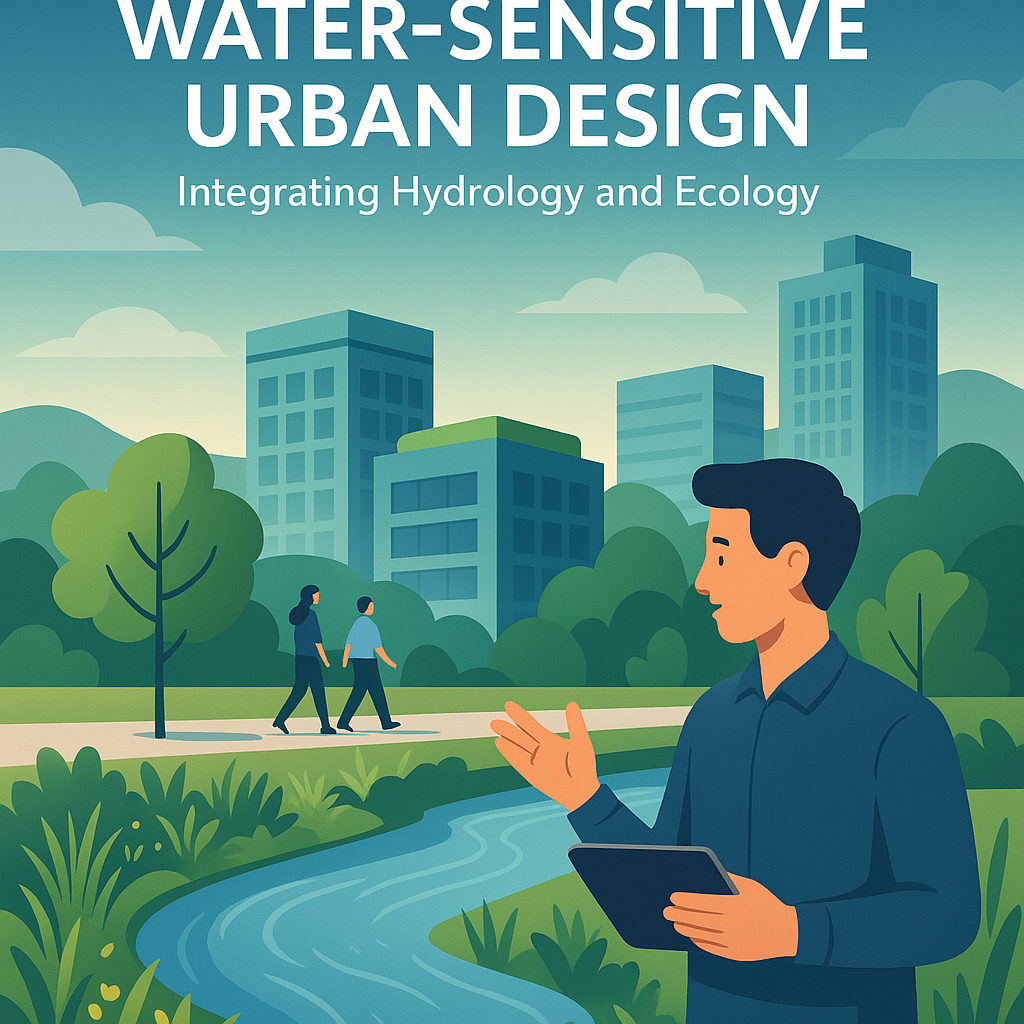
Water-sensitive urban design (WSUD) is an innovative approach to urban planning and architecture that seeks to harmonize the natural water cycle with human-made environments. At its core, WSUD strives to integrate systems of water management into urban environments in a way that maintains or restores the natural hydrological patterns, supports biodiversity, and enhances the function and aesthetics of the urban landscape. As urban areas continue to expand and climate change intensifies, conventional urban water management strategies are increasingly inadequate. The result is often amplified flooding, degradation of natural waterways, and a loss in landscape value. Adopting WSUD principles can mitigate these issues, making our cities more resilient and sustainable.
A major component of WSUD is hydrology – the scientific study of the movement, distribution, and management of water on Earth. This is coupled with ecology, which examines the relationships between living organisms, including humans, and their environment. By integrating the two, WSUD advocates for a system where every drop of water is valued, allowing it to pass through urban environments sustainably and beneficially. Implementation of water-sensitive urban design is becoming an urgent necessity as cities worldwide face environmental challenges such as increased urban heat, flooding, and water scarcity.
The Imperative of Natural Water Cycle Restoration
At the heart of water-sensitive urban design is the restoration and replication of natural water cycles disrupted by urbanization. Conventional urban development significantly alters the hydrological cycle, primarily through increased impervious surfaces such as concrete and asphalt, which contribute to rapid runoff and reduced water infiltration into the soil. This alienates landscapes, increasing flood risks and reducing groundwater recharge.
One effective method to counteract these issues is through the incorporation of green infrastructure. Cities like Melbourne, Australia, have been leading the way. Melbourne’s approach combines vegetated swales, pervious pavement, and rain gardens to intercept stormwater, encourage its infiltration, and manage its flow. Not only does this decrease urban flooding, but it also creates habitats for flora and fauna, supporting urban biodiversity and enhancing the quality of life for residents.
Green Roofs and Their Multi-Functional Benefits
Green roofs are an exemplary element of WSUD that address multiple urban challenges. These layered constructions of vegetation and soil placed atop usually flat roofs absorb rainwater, provide insulation, create habitats, and help lower urban air temperatures. They effectively transform wasted space into functional, aesthetic, and environmental contributors to urban ecosystems.
In Stuttgart, Germany, the local government has promoted the use of green roofs through financial incentives and policy regulations. This city serves as a compelling example of how green roofs can increase urban greenery, capture stormwater, and reduce the heat island effect while also making the architectural landscape more visually appealing. Residents benefit from increased energy savings due to the insulation properties of green roofs, as well as the psychological and ecological benefits of having more significant green spaces.
The Role of Bioretention Systems in Stormwater Management
Bioretention systems or biofilters are another vital aspect of WSUD. These systems use vegetation and soil to retain and treat stormwater guided by gravity into depressions where it undergoes natural filtration through various soil layers before entering groundwater systems or surface water bodies. They are cost-effective, sustainable, and highly efficient at pollutant removal.
For instance, the city of Portland, Oregon, has implemented extensive bioretention systems as part of its Green Streets Program. These systems manage surface runoff, reduce combined sewer overflows during heavy rain events, and improve water quality in local rivers and streams. By mimicking the natural conditions of wetlands, bioretention systems in Portland’s urban areas trap pollutants and sediments, discharge clean water, and provide urban greenery, exemplifying how cities can integrate these systems successfully.
Permeable Pavements and Urban Runoff Reductions
Permeable or porous pavements present an innovative solution for managing surface runoff. Unlike conventional asphalt or concrete, permeable pavements allow water to infiltrate through the surface, reducing runoff rates and promoting groundwater recharge. They are particularly beneficial in urban areas where large expanses of impermeable surfaces significantly disrupt natural water cycles.
Chicago, Illinois, offers a telling example of permeable pavements in action through its Green Alley Program. The city has installed several miles of permeable highways,roads and alleys that filter rainwater and diminish the burden on aging sewer systems. This initiative showcases an economically feasible pathway for cities to improve stormwater management while preserving the integrity of urban infrastructure.
| WSUD Element | Primary Function | Example City |
|---|---|---|
| Green Roofs | Insulation, stormwater absorption | Stuttgart, Germany |
| Bioretention Systems | Pollutant removal, water filtration | Portland, Oregon |
| Permeable Pavements | Runoff reduction, groundwater recharge | Chicago, Illinois |
Rainwater Harvesting Systems for Resource Conservation
Rainwater harvesting represents a fundamental component of WSUD, promoting the maximization of water resources by collecting and storing rain from roofs and surfaces for later use. Such systems are among the simplest ways to supplement water supplies and reduce dependence on groundwater reserves.
Consider the initiative in Chennai, India, where rainwater harvesting has been mandated by law for all buildings. This policy has led to substantial recovery in the local water table and has improved water security for its residents. Not only does rainwater harvesting provide ecological benefits by mitigating surface runoff and reducing urban flooding, it also empowers communities to be more self-sufficient in water management.
Sustainable Urban Drainage Systems (SUDS)
Sustainable Urban Drainage Systems (SUDS) are designed to replicate the natural movement of water in urban and rural settings. They help control and mitigate stormwater runoff to enhance water quality and biodiversity. Components like detention basins, wetlands, and filter strips form the backbone of SUDS. A brilliant example is the development in Glasgow, Scotland, where SUDS have reduced the need for extensive underground drainage infrastructure, alleviating pressure on existing systems.
The district of Dalmarnock in Glasgow has embraced SUDS to address severe flood risks, create new green spaces, and enhance community spaces. These systems improved the local environment, provided recreational opportunities, and are expected to increase property values over time. This case highlights how SUDS can foster sustainable urban environments.
Conclusion: The Essential Nature of Water-Sensitive Urban Design
In conclusion, water-sensitive urban design is not merely an optional consideration but a critical component of crafting sustainable and resilient urban landscapes. By integrating hydrology and ecology, WSUD offers practical benefits such as enhanced flood management, improved biodiversity, reduced urban heat, and sustainable water use. The examples from Melbourne, Stuttgart, Portland, Chicago, Chennai, and Glasgow underscore the transformative potential of applying WSUD principles across various urban contexts.
For urban planners, policymakers, architects, and environmentalists, the compelling takeaway is that adopting WSUD systems leads to healthier, more livable cities that are better equipped to face ecological challenges. Recognizing water as a crucial urban asset and not a nuisance is the first step in this transformative journey. As cities evolve, the pressing next step involves implementing and expanding these practices, ensuring that water-sensitive urban design becomes an integral part of urban development plans worldwide.
To move forward, consider how these methods could transform your city or community. Joining local initiatives, advocating for policy changes, and integrating WSUD principles into new projects can play a pivotal role in fostering an urban environment that respects and harnesses the power of natural water systems.
Frequently Asked Questions
1. What is Water-Sensitive Urban Design (WSUD) and why is it important?
Water-Sensitive Urban Design (WSUD) is a forward-thinking approach in urban planning that prioritizes integrating water management systems with urban landscapes. At its heart, WSUD seeks to align urban development with natural water cycles, effectively minimizing ecological disturbance and promoting biodiversity. With cities sprawling and pressures from climate change mounting, this approach is vital. Conventional urban arrangements often disrupt natural hydrological systems through impervious surfaces like concrete, which prevent water infiltration, amplify runoff, and contribute to urban flooding. WSUD, however, champions techniques like green roofs, permeable pavements, and rain gardens, which sustain the hydrological cycle, foster native plant growth, and reduce flood risks. This integration of hydrology and ecology not only sustains natural habitats but also lifts urban areas into more resilient and aesthetic living spaces. By adopting WSUD principles, cities are better equipped to handle environmental challenges while ensuring they remain livable and vibrant for future generations.
2. How does WSUD maintain or restore natural hydrological patterns?
WSUD works intricately to replicate or maintain the natural water movements that forests, wetlands, and other natural ecosystems have before urbanization. This involves employing a variety of technologies and strategies, which take inspiration from natural processes. For instance, rain gardens or bioretention systems are utilized to capture and slow down stormwater runoff, allowing water to infiltrate the ground slowly, mimicking how a natural landscape absorbs rainfall. Green infrastructure elements such as vegetative swales or permeable paving materials enable rainfall to seep into the subsoil, reducing impermeability of urban structures and assisting in replenishing groundwater tables. Also, constructed wetlands are used to treat urban water runoff, filtering pollutants and offering habitats for wildlife. This method not only preserves aquatic biodiversity but also restores water quality and sustains hydrology. By perpetuating these natural patterns, WSUD mitigates the adverse impacts of urban sprawl and climate change on the water cycle, which, consequently, builds urban resilience against environmental adversities.
3. In what ways does WSUD support biodiversity?
WSUD is a profound advocate for biodiversity within urban settings. By incorporating ecological considerations into water management, WSUD creates environments that accommodate various plant and animal species. One fundamental aspect lies in the establishment of green corridors and green roofs, which facilitate wildlife habitats and movement across urban landscapes, breaking the monotony of man-made structures. These green spaces are intricately designed using native plant species that attract and support local fauna, sustaining ecosystems even in densely populated areas. Moreover, features such as stormwater ponds and wetlands serve multiple functions; they not only manage water but are also designed as havens for aquatic and terrestrial species, sustaining local biodiversity. By introducing these elements, WSUD revitalizes urban biodiversity, counteracting the ecological fragmentation often introduced by traditional urban sprawl. In doing so, it nurtures diverse urban ecosystems, enriching the environment and enhancing residents’ quality of life.
4. What are the aesthetic and functional benefits of integrating WSUD into urban landscapes?
Integrating WSUD into urban landscapes doesn’t just address ecological or hydrological concerns; it vastly elevates both the visual aesthetics and functional aspects of the area. From an aesthetic standpoint, WSUD introduces greater greenery and nature-inspired designs into cities, transforming monotonous cityscapes into vibrant, scenic environments. Features such as rain gardens and thoughtfully designed wetlands provide a calming, natural beauty that stands out in urban settings, enhancing the visual appeal for residents and visitors alike. Functionally, these WSUD components drastically improve the management of stormwater, reduce flood risks, and enhance water quality through natural filtration. Additionally, permeable pavements, aside from their water management capabilities, can reduce urban heat effects and provide comfortable pedestrian pathways. WSUD thus marries functionality and beauty, creating spaces that are both utilitarian and conducive to wellness, offering stormwater solutions while concurrently building a pleasant place to live, work, and play.
5. How can cities transition to incorporating WSUD?
The transition to WSUD requires a deliberate and collaborative process involving urban planners, architects, environmental scientists, and policy-makers. The journey begins with comprehensive assessments, where cities evaluate current water management practices and identify areas susceptible to flooding or ecological degradation. This foundational analysis is crucial to tailor WSUD strategies that address specific urban needs effectively. Public awareness and community involvement also play a vital role, as buying public acceptance and participation can facilitate smoother implementations. Cities can gradually introduce pilot projects showcasing successful examples such as green roofs or rain gardens, fostering community support and demonstrating WSUD’s multifunctional benefits. Moreover, adopting policy changes to incentivize and prioritize sustainable practices is vital for widespread application. Cities can adopt WSUD principles through zoning laws, sustainable building codes, and supportive infrastructure funding. Integrating WSUD is a dynamic, ongoing process that redefines urban living, promoting cities that highlight resilience, ecological balance, and enhanced quality of life.