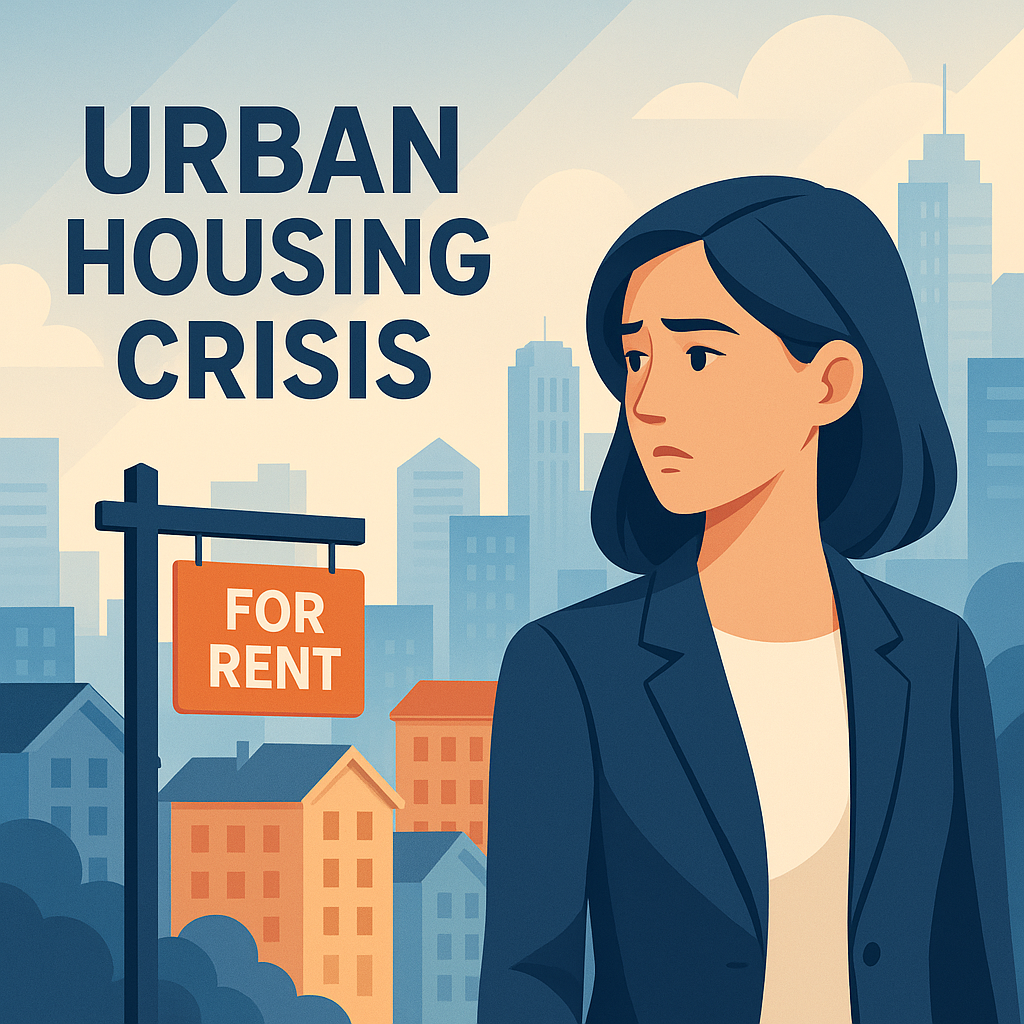
Urban centers around the globe are grappling with a pressing issue: the urban housing crisis. This crisis is characterized by a severe shortage of affordable housing options in metropolitan areas, leading to a host of related problems. Key terms to understand here include “affordable housing,” which refers to housing units that are reasonably priced to low- and moderate-income individuals, and “housing shortage,” which indicates a situation where the demand for housing significantly exceeds the available supply. Understanding and addressing the urban housing crisis is crucial because it affects essential aspects of society, including economic stability, health, and overall quality of life.
The urban housing crisis matters because housing is a fundamental human need and right. Inadequate or unaffordable housing can lead to increased homelessness, overcrowding, and deteriorating living conditions. Moreover, it can hinder a city’s economic development because worker displacement reduces workforce efficiency. Solving this crisis not only enhances the living conditions of individuals but also contributes to a city’s social and economic resilience. Addressing the crisis requires collaborative efforts among governments, private sectors, and communities to develop innovative solutions. As urban populations continue to grow, finding sustainable and scalable housing solutions is more imperative than ever.
Understanding the Causes of the Urban Housing Crisis
One of the primary causes of the urban housing crisis is the rapid pace of urbanization. Cities around the world are growing, with more people moving from rural to urban areas in search of better employment opportunities and living conditions. This rapid inflow of people results in a mismatch between housing supply and demand, often outpacing the construction of new housing.
A real-world example can be seen in Mumbai, India, where rapid urbanization has driven millions to the city. However, the infrastructure and housing development have not kept pace. The result is a sprawling urban landscape where slums proliferate due to limited affordable housing options. Contributing factors include expensive land prices and lengthy approval processes for new developments, which deter potential builders from investing in affordable housing projects.
Another significant cause of the housing crisis is the economic disparity. In many cities, housing prices have escalated faster than incomes. This is further compounded by speculative investment in real estate, which drives prices up but does not necessarily increase the stock of housing available for residents. In Vancouver, Canada, foreign investment has significantly contributed to increasing property values, making it difficult for local citizens to find affordable housing.
Exploring Government Policy Interventions
Government intervention is essential to address the housing crisis effectively. Various policies can be implemented to stimulate the construction of affordable housing and make existing housing more accessible. One successful approach is the development of inclusionary zoning policies, which require a proportion of new developments to be set aside for affordable housing.
A real-world example of effective government intervention is in the city of New York, where such zoning laws have incentivized developers to include affordable units within larger projects. The city also offers tax incentives and subsidies to developers who meet affordable housing criteria. However, the success of these policies depends heavily on enforcement and the commitment of local government to prioritize affordable housing amidst competing urban demands.
Innovative Housing Solutions
Innovative solutions prove to be an effective approach to mitigate the housing crisis, especially as traditional methods struggle to keep pace. One such solution is the development of micro-apartments, which provide compact, affordable living spaces in dense urban areas. These units offer an affordable option for single occupants or couples, maximizing the use of available space.
San Francisco has been one of the pioneers in micro-apartments, where limited space and high living costs necessitated new ways to provide housing. By allowing these smaller units, the city efficiently addressed some of the shortages without requiring significant physical expansion, which is limited by geographical constraints.
Another innovative approach is the utilization of modular and prefabricated houses. These constructions are faster and often cheaper than traditional building methods. Cities like London are increasingly turning to modular housing to quickly address homelessness and provide temporary shelters that can turn into permanent homes over time.
| Solution | City Example | Impact |
|---|---|---|
| Inclusionary Zoning | New York City | Increases affordable housing units |
| Micro-apartments | San Francisco | Offers affordable compact living |
| Modular Housing | London | Speeds up construction of homes |
Community-Led Initiatives
Community-led initiatives play a vital role in addressing the housing crisis. These initiatives involve local residents in decision making processes, fostering sustainable development that meets the community’s needs. Such efforts can range from cooperative housing, where residents collectively own and manage their living spaces, to community land trusts that ensure land is used for community benefit over profit maximization.
A prime example of community-driven efforts is found in Burlington, Vermont, where a community land trust has been instrumental in providing affordable housing options. This trust acquires and holds land for the benefit of the community, ensuring that housing remains affordable for the long-term. By separating the ownership of land and buildings, the model prevents real estate from falling prey to speculation and market pressures.
Another effective community-led model is Habitat for Humanity, a global non-profit that builds volunteer-driven housing projects. Their projects exemplify the power of community involvement, bringing together volunteers and future homeowners to construct affordable homes with sustainable practices.
Developing Sustainable Housing Models
Sustainability is at the core of combatting the housing crisis. Sustainable housing models not only focus on affordability but also on environmental impact, making cities more resilient to climate change. Implementing eco-friendly materials, utilizing renewable energy sources, and optimizing water conservation are just a few ways these models benefit urban areas.
In Freiburg, Germany, the Vauban district serves as a model of sustainable urban living. Developed on the site of former military facilities, it showcases energy-efficient buildings and solar energy use, prioritizing pedestrian and cycling infrastructure over car traffic. Such approaches not only reduce environmental footprints but also enhance the quality of urban life, promoting healthier and more connected communities.
Sustainable housing models also emphasize mixed-use development, where commercial, residential, and public spaces coexist, reducing the need for extensive commuting and creating vibrant, self-sufficient communities. Cities implementing such strategies not only address the housing crisis but also encourage economic growth and social cohesion.
Promoting Legislation for Long-Term Change
Legislative action can enforce the changes needed to tackle the housing crisis for the long term. Governments must focus on creating comprehensive housing policies that address supply constraints, regulate rental markets, and oversee development standards.
For instance, Berlin has adopted a rent cap policy to curb excessive rent increases, thereby making housing more affordable for its residents. Additionally, the city has invested in social housing, ensuring a stable supply of dwellings for lower-income families. These legislative measures demonstrate how policy can directly influence housing availability and affordability when effectively enforced.
Moreover, transparent zoning laws and streamlined building regulation processes can facilitate quicker, more efficient housing development. Governments proactive in adjusting legal frameworks to accommodate modern needs often see better synergy between development and community welfare.
Conclusion
The urban housing crisis is a multifaceted challenge that demands immediate and comprehensive solutions. By understanding the causes of this crisis, leveraging innovative housing techniques, involving community-led initiatives, and adopting sustainable housing models, cities can make significant strides toward alleviating housing shortages.
The key takeaway is that addressing the urban housing crisis not only benefits individuals by providing affordable, secure living conditions but also enhances broader societal benefits such as economic stability, reduced inequality, and strengthened community ties. As citizens and policymakers collaborate, the potential for sustainable, affordable urban living grows.
For those looking to make a difference, the next step is to advocate for responsible housing policies in your community, participate in local housing initiatives, and support policies that prioritize affordable housing development. Your engagement could be the catalyst for meaningful change in addressing the urban housing crisis.
Remember, solving the urban housing crisis empowers individuals and strengthens the fabric of society. It’s time to act, invest, and innovate for a future where everyone has a place to call home.
Frequently Asked Questions
1. What causes the urban housing crisis?
At the heart of the urban housing crisis is the simple yet challenging equation of supply and demand. As urban areas grow, the demand for housing increases. Unfortunately, the supply of affordable housing has not kept up with this demand, leading to a shortage. Several factors contribute to this disparity:
First, there’s rapid urbanization; as more people move to cities seeking economic opportunities, the demand for housing skyrockets. Additionally, construction of new housing units often lags due to regulations, high land prices, and insufficient investment. Another key factor is the gentrification of once-affordable neighborhoods, where rising property values push out lower-income residents. Finally, policies or lack thereof that do not adequately support affordable housing development play a critical role. All these factors combined create a challenging landscape for addressing the housing needs of urban dwellers.
2. Why is affordable housing important in metropolitan areas?
Affordable housing is a crucial pillar of a balanced and equitable urban environment. When housing is affordable, it ensures that low- and moderate-income individuals and families can live in the same areas as higher-income groups. This mix is vital for several reasons:
It facilitates diversity and inclusivity, giving everyone access to the services, employment opportunities, and amenities that cities offer. Affordable housing also reduces the burden on individuals, freeing up income for other essentials such as healthcare, education, and savings, which can significantly enhance quality of life. Furthermore, it can mitigate homelessness rates, boost local economies, and promote socially cohesive neighborhoods. Without affordable housing, cities risk becoming enclaves for the wealthy, exacerbating socioeconomic divides and societal tensions.
3. How do housing shortages affect urban populations?
The effects of housing shortages ripple through urban populations in a myriad of ways, often creating cycles of disadvantage and instability. One immediate impact is the increase in housing costs due to high demand and low supply, which can push low-income families into housing insecurity or homelessness. This, in turn, affects health, as overcrowded or inadequate living conditions can lead to both physical and mental health issues.
Economic strain is another consequence, as individuals spend a disproportionate amount of their income on rent or mortgages, leaving little for other necessities. Moreover, housing shortages can lead to longer commutes if people have to live far from their jobs, increasing stress and reducing time for family and leisure. Overall, housing shortages can diminish the quality of life for many urban residents and contribute to a range of social issues, from crime to educational disenchantment.
4. What solutions are available to address the urban housing crisis?
Addressing the urban housing crisis requires multi-faceted and integrated solutions from various sectors. Government plays a pivotal role by implementing policies that support affordable housing development, such as incentivizing builders to create low-cost housing units, easing zoning restrictions, and providing subsidies or tax breaks for builders and residents alike.
Additionally, innovative housing models, like co-living spaces and micro-apartments, can meet the needs of different demographics efficiently. Public-private partnerships can accelerate the development of affordable housing, utilizing both government resources and private sector agility. Urban planning must also incorporate sustainability practices, ensuring that new developments are environmentally friendly and resource-efficient. Importantly, community engagement is essential at every stage to ensure that solutions are tailored to the needs and wants of the residents themselves.
5. Can individuals take actions to help alleviate the housing crisis?
Individuals may feel that the housing crisis is beyond their control, but there are actions they can take to contribute to solutions. Advocacy and community involvement are powerful tools; by engaging in or supporting local initiatives and organizations focused on housing development and policy reform, individuals can amplify their voices on this issue.
Additionally, those who possess property or financial resources can consider options such as converting spaces into affordable rental units or supporting local housing charities. Educating oneself and raising awareness about the importance of affordable housing can also drive community discussions and change. On a grassroots level, supporting the creation and maintenance of inclusive neighborhoods can foster an environment where diverse income groups can coexist and thrive, ultimately contributing to a more balanced and equitable urban life.