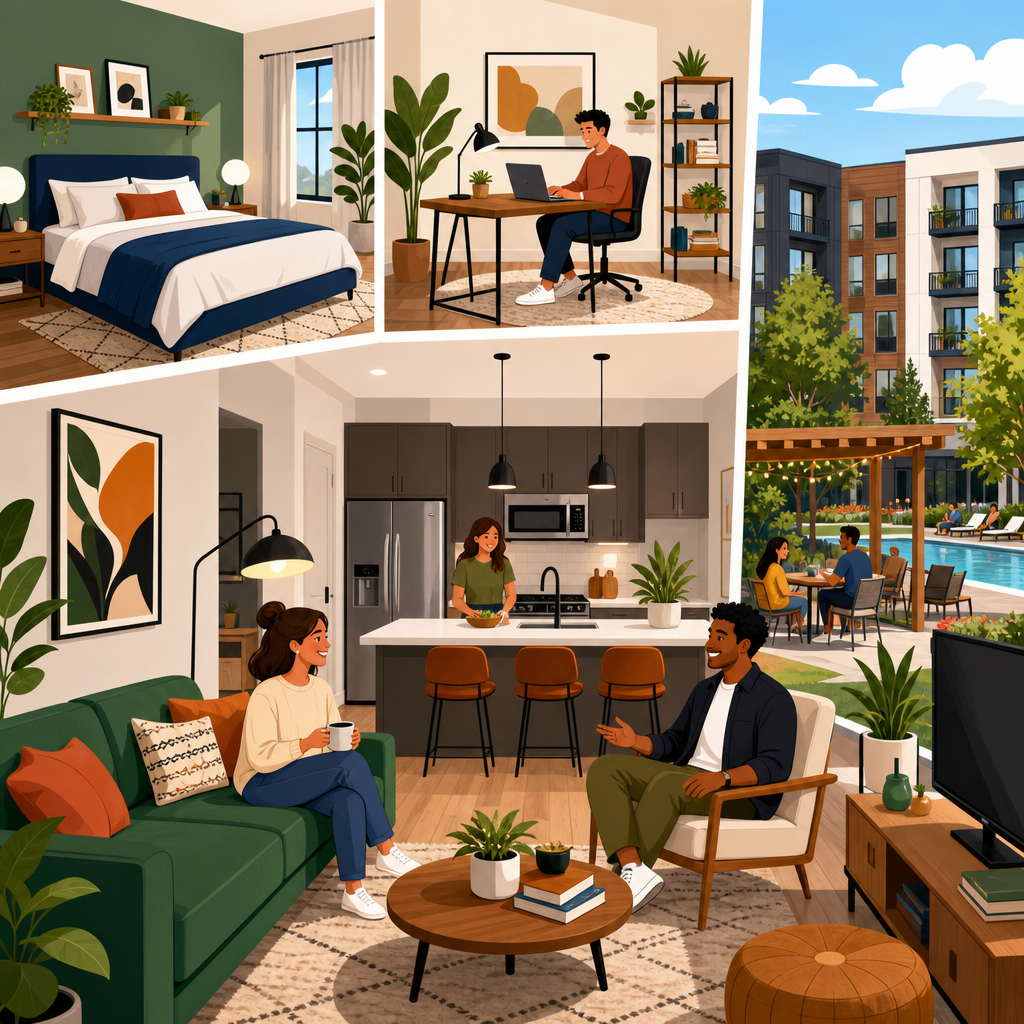
Interior layout trends in build-to-rent communities are reshaping how multifamily housing is planned, leased, and lived in across fast-growing urban markets. Build-to-rent communities, often abbreviated as BTR, are residential developments designed from the start for long-term rental occupancy rather than individual unit sales. In practice, that distinction changes almost every interior decision. Developers are not staging homes for a one-time transaction; they are creating durable, flexible spaces that must attract residents, reduce turnover, support efficient operations, and hold value over years of continuous use. After working with leasing teams, architects, and property operators on rental-focused projects, I have seen that the most successful interiors are neither purely trendy nor purely utilitarian. They combine resident appeal with repeatable performance.
Why does interior layout matter so much in build-to-rent communities? Because layout affects occupancy, rent premiums, maintenance costs, resident satisfaction, and even online reviews. A beautiful unit with poor storage or awkward circulation underperforms in the market. By contrast, a well-planned one-bedroom with a smart entry drop zone, usable wall space, acoustic separation, and flexible dining area can lease faster than a larger but less functional competitor. As housing costs rise and remote or hybrid work remains common, renters evaluate homes by how well rooms support daily routines, not just by square footage. That shift has pushed interior layout to the center of rental strategy.
Several key terms shape the discussion. Open-plan layouts refer to reduced separation between kitchen, dining, and living spaces. Flex spaces are secondary areas that can serve as office nooks, nurseries, or fitness corners. Programmed amenity integration means units are designed in relation to community spaces such as coworking lounges, parcel rooms, and fitness studios. Universal design supports usability for residents with different ages and abilities, while resilient materials and maintainable detailing reduce long-term operational burden. In build-to-rent settings, these concepts are not abstract design language. They influence construction cost, lease-up velocity, renewal rates, and the resident experience from move-in through retention.
This topic also matters within sustainable urban development because layout efficiency can reduce wasted square footage, support adaptive reuse, lower fit-out replacement frequency, and help residents live closer to work and services without feeling cramped. Better layouts make smaller homes more livable, which can improve land use efficiency in growing cities. They also help communities serve diverse household types, from single professionals and couples to roommates, downsizing retirees, and young families. The result is a housing product that can absorb demographic change more effectively than rigid floor plans. For developers and operators, understanding current interior layout trends in build-to-rent communities is therefore not about decoration. It is about designing for durability, flexibility, and sustained rental performance.
Flexible floor plans now outperform oversized rooms
The strongest trend in build-to-rent interior planning is the move away from simply maximizing room size and toward maximizing room usefulness. I have reviewed many lease-up reports where residents consistently chose units with better furniture placement, storage, and daylight over units that were technically larger. That pattern is easy to explain. Most renters judge a home by whether it supports specific routines: working on a laptop, hosting two friends for dinner, storing outdoor gear, supervising a child, or taking a video call without standing in the kitchen.
As a result, designers are creating floor plans with more intentional zoning. Instead of one undefined living area, many new BTR homes include subtle separation through kitchen islands, built-in desks, pocket doors, alcoves, or widened hall transitions. In townhome-style rental products, operators often prefer first-floor flex rooms that can function as offices or guest rooms, because hybrid workers are willing to pay for privacy. In apartment-style BTR communities, widened bedroom niches or living room recesses can accommodate a desk without making the entire unit feel like a workspace. These are small moves, but they change how the home performs.
Open layouts remain common, yet completely undifferentiated open plans are losing favor. Residents still want visual spaciousness, but they also want acoustic control and identifiable functions. That is why partial partitions, cased openings, and furniture-friendly walls are returning. Kitchens need enough openness for entertaining, but not so much exposure that every dish and appliance dominates the room. The most effective layouts balance connectedness with containment. That balance supports both social use and everyday order, which is critical in rental homes where residents may not invest in custom storage solutions.
Another important shift is designing layouts around digital life. Strong Wi-Fi placement, convenient outlet distribution, and areas with reliable natural light for video calls now influence planning decisions. A layout that supports one productive work zone can widen the renter pool significantly. For roommates, split-bedroom plans remain especially effective because they improve privacy and reduce noise conflicts. For families, sightlines from kitchen to living area and proximity between secondary bedrooms and bathrooms remain top priorities. Build-to-rent communities that respond to these realities create homes that feel intentionally designed rather than generically drafted.
Kitchen, storage, and bathroom layouts drive resident satisfaction
When residents decide whether a rental home feels easy to live in, they usually judge the kitchen, storage areas, and bathrooms first. These spaces carry the highest daily use and the greatest potential for frustration. In build-to-rent communities, layout decisions in these rooms directly affect maintenance calls and renewal decisions. A kitchen with poor landing space near the refrigerator, limited pantry storage, or blocked circulation around the dishwasher feels inconvenient every day. A bathroom with inadequate vanity storage or no place for towels creates clutter immediately, regardless of finishes.
Current BTR kitchen trends emphasize efficient work triangles, uninterrupted counter runs, and islands that do more than add visual appeal. Islands increasingly include outlets, under-counter storage, seating for casual meals, and enough clearance for two people to move comfortably. In compact units, L-shaped kitchens often outperform narrow galley plans because they create a stronger social connection to the living area while preserving practical prep space. In larger rental townhomes, walk-in pantries are less common than pantry cabinets paired with mudroom-style storage, because the latter combination uses square footage more effectively.
Storage has become a defining competitive advantage. Renters are often moving from older apartments with undersized closets or from urban units where seasonal items have nowhere to go. Successful build-to-rent layouts address this by adding linen closets, entry cabinets, laundry shelving, bedroom wardrobe walls, and exterior storage lockers where feasible. Even a well-placed owner’s closet can help operations manage unit turns more efficiently. I have seen modest increases in cabinet depth or hallway width produce outsized leasing benefits because prospects immediately notice where their belongings will fit.
Bathroom planning is also getting smarter. Double vanities are still valued in primary suites, but residents often care more about usable drawer storage, bright task lighting, and a layout that allows one person to shower while another uses the sink. In secondary bathrooms, tub-shower combinations remain important for households with children, while walk-in showers are increasingly preferred in one-bedroom and downsizer-oriented products. Durable porcelain tile, solid-surface counters, and easy-to-clean transitions are not just finish decisions; they support cleaner detailing and reduce long-term replacement cycles.
| Layout feature | Why residents value it | Why operators value it |
|---|---|---|
| Kitchen island with seating | Supports dining, working, and social use | Improves perceived space without adding rooms |
| Entry drop zone or mud bench | Creates order for bags, shoes, and packages | Reduces clutter complaints during tours and inspections |
| Split-bedroom configuration | Improves privacy for roommates and families | Expands target renter profiles |
| Linen and utility storage | Makes everyday living easier | Boosts satisfaction and supports longer stays |
| Dedicated work nook | Enables hybrid work without sacrificing main rooms | Supports rent premiums in competitive markets |
Amenity-connected layouts are changing the role of the private unit
One of the most important build-to-rent trends is that interior layouts are being designed in direct relationship with shared amenities. In older multifamily models, the unit had to do almost everything. Today, many BTR communities can distribute functions across private and shared spaces more intentionally. If a property offers reservable coworking rooms, conference booths, a fitness studio, pet wash, package lounge, and outdoor social areas, the unit itself can be more focused and efficient. That does not mean shrinking homes carelessly. It means sizing and planning them based on the full living ecosystem of the community.
For example, a studio or one-bedroom unit may lease well with a compact dining area if the property includes coworking tables and a clubroom suitable for group gatherings. Likewise, a smaller patio may be acceptable if the community has attractive courtyards, grilling stations, and shaded seating. The best projects make this tradeoff explicit in both design and leasing. They show residents how private and shared spaces complement each other. This approach is particularly effective in high-density urban locations where land costs make every square foot important.
However, the strategy only works when amenities are genuinely usable. I have seen projects overestimate the substitutability of community space. If coworking rooms are too few, noisy, or difficult to reserve, residents still expect a workable office zone inside the unit. If package rooms are inconvenient, entry storage becomes even more important. If outdoor common space lacks shade or privacy, balconies matter more. In other words, unit layout cannot rely on amenities that are poorly programmed or under-maintained. The operational model must support the design concept.
This is where coordination among architects, interior designers, property managers, and asset managers matters. Amenity-connected layout planning should be grounded in resident behavior, not brochure language. Operators who track amenity utilization, resident surveys, and renewal feedback can refine future floor plans with far greater precision. Over time, these data points reveal which private functions can be shared successfully and which must remain inside the home. That feedback loop is becoming a core competitive advantage for sophisticated build-to-rent platforms.
Durability, accessibility, and sustainability are now layout decisions
Interior layout trends in build-to-rent communities are increasingly shaped by long-term performance, not only by aesthetics. Durable planning starts with circulation, clearances, and maintainable detailing. A narrow laundry closet with difficult appliance access may save inches on paper, but it creates service headaches for years. A front door that opens into a cramped corridor with no landing area invites damage and resident dissatisfaction. By contrast, layouts that accommodate moving, cleaning, and repairs reduce operating friction and preserve finish quality.
Accessibility is also gaining a more central role. Wider passages, curbless shower options, reachable storage, lever hardware, and smoother transitions are no longer treated solely as special-case features. They expand the resident base and future-proof the asset. In mixed-age rental communities, universally usable layouts support everyone from young parents with strollers to older residents aging in place. They also help properties respond to changing household needs without expensive retrofits. The most effective teams integrate these principles early, because retroactive accessibility fixes are usually more costly and less elegant.
Sustainability shows up in layout through efficiency and adaptability. Compact but well-planned units can reduce embodied carbon by using less material per household while still delivering high livability. Durable surfaces in kitchens, baths, and entries reduce replacement frequency. Better daylight penetration can lower daytime lighting demand and improve resident comfort. Stackable plumbing walls, rational structural grids, and standardized wet-zone planning can simplify construction and maintenance. These choices may sound technical, but they directly influence the resident experience by making homes quieter, brighter, easier to clean, and less prone to disruption.
Technology integration also supports sustainable operations. Smart thermostats, leak detection near water heaters and washing machines, keyless entry, and submetering can all influence where equipment closets, utility walls, and communication hubs are located. Good layout anticipates these systems cleanly. It avoids the visual clutter and service access problems that appear when technology is treated as an afterthought. In the strongest BTR communities, layout, operations, and sustainability strategy are planned together, creating homes that remain competitive longer and cost less to maintain.
What developers and operators should prioritize next
For teams planning the next generation of build-to-rent communities, the clearest lesson is that interior layout should be treated as a performance tool, not a styling exercise. Start with resident segmentation. A community targeting roommates, remote workers, and young professionals should emphasize split bedrooms, work nooks, package-friendly entries, and social kitchens. A community aimed at families and long-term renters may benefit more from mudroom storage, secondary bath functionality, bedroom adjacency, and private outdoor access. The wrong layout for the target audience can suppress rents even when finishes look current.
Next, test plans with real furniture and real routines. Too many layouts still appear workable only because marketing plans use undersized furniture blocks. During design review, teams should verify dining table fit, sofa placement, TV wall options, stroller storage, laundry access, and door swings. Walk through move-in, grocery unloading, pet care, and work-from-home scenarios. These exercises expose flaws early, when corrections are cheapest. Post-occupancy feedback should then inform the next phase of product development.
Finally, align interior layouts with brand promise and operating model. If a property markets itself as effortless living, the home must support organization, maintenance access, and everyday convenience. If it promises wellness, layouts should prioritize daylight, acoustic separation, and connection to outdoor space. If it promotes sustainability, durable and efficient planning must be visible in the resident experience, not hidden in specifications. Build-to-rent communities that win over time are those where design intent, resident behavior, and operations reinforce one another consistently.
Interior layout trends in build-to-rent communities point to a simple conclusion: renters reward homes that make daily life work smoothly. Flexible floor plans, stronger kitchen and storage planning, thoughtful amenity integration, and durable accessible design all contribute to better leasing and better retention. In a market where residents compare options quickly and live with their choice every day, layout quality becomes a measurable business advantage.
For sustainable urban development, that advantage extends beyond individual properties. Better-planned rental homes use space more efficiently, adapt to changing household needs, and stay relevant longer, reducing wasteful churn in both materials and tenant turnover. Developers, designers, and operators who treat layout as a strategic asset can create communities that are more livable, more resilient, and more competitive. Review your current floor plans, test them against real resident routines, and make layout performance a priority in every future build-to-rent project.
Frequently Asked Questions
What makes interior layouts in build-to-rent communities different from traditional multifamily or for-sale housing?
Interior layouts in build-to-rent communities are shaped by a very different business model. In a for-sale home, the design often aims to impress a buyer during a short decision window. In traditional multifamily, layouts may prioritize density and standardization above all else. In build-to-rent communities, however, the goal is long-term resident satisfaction, operational durability, and steady leasing performance over time. That means interior planning is less about temporary visual impact and more about how people actually live day after day.
As a result, BTR interiors tend to emphasize flexible, efficient floor plans that support everyday routines. Open-concept living areas remain popular, but they are often refined to create better furniture placement, more useful circulation paths, and clearer separation between living, dining, and work zones. Developers are also placing greater importance on storage, private bedrooms, usable kitchens, and layouts that support roommates, families, couples, remote workers, and pet owners. Instead of designing around a one-time sale, they are designing around renewal rates, maintenance realities, and resident retention.
Another key distinction is durability. Materials, fixture selections, and room configurations in BTR homes are chosen with repeated occupancy in mind. Interior layouts are expected to perform well across multiple lease cycles while still feeling modern and livable. That is why many build-to-rent communities favor practical upgrades such as hard-surface flooring in main living areas, kitchens with generous cabinetry, mudroom-style entry storage, and bathrooms designed for easy cleaning and longevity. In short, BTR layout trends reflect a blend of hospitality thinking, property management strategy, and resident-centered design.
Which interior layout trends are currently most popular in build-to-rent communities?
Several interior layout trends are defining today’s build-to-rent communities, and most of them revolve around flexibility, privacy, and everyday functionality. One of the most common trends is the evolution of the open floor plan. Rather than creating one oversized undifferentiated room, newer BTR layouts are using subtle design cues to create zones within open space. Kitchen islands, lighting placement, ceiling changes, furniture walls, and strategic window positioning help residents define where to cook, dine, work, and relax without making the home feel closed off.
Another major trend is the inclusion of dedicated or semi-dedicated work-from-home space. As remote and hybrid work remain a lasting reality, developers are rethinking spare bedrooms, alcoves, lofts, and flex rooms so they can function as home offices without sacrificing the livability of the rest of the unit. Even smaller floor plans now often include niches for built-in desks, pocket-office areas, or secondary spaces that can easily shift between work, study, and storage use. This kind of flexibility makes a rental home more attractive to a broader range of residents.
Privacy-oriented layouts are also gaining traction. In many BTR homes, bedrooms are being positioned farther apart, especially in two- and three-bedroom plans, to better accommodate roommates, multigenerational households, or families with older children. En suite bathrooms, split-bedroom configurations, and more intentional transitions between public and private areas are increasingly common. At the same time, kitchens are becoming more central to the home experience, often featuring larger islands, walk-in pantries, and better visual connection to living areas. Additional trends include larger laundry spaces, more entry storage, enhanced outdoor connectivity through patios or small yards, and layouts that support pets with practical flooring and easier access to exterior spaces.
How are build-to-rent interior layouts adapting to remote work, hybrid schedules, and changing resident lifestyles?
Build-to-rent interior layouts are adapting to modern lifestyles by becoming far more versatile than the standard apartment plans of the past. Remote work was a major catalyst, but the shift is broader than that. Residents now expect homes to support multiple functions throughout the day, including work, relaxation, exercise, entertainment, and family life. In response, BTR communities are embracing layouts that can change with those needs rather than locking every room into one fixed purpose.
One of the clearest examples is the rise of flex spaces. These may appear as dens, lofts, bonus nooks, expanded landings, or slightly enlarged secondary bedrooms that can serve as offices, guest rooms, hobby areas, or study spaces. Developers are also paying closer attention to acoustic separation, natural light, and outlet placement so these spaces are not just technically available, but genuinely usable. A layout that places a work area near daylight while still offering visual privacy can significantly improve a resident’s experience and make the home more competitive in leasing.
Daily routines are also influencing layout decisions in practical ways. Kitchens are being designed for more frequent at-home meals, often with better prep surfaces and storage. Laundry rooms are becoming more functional and less hidden, with space for shelving or utility use. Entry areas are increasingly treated as drop zones for shoes, bags, packages, and pet gear. Even circulation patterns matter more now, because residents spend more waking hours inside the home. Well-planned BTR interiors reduce friction, create a sense of order, and allow one household to carry out different activities simultaneously. That level of adaptability is one of the strongest drivers behind current layout trends.
Why do privacy, storage, and durability play such a large role in build-to-rent interior planning?
Privacy, storage, and durability are central to build-to-rent interior planning because they directly affect resident satisfaction and long-term property performance. In a rental setting designed for long-term occupancy, people are not simply looking for a place to stay for a short period. They want a home that supports real life. Privacy becomes especially important in households with roommates, children, guests, or work-from-home schedules. Layouts that reduce bedroom wall sharing, create separation between sleeping and living areas, and provide better bathroom access tend to be more appealing and more livable over time.
Storage has a similarly large impact. Residents are much more likely to renew a lease when a home helps them stay organized. That is why current BTR layouts often include larger bedroom closets, linen storage, kitchen pantries, laundry shelving, and entryway storage solutions. In some communities, garages, mudrooms, and under-stair storage are becoming meaningful differentiators. These features may seem basic, but they solve everyday problems and make a rental feel more like a permanent home rather than a temporary unit.
Durability is equally critical from both the resident and operator perspective. Developers and property managers need interiors that maintain their appearance and function across multiple lease cycles without constant replacement or excessive turnover costs. That influences not just materials, but layout itself. Designs that minimize tight furniture fits, improve cleaning access, and reduce wear in high-traffic zones tend to perform better over time. Wider circulation paths, resilient flooring, practical bathroom configurations, and kitchens with efficient work triangles all contribute to a home that is easier to maintain and more comfortable to live in. In BTR communities, strong interior planning is not just about aesthetics; it is a strategy for protecting asset value while improving the resident experience.
How do interior layout trends in build-to-rent communities influence leasing, retention, and long-term asset value?
Interior layout trends have a direct effect on leasing success because floor plans are often one of the first and most important decision factors for prospective residents. A visually appealing home may generate interest, but a functional layout is what helps convert that interest into signed leases. When a build-to-rent home offers usable space, privacy, storage, and flexibility, it stands out in a crowded market. Prospective renters can more easily picture their daily lives in the home, and that emotional clarity is powerful during the leasing process.
Retention is where layout quality becomes even more important. Residents may be attracted by amenities, finishes, or location, but they stay when the home continues to work well for them over time. A smart interior layout reduces frustration and supports lifestyle changes, whether that means a new remote work routine, a growing family, a roommate arrangement, or the addition of a pet. Homes that feel adaptable and comfortable are more likely to earn renewals, and that can significantly reduce turnover costs, vacancy periods, and unit refresh expenses for operators.
From an investment standpoint, strong layout design also contributes to long-term asset value. Communities with well-planned interiors tend to remain competitive longer because their homes are more broadly appealing and less dependent on short-lived style trends. Functional layouts can support stronger occupancy, more stable rent performance, and better resident reviews, all of which influence the property’s market position. In fast-growing urban markets especially, where renter expectations continue to rise, build-to-rent communities that prioritize thoughtful interior planning are better positioned to perform. In other words, layout is not just a design choice; it is a core operational and financial advantage.