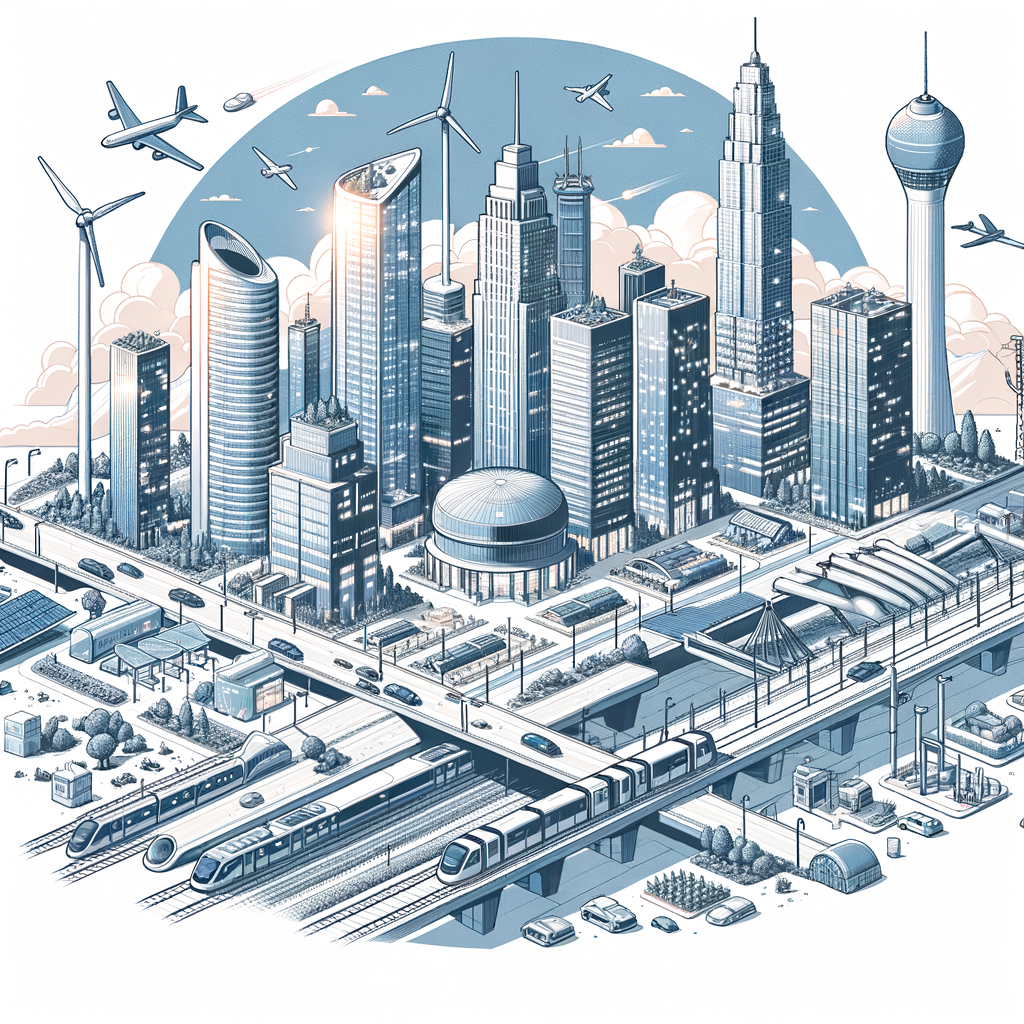
Urban transportation infrastructure is a critical component of modern cities. It is the backbone that drives economic activity, dictates the pace of daily life, and shapes the social dynamics of urban environments. As cities continue to grow, driven by increasing population density and expanding urbanization, the pressure on transport systems intensifies, calling for unprecedented innovations and robust adaptations. Urban transportation infrastructure encompasses roads, public transit systems, airports, rail networks, bicycle paths, and pedestrian walkways, each playing a pivotal role in ensuring efficient mobility and accessibility. In recent years, technological advancements, environmental concerns, and the shifting needs of urban populations have accelerated transformations within this sphere. This article explores the emerging trends and innovations shaping the future of urban transportation infrastructure, providing insights into how cities are reinventing their transport systems to meet the challenges of the 21st century.
Historically, transportation infrastructure has evolved through various phases – from horse-drawn carriages to the advent of railways, the mass adoption of private automobiles, and the development of comprehensive public transport systems. However, today’s cities face unprecedented challenges that require a multidimensional approach to planning and development. Factors such as climate change, digitalization, and demographic shifts necessitate a rethinking of urban transport strategies. Cities across the globe are investing in sustainable and inclusive transportation solutions that not only reduce environmental impact but also enhance urban quality of life and economic viability. Understanding these trends is crucial for urban planners, policymakers, and industry stakeholders looking to create resilient and forward-thinking transport infrastructure.
With the global population expected to reach around 9.7 billion by 2050, the majority of whom will reside in urban areas, the necessity for efficient, sustainable, and innovative transportation solutions has never been more urgent. This article delves into several key trends and innovations in urban transportation infrastructure, examining how technology, policy, and community engagement are driving transformative changes. By dissecting these elements, it becomes clear how cities can create scalable and integrated transport networks that meet the current and future demands of urban living.
Trends in Urban Transportation Infrastructure
The landscape of urban transportation is in a state of rapid evolution, characterized by significant trends that promise to redefine how city dwellers commute. At the heart of these changes is the growing shift towards sustainable and smart transportation solutions. As cities aim to meet environmental targets, there’s an increasing emphasis on developing infrastructures that minimize carbon footprints. Electrification stands as a dramatic game-changer, with electric buses and EV-friendly cities setting the pace for zero-emission futures. Public transit systems are also adapting to incorporate more electric vehicles, supported by expanding charging networks and evolving energy solutions.
Beyond electrification, the integration of data and digital technology is ushering cities into the era of smart transportation. Traffic management systems powered by AI, real-time data analytics, and the Internet of Things (IoT) are critically optimizing urban mobility. These systems enhance efficiency by predicting congested routes, managing public transport schedules, and improving emergency services’ responsiveness. Cities like Singapore and Amsterdam are pioneers in deploying smart infrastructure to alleviate transport-related inefficiencies significantly. As reliable data becomes more accessible, urban planners can craft evidence-based strategies that better accommodate and anticipate the nuanced demands of urban transportation.
Public transport is also experiencing a renaissance due to an increased emphasis on resilience and inclusivity. As cities seek to accommodate diverse populations, adaptability and accessibility have emerged as paramount objectives. This shift is evident in improved designs for stations and vehicles that cater to the needs of the disabled, elderly, and infant passengers. In parallel, expansion efforts focus on connecting underserved neighborhoods to economic centers, ensuring equitable access to opportunities. Simultaneously, there has been a push towards multi-modal transport systems that allow seamless transitions between different types of transport modes, enhancing user convenience.
Another significant trend affecting urban transportation is the growing use of micro-mobility solutions. Items from electric scooters to bicycles offer compact, flexible, and eco-friendly travel choices. Given their ability to navigate congested streets effectively, cities worldwide have embraced micro-mobility as a vital piece of urban transit infrastructure. This sector’s impressive growth is bolstered by advancements in sharing platforms, mobile applications, and technology that facilitates efficient mid-to-short-distance commutes. Cities such as Paris and San Francisco lead in incorporating micro-mobility solutions within their broader transportation frameworks, signaling a potential shift that favors light-weight, sustainable alternatives over traditional modes.
Innovations in Urban Transportation Infrastructure
The pursuit of innovation in urban transportation has ignited creativity and technical ingenuity globally, leading to groundbreaking developments reshaping cityscapes. Autonomous vehicles (AVs) are perhaps the most talked-about innovation, carrying the promise to transform urban mobility by offering safer, efficient, and flexible travel options. As artificial intelligence and machine learning technologies mature, AVs signify a significant shift towards automated transport solutions. With trials already underway in cities like Phoenix and Detroit, autonomous shuttles and public transport vehicles could become routine, significantly changing how urban transit is conceived and implemented.
Additionally, the development of integrated mobility platforms marks another profound innovation. These digital solutions offer users a single-touchpoint to access multiple forms of transport, from buses to carpooling services, e-scooters, and rail networks. The blended approach eliminates the friction traditionally involved in coordinating multi-modal journeys, promoting usage through convenience and user-centric design. Helsinki’s MaaS (Mobility as a Service) system is a trailblazer in transforming travel into a consolidated service framework, integrating payments, routes, and schedules in a cohesive mobile platform.
Hyperloop technology also promises to revolutionize urban transportation infrastructure by offering ultra-fast travel in vacuum tube systems. Originally conceptualized by Elon Musk, hyperloop systems could diminish travel times dramatically, with speeds projected to reach 700 mph. These systems use pod-like capsules and are vacuum-sealed to reduce air resistance, providing a sustainable travel alternative with significantly reduced energy consumption and environmental impact compared to traditional rail and air transport.
Renewable energy solutions continue to shape the evolution of urban transport infrastructures, catalyzing green innovations and carbon-neutral ambitions. Solar roadways, wind-powered charging stations, and energy-harvesting pavements are part of the repertoire that cities are beginning to incorporate. Projects like Eindhoven’s solar bike paths exemplify how infrastructure can generate clean energy while fulfilling transport needs, providing dual benefits and maximizing urban space utility.
Conclusion
In conclusion, the convergence of sustainability, technology, and inclusivity is driving transformative innovations in urban transportation infrastructure. As cities grapple with contemporary challenges, this dynamic interplay is crucial, guiding urban environments towards more resilient, efficient, and equitable futures. The trends and innovations discussed in this article indicate an overarching move towards a sustainable, integrated, and user-friendly urban mobility ecosystem.
Technological advancements, such as electric vehicles, autonomous driving technologies, and renewable energy integration, reflect the critical pivot cities must execute to align environmental goals with transportation infrastructure. Cities committed to innovation can position themselves at the forefront of modern urban planning, delivering transportation solutions that significantly enhance the quality of urban life.
Moreover, the push for inclusivity ensures transport systems accommodate diverse urban populations while fostering accessibility and connectivity. By embracing adaptive designs, enhancing multi-modal transport systems, and encouraging micro-mobility, cities can work towards balanced development that provides opportunities for all residents. These efforts take an inspiring step towards realizing equitable and efficient urban landscapes
Ultimately, urban transportation infrastructure is at a transformative crossroads, driven by collaborative efforts among city planners, technology developers, policymakers, and communities. By staying attuned to emerging trends and leading innovations, cities have the potential to create transport systems that prepare for future dynamic urban challenges, ensuring that mobility remains a catalyst for prosperity and sustainability in the urban world.