Urban sustainability is the practical effort to make cities healthier, lower carbon, more resilient, and more equitable while supporting economic activity and daily life. In professional planning work, that means reducing resource consumption, designing infrastructure that lasts, and improving outcomes for residents at the same time. The phrase covers a wide field, but the core idea is simple: a city should meet present needs without undermining its future capacity to provide housing, mobility, clean air, water, public health, and opportunity.
For a hub article under urban challenges and solutions, sustainability in the miscellaneous category matters because many city problems do not fit neatly into one department. Heat islands, waste overflow, stormwater flooding, digital access, aging buildings, and public space management overlap constantly. I have seen municipalities discover that a transit upgrade changes street safety, storefront activity, emissions, and even neighborhood cooling. Urban sustainability is therefore not one project type. It is a method of decision-making that links land use, infrastructure, policy, technology, finance, and community behavior.
Key terms help clarify the discussion. Resilience is a city’s ability to absorb shocks such as floods, heat waves, grid failures, or supply disruptions and recover quickly. Circular economy refers to systems that reduce waste by reusing materials, repairing products, and designing for recovery instead of disposal. Nature-based solutions use trees, wetlands, permeable soils, and green roofs to manage heat and water while providing habitat and amenity. Decarbonization means cutting greenhouse gas emissions from buildings, transport, energy, waste, and industry. Equity means the benefits and burdens of urban systems are shared fairly, especially for lower-income residents and historically underserved neighborhoods.
Why does this matter now? Cities generate roughly 70 percent of global energy-related carbon dioxide emissions according to the International Energy Agency, and urban populations continue to grow. At the same time, climate risks are intensifying. The World Meteorological Organization has documented rising temperatures and more frequent extreme weather, which translate in cities into dangerous heat, overloaded drainage systems, and infrastructure stress. Against that backdrop, good sustainability practice is not cosmetic. It is operational risk management combined with public value creation.
Energy-efficient buildings and district systems
Buildings are usually the first place cities can make measurable progress because they consume large amounts of electricity and fuel every day. In many jurisdictions, building operations account for the largest share of local emissions. The strongest urban sustainability programs start with benchmarking, energy audits, and performance standards. New York City’s Local Law 97 is one example of a policy that pushes large buildings to cut emissions through retrofits, improved controls, electrification, and better maintenance. Similar approaches appear in Washington, DC, Boston, and several European cities.
From direct project experience, the biggest gains often come from unglamorous fixes: sealing air leaks, recommissioning HVAC systems, upgrading lighting to LEDs with occupancy controls, and improving insulation at the roof and facade. Heat pumps are increasingly important because they can replace fossil-fuel heating while also providing cooling. Smart meters and building management systems help operators find waste in real time. District energy systems can multiply these benefits by sharing heating and cooling infrastructure across multiple buildings, reducing peak demand and improving efficiency. Copenhagen and Stockholm have shown that district networks, when paired with low-carbon energy sources, can dramatically cut urban emissions.
Mobility, street design, and access
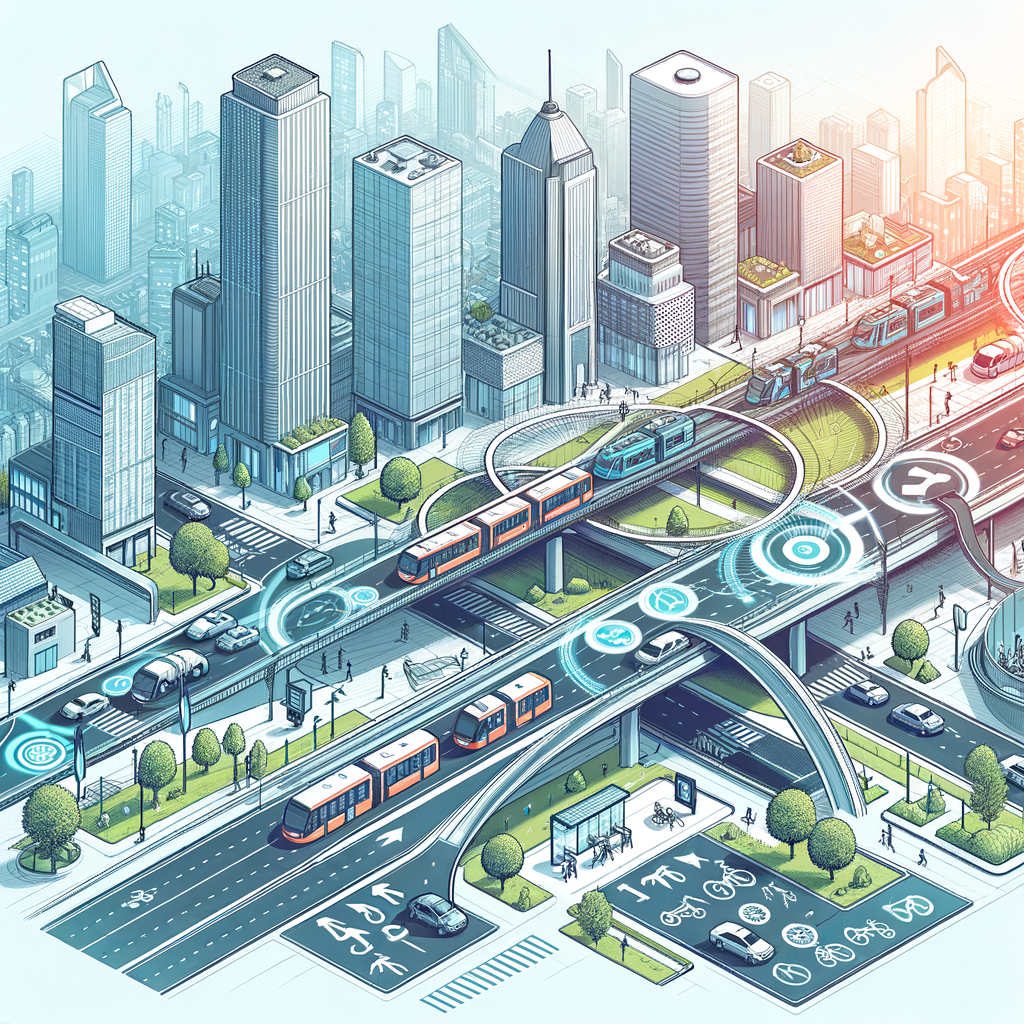
Urban sustainability depends on how people and goods move. A city that requires every trip to be made by private car will struggle with emissions, land consumption, noise, congestion, and safety. The most effective mobility strategies create attractive alternatives: reliable public transit, protected cycling networks, walkable streets, and freight systems that reduce unnecessary vehicle kilometers. Transit-oriented development reinforces this by concentrating housing, jobs, and services near stations. That shortens trips and increases the viability of buses, metro systems, and regional rail.
Street design matters as much as transport technology. When cities narrow lane widths, calm intersections, add protected bike lanes, improve bus priority, and widen sidewalks, they usually see better safety and a shift in travel behavior. Paris offers a clear example, with rapid expansion of cycling infrastructure and lower-car streets changing modal share in a short period. Bogotá’s bus rapid transit and open streets program demonstrate that cost-effective interventions can reach large populations. Electrification also plays a role, but electric vehicles alone do not solve congestion or road danger. Sustainable mobility is achieved when cities improve access, not merely vehicle efficiency.
Water, stormwater, and climate adaptation
Many urban sustainability failures appear first in water systems. Older cities often rely on combined sewers or aging drainage networks designed for historical rainfall patterns rather than current extremes. As intense storms become more common, streets flood, basements back up, and treatment plants face overload. The best practice response combines gray infrastructure upgrades with green infrastructure that slows, stores, infiltrates, and cleans water. Bioswales, retention basins, permeable pavement, rain gardens, and restored urban wetlands reduce runoff volume and improve water quality.
Rotterdam is often cited because it has treated water management as a city-shaping design problem rather than a hidden utility issue. Water plazas, adaptive public spaces, and flood-conscious urban design help the city live with water instead of trying to eliminate risk entirely. Singapore’s ABC Waters program also demonstrates how stormwater channels can become multifunctional landscapes. Heat adaptation is closely linked. Trees, shade structures, reflective surfaces, cool roofs, and ventilation corridors reduce urban heat island effects, which can be several degrees higher than surrounding areas. Mapping vulnerable populations and critical facilities is essential so investments target schools, senior housing, clinics, and transit stops first.
Waste, circular economy, and resource recovery
Waste management is often treated as a back-end municipal service, yet it is central to urban sustainability because it affects emissions, land use, sanitation, and material efficiency. The most mature city programs move beyond collection and disposal toward prevention, separation, recovery, and market development for secondary materials. That means reducing food waste, expanding organics collection, improving construction and demolition recovery, and creating procurement rules that favor recycled content and durable goods.
San Francisco’s long-running zero waste policies show how regulation, service design, and public education can work together. South Korea’s volume-based waste fee systems and food waste separation programs demonstrate another proven model. In construction, cities increasingly require waste management plans and deconstruction assessments so salvageable timber, metal, fixtures, and concrete are not simply buried. Circularity also depends on repair and reuse ecosystems. Maker spaces, tool libraries, refurbishment businesses, and digital resale platforms keep materials in circulation longer. These measures cut disposal costs and lower the embedded carbon associated with producing new materials.
Smart technology, governance, and data-driven management
Technology supports urban sustainability when it solves operational problems, not when it is deployed as branding. The strongest digital initiatives connect sensors, geospatial analysis, asset management, and public dashboards to specific service outcomes. Cities use Internet of Things devices to detect water leaks, optimize street lighting, monitor air quality, and improve waste collection routes. Geographic information systems help planners identify heat hot spots, flood exposure, tree canopy gaps, and areas underserved by public amenities. Open data portals can also improve accountability by showing whether targets are being met.
Good governance determines whether these tools deliver value. Data standards, privacy controls, procurement discipline, and maintenance capacity matter more than novelty. In practice, I have seen cities buy fragmented platforms that cannot exchange data, creating expensive silos. A better approach uses interoperable systems, clear key performance indicators, and pilot projects tied to procurement lessons. The table below summarizes common urban sustainability interventions and the conditions under which they usually perform best.
| Intervention | Primary benefit | Best use case | Key limitation |
|---|---|---|---|
| Building retrofits | Lower energy use and emissions | Older high-consumption building stock | Upfront capital and tenant coordination |
| Bus priority lanes | Faster, more reliable transit | Dense corridors with delayed bus service | Political resistance to road reallocation |
| Green roofs and trees | Cooling and stormwater control | Heat-prone districts with limited open land | Maintenance and irrigation requirements |
| Organics collection | Waste diversion and methane reduction | Residential areas with disposal capacity | Contamination if outreach is weak |
| Leak detection sensors | Reduced water loss | Aging distribution networks | Needs technical staff and analytics |
Equity, public health, and community participation
A sustainable city is not simply efficient; it must also be livable and fair. Many low-income neighborhoods experience higher air pollution, less tree canopy, more flood exposure, older housing, and fewer quality transit options. If sustainability policy ignores these patterns, it can deepen inequality even while improving citywide metrics. Equity-centered planning starts with distributional analysis: who benefits, who pays, and who bears the risk. That requires demographic mapping, engagement in multiple languages, and performance targets tied to neighborhoods rather than averages alone.
Public health offers a practical lens. Better air quality, safer streets, cooler neighborhoods, active travel, and cleaner housing all reduce disease burden. The health impacts are measurable. Fine particulate pollution is associated with cardiovascular and respiratory illness, while extreme heat disproportionately harms older adults, outdoor workers, and people without adequate cooling. Community participation improves outcomes when it starts early and affects real decisions, such as tree species selection, curb use, stormwater design, or the location of mobility hubs. Residents often know where buses bunch, where flooding starts, or which public spaces feel unsafe after dark. Sustainable cities use that local knowledge as operating intelligence, not as a box-checking exercise.
Financing, policy integration, and implementation
The final barrier is usually not ideas but execution. Cities often know what works yet struggle with fragmented budgets, short political cycles, procurement delays, and unclear ownership between agencies. Effective implementation starts by integrating sustainability goals into capital planning, zoning, infrastructure standards, and asset management rather than treating them as standalone initiatives. Climate action plans matter, but they only change outcomes when departments use them to shape daily decisions. Performance standards for buildings, complete streets policies, green procurement rules, and resilience criteria for capital projects turn strategy into routine practice.
Financing can come from multiple sources: municipal bonds, green bonds, utility incentives, public-private partnerships, revolving loan funds, tax credits, and value capture around transit investments. The best funding packages match project type to revenue profile. Energy efficiency projects can often be supported through savings or energy service agreements, while flood protection and public realm upgrades usually require public capital because benefits are broad and long term. Strong measurement is essential. Cities should track energy intensity, mode share, tree canopy, waste diversion, flood claims, and access to parks or transit within a walkable distance. What gets measured consistently gets managed more effectively.
Urban sustainability works when cities stop treating environmental performance, resilience, affordability, and quality of life as separate agendas. The most successful places align building policy, mobility planning, water management, digital systems, waste reduction, and public health around a common operating goal: deliver better urban services with fewer resources and lower risk. That is why this topic belongs at the center of any urban challenges and solutions hub. It connects nearly every municipal function and every neighborhood experience.
The practical lessons are clear. Start with data, but tie it to service outcomes. Prioritize buildings, transport, water, and waste because they produce the largest operational gains. Use nature-based solutions where they outperform single-purpose gray infrastructure. Design streets and public spaces for people, not only vehicles. Build governance systems that support cross-department coordination, transparent measurement, and long-term maintenance. Most importantly, direct investment toward communities facing the highest exposure to heat, flooding, poor air quality, and infrastructure neglect.
No city will solve every sustainability challenge at once, and tradeoffs are real. Retrofits cost money, transit reform faces politics, and new technology can fail if staff capacity is weak. Even so, the evidence from leading cities is consistent: targeted, well-governed interventions produce cleaner air, lower emissions, stronger resilience, and better daily life. Use this hub as a starting point to explore each subtopic in depth, assess your city’s biggest gaps, and turn proven urban sustainability best practices into an actionable local plan today.
Frequently Asked Questions
What does urban sustainability mean in practical terms for cities and communities?
Urban sustainability is the practical work of making cities function better over the long term by reducing environmental impact, strengthening resilience, improving public health, and expanding access to opportunity. In day-to-day planning and policy, it means designing neighborhoods, infrastructure, and services so they meet current needs without creating larger problems for future generations. That includes lowering energy and water use, cutting emissions, managing waste more effectively, protecting natural systems, and ensuring that transportation, housing, and public spaces support a high quality of life.
In practice, urban sustainability is not limited to environmental initiatives alone. It also includes economic durability and social equity. A sustainable city is one where infrastructure lasts, public investments deliver multiple benefits, and residents across income levels can access jobs, schools, healthcare, and reliable mobility. For example, a city that upgrades stormwater systems with green infrastructure may reduce flooding, lower maintenance costs, improve neighborhood appearance, and create cooler, healthier streets at the same time. That multi-benefit approach is one of the defining features of sustainable urban planning.
Importantly, urban sustainability is most effective when it is built into routine decision-making rather than treated as a separate agenda. Land use, building design, transportation planning, utility management, public procurement, and economic development all influence whether a city becomes more efficient and resilient or more vulnerable and costly to maintain. When cities align these systems, they can support growth while using fewer resources and delivering better outcomes for residents.
What are the most important innovations currently shaping urban sustainability?
Some of the most important innovations in urban sustainability are not single technologies, but integrated systems that allow cities to perform better with fewer resources. Clean energy deployment is a major example. Cities are increasingly investing in solar generation, district energy systems, electrified public fleets, and smarter grids that improve reliability while reducing dependence on fossil fuels. Building technology is also advancing quickly, with better insulation, energy-efficient equipment, heat pumps, building automation, and performance monitoring helping both new and existing buildings reduce operating costs and emissions.
Mobility innovation is another major area. Cities are moving beyond car-dependent planning by expanding public transit, improving pedestrian infrastructure, building protected bike networks, and supporting shared mobility options. Electrification is changing urban transportation as well, with electric buses, charging networks, and cleaner municipal fleets helping reduce local air pollution and greenhouse gas emissions. These changes matter because transportation and buildings are often the largest sources of urban carbon emissions, and improvements in these sectors can produce visible, measurable gains.
Data and digital tools are also reshaping how cities manage sustainability. Sensors, mapping platforms, and performance dashboards allow local governments to track energy use, traffic flow, water loss, heat risk, and infrastructure conditions in real time. When used well, these tools help cities prioritize investments, identify inefficiencies, and respond more quickly to climate and service disruptions. At the same time, nature-based innovations such as urban tree canopies, green roofs, permeable pavements, wetland restoration, and bioswales are becoming central best practices because they manage heat, runoff, and biodiversity loss while improving the public realm. The most effective innovation strategies combine technology, design, and governance rather than relying on a single solution.
How can cities reduce carbon emissions without harming economic growth or quality of life?
Cities can reduce carbon emissions while supporting economic growth by focusing on efficiency, modernization, and better urban design. In many cases, the lowest-carbon choices are also the most practical and cost-effective over time. Energy-efficient buildings lower utility bills for residents and businesses. Reliable public transit and safer walking and biking networks reduce congestion and transportation costs. Upgraded water, waste, and energy systems often reduce operating expenses and make cities more attractive to employers and investors. Carbon reduction does not have to mean sacrifice; often it means building systems that work better.
Land use planning plays a central role in this transition. Compact, mixed-use development reduces the need for long car trips, supports local business activity, and makes public infrastructure more efficient to deliver and maintain. When housing, jobs, schools, and services are closer together, cities can lower emissions while improving convenience and access. Retrofitting existing buildings is especially important because much of the urban building stock will remain in use for decades. Energy upgrades, electrification, and better materials management can significantly reduce emissions without disrupting the local economy.
The key is to pair climate goals with policies that create co-benefits. Workforce development for green construction and clean energy can create jobs. Transit-oriented development can increase housing supply and improve mobility at the same time. Investing in resilient infrastructure can reduce disaster-related losses and insurance costs. Cities that communicate these practical advantages tend to build broader support for climate action because residents and businesses can see the direct benefits in cleaner air, lower costs, better access, and more dependable public services.
Why is equity considered a core part of urban sustainability?
Equity is central to urban sustainability because a city cannot be considered truly sustainable if its benefits are unevenly distributed or if vulnerable populations bear the highest burdens of pollution, displacement, unsafe housing, and climate risk. Historically, many urban systems have produced unequal outcomes, with lower-income communities and marginalized neighborhoods often located near highways, industrial uses, flood-prone areas, or poorly maintained infrastructure. Sustainability efforts that ignore those patterns may improve headline metrics while leaving underlying inequities in place.
An equitable sustainability approach asks who benefits, who pays, and who is included in decision-making. This affects everything from transit service and housing policy to tree planting, energy retrofits, and disaster preparedness. For example, a heat resilience strategy should prioritize neighborhoods with low tree cover, high energy burden, and greater exposure to extreme temperatures. Affordable housing near transit is also an equity issue, because it determines whether lower-income households can access jobs and services without spending a disproportionate share of income on transportation. Similarly, utility and building upgrades should be designed so that renters and lower-income residents benefit rather than being priced out by rising costs.
Public participation is a major part of this work. Cities tend to make better, more durable sustainability decisions when residents, community organizations, and local businesses are involved early and meaningfully. That helps identify real needs, avoid unintended consequences, and build trust around implementation. Equity strengthens sustainability because it improves legitimacy, directs resources where they are most needed, and ensures that long-term urban progress is shared rather than concentrated.
What are the best practices for implementing a successful urban sustainability strategy?
Successful urban sustainability strategies usually begin with clear goals, reliable baseline data, and strong coordination across departments. Cities often struggle not because they lack ideas, but because housing, transportation, utilities, economic development, parks, and public health are managed separately. A best-practice approach creates a shared framework that aligns these functions around common outcomes such as emission reduction, resilience, affordability, public health, and infrastructure performance. That framework should include measurable targets, implementation timelines, funding pathways, and public accountability.
Another best practice is to prioritize actions that deliver multiple benefits. Cities get stronger results when projects address several challenges at once. For example, street redesign can improve safety, reduce heat, manage stormwater, and support local commerce. Building retrofits can lower emissions, improve indoor air quality, and reduce energy burden. Urban greening can cool neighborhoods, absorb runoff, improve mental well-being, and support biodiversity. Multi-benefit projects are often more defensible politically and financially because they create visible value across sectors.
Long-term success also depends on maintenance, financing, and adaptability. Sustainable infrastructure is only effective if it is maintained over time, integrated into capital planning, and evaluated against changing conditions. Cities should use pilot projects where appropriate, but they should also build pathways to scale, including procurement standards, zoning updates, incentives, and partnerships with utilities, developers, community groups, and regional agencies. Regular reporting is essential so leaders can track progress, correct underperformance, and communicate results to the public. In the strongest urban sustainability programs, best practices are embedded into everyday governance, making sustainability part of how the city operates rather than a one-time initiative.