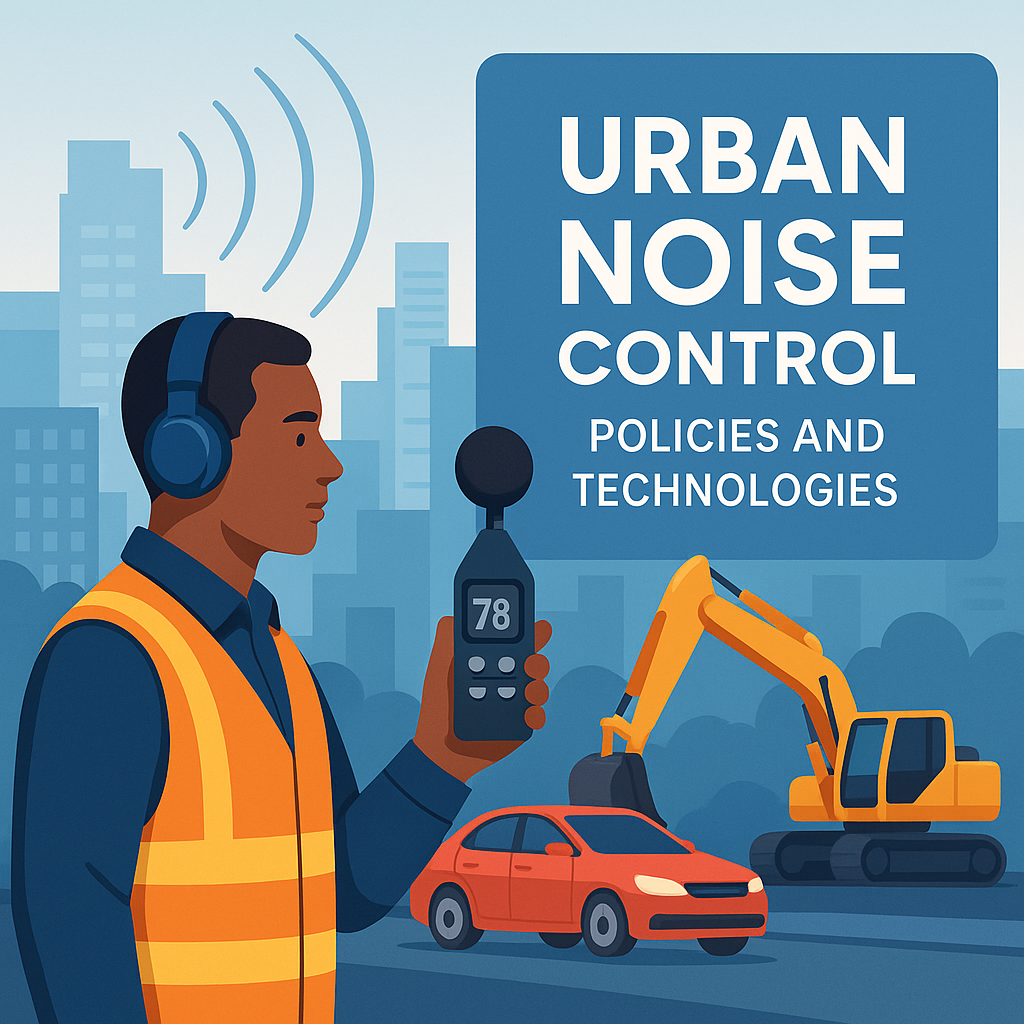
Noise pollution in urban areas is a longstanding issue that often goes unnoticed despite its significant impact on the quality of life for city dwellers. Urban noise comes from various sources such as traffic, industrial processes, construction sites, and crowded public areas. Key terms in this domain include “decibel” (dB), which is the unit used to measure sound, and “noise abatement,” which refers to the reduction or elimination of unwanted noise. Urban noise control matters because excessive noise can lead to health problems such as stress, sleep disturbances, and cardiovascular issues. Additionally, it can lower property values and affect the overall livability of a city. Addressing urban noise pollution is essential to creating sustainable urban environments and fostering the well-being of residents. To tackle this issue, a combination of effective policies and advanced technologies is necessary. This article explores these strategies in depth, providing insights into how cities can manage noise more effectively.
Understanding Noise Policies
Urban noise regulations are crucial in managing the sound levels that residents experience daily. Cities around the world have implemented various policies to control and mitigate noise pollution. This can include zoning regulations that separate residential areas from noisy industrial sites or setting noise level limits for different parts of the city. Effective noise policies are typically based on comprehensive noise assessments and strategically integrate community feedback. For instance, New York City’s Noise Code comprises rules on acceptable noise levels and specific measures for situations like construction and hospitality venues. It includes requirements for barriers or operational modifications during construction. These regulations help ensure that urban areas remain pleasant and livable.
Noise Barriers: An Effective Solution
Noise barriers are a commonly used technology for mitigating sound in urban settings. These barriers absorb or reflect sound waves, thereby reducing the perceived noise levels for individuals located on the opposite side. For example, the United States employs noise barriers alongside highways to protect nearby residential areas from traffic noise. These structures can be made from materials such as concrete, brick, or specialized acoustic fabrics. The installation of noise barriers is a straightforward yet effective measure. However, their success relies heavily on proper placement and design. A well-placed noise barrier can significantly decrease noise pollution, making them a vital tool in urban noise control strategies.
Advanced Soundproofing Techniques
Beyond noise barriers, innovative soundproofing techniques have advanced significantly in recent years. For instance, architectural acoustic panels, double-glazed windows, and soundproof doors are now commonly used in urban buildings to reduce interior noise. Residential units located in bustling downtown areas often use these technologies to maintain quiet indoor environments. The architectural firm QuietRock specializes in building materials designed to minimize noise transmission. By using layers of sound-dampening material, they create walls that are far more effective at minimizing noise than traditional drywall. For city planners and building designers, integrating advanced soundproofing into the infrastructure is a crucial step in maintaining urban tranquility.
Technological Innovations in Noise Control
Emerging technologies offer new possibilities for managing urban noise pollution. Noise-canceling technologies that utilize active noise control (ANC) have revolutionized personal audio devices and are now being adapted for urban applications. ANC works by analyzing sound waves and creating opposing waves that cancel out the noise. For example, in bustling Tokyo, researchers have experimented with ANC-enabled vehicle windows, providing a quieter ride for commuters. Combining ANC with smart city technologies allows for real-time monitoring and management of urban soundscapes. Additionally, initiatives such as using low-noise road surfaces and quiet urban transport solutions, like electrical vehicles, are innovative strategies to address noise pollution while supporting broader environmental goals.
Community Engagement and Education
Beyond policies and technologies, effective urban noise control requires community engagement and public education. Residents play a vital role in noise management through their choices and behaviors. For example, noise from DIY home repairs or increased use of vehicles can contribute significantly to local noise levels. Cities like Amsterdam have initiated community-driven programs that encourage residents to be mindful of noise, promoting simple actions like reducing car honking and managing domestic appliance use. Public education campaigns focusing on noise awareness can alter social behavior and reduce noise pollution in meaningful ways. By fostering a culture that values tranquility, cities can effectively empower citizens to contribute to quieter urban environments.
The initiatives mentioned above can be consolidated through the following categories:
| Solution | Description | Example |
|---|---|---|
| Regulations | Policies setting permissible noise levels and guidelines. | New York City’s Noise Code |
| Noise Barriers | Physical structures to block or absorb sound. | US highway barriers |
| Soundproofing | Use of materials to reduce indoor and outdoor noise. | Double-glazed windows |
| Technological Innovations | Active and passive noise-reducing technologies. | Tokyo ANC vehicle windows |
| Community Engagement | Public involvement and education on noise reduction. | Amsterdam community programs |
The Role of Urban Planning
Effective urban noise control also involves strategic urban planning that takes noise into account. Urban planners now utilize mapping technologies to identify city zones that experience higher noise levels and design accordingly. For instance, cities can strategically plan parks, green spaces, and water features to naturally reduce noise in dense areas. In Copenhagen, urban planners have used modeling tools to map out noise patterns, allowing them to locate future schools and hospitals in quieter areas. The long-term planning of urban environments, considering noise levels, is an opportunity to embed noise management into the city’s growth trajectory. By planning with noise control in mind, urban areas can preemptively manage challenges associated with increasing noise pollution.
Acoustic Zoning: A Innovative Approach
Acoustic zoning is an emerging concept that cities are adopting to reduce noise pollution. It involves designating areas within a city for specific noise levels, similar to how commercial and residential zones are organized. Singapore has pioneered this approach by implementing ‘Quiet Zones,’ where noise emissions are strictly regulated. In these zones, activities that generate excessive noise are controlled or banned. This innovative zoning plans ensure that urban noise is managed at the source rather than dealing with the repercussions later on. Acoustic zoning empowers cities to proactively manage noise pollution and creates a more harmonious living environment.
Noise Pollution and Health Effects
The repercussions of urban noise extend beyond mere annoyance, significantly impacting public health. Prolonged exposure to elevated sound levels is linked to various psychological and physiological issues. Studies from the World Health Organization indicate that chronic noise exposure contributes to stress, sleep disturbances, and even cardiovascular diseases such as hypertension and heart attacks. A study conducted in London found correlations between high traffic noise levels and increased rates of cardiovascular issues among residents. This evidence underscores the importance of robust urban noise control strategies for protecting public health. Tackling noise pollution is not only about maintaining tranquility but also about guarding the physical health of urban inhabitants.
The Economic Impact of Noise Control
Addressing noise pollution also has significant economic implications. Excessive noise can decrease property values, deter tourism, and reduce worker productivity. For example, a survey in Berlin demonstrated that residential properties exposed to high noise levels depreciated more rapidly compared to those in quieter locales. Conversely, urban areas with effective noise management often see increased investment, driven by the appeal of a more attractive living environment. Investment in noise control measures can thus be seen as a critical factor for the economic development of urban areas. By prioritizing noise management, cities can enhance their attractiveness and sustainability, potentially driving economic growth and community improvement.
Global Case Studies in Urban Noise Control
Globally, various cities offer impressive case studies in effective urban noise control. In Paris, widespread implementation of noise-reducing road surfaces has significantly reduced traffic noise, enhancing the pedestrian experience. Similarly, in Seoul, the adoption of electric buses has cut down on urban noise pollution while improving air quality. In Singapore, laws limiting construction noise at night have made the city more livable, especially in busy districts. These proactive measures demonstrate how diverse strategies can successfully control noise pollution, serving as benchmarks for cities worldwide. Every city faces distinct noise challenges, but learning from successful global examples can inspire effective solutions tailored to specific urban environments.
Next Steps for Cities
As urban areas continue to grow, the challenge of noise control will become more pressing. However, through effective strategies and technologies, cities have the tools necessary to manage and mitigate noise pollution effectively. Investing in innovative noise control measures, engaging communities, and implementing far-sighted urban planning can create more harmonious urban environments. The benefits of reduced noise pollution are compelling: improved public health, enhanced property values, and better quality of life for residents. Cities are encouraged to assess their current noise policies and infrastructures, identify areas for improvement, and take decisive action to implement these essential measures. In doing so, they can ensure a quieter, healthier, and more livable future for their residents.
In conclusion, urban noise control is a multi-faceted challenge that requires a combination of regulatory frameworks, innovative technologies, and community engagement. By understanding the issues and employing the strategies outlined in this article, cities can effectively manage noise pollution, improving the quality of life for their citizens and paving the path for sustainable urban living.
Frequently Asked Questions
1. What are the main sources of urban noise pollution?
Urban noise pollution primarily stems from a variety of sources that are typical in city environments. One significant contributor is traffic noise, which includes not just cars but also buses, trucks, motorcycles, and the increasing trend of electric scooters. The constant hum, horns, and engine noises create a cacophony that’s nearly inescapable in urban areas. Additionally, industrial processes can be quite noisy, especially if factors like machinery and operations occur near residential zones. Another notable source is construction sites, which are ubiquitous in growing cities and often operate early in the morning or late into the night, filling the air with the sounds of drills, hammering, and heavy equipment. Lastly, crowded public areas like bars, clubs, markets, or even busy sidewalks can contribute significantly to noise pollution, as the sheer volume of people generates substantial ambient noise.
2. How is noise measured and why does it matter?
Noise is typically measured using the decibel scale (dB), which is a logarithmic unit that denotes the intensity of sound. The range of human hearing spans from the faintest sound the ear can detect, identified at 0 dB, to the extremely loud and painful 120 dB or more. Understanding decibels is crucial because it helps quantify the level of noise pollution and its potential impact on health and wellbeing. For instance, prolonged exposure to levels above 85 dB can lead to hearing loss, whereas continual ambient noise around 55 dB can begin to affect sleep quality, potentially causing long-term health issues. Proper measurement of noise helps in implementing appropriate urban planning and noise abatement strategies to ensure sound levels remain within healthy limits for city residents.
3. What is noise abatement and how does it help control urban noise?
Noise abatement refers to the strategies and processes implemented to reduce or eliminate unwanted noise. In urban settings, noise abatement includes a wide array of solutions tailored to specific types of noise pollution. One common method involves installing sound barriers, such as walls or landscaping acoustically-designed to block roadway sounds from dispersing into nearby areas. Technologically, soundproofing materials can be used in construction to limit noise passage. Moreover, city planners might impose restrictions, like limiting construction hours and enforcing quieter vehicular technologies to minimize disturbance. Policies promoting electric vehicles or encouraging public transportation also serve as measures to mitigate traffic noise. Noise abatement is pivotal because it focuses on maintaining or improving quality of life in urban spaces by ensuring noise levels remain within tolerable thresholds.
4. What are some policies being enacted to manage urban noise control?
Various local and national governments have enacted a range of policies aimed at managing urban noise control. A frequent approach is setting maximum permissible sound levels for different zones (residential, commercial, industrial) and imposing fines for exceeding these limits. Zoning laws also dictate what activities can take place in certain areas to minimize noise pollution, ensuring that noisy operations like manufacturing plants aren’t situated near living spaces. Some cities employ noise mapping tools to assess and visualize noise problems in real-time, allowing more tailored interventions. In some cases, local governments promote campaigns for raising public awareness about noise pollution’s impact and encourage community reporting of excessive noise disturbances. Legislation also often targets reduction in transportation noise by setting emission standards for vehicles and advocating for quieter public transit options, like trams and trains.
5. What technologies are being developed to tackle urban noise pollution?
Technology plays a crucial role in addressing urban noise pollution through innovative methods and applications. For instance, active noise control (ANC), also known as noise cancellation, uses sound waves to counteract offending noise, a technique prevalent in noise-canceling headphones and now being applied in building designs to manage ambient noise. Advances in materials science have led to the development of better soundproofing materials capable of absorbing sound more effectively. In transportation, quieter electric vehicles are being embraced to lessen traffic noise. Moreover, smart city initiatives often incorporate sensor networks that continuously monitor noise levels across urban areas, providing data that can help inform noise management strategies. On a broader scale, AI and data analytics are evolving to predict noise pollution trends and develop more effective long-term solutions for urban noise control.