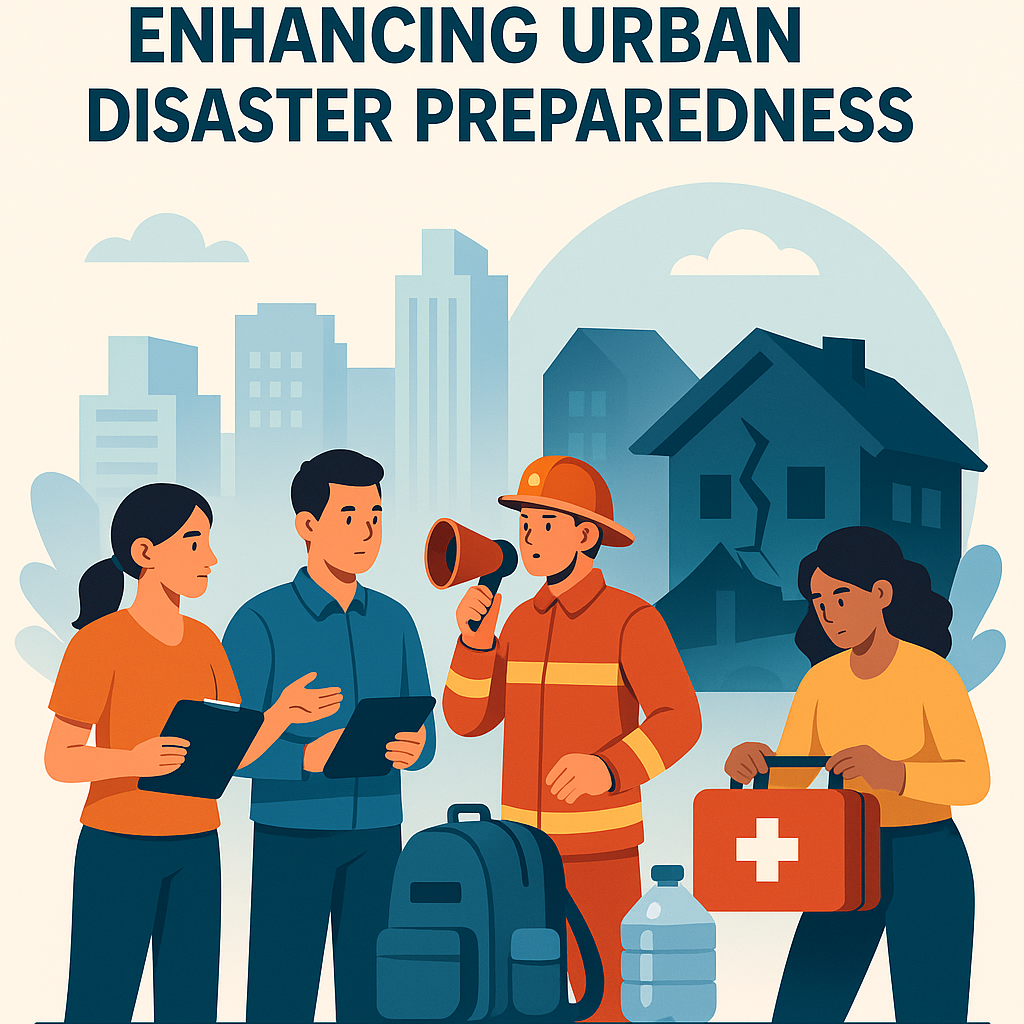
Disaster preparedness is a critical issue for urban environments, where natural and human-made disasters can have devastating effects. In the heart of bustling cities, populations are dense, infrastructure is complex, and the socio-economic dynamics are often fluid. Enhancing urban disaster preparedness addresses these factors, ensuring cities are resilient and capable of responding effectively when disaster strikes. The importance of this topic cannot be overstated, as the increasing frequency of extreme weather events and other disasters necessitates that cities be equipped to both mitigate impacts and recover rapidly.
Disaster preparedness involves proactive measures taken to anticipate, respond to, and recover from hazardous events. Key terms include “resilience,” referring to the ability of a city or community to withstand hazards and recover quickly, and “mitigation,” which involves strategies to reduce or eliminate the impacts of disasters. As urban areas continue to expand globally, the need for effective disaster preparedness becomes increasingly urgent. When cities fail to properly prepare, the human and economic costs can be substantial, leading to loss of life, displacement, and long-term disruptions to development and progress.
Identifying Urban Hazards and Risks
To enhance disaster preparedness, it is essential first to identify the specific hazards and risks each urban area faces. This involves a comprehensive hazard assessment that takes into account geographical, climatic, and socio-political factors. For example, a city like New Orleans is highly vulnerable to hurricanes and flooding, making it imperative to focus on these hazards in its preparedness strategies.
A successful hazard identification process leverages historical data, scientific projections, and local expertise. By mapping out potential scenarios and their impacts, urban planners and emergency managers can develop targeted interventions. This process also includes estimating the potential number and location of people affected, which informs evacuation plans and resource distribution.
- Historical data collection
- Scientific risk projections
- Local expertise and consultations
Utilizing these tools helps in understanding not just the probability of a disaster occurring, but also the likely severity and geographic areas of greatest risk. This foundational knowledge is crucial for all subsequent preparedness efforts, ensuring they are grounded in reality and tailored to the needs of the urban environment.
Enhancing Infrastructure Resilience
Infrastructure is a city’s backbone, and its resilience is vital in the face of disasters. Urban infrastructure includes transportation systems, utilities, communication networks, and essential services like healthcare and education facilities. Enhancing the resilience of these systems involves both reinforcing existing structures and designing new ones with disaster risk reduction in mind.
Consider Tokyo, which has invested heavily in earthquake-resistant buildings and infrastructure due to its location in a seismically active zone. The city’s stringent building codes and advanced engineering practices serve as models for other urban areas. Retrofitting older buildings to withstand earthquakes and modernizing utilities to function under duress are key steps in infrastructure resilience.
| Area | Strategy | Outcome |
|---|---|---|
| Buildings | Retrofitting | Increased safety during earthquakes |
| Transportation | Structural reinforcement | Improved emergency access |
| Utilities | Modernization | Continued service delivery |
Investment in infrastructure resilience not only saves lives but also reduces economic losses, as damage to critical systems can halt commerce and lead to costly repairs. Moreover, resilient infrastructure supports quicker recovery, enabling normal operations to resume and contributing to community stability and confidence in the face of emergencies.
Community Engagement and Education
Communities play a crucial role in urban disaster preparedness. Engaging local populations in preparedness activities fosters a culture of resilience and empowers individuals to act during disasters. Community-based approaches often include educational initiatives, drills, and participatory planning processes, all of which ensure that information reaches those who need it most.
The city of San Francisco, prone to earthquakes, exemplifies successful community engagement strategies. Regular earthquake preparedness drills, supported by government agencies and community organizations, ensure residents are familiar with emergency protocols. Programs also teach individuals how to assemble emergency kits, develop family communication plans, and understand local emergency systems.
- Regular community drills
- Emergency kit assembly workshops
- Family communication plan education
- Familiarization with emergency systems
Community engagement and education not only equip individuals with the knowledge and skills they need in a crisis but also foster unity and collaboration. When communities are prepared, they can support each other and reduce the burden on formal emergency response systems.
Utilizing Technology for Disaster Preparedness
Technology offers powerful tools for enhancing disaster preparedness in urban areas. From early warning systems to digital communication platforms, technology can drastically improve the efficiency and effectiveness of disaster response efforts. The integration of data analytics, geographical information systems (GIS), and mobile applications facilitates real-time information sharing and decision-making.
In India, the use of mobile applications has revolutionized disaster management. The Indian government has developed apps that provide early warnings and disseminate crucial information to the public. These applications are a critical component of the country’s disaster risk reduction strategy, providing users with up-to-date alerts and instructions, thus enabling timely evacuations and reducing panic.
Technology also enables better coordination among emergency response teams. GIS can be used to visualize hazard risks and resource distribution, facilitating strategic planning and operations. Additionally, social media platforms offer a way to crowdsource information quickly, allowing for rapid assessment and response to unfolding situations.
Investing in technology for disaster preparedness is a cost-effective way to enhance resilience and efficiency. As urban areas become more interconnected, the role of technology in preparedness is only set to expand, with innovations such as artificial intelligence and machine learning offering even greater capabilities for predicting and managing disasters.
Coordination Among Stakeholders
Successful disaster preparedness in urban environments requires collaboration among a wide array of stakeholders. These include government agencies, non-governmental organizations (NGOs), private sector actors, and community groups. Each plays a unique role, and coordination ensures that resources are utilized efficiently and response efforts are streamlined.
New York City provides a prime example of coordinated preparedness efforts. The city’s Office of Emergency Management works with various agencies and sectors to conduct annual evaluations of disaster plans and coordinate drills. This inclusive approach aligns multiple perspectives and expertise, strengthening the overall disaster management framework.
Private companies can contribute significantly through corporate social responsibility programs, offering resources and logistics support during emergencies. NGOs often have specialized knowledge and on-the-ground experience that can enhance community resilience initiatives. When all stakeholders collaborate effectively, they create a cohesive network capable of responding decisively and minimizing disaster impacts.
Integration of efforts also ensures that preparedness plans are comprehensive, covering all aspects of potential threats and vulnerabilities. Ongoing communication and partnership-building between stakeholders solidify trust and readiness, ensuring that when disaster strikes, the collective response is swift and organized.
Developing Comprehensive Emergency Plans
Finally, comprehensive emergency plans are the cornerstone of effective urban disaster preparedness. These plans outline clear procedures for response and recovery, assign roles and responsibilities, and serve as a reference point for all actions taken during a disaster event. Developing and regularly updating these plans ensures they reflect current risks, available resources, and emerging threats.
An example of thorough emergency planning can be found in Wellington, New Zealand, which faces significant earthquake risks. The city has developed a detailed emergency management plan that includes evacuation maps, shelter locations, and protocols for alerting the public. These plans are not static; they evolve with new information, ensuring relevance and efficiency.
Comprehensive emergency plans integrate all elements of preparedness, from risk assessment to technological innovation and stakeholder coordination. They guide both the immediate response and long-term recovery efforts, facilitating a return to normalcy and minimizing socio-economic impacts. Regular drills and evaluations ensure these plans are practical and actionable, equipping urban centers to handle crises with confidence.
Conclusion: Building a Safer Future
The key takeaways in enhancing urban disaster preparedness center on the importance of understanding unique risks, building resilient infrastructure, engaging communities, leveraging technology, and coordinating among diverse stakeholders. These elements form a holistic approach that strengthens the ability of cities to withstand and rapidly recover from disasters.
For readers, the main benefit of embracing these strategies lies in the potential to significantly reduce the negative impacts of disasters on human life and economic stability. By prioritizing resilience and preparedness, urban areas become safer and more sustainable, capable of adapting to changes and challenges.
The next step for cities and individuals alike is to assess their current preparedness levels and identify areas for improvement. Engaging with local authorities, participating in community initiatives, and advocating for resilience-focused policies are effective ways to contribute to a safer urban environment. By doing so, we ensure that our cities are not only places of growth and opportunity but also bastions of safety and resilience in the face of adversity.
Frequently Asked Questions
1. What is urban disaster preparedness and why is it essential?
Urban disaster preparedness refers to the planning, training, and development of effective strategies and measures to mitigate, respond to, and recover from disasters in urban environments. This involves understanding the unique characteristics of cities, such as high population density, intricate infrastructures like utilities and communication networks, and their socio-economic complexities. Preparing urban areas for disasters is crucial because cities often have more at stake when a disaster occurs. The potential for significant human, economic, and infrastructural losses makes it imperative to develop robust preparedness plans. Moreover, as cities continue to grow and weather patterns become more unpredictable, the probability and impact of disasters have increased. Therefore, investing in urban disaster preparedness promotes resilience, ensuring that cities can bounce back swiftly from adversities and continue to thrive.
2. How can urban areas prepare for both natural and human-made disasters?
To effectively prepare urban areas for potential disasters, whether natural or human-made, there are several layers of strategies involved. Firstly, an extensive risk assessment is necessary, identifying the types of disasters most likely to occur, such as earthquakes, floods, fires, or industrial accidents. Subsequently, designing comprehensive emergency response plans that include evacuation routes, communication systems, and resource allocation is critical. Additionally, involving community members in preparedness initiatives enhances awareness and readiness. Public education campaigns, simulations, and drills ensure that residents know what to do before, during, and after a disaster. Cities also need to invest in resilient infrastructure that can withstand disasters, as well as implement early warning systems that can provide timely notifications to persons at risk. Collaborating with regional and national disaster management agencies ensures a synchronized response to larger-scale events. Finally, urban policies should support sustainable development, factoring in climate change and environmental protection as preventive measures against future disasters.
3. What role does technology play in enhancing urban disaster preparedness?
Technology acts as a pivotal element in boosting urban disaster preparedness. For starters, technological advancements have improved prediction models and early warning systems, giving cities more time to initiate preemptive measures. Geographic Information Systems (GIS) are extensively used in urban planning and disaster risk management, helping identify vulnerable areas and optimizing evacuation routes. Innovative communication tools and social media platforms facilitate real-time information dissemination and coordination among disaster response teams and the public. Moreover, drones and robotics provide valuable support in surveillance, search and rescue operations, and delivering essential supplies in hard-to-reach areas during disasters. Additionally, mobile applications designed for disaster alerts and guidance can enhance personal preparedness and community resilience. By leveraging technology, urban environments can implement more efficient preparedness measures, anticipate risks better, and ultimately minimize the impact and recovery time of catastrophic events.
4. What challenges do cities face in implementing effective disaster preparedness strategies?
Various challenges complicate the implementation of effective disaster preparedness strategies in urban settings. One of the primary issues is limited resources. Urban areas, particularly those in developing regions, may lack the financial means to develop comprehensive preparedness plans or invest in resilient infrastructure. Complex bureaucracies and insufficient coordination between different government departments can delay response efforts and impede timely disaster management. Additionally, the diverse socio-economic fabric of cities means that certain populations, such as low-income communities and undocumented residents, may be more vulnerable to disasters and less engaged in preparedness activities. Urban sprawl also poses a challenge, as expanding cities often have outdated infrastructure that cannot accommodate the growing demand or withstand disasters. Although technological solutions are available, they often come with high costs that may not be feasible for all cities. Therefore, urban disaster preparedness calls for innovative, inclusive, and sustainable approaches that address these multifaceted challenges.
5. How can community engagement enhance urban disaster preparedness?
Community engagement is a vital component of urban disaster preparedness. By involving communities in the planning and implementation phases, cities can cultivate a culture of preparedness and resilience. Engaged residents are more likely to understand the risks their communities face and, consequently, take appropriate measures to protect themselves and their neighbors. This grassroots level of involvement encourages the development of neighborhood-specific disaster plans that account for local demographics, languages, and cultural nuances. Community groups can organize regular workshops, training sessions, and drills to ensure ongoing awareness and preparedness. Furthermore, community engagement fosters solidarity and collaboration, empowering individuals to offer mutual aid and support during and after disasters. City officials can also benefit from local insights and knowledge that improve resource distribution and response strategies. Overall, a well-prepared community not only complements the formal disaster management framework but also enhances the overall resilience and recovery capacity of urban areas.