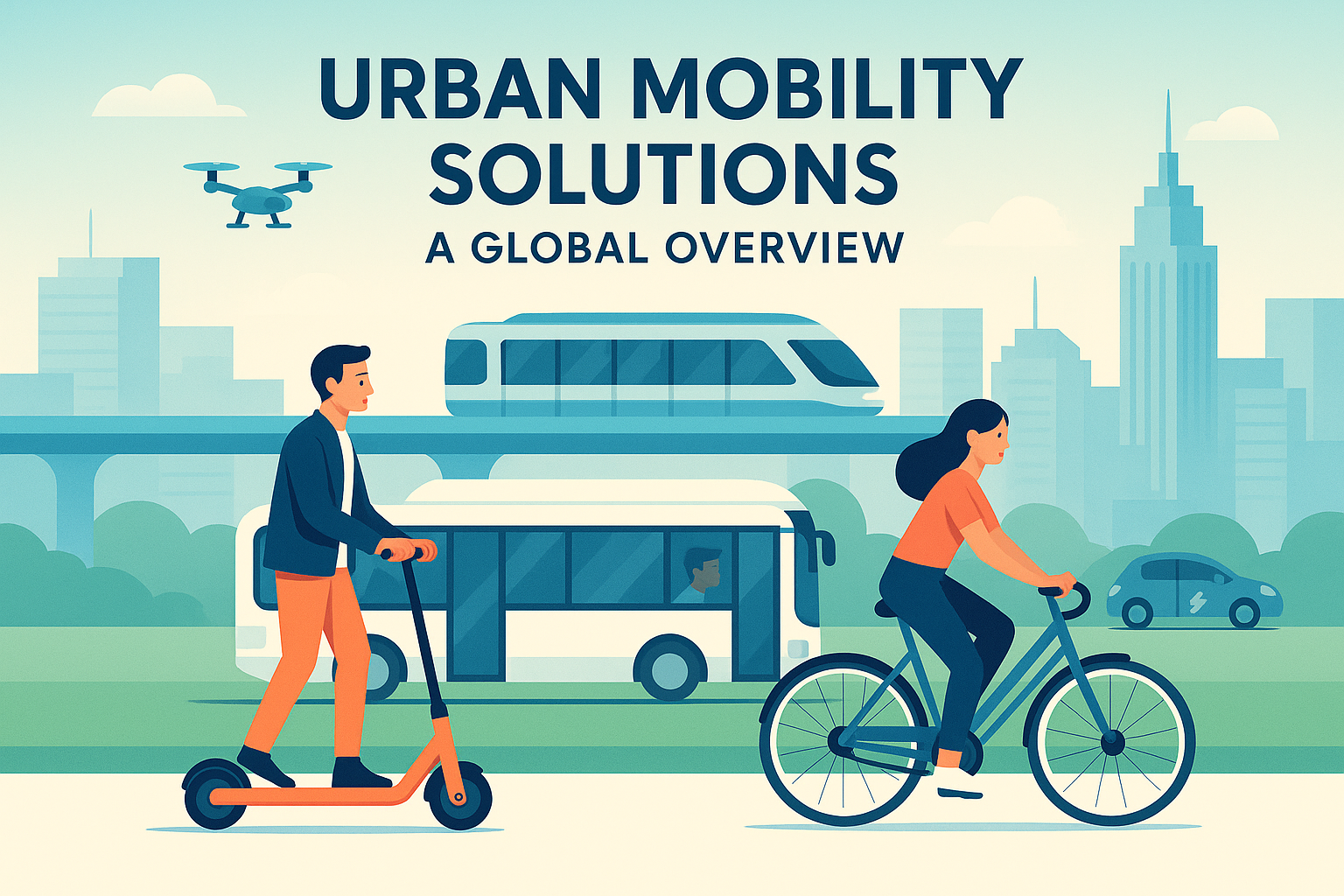
With the rapid pace of urbanization across the globe, cities are becoming more densely populated, leading to significant challenges in transportation. Urban mobility solutions are systems and infrastructures designed to efficiently move people and goods within urban areas. These solutions encompass various modes of transportation, including public transit, cycling, walking, and personal vehicles, often integrated through advanced technologies. The effectiveness of urban mobility solutions is critical not only for reducing traffic congestion and pollution but also for enhancing economic productivity and quality of life. As cities grow, finding sustainable and efficient ways to facilitate movement within them matters more than ever. The stakes are high; successful mobility systems can transform urban areas into thriving centers of innovation and community, while failure can lead to inefficiency and decline.
Public Transit Networks: The Backbone of Urban Mobility
Public transit systems, comprising buses, trains, and subways, form the backbone of urban mobility in many cities. Developed to support the efficient movement of large numbers of people, transit networks are essential for reducing pollution and congestion associated with personal vehicle use.
A leading example of an advanced public transit system is London’s Underground. Known globally as ‘The Tube,’ it efficiently serves millions of commuters each day across a sprawling network stretching over 402 kilometers. The integration of contactless payment methods, real-time updates, and a comprehensive map system makes commuting more accessible and reliable for its users.
Public transit systems reduce environmental impact while offering affordable travel options. They are especially effective in densely populated cities where space is limited and car ownership can be prohibitive. For a city, a robust public transit network not only moves people efficiently but is also an investment in its economic health and environmental sustainability.
Cycling: A Sustainable Urban Mobility Solution
Cycling is increasingly being recognized as a sustainable and effective urban mobility solution. It presents numerous benefits, including reduced traffic congestion, lower emissions, and improved public health. Cities around the world are investing in infrastructure to make cycling more attractive and safe.
Take, for instance, Copenhagen, a city that has embraced cycling as a primary mode of transportation. More than half of the city’s residents commute by bike daily, supported by an extensive network of bike lanes and cyclist-friendly policies. The Danish capital has set a precedent with its Cycle Superhighways—direct routes aimed at making bike commutes faster and more comfortable, thereby boosting ridership numbers significantly.
Cities aiming to improve urban mobility should consider significant investments in cycling infrastructure. For cyclists, dedicated lanes and secure parking make all the difference. The end result is not just a reduction in road traffic and pollution but also healthier, more engaged communities.
Walkable Urban Areas: Enhancing Health and Connectivity
Walkability refers to how friendly an area is to walking, which includes accessibility and safety for pedestrians. Walkable urban areas can boost physical health, reduce pollution, and promote community interactions, forming an essential part of urban mobility strategies.
New York City is often cited for its walkable urban design. The city has made concerted efforts to reimagine and repurpose street spaces for pedestrians. The transformation of Times Square into a pedestrian plaza is particularly noteworthy, turning a congested traffic area into a vibrant public space filled with people rather than cars. Traffic reductions there have transformed the way residents and tourists experience the heart of Manhattan.
Urban planners aiming to enhance walkability can draw from New York’s experience, focusing on reducing vehicle dominance and creating more public spaces. Walkable areas encourage residents to engage with their surroundings more actively, improving not just mobility, but quality of life as well.
Integration of Emerging Technologies
The integration of emerging technologies into urban mobility systems has led to unprecedented improvements in efficiency and user convenience. Technologies such as artificial intelligence (AI), the Internet of Things (IoT), and mobile applications are transforming how urban transit is managed and used.
Asian cities, such as Singapore, are at the forefront of technology integration in mobility solutions. Singapore’s Intelligent Transport System utilizes AI and IoT to manage traffic flow efficiently, reduce congestion, and enhance safety. The city-state also embraces smart traffic lights and real-time data apps, providing commuters with precise travel information.
| Technology | City | Impact |
|---|---|---|
| AI & IoT | Singapore | Optimized traffic flow |
| Mobile Apps | New York | Enhanced commuter information |
| Smart Traffic Lights | Berlin | Reduced congestion |
Incorporating emerging technologies into urban mobility systems makes commuting smarter and more connected. Cities seeking to improve their urban mobility solutions should consider investing in technological infrastructures that enhance data collection, analysis, and usability for commuters.
Ridesharing and Car-sharing Services
Ridesharing and car-sharing services offer flexible and convenient transportation options that can complement public transit and reduce the need for personal car ownership. These services, often accessed through mobile apps, match users with nearby drivers, offering on-demand transport solutions.
Notable among these innovations is San Francisco’s Uber, which has redefined urban mobility worldwide. By enabling people to share rides or easily hire a taxi, Uber combats traffic congestion and lowers emissions. Furthermore, the introduction of electric vehicles into the ridesharing fleet has emphasized environmental sustainability.
Ridesharing and car-sharing are especially effective in urban areas where public transit may not reach. For residents, these services provide flexible commuting alternatives. For city planners, they offer new models for reducing car ownership and associated environmental impacts.
Electric and Autonomous Vehicles: The Future is Now
Electric vehicles (EVs) and autonomous vehicles (AVs) are set to transform the landscape of urban mobility. EVs promise significant reductions in emissions, while AVs have the potential to improve safety and efficiency through automation.
Oslo, Norway, serves as a beacon of success for electric vehicle integration into urban mobility. With substantial government incentives, EV adoption in Oslo is among the highest worldwide. The city is also working towards electrifying its entire public transit system, including buses, promoting a cleaner, more sustainable urban environment.
As for AVs, cities like Phoenix, Arizona, have emerged as testing grounds. Waymo, Google’s self-driving car project, is conducting extensive trials here, offering a glimpse into a future where autonomous vehicles might dominate urban transport.
The drive towards electric and autonomous vehicles offers cities a path to cleaner, safer, and more efficient transportation networks. Policymakers and urban planners should advocate for infrastructure development and incentives that encourage EV and AV use to fully capitalize on these transformative technologies.
Summary and Call to Action
Urban mobility solutions are integral to the sustainable growth and development of cities worldwide. From robust public transit systems like London’s Underground to cycling initiatives in Copenhagen, cities across the globe are taking varied approaches to enhance urban mobility. Technologies such as AI and IoT are making transit smarter, while ridesharing and the adoption of electric vehicles support more flexible and sustainable transport options.
The examples underscore the necessity of innovation and investment in urban transit infrastructure and technological enhancements. They highlight how cities can improve commute times, environmental impact, and overall quality of life for their residents through effective mobility planning.
For policymakers, urban planners, and city residents, the call to action is clear: prioritize investments in integrated, sustainable, and technology-driven urban mobility solutions. By doing so, we can collectively build urban environments that thrive both now and in the future, supporting economic growth, environmental sustainability, and vibrant urban living.
Frequently Asked Questions
1. What are urban mobility solutions, and why are they important?
Urban mobility solutions refer to the systems and infrastructures that facilitate the efficient movement of people and goods within cities. These solutions are crucial because, with the growing trend of urbanization, cities around the world are becoming more densely populated, which escalates transportation challenges. Effective urban mobility solutions aim to alleviate traffic congestion, reduce pollution, and ensure that urban environments are livable and accessible. They include a wide range of transportation modes such as public transit systems, cycling infrastructure, pedestrian pathways, and provision for personal vehicles. Moreover, integration through advanced technologies, like smart traffic systems and mobility-as-a-service (MaaS) platforms, play a significant role in optimizing these systems. In essence, urban mobility solutions are vital for enhancing the quality of city life, supporting economic growth, and achieving environmental sustainability.
2. How do public transportation systems fit into urban mobility solutions?
Public transportation systems are a cornerstone of urban mobility solutions. They are designed to move large numbers of people efficiently and are often considered more sustainable and economic compared to personal vehicle use. Public transit includes buses, subways, trams, and trains. These systems help reduce traffic congestion, lower greenhouse gas emissions, and provide affordable and equitable access to transportation. To optimize public transportation, many cities are investing in technologies like real-time tracking, mobile app ticketing, and integrated transit hubs that connect different modes of transit seamlessly. Furthermore, public transportation can potentially reduce the urban footprint by decreasing the number of private vehicles on the road and thereby limiting the need for extensive road infrastructure. The development and improvement of public transit are crucial as cities aim to meet the demands of rising populations while also addressing environmental concerns.
3. What role do bicycles and walking play in urban mobility?
Bicycles and walking are integral components of sustainable urban mobility solutions. They offer an eco-friendly, healthy, and cost-effective mode of transportation. Encouraging cycling and walking not only helps to reduce air pollution and traffic congestion but also promotes public health through physical activity. Many modern cities are investing in infrastructure such as bike lanes, pedestrian-friendly pathways, and safe crossing zones to make these modes of travel more accessible and appealing to residents. Additionally, initiatives like bike-sharing programs have been implemented in several cities worldwide, enabling more people to engage in cycling without the need to own a bicycle. By adopting smart city technologies, planners can analyze patterns of pedestrian and bicycle use to further enhance these infrastructure networks. Promoting bicycle and pedestrian-friendly urban areas is a strategic aspect of creating a balanced and inclusive transportation ecosystem.
4. How do technologies enhance urban mobility solutions?
Technological advancements are pivotal in revolutionizing urban mobility solutions. Technologies such as GPS, mobile applications, big data analytics, and smart grids have significantly enhanced the efficiency and integration of different transportation modes. Mobility-as-a-Service (MaaS) platforms, for instance, provide a comprehensive mobility solution by integrating various forms of transportation services into a single accessible on-demand service. Urban areas are adopting intelligent transportation systems (ITS) to manage traffic flow and minimize delays through adaptive traffic signals and congestion pricing. Real-time data collection and analysis enable cities to improve the planning and management of transit systems, thus making them more responsive to user needs. Furthermore, innovations in autonomous vehicles and drones are expected to shape the future of urban mobility, offering new possibilities for passenger transport and goods delivery. Smart technology solutions are thus fundamental in building highly efficient, user-friendly, and sustainable urban transportation systems.
5. What challenges do cities face in implementing urban mobility solutions?
Implementing urban mobility solutions poses several challenges for cities. One of the biggest hurdles is the financial investment required for developing and upgrading transportation infrastructure. Many cities may struggle with limited budgets and competing priorities, which can slow down the adoption of new mobility projects. Additionally, integrating different modes of transportation involves complex planning and coordination across various governmental and private entities. Urban areas must also navigate the societal resistance to change, especially when policies aim to reduce the use of private vehicles. There’s also the ongoing challenge of balancing the needs of diverse population groups and ensuring equitable access to mobility across different socioeconomic demographics. Environmental considerations and the need for innovative, resilient infrastructure to cope with the effects of climate change present another layer of complexity. Overall, while the benefits of effective urban mobility solutions are clear, the path to implementation requires overcoming financial, logistical, and societal challenges.