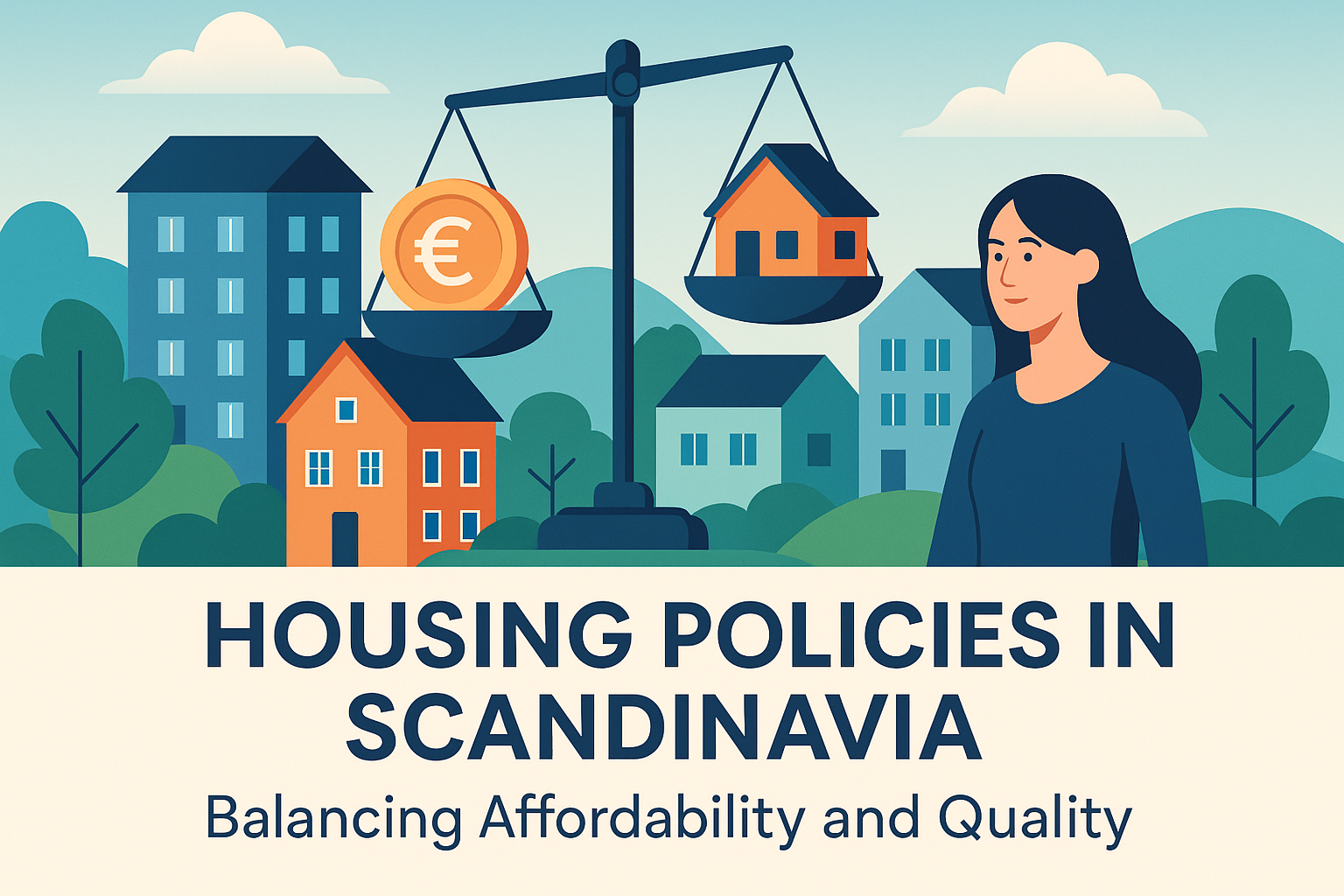
Scandinavian countries, notably Denmark, Sweden, and Norway, have long been admired for their robust welfare systems and high quality of life. At the heart of these systems is an emphasis on ensuring accessible, affordable, and quality housing for all residents. The term “affordable housing” refers to residential units that are reasonably priced relative to the average household income, ensuring that all socio-economic classes can afford shelter without sacrificing other basic needs. Meanwhile, “quality housing” pertains to homes that meet safety standards, provide adequate space, and enhance the residents’ overall well-being. In Scandinavian countries, the intertwining of these concepts within housing policies is crucial, as housing significantly impacts health, stability, and economic opportunities for individuals and families. This article explores how Scandinavian countries navigate the delicate balance between affordability and quality in housing policies, highlighting innovative strategies and challenges faced along the way.
Public Housing Models: A Cornerstone of Scandinavian Strategy
Scandinavian countries have a long tradition of offering public housing to their citizens. These housing models are pivotal in maintaining housing affordability and quality across the region. In Sweden, for instance, municipal housing companies known as “Allmännyttan” play a vital role in managing a significant portion of the housing stock. These companies are not motivated by profit but aim to provide decent living conditions for everyone, regardless of income level.
In Denmark, the public housing model involves housing associations, which are non-profit organizations that manage rental units. These associations play a significant role by offering affordable rental options that adhere to strict quality standards. For example, The Metropolitan Area of Copenhagen is home to several such associations that prioritize sustainable and innovative building designs, ensuring energy efficiency and minimizing environmental impact.
Moreover, Norway’s approach centers on subsidy programs that make owning a home more attainable. The Housing Bank, or Husbanken, provides favorable loans and grants to individuals and housing developers to enhance housing availability. Such measures ensure that affordable housing is not relegated to substandard conditions but maintains high quality.
Sustainability in Housing: Blending Environmental Goals with Living Standards
Scandinavian countries are at the forefront of integrating sustainability within their housing policies. This practice is not only environmentally conscious but also ensures long-term affordability through decreased utility costs. Denmark has been especially proactive, setting stringent building codes that prioritize energy efficiency and the use of renewable resources. For instance, the city of Aarhus is gaining attention for its pioneering sustainability projects, constructing “green” buildings that serve as benchmarks for future developments.
In Sweden, initiatives like Hammarby Sjöstad showcase how cities can build sustainable yet affordable housing. This urban development focuses on integrating infrastructure that supports renewable energy sources, efficient waste management, and water conservation. As residents enjoy lower utility bills and a healthier living environment, the benefits of such policies become evident.
Norway, too, is advancing in this realm. The country has launched programs to retrofit older buildings with better insulation and energy-efficient systems. This move not only preserves Norway’s architectural heritage but also aligns with global sustainability goals while ensuring affordable living conditions through reduced energy consumption.
Innovative Funding Structures: Making It Financially Feasible
To facilitate affordable and quality housing on a large scale, Scandinavian governments have implemented innovative funding structures. In Sweden, the government’s collaboration with private investors and construction companies under public-private partnerships (PPPs) illustrates a successful approach. These partnerships help lower construction costs while maintaining high-quality standards, benefiting both the government and private sector.
Denmark’s model also hinges on creative financial solutions, particularly through municipal bonds and tax incentives, which support public housing projects. These mechanisms mobilize resources efficiently, enabling the construction of more affordable housing units without compromising quality.
Furthermore, in Norway, the state plays a crucial role by providing favorable loans through Husbanken. These loans cater to both individuals and housing cooperatives, promoting homeownership and ensuring that low to middle-income families can access quality housing.
| Country | Main Housing Policy | Financing Method |
|---|---|---|
| Sweden | Public Housing (Allmännyttan) | Public-Private Partnerships |
| Denmark | Housing Associations | Municipal Bonds & Tax Incentives |
| Norway | Subsidy Programs | Loans via Husbanken |
Challenges and Solutions: Navigating Roadblocks in Scandinavian Housing
Despite their success, Scandinavian countries face challenges in maintaining the balance between affordable and quality housing. An increase in urban migration has resulted in high demand, outstripping supply in major cities like Stockholm, Copenhagen, and Oslo. This phenomenon has prompted inflation in housing prices, making homeownership difficult for numerous residents.
To tackle these challenges, governments are adopting measures like urban densification, where the focus is on optimizing existing spaces to build more housing units. For instance, in Stockholm, strategies to convert underutilized spaces into livable areas are underway, aiming to meet the surging housing demand.
In Denmark, cities are experimenting with modular housing, a more affordable and faster construction method. These structures, quickly assembled and customizable, present viable solutions to urban housing shortages.
Norway, meanwhile, has focused on rural development as a strategy to lessen urban pressure. By improving infrastructure and creating job opportunities in less-populated areas, the government is working to distribute housing demand more evenly across the country, ensuring affordability and quality across regions.
The Role of Social Inclusion: Ensuring Equitable Access
Social inclusion is pivotal in Scandinavian housing policies. These countries strive to avoid socio-economic segregation, opting instead for integrated communities where diverse groups coexist harmoniously. Mixed-income housing projects are prevalent, particularly in cities such as Malmö, Sweden, where a blend of income levels within residential areas leads to a rich, diverse community spirit.
Denmark has taken measures to prevent “ghettoization” by encouraging the creation of diverse neighborhoods. Laws against exclusivity in housing developments ensure a heterogeneous demographic, promoting social cohesion and minimizing disparities.
In Norway, efforts to include vulnerable groups, such as the elderly and immigrants, in housing policies are notable. The government’s inclusive approach ensures that everyone, regardless of background, can access quality housing without facing discrimination.
The Impact of Technology: Enhancing Housing Solutions
Technology plays an influential role in Scandinavian housing policies by increasing efficiency and cutting costs. Sweden has embraced digital platforms that streamline the housing application process, reducing waiting times and improving service delivery. These platforms enhance transparency, allowing citizens to access important information and actively participate in housing decisions.
In Denmark, technology is being harnessed to monitor energy usage in residential buildings. Advanced data analytics identify usage patterns, enabling the optimization of energy consumption, contributing to sustainable and affordable housing.
Norway has introduced smart housing systems that cater to residents’ specific needs. These smart systems leverage data to adjust lighting, heating, and cooling systems, ensuring comfort while minimizing costs, solidifying Norway’s commitment to maintaining quality and affordability.
Reflecting on Scandinavian Success: Key Takeaways
Scandinavian countries exemplify how strategic housing policies can effectively address affordability and quality issues. Through public housing models, sustainable design, innovative funding, and inclusive practices, these nations navigate and surmount housing challenges with commendable success. The core lesson here is the importance of aligning policies with societal goals, environmental concerns, and economic realities.
The approach of integrating social inclusivity illustrates invaluable foresight, fostering harmonious communities and counteracting segregation. Furthermore, embedding technology within housing policies not only signifies innovation but ensures more efficient, quality-focused solutions that can be replicated worldwide.
To communities around the globe facing housing challenges, Scandinavia offers rich insights. By highlighting these best practices, we encourage policy-makers, urban planners, and citizens to consider similar strategies and seek continuous improvement in the quest for balanced housing development. As the journey doesn’t end here, we invite stakeholders to collaborate, innovate, and engage in crafting sustainable housing solutions that meet the demands of present and future generations.
In conclusion, as you reflect on the Scandinavian model and its applied strategies, consider exploring further how these methods could enhance local housing circumstances. Delve into the dynamics of urban planning that prioritize sustainability and inclusivity, and join the global dialogue on reshaping housing policies for a balanced, equitable future.
Frequently Asked Questions
1. What are the key principles behind housing policies in Scandinavian countries?
Scandinavian countries like Denmark, Sweden, and Norway have a comprehensive approach to housing that emphasizes accessibility, affordability, and quality for everyone. The key principles behind their housing policies revolve around the idea that housing should be treated as a fundamental right for all citizens, not just a commodity. This principle is deeply rooted in their social welfare systems, which aim to reduce social inequalities and provide a high quality of life.
In practice, this means the government plays an active role in regulating the housing market to ensure that it meets the needs of all residents. They utilize a mix of public and private sector initiatives to achieve their goals. For instance, they invest in social housing, which is subsidized housing delivered by non-profit organizations or government agencies. This ensures that even lower-income families have access to decent housing.
Moreover, these countries actively engage in urban planning, seeking to promote community development and sustainability. This involves meticulous zoning laws, architectural guidelines to maintain aesthetic qualities, and environmentally friendly building practices to ensure durability and energy efficiency in the housing stock. The balance of affordability and housing quality is achieved through these integrated approaches, leading to high living standards across the board.
2. How do these countries balance affordability and quality in housing?
Balancing affordability and quality in housing is a nuanced process that Scandinavian countries manage deftly through a combination of state intervention, regulation, and market forces. They use a multipronged strategy that includes policies for price control, quality standards, and financial subsidies.
On one hand, government initiatives aim to keep housing affordable through direct interventions like setting price caps on rent increases and providing housing allowances to those in need. These measures help prevent housing from becoming disproportionately expensive, thus ensuring that all citizens can access housing without financial strain.
On the other hand, quality is addressed by imposing strict standards on construction and maintenance. These standards ensure that the housing provided meets certain criteria for space, safety, and environmental impact. Additionally, emphasis on sustainability and energy efficiency is key; most new buildings must comply with regulations aimed at reducing carbon footprints and conserving resources.
The blend of regulatory imperatives and economic assistance allows these countries to maintain high standards of living while also making sure that accessible, affordable housing is available to everyone. They aim to create inclusive communities where people from varied backgrounds live together, thus contributing to social cohesion and stability.
3. How do Scandinavian countries address the challenges of urbanization in their housing policies?
Urbanization poses a unique set of challenges, but Scandinavian countries address these challenges with proactive policies. As more people move to cities for opportunities, these countries have devised strategic urban planning initiatives that focus on sustainable development, efficient land use, and smart community designs.
One of their key strategies is the development of mixed-use areas that integrate residential spaces with commercial and recreational facilities. This design not only optimizes land use but also enhances the quality of life by reducing travel time, encouraging local commerce, and fostering a sense of community.
Public transportation systems are also a crucial component of their approach to urbanization. These systems are designed to be reliable, efficient, and environmentally friendly, making it easier for residents to commute without relying on personal vehicles. This not only reduces traffic congestion but also lowers the environmental impact of urbanization.
To tackle the rising demand for housing in urban areas, these countries also focus on expanding the housing stock with innovative solutions like modular homes and co-housing communities. These options, coupled with financial mechanisms like low-interest loans and grants, help accommodate the growing population while maintaining affordability and quality.
This holistic approach allows Scandinavian countries to manage urban growth effectively, with policies designed to foster balanced development and ensure that the urban environment remains livable for future generations.
4. What role do public-private partnerships play in Scandinavian housing policies?
Public-private partnerships (PPPs) are a crucial component of housing policies in Scandinavian countries, effectively bridging the gap between public funding limitations and the need for large-scale housing developments. These partnerships leverage the strengths and resources of both sectors to deliver sustainable, affordable housing solutions.
In Scandinavia, collaborative projects between the government, private developers, and non-profit organizations are common. The public sector typically facilitates the initial stages by offering incentives, reducing regulatory barriers, or even providing land at discounted rates. Meanwhile, private entities contribute their expertise in construction, innovation, and efficient project management.
The goal of these partnerships is to combine public sector objectives of affordability and accessibility with the private sector’s ability to implement projects rapidly and efficiently. Non-profit organizations often bring expertise in community development and social services, ensuring that housing projects also address social needs and inclusion.
Additionally, these partnerships often focus on innovation—such as eco-friendly building designs and affordable construction techniques—that propel the housing market forward. As a result, public-private partnerships can deliver high-quality housing solutions that are affordable for the populace while supporting economic growth and sustainability, embodying the Scandinavian ethos of collective well-being and responsibility.
5. How do Scandinavian countries integrate environmental sustainability into their housing policies?
Environmental sustainability is a cornerstone of Scandinavian housing policies. Recognizing the importance of conserving natural resources and minimizing environmental impacts, these countries have integrated sustainability into every aspect of housing development and management.
One prominent approach is the enforcement of stringent building codes that ensure new constructions are energy-efficient and environmentally friendly. These codes often mandate the use of sustainable materials, high insulation standards, and renewable energy sources like solar panels. Builders are also encouraged to incorporate green roofs and walls, which not only improve a building’s insulation but also contribute to urban biodiversity.
In existing housing, retrofitting projects are common to upgrade older buildings to new environmental standards. These projects often receive governmental support in the form of grants or tax incentives, making it more feasible for property owners to carry out these improvements.
Community-wide initiatives, such as the development of eco-villages and sustainable neighborhoods, are also prevalent. These communities emphasize shared resources, waste recycling, and sustainable landscaping. Public transportation options, cycling tracks, and pedestrian paths are well-integrated, reducing the reliance on cars and lowering the overall carbon footprint.
Through these comprehensive actions, Scandinavian countries not only address present housing needs but also contribute to global environmental goals. Their commitment to sustainability in housing policies ensures that future generations can enjoy the same high-quality living environment, rooted in respect for their natural surroundings.