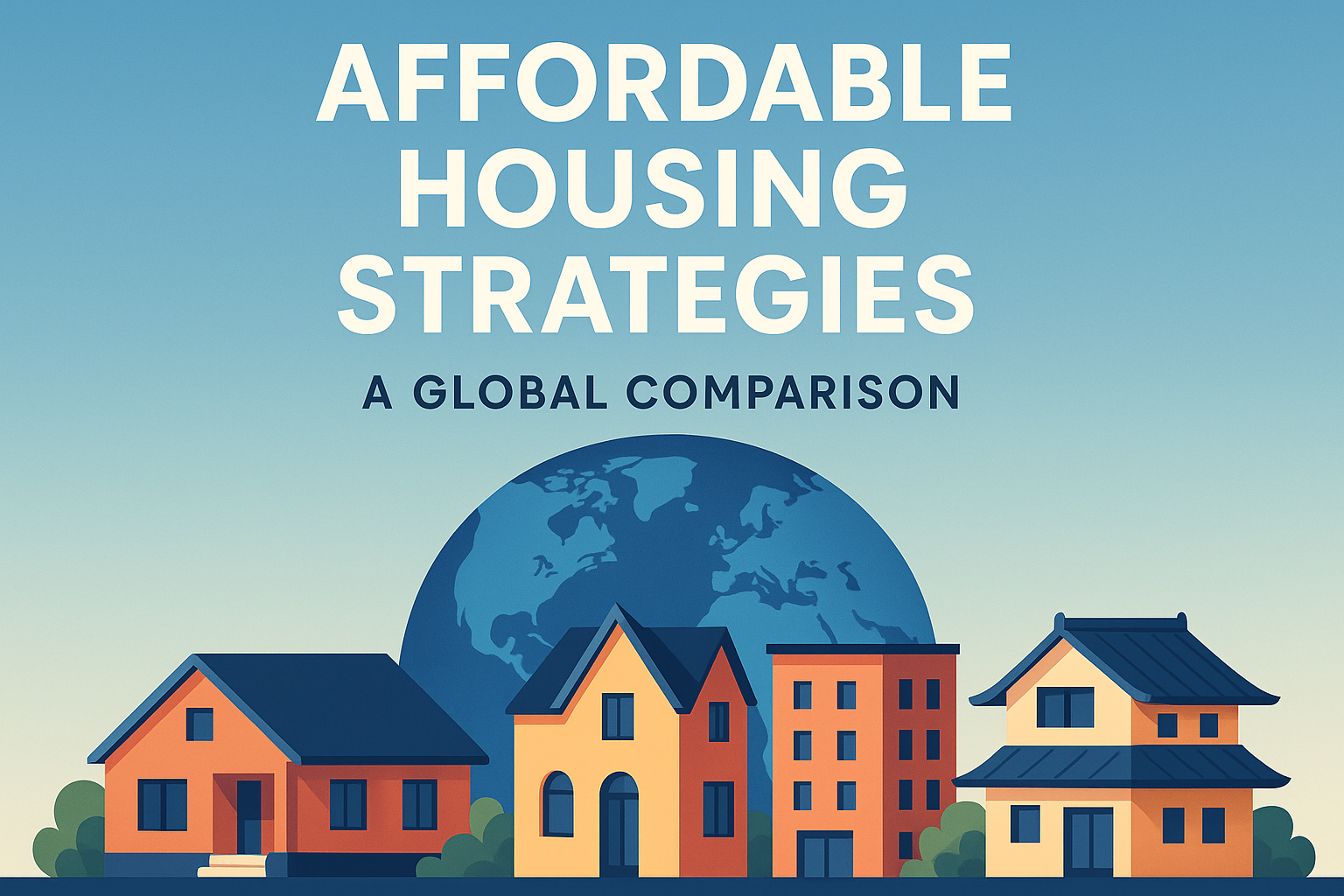
Affordable housing has become a critical issue in urban and rural areas across the world. It refers to housing that is reasonably priced relative to income levels, ensuring that individuals and families are not overburdened by housing costs. The term “affordable” typically refers to spending no more than 30% of one’s income on housing expenses. In many regions, the gap between income growth and housing price increases has led to a housing crisis, impacting people’s ability to secure decent living conditions. This problem is exacerbated by urbanization, population growth, and economic inequality, making it a matter of both economic and social justice. Addressing the challenge of affordable housing is pivotal for economic stability, community health, and the overall quality of life. This article explores how different countries are tackling this complex issue and highlights effective strategies being implemented around the globe.
Government-Sponsored Housing Programs
Government-sponsored housing programs are a pivotal strategy in several countries striving to provide affordable housing. These programs generally encompass subsidized housing projects and public housing developments funded by governmental bodies. A prominent example is found in Singapore, where the Housing & Development Board (HDB) plays a central role in developing and maintaining public housing for nearly 80% of its residents. By offering government-subsidized flats and implementing various housing schemes catered to different income groups, the HDB ensures accessibility to quality housing for its citizens. The efficiency of such programs hinges on well-planned urban development policies, adequate funding, and responsive government agencies. The key takeaway from Singapore’s model is the strong coordination between public forums and government efforts, which ensures that housing remains accessible to the masses.
Incentives for Private Sector Involvement
The private sector can be a powerful asset in combating the housing crisis. By creating incentives such as tax breaks or expedited construction permits, governments encourage private developers to contribute to affordable housing projects. The United States employs the Low-Income Housing Tax Credit (LIHTC) as an incentive for private developers to create affordable rental housing. Under LIHTC, developers receive federal tax credits distributed by states, which reduces the financial risks of investing in low-income housing developments. This initiative not only expands the stock of affordable housing but also fosters private-public partnerships that maximize resources and expertise. The effectiveness of this approach illustrates how aligning financial interests with social goals can result in successful housing policies that address affordability concerns.
Co-operative Housing Models
Co-operative housing models provide another solution to the affordable housing challenge, facilitating community-managed properties where residents collectively own and operate their housing. This approach has seen success in countries such as Canada, which boasts a strong co-operative housing sector. In these co-operatives, residents share the financial responsibilities and operational decisions, reducing individual housing costs while promoting communal living. The benefits of co-operative housing include enhanced social cohesion, greater affordability, and the empowerment of residents to actively participate in their housing management. Co-operative housing can also be flexible in accommodating diverse demographic groups, making it a versatile tool for addressing varied housing needs.
Innovative Financing Solutions
Innovative financing approaches play a crucial role in bridging the gap between low-income households and affordable shelter. Microfinancing, which involves providing small loans to low-income individuals or groups, is one such solution employed in several developing countries. In Bangladesh, Grameen Bank’s microfinancing model provides funding to rural communities, empowering them to improve their living conditions and invest in housing. This model not only facilitates access to housing but also stimulates economic growth and self-sufficiency within communities. Moreover, shared equity schemes, where the cost of purchasing a home is shared between a buyer and an investor, are gaining traction worldwide. These schemes reduce the financial burden on buyers while offering returns to investors, creating a mutually beneficial arrangement that supports home ownership affordability.
Land Use Regulations and Zoning Policies
Land use regulations and zoning policies significantly affect housing affordability. In many urban areas, restrictive zoning laws can limit the development of multi-family units or densely packed housing, indirectly contributing to higher housing costs. Japan serves as a notable case where flexible zoning regulations have facilitated the construction of high-density housing, effectively meeting urban housing demands while maintaining affordability. By permitting mixed-use developments and easing restrictions on building heights, Japan’s approach to land use encourages the efficient utilization of space. This has successfully stimulated housing supply and helped maintain lower housing costs despite the population pressures typical of its urban centers. Such regulatory frameworks highlight the importance of adaptable policies that balance growth with accessibility.
| Country | Strategy Example | Outcome |
|---|---|---|
| Singapore | Government-Sponsored Housing Programs | 80% of residents housed by HDB |
| United States | Incentives for Private Sector Involvement (LIHTC) | Increased affordable housing development |
| Canada | Co-operative Housing Models | Greater affordability and community engagement |
| Bangladesh | Innovative Financing Solutions (Microfinancing) | Improved rural housing conditions |
| Japan | Flexible Zoning Policies | Efficient urban housing provision |
Community Land Trusts
Community Land Trusts (CLTs) offer an innovative model for ensuring long-term affordability by separating the ownership of land from the ownership of housing. In this model, a non-profit organization owns the land and leases it to homeowners on long-term leases, keeping resale prices within reach for future generations. This approach preserves affordability and stabilizes neighborhoods by maintaining a stock of land dedicated to affordable housing. An example of this in practice is the Burlington Community Land Trust in Vermont, USA, which has been successful in sustaining a supply of affordable homes while reducing speculative property investment. By removing land from the traditional market, CLTs help mitigate the cyclic nature of housing markets and provide a buffer against aggressive price hikes.
Social Housing Policies
Social housing policies involve the provision of housing by the state to individuals and families who cannot afford market prices. This type of initiative is prevalent in locations such as Austria, where a strong social housing sector ensures affordable living conditions for a significant proportion of the population. Austria’s focus on municipal rental housing and limited-profit housing associations offers well-maintained and affordable options, ensuring a high quality of life for residents. The Austrian model demonstrates the efficacy of long-term government investment in social housing, resulting in a stable and equitable housing system where affordability is a consistent priority.
Conclusion: A Unified Global Effort
In summary, affordable housing strategies vary significantly across the globe, yet they share the common aim of making housing accessible and sustainable for all income levels. From government-sponsored housing programs to private sector incentives, and from innovative financing solutions to community-focused models like co-operative housing and Community Land Trusts, each strategy offers valuable insights and outcomes. By examining empirical examples from Singapore, the United States, Canada, Bangladesh, Japan, and Austria, one can see the diversity and ingenuity in tackling this pressing issue.
It is evident that successful affordable housing solutions require a mix of government policy, community engagement, and innovative financial mechanisms. Stakeholders at all levels—governments, private developers, and non-profit organizations—must collaborate to create multifaceted approaches that address the nuances of local housing markets. The ultimate benefit of these efforts is a more equitable, inclusive society where housing is not a privilege but a right.
As we move forward, policymakers and communities are encouraged to adopt and adapt these strategies, contributing to a comprehensive global effort to guarantee affordable housing for everyone. It’s time to take action: explore these models, advocate for policies that support affordable housing, and participate in local discussions to ensure that every individual has the opportunity to live in safe, dignified, and affordable accommodations.
Frequently Asked Questions
1. What is affordable housing and why is it important?
Affordable housing refers to homes that are priced within the means of households, ensuring they do not spend more than 30% of their income on housing costs. This concept is critical because when housing costs are burdensome, individuals and families may struggle to afford other necessities such as food, healthcare, and education. In many parts of the world, especially in urban areas, the disparity between growing income levels and soaring housing prices has exacerbated living conditions, prompting a housing crisis. Affordable housing provides stability and improves overall community health by allowing families and individuals to invest more in their future and the development of their surroundings.
2. What are some of the most effective affordable housing strategies used worldwide?
Different countries and regions have adopted various strategies tailored to their unique challenges. Commonly effective strategies include: – **Inclusionary Zoning:** This mandates developers to allocate a part of new housing for affordable housing. – **Subsidized Housing Programs:** Governments directly support low-income residents through rental subsidies or housing vouchers. – **Public-Private Partnerships:** Collaboration between the public sector and private developers can increase the supply of affordable housing through shared resources and risks. – **Community Land Trusts:** These allow communities to own land collectively, keeping housing prices stable and affordable for residents. – **Tiny Homes and Modular Housing:** These innovative, cost-effective solutions provide quick and efficient ways to create housing. These strategies often require cooperation across different sectors and consistent regulatory frameworks to ensure they remain effective over time.
3. How does the housing affordability crisis vary between urban and rural areas?
While both urban and rural areas face affordable housing challenges, the nature and causes can differ significantly: – **Urban Areas:** In cities, the lack of affordable housing is often due to rapid population growth, high demand, limited space for expansion, and the speculative increase in real estate prices. This results in overcrowding and sometimes unsafe living conditions for those unable to afford the high cost of living. – **Rural Areas:** The issue is more about income levels not matching housing costs, lack of investment in housing infrastructure, and economic decline or stagnation impacting the residents’ ability to afford homes. Additionally, rural areas may face a shortage of employment opportunities, limiting the means for residents to adapt or relocate easily. Addressing these challenges requires tailored approaches that consider the specific economic and social contexts of the areas in question.
4. What role does government policy play in addressing affordable housing needs?
Government policy is pivotal in shaping the landscape of affordable housing. Policies can guide the creation and maintenance of affordable housing through various means: – **Regulatory Frameworks:** These include zoning laws, rent control, and housing finance regulations that can promote or inhibit the development of affordable housing. – **Financial Incentives:** Tax credits, subsidies, and other financial incentives can encourage private developers to build affordable homes. – **Direct Investment:** Government investment in public housing projects remains a key strategy in many regions. – **Support Programs:** Providing education, training, and assistance to low-income renters and potential homeowners helps them navigate the housing market. Moreover, governments can leverage their authority to foster partnerships, drive innovation, and set long-term strategies that align with the needs of their populations. Monitoring and adjusting these policies over time is crucial to adapting to changing economic conditions and needs.
5. How does the lack of affordable housing impact communities on a social and economic level?
The absence of affordable housing has far-reaching social and economic consequences: – **Social Impact:** Lack of affordable housing can lead to increased homelessness, overcrowding, and strained public resources and services. It can exacerbate social inequalities, reduce access to education and healthcare, and break down community cohesion by forcing residents to relocate. – **Economic Impact:** Economically, it limits workforce mobility and productivity, as individuals may struggle to live near job opportunities. It increases financial strain on households, affecting overall economic stability and growth. High housing costs limit disposable income, reducing consumer spending and affecting local businesses. Addressing affordable housing crises is crucial not only for improving individual life quality but also for fostering a more equitable, vibrant, and resilient economy.