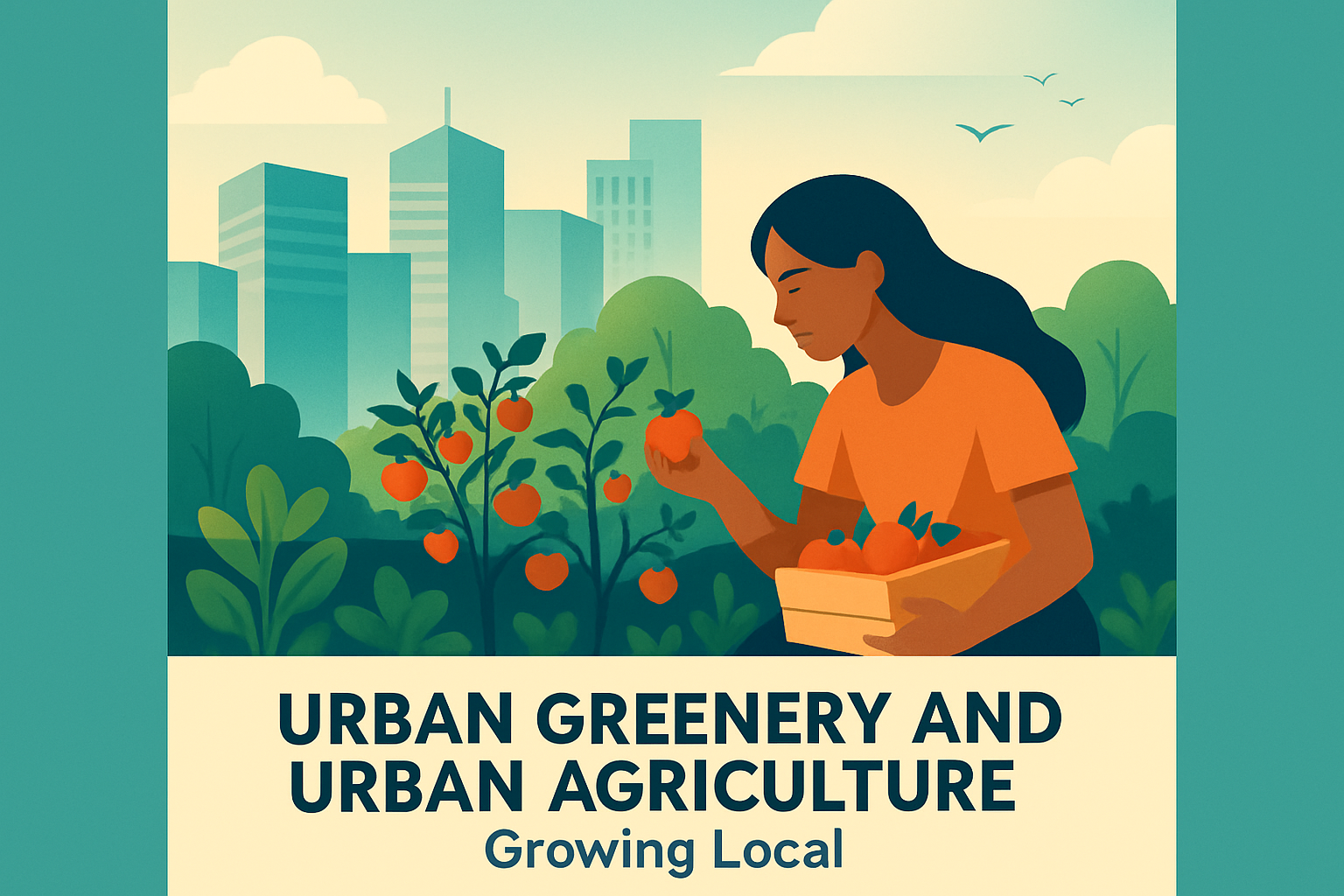
Urban greenery and urban agriculture are increasingly becoming integral components of town planning and city living in the 21st century. As the world becomes more urbanized, with over half of the global population now living in cities, the traditional separation between urban and rural zones is blurring. Urban greenery refers to the incorporation of natural plant life within city landscapes. This includes parks, green roofs, and vertical gardens which contribute to the aesthetic value and environmental quality of urban environments. Urban agriculture, on the other hand, is the practice of cultivating, processing, and distributing food in or around urban areas. This localized approach to food production offers potential solutions to issues like food security, sustainability, and community well-being. Together, these practices can transform cities into healthier, more livable spaces. Addressing public concerns such as pollution, climate change, and diminishing green spaces makes urban greenery and agriculture critically relevant today. By integrating green solutions into urban planning, cities can combat environmental challenges while enhancing residents’ quality of life.
The Environmental Benefits of Urban Greenery
Urban greenery primarily contributes to environmental sustainability. Cities are notorious for their “heat island” effect, a phenomenon where urban areas become significantly warmer than surrounding rural areas. This is largely due to human activities and the abundance of heat-absorbing materials like concrete and asphalt. By introducing greenery into the urban fabric, cities can mitigate this effect. Plants provide shade and release moisture through a process known as evapotranspiration, both of which help to cool urban environments.
An excellent example of this in action is New York City’s High Line Park. Constructed on a disused rail line, the park is an elevated greenway that stretches over a mile. The High Line not only provides a walkable green space for New Yorkers but also contributes significantly to cooling the surrounding urban area. Beyond cooling effects, urban greenery absorbs pollutants and gives cities much-needed oxygen. This reduction in pollution is crucial for urban areas grappling with the health repercussions of poor air quality.
Urban Agriculture: Promoting Food Security and Sustainability
Urban agriculture stands as a beacon of hope in the face of growing food insecurities. By fostering localized food systems, urban agriculture reduces the carbon footprint associated with long-distance food transport and offers fresh produce to city dwellers, often at a lower cost. This not only promotes healthier lifestyles but also supports local economies and job creation.
A prime example of urban agriculture is Havana, Cuba. Following the collapse of the Soviet Union, food imports to Cuba dropped drastically, sparking a food crisis. In response, Cuba embraced urban agriculture, and today, the city of Havana produces a significant percentage of its fresh produce within urban boundaries. Citizens have taken to growing vegetables in every available space, including rooftops and urban lots. This movement spearheaded by necessity now signifies sustainability and community resilience.
Community and Social Impacts of Urban Green Space
Urban green spaces contribute significantly to social cohesion and community well-being. Parks, community gardens, and green corridors serve as places for recreation, community gatherings, and relaxation. They provide city dwellers an escape from the frantic pace of urban life, improving mental health and promoting physical activity and interaction among residents.
Consider the community gardens of Detroit, Michigan. Once the pinnacle of American industry, Detroit faced economic downturns and population decline. In response, residents began transforming vacant lots into community gardens. These gardens have become vital community hubs—offering not just food, but also fostering relationships and revitalizing neighborhoods. They empower residents, giving them a vested interest in their locality, while promoting social interaction across different demographics.
The Economics of Urban Greenery and Agriculture
Investing in urban greenery and agriculture has transformative economic benefits. These initiatives often lead to increased property values, reduced public health costs, and job creation within local economies. Greenery enhances aesthetic appeal and is known to uplift neighborhoods, thereby attracting businesses and increasing property demand.
A noteworthy example is the city of Singapore, known for its green infrastructure policies. With initiatives like the Gardens by the Bay and strict greening regulations, Singapore has created an economically viable model that combines urban development with nature. The Gardens by the Bay alone attracted millions of tourists in its initial years, contributing significantly to local revenue.
| City | Initiative | Impact |
|---|---|---|
| New York City | High Line Park | Cooling effect, increased tourism |
| Havana | Urban Agriculture | Food security, sustainability |
| Detroit | Community Gardens | Community cohesion, revitalization |
| Singapore | Gardens by the Bay | Economic vitality, tourism boost |
Overcoming Challenges in Implementing Urban Greenery
Despite the myriad benefits, the implementation of urban greenery and agriculture faces significant challenges. Limited urban space, high costs, and policy restrictions often hinder developments. Therefore, innovative approaches and strategies are necessary to overcome these barriers. Gathering community support is essential for projects to thrive, often requiring collaboration between government bodies, local businesses, and residents.
The approach of Paris, France, in promoting ‘green rooftops’ showcases effective overcoming of space limitations. Initiatives in Paris encourage citizens to convert available rooftop spaces into gardens. This not only adds to the city’s green cover but also promotes biodiversity and local food production. The city provides monetary incentives to motivate citizens, resulting in higher rates of project success and public involvement.
Technological Advancements Supporting Urban Green Initiatives
Technology plays an increasingly pivotal role in urban greenery and agriculture. Innovations in crop cultivation, resource management, and environmental monitoring support higher efficiency and sustainability. Technological tools allow urban farmers to maximize yields even in constrained environments, making agriculture viable in cities.
A great example is vertical farming technology. Pioneered by companies like Aerofarms in Newark, New Jersey, vertical farming utilizes indoor, climate-controlled environments to grow crops on stacked layers, reducing land use drastically. This method enables year-round farming without reliance on favorable weather conditions, making it ideal for urban settings. Vertical farming’s resource efficiency serves as a testament to technology’s potential in promoting urban agricultural development.
Integrating Urban Greenery into Future Urban Planning
The future of urban planning must integrate greenery and agriculture at its core. Sustainable urban design involves creating interconnected green networks that offer both ecological and social advantages. Green initiatives should be considered essential infrastructure, akin to roads or sewage systems, with dedicated funding and strategic planning frameworks.
The concept of a “green city” is embodied by Vancouver, Canada, which aims to become the world’s greenest city. Vancouver employs a comprehensive Greenest City Action Plan that focuses on broadening green spaces, enhancing urban farming opportunities, and reducing carbon emissions. A holistic view of city planning embracing natural environments is crucial for sustainability, health, and economic prosperity.
Conclusion and Call to Action: Cultivate Urban Greenery
Urban greenery and urban agriculture emerge as critical tools for cities to navigate modern challenges. By integrating green spaces and food production systems into urban settings, cities can promote sustainability, environmental health, and societal well-being. These benefits demonstrate why prioritizing such initiatives is indispensable for urban planners and communities alike.
Cities worldwide stand to gain by embracing urban greenery and agriculture. Improved air quality, heightened community interactions, and economic benefits create compelling cases for integration. As residents, community leaders, and policymakers, there’s a need for concerted action towards adopting green measures in your own urban environments. Begin by exploring local initiatives, participating in community gardens, or advocating for green policy at city council meetings.
Urban lives become enriched when green entwines with concrete. Let us all be part of cultivating this growth, ensuring greener, more resilient, and sustainable cities for generations to come.
Frequently Asked Questions
1. What exactly is urban greenery, and why is it important in city planning?
Urban greenery involves integrating natural vegetation into urban landscapes, including elements such as parks, green roofs, vertical gardens, and more. The inclusion of these green spaces is vital as they offer numerous benefits for both the environment and urban dwellers. Firstly, urban greenery contributes significantly to the improvement of air quality by filtering pollutants and absorbing carbon dioxide, which is particularly important in densely populated areas where pollution levels can be high. Secondly, these green spaces help mitigate the urban heat island effect, where built-up areas become significantly hotter than their rural surroundings. This cooling effect can be crucial during hotter months, making cities more livable. Moreover, urban greenery enhances the aesthetic appeal of cities, providing a visual respite and creating serene environments that improve mental health and well-being. Green spaces also foster social cohesion, offering settings for recreation, gatherings, and communal activities, thus strengthening community ties. Overall, urban greenery is an essential component of sustainable city planning, promoting healthier and more resilient urban environments.
2. How does urban agriculture contribute to sustainability and food security in cities?
Urban agriculture involves the cultivation of food within city limits through gardens, farms, or hydroponic systems. It plays a crucial role in enhancing sustainability and food security in urban areas. By producing food locally, urban agriculture reduces the necessity for long transportation, which lowers carbon emissions and lessens the environmental impact traditionally associated with agriculture. This local production also means fresher produce can be delivered to urban residents, increasing access to nutritious food. Additionally, urban agriculture promotes food security by diversifying the sources of food supply and reducing dependency on external food imports, which is particularly important during disruptions to food supply chains. Urban farming also provides opportunities for urban residents to engage in agricultural activities, which can lead to increased awareness and education about food production and sustainability practices. Moreover, urban agriculture can serve as a catalyst for economic opportunities, including job creation in various stages of the food production process. Ultimately, urban agriculture is pivotal in creating resilient urban food systems and fostering sustainable cities.
3. What are green roofs and vertical gardens, and how do they benefit urban environments?
Green roofs and vertical gardens are innovative solutions to introduce vegetation in urban settings where space is limited. Green roofs involve growing plants on rooftops of buildings, which can range from extensive systems with low-maintenance plants to intensive systems capable of supporting a wide variety of vegetation, including trees and shrubs. Vertical gardens are structures that allow plants to grow upward, often attached to walls, saving substantial ground space. These green solutions provide numerous benefits to urban environments. They act as natural insulators, reducing the need for air conditioning and heating, consequently cutting energy consumption and lowering utility costs. They manage rainwater effectively, absorbing it to minimize runoff and relieve stress on urban drainage systems. Additionally, these green installations improve urban biodiversity, offering habitats for birds and insects. Aesthetic enhancements are also significant, as green roofs and vertical gardens transform bland urban spaces into appealing and vibrant areas that contribute to the mental well-being of residents. As part of an integrated urban planning approach, these solutions lead to more sustainable and livable cities, combating urban challenges like pollution and climate change.
4. What challenges do cities face when implementing urban greenery and agriculture, and how are they being addressed?
Implementing urban greenery and agriculture presents numerous challenges, yet cities are increasingly devising strategies to overcome them. One primary challenge is the limitation of space in densely built environments, leaving little room for traditional gardening and farming methods. To counter this, innovative solutions such as vertical gardens and rooftop farming are being employed. Another issue is the initial investment and maintenance cost of urban green projects, which can be high. Many cities address this by incentivizing green initiatives through grants, tax benefits, or public-private partnerships to encourage investment in urban green infrastructure. Furthermore, urban agriculture faces regulatory challenges, as zoning laws and policies may not always accommodate agricultural activities. This is gradually being tackled by revising urban planning policies to incorporate green space requirements and agricultural zoning. There is also the challenge of engaging communities and fostering interest in urban agriculture, which cities are resolving by creating educational programs and community gardening projects that raise awareness and foster involvement among urban residents. By addressing these challenges with creative solutions and supportive policies, cities progressively integrate more greenery and agriculture into their urban ecosystems.
5. How can individuals get involved in urban greenery and urban agriculture initiatives?
There are numerous ways individuals can actively participate in urban greenery and agriculture initiatives, whether at the community level or within their own homes. For those interested in community-driven efforts, participating in local community gardens is a fantastic starting point. These gardens offer individuals the chance to learn gardening skills, engage with other like-minded residents, and contribute to the local food system. Many cities also have volunteering programs that focus on maintaining and enhancing public green spaces, where you can volunteer your time and efforts. If you’re interested in incorporating greenery into your personal living space, consider starting a balcony or rooftop garden that utilizes container gardening or hydroponics, which are suited for limited spaces. Even something as simple as joining a local cooperative supporting urban farmers or purchasing produce from urban farm markets helps foster the urban agriculture movement. Additionally, educating oneself and others about the benefits and techniques of urban agriculture can contribute significantly to spreading awareness and initiating more widespread adoption of these green practices. By taking these steps, individuals can play a meaningful role in advancing sustainable urban living practices.