Urban greenery is a term that encompasses all types of plant life in urban areas, including trees, shrubs, gardens, parks, and green walls. This natural element within cities plays a significant role in environmental education, a field that seeks to impart knowledge and awareness about the environment and sustainability. The integration of greenery in urban settings is crucial, as it not only enhances the aesthetic appeal but also provides critical environmental benefits such as air purification, temperature regulation, and biodiversity support. In a world facing rapid urbanization and climate change, urban greenery presents an indispensable opportunity for fostering environmental education among city dwellers. The aim is to cultivate an environmentally conscious populace that is aware of the significance of sustainable living practices and the preservation of natural resources. This article explores the concept of urban greenery, its relevance in environmental education, and the potential it holds for a sustainable future.
The Role of Urban Greenery in Environmental Education
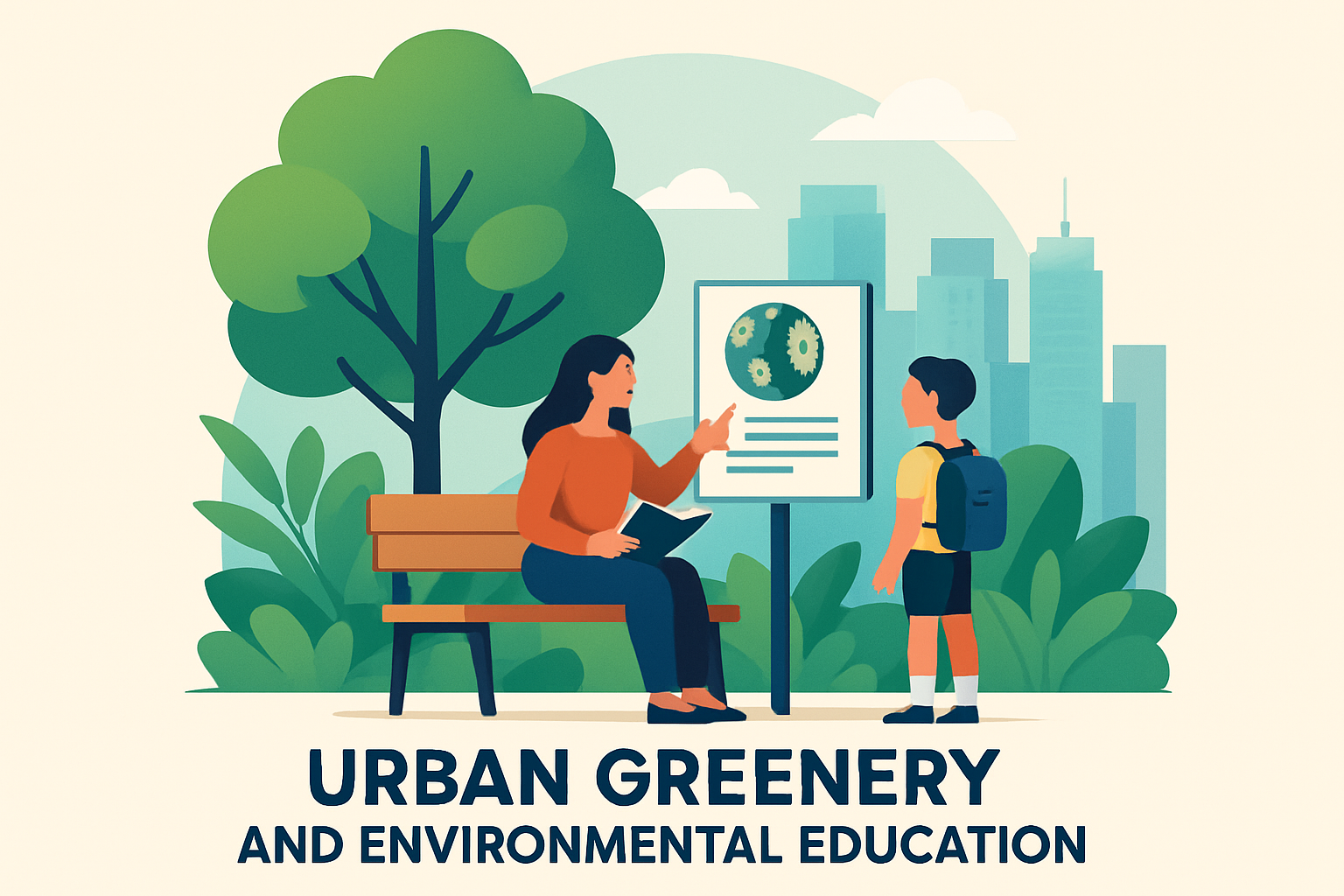
Urban greenery can serve as live classrooms, offering citizens a direct learning experience about ecological processes and the importance of maintaining green spaces. Educational institutions leverage parks and botanical gardens to teach students about plant species, wildlife habitats, and ecosystem dynamics. Urban gardens can serve as platforms for hands-on learning, permitting learners to engage with nature, which can enhance understanding and foster a deeper appreciation for the environment.
For example, in New York City, the High Line, an elevated linear park built on a historic freight rail line, has been used extensively for educational programs. These initiatives include guided tours and workshops that teach about native flora and fauna and urban sustainability practices. Such opportunities take learning beyond traditional classrooms and instill a sense of environmental stewardship among participants, emphasizing the connectivity of human actions and natural systems.
Urban Greenery and Mental Health Benefits
Urban greenery doesn’t solely contribute to physical education concerning the environment, but also has positive implications for mental well-being. Studies have indicated that exposure to green spaces can reduce stress, improve mood, and even enhance cognitive function. Incorporating green spaces within cities aids in establishing tranquil environments that can mentally refresh city dwellers.
A prominent example can be found in Tokyo, where the concept of “forest bathing” is practiced. The practice, originating from Japan and known as “Shinrin-yoku,” involves immersing oneself in a forest environment. Urban parks in Tokyo have enabled this restorative practice without needing to venture far from the city, promoting mental health alongside creating platforms for educating citizens about the benefits and care of green environments.
| Urban Greenery Type | Role in Education | Mental Health Benefits |
|---|---|---|
| Parks | Workshops & Guided Tours | Reduces Stress |
| Botanical Gardens | Exploration of Plant Species | Improves Mood |
| Community Gardens | Hands-on Learning | Enhances Cognitive Function |
Environmental Awareness through Community Engagement
Community involvement in urban gardening can significantly uplift public awareness about sustainable practices. Participatory activities in urban neighborhoods offer insight into the cultivation and conservation of natural resources. These participatory projects make environmental issues more tangible to individuals who may not have easy access to natural settings.
In Detroit, community-driven green initiatives have flourished, particularly through urban farming projects. These projects not only provide fresh produce to urban populations but also create educational environments where community members learn about composting, water conservation, and the biodiversity benefits of green spaces. Such grassroots movements underscore the importance of urban greenery in providing accessible environmental education and fostering a sense of community ownership.
Technological Integration in Urban Green Spaces
The application of technology in urban greenery initiatives provides innovative tools for environmental education, extending the reach and engagement of traditional approaches. With apps and digital platforms now available, users can gain instantaneous information about plant species and green spaces, facilitating an interactive learning experience.
In Singapore, known for its “City in a Garden” initiative, digital technology has become intertwined with urban greenery. Through mobile applications and augmented reality systems, users can explore nearby parks and gardens, with the ability to access detailed information on specific plant species, their roles in the ecosystem, and guidelines for conservation. This tech-savvy approach not only modernizes the educational experience but also appeals to the tech-centric younger demographics, ensuring broader engagement with environmental education.
Challenges and Opportunities
Despite numerous benefits, the implementation of urban greenery also faces challenges that can impede its role in environmental education. Limited space, high maintenance costs, and competing land uses often restrict the expansion of green spaces in urban environments. Moreover, socio-economic disparities can affect access to such spaces, curtailing educational opportunities for marginalized communities.
Nevertheless, these challenges also present opportunities for innovation. Vertical gardens or “green walls” offer a viable solution to space constraints, as evidenced by Melbourne’s urban garden projects that transform building exteriors into lush green vistas. Similarly, public-private partnerships can provide the requisite funding and resources for maintaining urban green spaces, ensuring their sustainability and educational use.
Policy and Urban Greenery
Effective policy-making is crucial for the successful integration of urban green spaces and the promotion of environmental education. Local governments and policymakers can prioritize the development and maintenance of urban greenery through strategic urban planning and budget allocation.
The case of Copenhagen illustrates effective policy intervention, where the municipality’s green strategy emphasizes creating accessible parks and ensures every resident lives within a short distance of a green area. By supporting initiatives such as tree planting and park expansion, municipalities can bolster environmental education programs and align urban development with sustainability goals.
Conclusion and Call to Action
Urban greenery plays an indispensable role in environmental education, providing a unique nexus between nature and society within the concrete confines of cities. By fostering environmental literacy through hands-on learning, promoting mental well-being, and encouraging community participation, urban green spaces help build a sustainable future while enhancing the quality of urban life. Despite facing challenges such as limited space and resource constraints, innovative solutions like vertical gardens and technological integration hold promise in expanding educational opportunities.
To maximize the benefits of urban greenery, individuals, communities, and governments must collaborate towards a common goal of preserving and enhancing green spaces. By participating in local conservation activities, promoting policies that prioritize environmental education, and utilizing technology to broaden the reach of educational initiatives, we can collectively cultivate an eco-conscious society.
Let us take responsibility to not only preserve but also incorporate greenery within urban spaces, ensuring that future generations inherit a more sustainable and environmentally aware world. Join local initiatives, advocate for urban green policies, and educate oneself and others about the significance of green spaces. The time to act is now.
Frequently Asked Questions
1. What is urban greenery, and why is it important?
Urban greenery refers to various forms of plant life within city environments, such as trees, shrubs, gardens, parks, and green walls. Its importance stems from a variety of factors. Firstly, urban greenery significantly contributes to the enhancement of the aesthetic and livability aspects of urban spaces, creating more inviting and pleasant environments for inhabitants. However, its value extends far beyond just aesthetics. Urban greenery plays a critical environmental role by aiding air purification. Trees and plants filter pollutants and carbon dioxide from the air, releasing oxygen and improving air quality. This is particularly crucial in cities, where pollution levels tend to be higher due to dense populations and vehicle emissions.
Additionally, urban greenery helps moderate urban temperatures, combat the urban heat island effect, and support biodiversity by providing habitats for various species. Importantly, it also contributes to mental health and well-being, offering residents spaces for recreation, relaxation, and a respite from the hustle and bustle of city life. In terms of educational impact, urban greenery serves as a living classroom, enabling residents, particularly students, to learn about ecological systems, conservation efforts, and sustainability in a tangible and engaging manner.
2. How does urban greenery contribute to environmental education?
Urban greenery offers a rich resource for environmental education by providing real-world examples of ecological processes and environmental stewardship. By observing and interacting with green spaces, individuals gain firsthand knowledge of topics such as the water cycle, photosynthesis, and biodiversity. Parks, community gardens, and green walls serve as open-air classrooms where concepts typically taught in textbooks come alive, helping people of all ages grasp the importance of plants and ecosystems in urban settings.
Beyond scientific understanding, urban greenery also fosters a sense of environmental responsibility and stewardship. Community-based projects, such as the creation and maintenance of garden spaces, teach sustainable practices. These projects encourage community involvement, collaboration, and a personal investment in a greener future. For students, taking part in such activities, or merely observing their implementation, can provide an appreciation for nature’s role in urban life, nurturing eco-conscious citizens who carry the values of sustainability into adulthood.
3. What role do green spaces play in enhancing urban air quality?
Green spaces are integral to improving urban air quality. Plants have an innate ability to filter airborne pollutants through their leaves and bark, trapping particulates and absorbing gases like carbon dioxide while releasing oxygen, a process known as photosynthesis. This natural filtration helps lower pollution levels in cities where industrial and vehicular emissions are prevalent.
Furthermore, urban greenery contributes to reducing urban heat, which can exacerbate air pollution problems. Green spaces moderate temperatures by providing shade and increasing moisture through evapotranspiration, which can improve the overall air quality. In effect, urban greenery acts as a natural air conditioner, cooling down hot city landscapes and promoting healthier, cleaner air, which is critical for human health and well-being.
4. Why is the integration of green infrastructure crucial in urban areas?
The integration of green infrastructure into urban areas is essential for several reasons. Firstly, as cities continue to expand and population densities increase, the demand for spaces that balance urban development with natural environments becomes more pressing. Green infrastructure like parks, green roofs, and tree-lined streets contributes to enhancing the urban aesthetic and improving quality of life.
Equally important are the environmental benefits. By facilitating better air and water quality, supporting biodiversity, reducing urban heat, and contributing to rainwater management, green infrastructure is a pillar of sustainable urban development. These elements provide vital habitats for species, connect people with nature, and highlight environmentally friendly practices, supporting broader educational initiatives and fostering community connections.
Moreover, being surrounded by nature has been shown to improve mental health and reduce stress, promoting healthier and happier urban communities. Recognizing these benefits emphasizes why city planners and policymakers must prioritize the integration of green spaces in urban planning strategies to create resilient and sustainable urban futures.
5. How can individuals contribute to promoting urban greenery?
Individuals can play an active role in promoting urban greenery through various means. First, engaging with local community gardening projects or volunteering for park clean-up and planting events can have a significant impact. Such activities support local ecosystems and maintain public green spaces, demonstrating commitment to a greener urban environment.
Individuals can also advocate for increased green space within their communities by contacting local government officials, supporting policies and initiatives aimed at enhancing urban greenery, or even participating in planning meetings. At a more personal level, residents can contribute by incorporating plants into their living spaces, whether through balcony gardens, rooftop green plots, or simply keeping indoor plants, all of which help increase local biodiversity.
Education and awareness are other vital components. By educating themselves and others—friends, family, and broader social circles—about the benefits of urban greenery and sustainable practices, individuals can foster a culture that values and actively promotes environmental stewardship. Small actions can lead to significant changes, especially when communities come together to work towards common green goals.