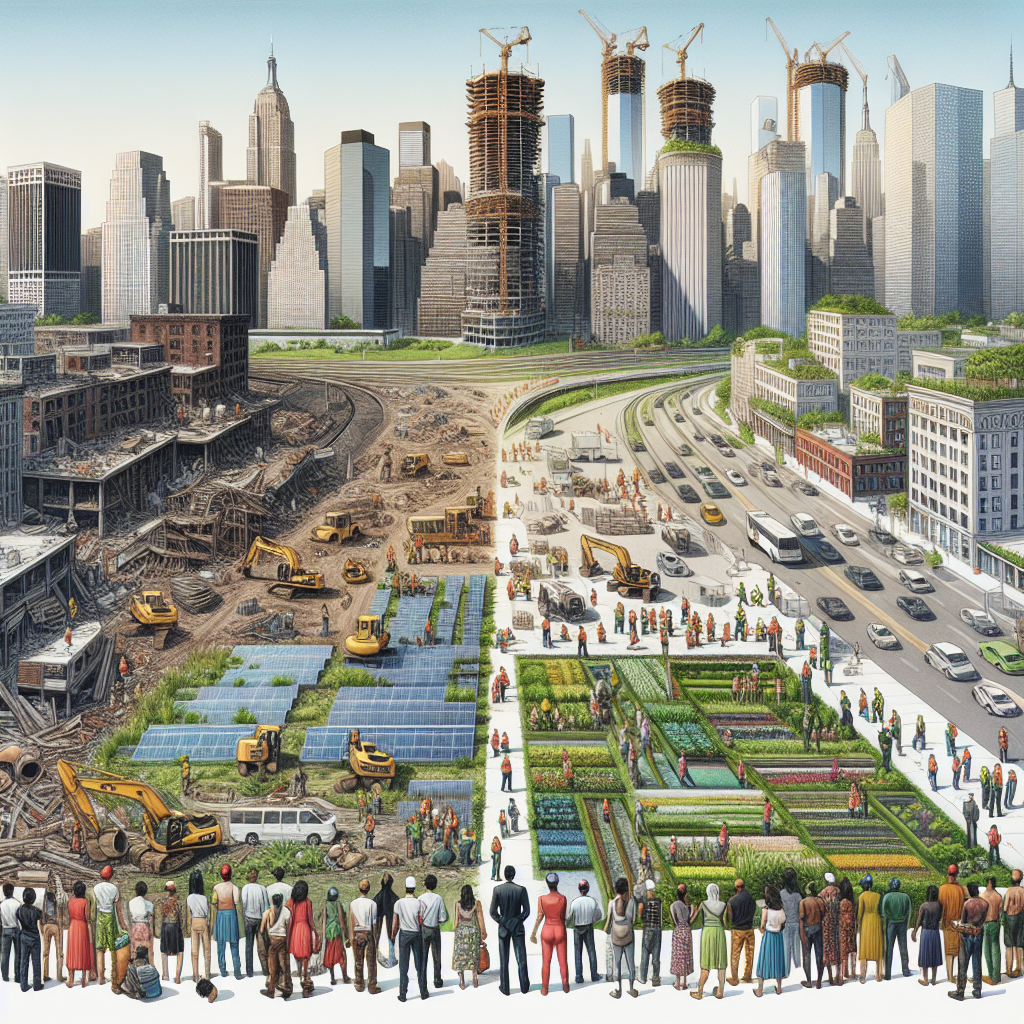
Trends in Urban Renewal and Redevelopment Projects Urban renewal and redevelopment projects have always been a crucial aspect of urban planning, bridging the gap between the historical legacy of cities and their modern futures. Increasingly, cities worldwide are undergoing transformations to rejuvenate their urban cores, making them more livable, sustainable, and economically vibrant. This article delves into the emerging trends in urban renewal and redevelopment projects, highlighting key strategies and showcasing exemplary projects.
Introduction: The Rising Importance of Urban Renewal
Urban renewal is not a novel concept. However, the scale and scope at which these projects are being undertaken now are unprecedented. Several factors are driving the renewed focus on urban renewal:
- Population Growth: The global population is rapidly urbanizing. More than half of the world’s population now lives in urban areas, and this trend is expected to continue. This influx necessitates the efficient use of space through urban renewal.
- Deteriorating Infrastructure: Many cities have infrastructure that dates back several decades, some even centuries. This infrastructure is often inefficient and cannot meet the demands of modern cities, making redevelopment essential.
- Economic Revitalization: Urban renewal projects often serve as catalysts for economic growth. By attracting businesses and residents to previously neglected areas, cities can boost their economic activities and create jobs.
- Sustainability Goals: Climate change and environmental sustainability have become central themes in urban planning. Redevelopment projects are increasingly incorporating green building standards and sustainable practices to reduce carbon footprints.
- Quality of Life: Urban renewal enhances the quality of life by providing safer, healthier, and more aesthetically pleasing environments for residents.
These factors underscore the critical importance of urban renewal in contemporary urban planning. Next, we will explore some of the prevalent trends in urban renewal and redevelopment projects.
Trend #1: Mixed-Use Developments
One of the most prominent trends in urban renewal is the rise of mixed-use developments. Mixed-use developments integrate residential, commercial, and recreational spaces within a single project. These developments create vibrant, dynamic neighborhoods that foster a sense of community and reduce the need for long commutes. Key benefits include:
- Increased Walkability: Residents have easy access to amenities, reducing reliance on cars and promoting healthier lifestyles.
- Enhanced Connectivity: These developments encourage social interaction and connectivity among residents, fostering a sense of community.
- Efficient Land Use: Mixed-use projects maximize the use of available land, making them ideal for cities with limited space.
Examples of successful mixed-use developments include Hudson Yards in New York City and Battery Park City, which combine residential, commercial, and recreational spaces to create thriving urban communities.
Trend #2: Sustainable and Green Urban Design
As cities strive to combat climate change and reduce their environmental impact, sustainable and green urban design has gained significant traction. Urban renewal projects are increasingly incorporating eco-friendly practices and technologies. Key elements of this trend include:
- Green Buildings: Utilizing energy-efficient building materials and designs to reduce energy consumption and lower carbon emissions.
- Renewable Energy: Incorporating solar panels, wind turbines, and other renewable energy sources to power buildings and reduce dependence on fossil fuels.
- Green Spaces: Creating parks, rooftop gardens, and green belts that improve air quality, provide recreational opportunities, and enhance the overall aesthetics of urban areas.
- Efficient Transportation: Promoting public transportation, cycling, and pedestrian-friendly infrastructures reduces traffic congestion and emissions.
Noteworthy examples of this trend include the development of Eco-Cities like Masdar City in the UAE and the Garden City concept in Singapore. These cities prioritize sustainable urban design, setting an example for future urban renewal projects.

Trend #3: Adaptive Reuse and Preservation
Adaptive reuse and preservation involve repurposing existing structures for new uses while maintaining their historical and architectural significance. This trend addresses the need to balance urban growth with cultural heritage preservation. Benefits of adaptive reuse include:
- Cultural Preservation: Retaining historical and architectural elements preserves the identity and character of a city.
- Cost-Efficiency: Renovating existing structures can be more cost-effective than new construction.
- Sustainability: Reusing buildings reduces construction waste and minimizes the environmental impact of demolition.
Examples of successful adaptive reuse projects include the Tate Modern in London, which converted a former power station into a renowned art museum, and the High Line in New York City, which transformed an abandoned elevated railway into a popular urban park.
Trend #4: Community-Centric Planning
Urban renewal projects are increasingly focused on community-centric planning, emphasizing the needs and aspirations of local residents. This approach ensures that developments align with the interests of the people who will inhabit them. Key principles include:
- Public Participation: Involving residents in the planning and decision-making processes to ensure that their voices are heard.
- Affordable Housing: Developing affordable housing options to address the growing issue of housing affordability in urban areas.
- Equity and Inclusion: Ensuring that projects benefit all members of the community, regardless of socioeconomic status.
An exemplary project embodying community-centric planning is the Medellín Transformation in Colombia, where extensive community engagement led to the successful revitalization of formerly neglected neighborhoods through initiatives such as libraries, schools, and public parks.
Trend #5: Technological Integration in Urban Renewal
Technology plays a vital role in modern urban renewal projects, enhancing efficiency, sustainability, and connectivity. Key technological trends include:
- Smart Cities: Leveraging Internet of Things (IoT) devices, sensors, and data analytics to optimize urban services such as transportation, waste management, and energy usage.
- Building Information Modeling (BIM): Using digital modeling tools to streamline the design, construction, and maintenance of buildings and infrastructure.
- Augmented Reality (AR) and Virtual Reality (VR): Employing AR and VR technologies for urban planning and design, enabling stakeholders to visualize and interact with proposed developments.
Examples of cities embracing technological integration include Barcelona’s implementation of smart city technologies and Dubai’s use of BIM for efficient urban planning. These innovations are revolutionizing urban renewal projects, making cities more responsive and adaptive to the needs of their residents.
Conclusion: Shaping the Future of Urban Development
Urban renewal and redevelopment projects are at the forefront of shaping the future of cities worldwide. The trends discussed in this article reflect the evolving nature of urban planning, driven by the need for sustainable growth, economic viability, and improved quality of life.
Mixed-use developments are transforming traditional neighborhoods into vibrant, self-sustaining communities. Sustainable and green urban design is addressing the pressing challenges of climate change, while adaptive reuse and preservation balance modernity with cultural heritage. Community-centric planning ensures that urban renewal projects align with the needs of residents, fostering inclusivity and social equity. Technological integration is paving the way for smart cities that can efficiently respond to contemporary urban challenges.
As cities continue to evolve, urban renewal policies must be adaptable, forward-thinking, and inclusive. Policymakers, urban planners, developers, and communities must collaborate to create spaces that are not only functional but also enriching and sustainable. The success of urban renewal initiatives ultimately depends on their ability to foster resilience, innovation, and inclusivity.
In summary, the trends in urban renewal and redevelopment projects signify a promising future for our cities. By embracing these trends, cities can navigate the complexities of modern urbanization and create environments that thrive economically, socially, and environmentally.
Frequently Asked Questions
1. What is urban renewal, and why is it important for cities today?
Urban renewal is a comprehensive strategy aimed at revitalizing and redeveloping underutilized or decaying urban areas to make them more functional, aesthetically pleasing, and economically viable. It typically involves a combination of demolition, new construction, urban design improvements, and regulatory changes. Nowadays, urban renewal is more important than ever as cities face increasing challenges such as population growth, aging infrastructure, and environmental concerns. By addressing these, urban renewal projects help to enhance a city’s livability by creating more sustainable communities, providing better housing options, improving public transport, and boosting economic opportunities. Moreover, these projects encourage community engagement and often incorporate input from local residents to ensure that the renewed spaces meet their needs, thus fostering a sense of ownership and pride within communities.
2. What are some of the latest trends in urban renewal and redevelopment?
Urban renewal and redevelopment have evolved significantly in recent years, with several key trends that are shaping their future. A major trend is the focus on sustainability and green infrastructure. This includes initiatives such as increasing urban green spaces, promoting use of eco-friendly materials, and integrating renewable energy sources. Another trend is the emphasis on mixed-use developments, which blend residential, commercial, and recreational spaces to create vibrant, 24/7 communities. Additionally, technology plays a crucial role in modern urban redevelopment through Smart City solutions, which harness data and digital innovation to improve urban living conditions and infrastructure management. Furthermore, there is a stronger move towards inclusivity and community-centric planning, ensuring that redevelopment projects reflect diverse cultural backgrounds and provide benefits across different demographics. The adaptive reuse of buildings is another trend, converting historic or old structures into modern, functional spaces while preserving their character and reducing the need for new construction.
3. How do urban renewal projects impact local communities?
Urban renewal projects can have profound impacts on local communities, both positively and negatively. On the positive side, they can significantly enhance the quality of life by improving infrastructure, delivering better public services, providing new recreational facilities, and boosting local economies through job creation and business opportunities. Redevelopment can stimulate the local economy by attracting investment and increasing property values. However, there can also be challenges, such as displacement of existing residents due to rising property costs, which can lead to gentrification if not managed carefully. To mitigate these issues, it’s crucial for urban renewal projects to incorporate inclusive planning that considers affordable housing solutions, preserves cultural landmarks, and includes input from community members in decision-making processes. This ensures that the benefits of urban renewal are equitably distributed and that the social fabric of communities is maintained.
4. What role does technology play in urban renewal and redevelopment projects?
Technology plays an increasingly vital role in urban renewal and redevelopment, transforming the way cities are imagined and developed. One of the primary influences of technology is through the creation and implementation of Smart City concepts. These involve integrating digital solutions such as IoT (Internet of Things) devices, advanced data analytics, and urban management software to optimize city services like waste management, energy distribution, and traffic control systems. Moreover, technology enables more detailed and realistic modeling and simulation of urban projects, allowing planners to visualize outcomes and make informed decisions based on accurate data. Geographic Information Systems (GIS) and Building Information Modeling (BIM) are two examples of technological tools that are pivotal in efficient urban planning and redevelopment. Technology also facilitates greater community participation via digital platforms, allowing residents to engage directly with planners and policymakers, thus ensuring their voices are heard in the redevelopment process.
5. How do urban renewal and redevelopment projects address environmental concerns?
Environmental concerns are at the forefront of urban renewal and redevelopment projects today. Many cities are redesigning their urban spaces with a strong emphasis on sustainability and resilience against climate change. This includes promoting green architecture by incorporating energy efficiency in building designs, utilizing sustainable materials and construction practices, and reducing urban heat through increased greenery such as parks, green roofs, and street trees. Water management systems that capture rainwater and reduce stormwater runoff are being integrated into new developments, helping to alleviate the burden on the city’s drainage infrastructure and enhance the urban ecosystem. Redevelopment projects also prioritize improving public transport networks to reduce reliance on automobiles, decrease emissions, and encourage environmentally friendly commuting. The focus is on creating walkable, bike-friendly cities that rely less on heavy vehicular traffic. Embracing these practices not only helps in tackling environmental issues but also contributes to healthier and more appealing urban living environments.