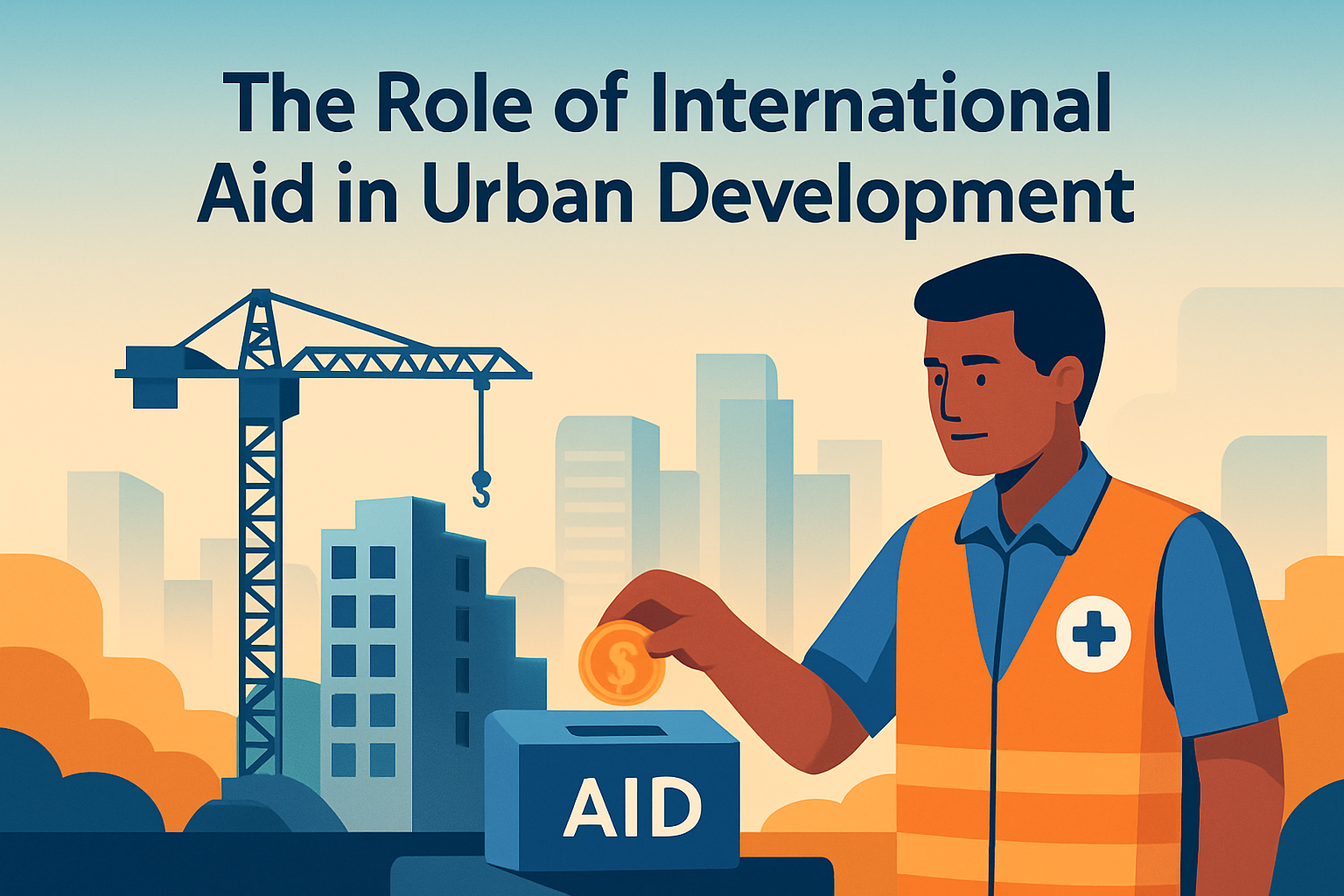
In an increasingly globalized world, urban development has become a focal point for sustainable growth and progress. Urban areas around the globe face myriad challenges, from infrastructure needs to environmental concerns and social inequities. Herein lies the significance of international aid in urban development, a facet of globalization that promotes equity and sustainability across borders. International aid refers to the financial, technical, and humanitarian assistance provided by one country or international organizations to another, with the aim of fostering development and well-being. In the context of urban growth, it plays a pivotal role in addressing infrastructural deficiencies, boosting economic development, and promoting social equality. Understanding the significance of international aid in urban development is crucial for policymakers, stakeholders, and global citizens alike. As urban areas continue to expand, often rapidly, the need for strategic, effective support mechanisms becomes evident. Thus, delving into how international aid contributes to urban development is not just a theoretical exercise but a practical necessity with real-world implications.
The Importance of Infrastructure Development
Infrastructure is the backbone of urban development, facilitating the smooth functioning and growth of cities. International aid has been instrumental in advancing infrastructure in developing urban areas. For instance, the World Bank has financed numerous projects worldwide aimed at improving public transportation, water systems, and energy supply in urban centers. One notable example is the Dar es Salaam Urban Transport Project in Tanzania, which received substantial funding from multiple international donors. This project aimed to alleviate traffic congestion and improve public transit systems, directly impacting the daily lives of citizens by reducing travel time and increasing accessibility. Infrastructure improvements brought about by international aid not only enhance urban efficiency but also spur local economic growth by attracting investment and creating jobs.
Boosting Economic Development Through Investment
Economic growth is a crucial component of urban development, and international aid has a profound impact on economic opportunities in developing cities. Aid in the form of grants or loans can help finance microenterprise initiatives, vocational training, and technological innovation, ingeniously weaving these into the existing urban fabric. Consider the case of Kabul, Afghanistan, where aid from the United Nations Development Program (UNDP) supported youth training programs, empowering young entrepreneurs to kick-start their businesses. By providing resources, training, and mentorship, such initiatives create a fertile ground for local talent to thrive and contribute to the urban economy. With skilled labor and innovative businesses on the rise, urban regions have seen palpable improvements in living standards and economic resilience.
Promoting Social Equity and Reducing Inequality
Urban areas often reflect stark disparities in wealth and access to services, making social equity a pressing issue in urban development. International aid targets these inequities by supporting health care, education, and housing projects in vulnerable communities. An exemplary case is the Socio-Economic Housing Project in Manila, Philippines, where international funds have been directed towards constructing affordable housing for low-income families. The initiative not only provided better living conditions but also included amenities like community centers and vocational training programs, fostering a healthier and more equitable society. By prioritizing social equity, international aid assists cities in bridging the gap between the affluent and the underprivileged, ensuring that everyone can benefit from urban progress.
Addressing Environmental Challenges
As urbanization accelerates, environmental sustainability becomes a critical aspect of urban development. International aid organizations like the Global Environment Facility (GEF) offer financial assistance to help urban areas address their environmental challenges. One such initiative is the Green Cities Program, which aims to reduce pollution and promote sustainable urban planning across several global cities. In Tbilisi, Georgia, international aid played a crucial role in retrofitting public buildings to be more energy efficient, significantly reducing carbon emissions. Environmental improvements resulting from international aid not only enhance the quality of urban life but also provide a model for other cities striving to achieve sustainability.
| Aspect | Role of International Aid | Example |
|---|---|---|
| Infrastructure | Funding and implementing improvement projects | Dar es Salaam Urban Transport Project |
| Economic Development | Supporting entrepreneurship and training | UNDP youth programs in Kabul |
| Social Equity | Providing resources for health, education, and housing | Socio-Economic Housing Project in Manila |
| Environment | Promoting sustainable practices | GEF’s Green Cities Program in Tbilisi |
Challenges and Criticisms of International Aid
While international aid plays a significant role in urban development, it is not without its challenges and criticisms. Some critics argue that aid can foster dependency, where recipient cities become reliant on external support rather than developing self-sustaining systems. Additionally, there are instances where aid does not reach its intended targets due to bureaucratic inefficiencies or corruption. For example, there have been reports of financial mismanagement in certain projects in sub-Saharan Africa, where funds intended for infrastructure development were not judiciously utilized. Moreover, the conditionalities attached to some international aid packages may compel recipient cities to conform to donor priorities, which might not always align with local needs or cultural contexts. Thus, while international aid is inherently beneficial, it necessitates prudent management and strategic planning to ensure its effective contribution to urban development.
Case Study: International Aid in Nairobi, Kenya
Nairobi, Kenya, stands as a testament to how international aid can effectively transform urban development. With a rapidly growing population, Nairobi faces significant challenges, including inadequate infrastructure, unemployment, and informal settlements. Nonetheless, with international aid flowing from various global partners, Nairobi has embarked on numerous transformative projects. For instance, the Nairobi Metropolitan Services Improvement Project, funded by the World Bank, aims to improve infrastructure and access to services in selected areas of the city. Through an integrated approach that includes modernizing transportation systems and upgrading informal settlements, the project demonstrates the tangible benefits of smart, comprehensive aid programs. As Nairobi continues to evolve, the role of international aid remains pivotal in guiding its journey toward becoming a world-class urban center.
Conclusion: Embracing International Aid for Sustainable Urban Futures
International aid’s pivotal role in urban development cannot be overstated. From infrastructure enhancement to economic stimulation, promoting social equity, and environmental sustainability, international aid serves as a crucial catalyst propelling cities toward a better future. By analyzing its impact across various facets, it becomes evident that international aid is not merely a financial transaction; it is a partnership that fosters resilience, innovation, and inclusivity in urban areas worldwide. The potential for such aid to spark transformative change emphasizes the importance of its judicious allocation and management. For stakeholders and policymakers, embracing international aid within the framework of local priorities ensures cities can effectively leverage this support to meet their unique challenges and aspirations. As individuals, we can advocate for accountability, transparency, and sustained collaboration between donors and recipient cities to enhance the effectiveness of international aid. The future of urban development, marked by sustainable progress and enriched living standards, beckons for a conscious, collective effort underscored by the unwavering support of international aid.
To harness the full potential of international aid, it is imperative to foster dialogue, facilitate knowledge exchange, and strengthen policy frameworks that align with developmental goals. In doing so, we can pave the path for cities that are not just robust in infrastructure and vibrant in economy but are also equitable and sustainable sanctuaries where communities thrive. It is through such concerted efforts that the promise of international aid can be fully realized, ushering in an era of urban development characterized by prosperity and harmony.
Frequently Asked Questions
1. What is the primary role of international aid in urban development?
International aid plays a crucial role in urban development by providing financial resources, technical expertise, and humanitarian support to cities facing various challenges. In a world where urban areas are growing rapidly, many cities struggle to cope with issues like inadequate infrastructure, environmental degradation, and social inequalities. This is where international aid steps in to bridge the gap and foster sustainable growth. Financial aid can help fund essential infrastructure projects such as roads, public transportation, water supply systems, and housing. Moreover, technical assistance offers cities access to global expertise and innovative solutions in urban planning, environmental management, and social welfare programs. This external support is critical not only for alleviating immediate urban issues but also for enabling long-term development strategies that enhance quality of life for residents, bolster economic productivity, and ensure environmental sustainability. Overall, international aid facilitates knowledge exchange and collaboration between nations, promoting an equitable approach to urban development across different regions.
2. How does international aid address environmental challenges in urban areas?
Environmental challenges are a significant concern for urban development, especially in the context of climate change, pollution, and natural resource depletion. International aid targets these issues in several ways. Firstly, it provides funding for green infrastructure projects such as renewable energy systems, waste management solutions, and sustainable public transportation. For example, aid might support the construction of solar energy plants or help implement policies that encourage the use of electric vehicles in cities. Additionally, international aid often includes collaboration with environmental specialists who work alongside local authorities to design and implement effective environmental management plans. This could involve enhancing urban green spaces, improving air and water quality, and increasing resilience to climate-related disasters like floods and heatwaves. Moreover, technical assistance in the form of capacity-building programs educates city planners and local government officials about sustainable urban practices and the latest environmental technologies. These measures, supported by international aid, are essential in creating cities that are not only more livable and attractive but also more resilient and adaptive to future environmental challenges.
3. In what ways does international aid contribute to reducing social inequalities in urban areas?
Reducing social inequalities is a significant focus of international aid in urban development. This is often achieved through programs and initiatives designed to improve living conditions, access to services, and economic opportunities for marginalized and disadvantaged communities. International aid provides critical financial resources for the construction and refurbishment of affordable housing, ensuring that even the low-income populations have access to safe and adequate shelter. It also supports the development and improvement of public health services, ensuring that everyone, regardless of their socio-economic status, can access necessary medical care. Education is another area where international aid plays an instrumental role by funding schools, vocational training programs, and adult education initiatives to boost literacy and skill levels. Furthermore, international aid fosters economic empowerment by supporting entrepreneurship programs, microfinance initiatives, and job creation schemes that enable residents from all walks of life to participate actively in their local economies. By addressing these diverse aspects of social inequality, international aid contributes to fostering inclusive cities where everyone has the opportunity to thrive.
4. How does international aid support urban infrastructure development?
Infrastructure development is one of the most visible and direct impacts of international aid in urban areas. It provides the capital necessary for large-scale projects that may otherwise be beyond the financial reach of local governments, especially in developing countries. This includes funding for the construction and maintenance of critical infrastructure such as roads and highways that improve connectivity and reduce congestion in fast-growing cities. International aid is also pivotal in expanding public transport systems, which helps reduce reliance on personal vehicles, thus decreasing traffic congestion and the associated carbon emissions. Investments in water supply systems and sanitation are equally vital, helping to ensure that urban populations have reliable access to clean water and hygienic waste disposal. Moreover, international aid often supports smart city initiatives, integrating technology with infrastructure to create more efficient, sustainable urban systems. For example, adaptive traffic management systems that minimize congestion or smart grids for more efficient energy distribution. The multifaceted assistance provided by international aid in urban infrastructure development thus underpins economic growth, enhances quality of life, and supports sustainable urbanization.
5. Can international aid lead to dependency in urban development, and if so, how is this addressed?
The concern of dependency on international aid is a valid one in the domain of urban development, as cities might become reliant on external assistance rather than developing their self-sufficient systems. However, effective international aid programs are designed not only to provide immediate solutions but also to build the local capacity and institutional frameworks needed for sustainable growth. Capacity building plays a significant role in mitigating dependency, as international aid often includes training for local government and community leaders, enabling them to manage and maintain urban development initiatives independently. This may include sharing best practices in governance, urban planning, and policy formulation. Furthermore, aid is increasingly delivered with accountability measures and performance benchmarks that encourage local ownership of projects. This approach ensures that cities develop the skills and knowledge needed to sustain progress without ongoing external support. Additionally, partnerships under international aid agreements often emphasize mutual goals and accountability, working towards a stage where the local entity can continue without external aid. Ultimately, the most successful international aid programs are those that actively strive to become obsolete by fostering resilience and self-reliance in urban development.