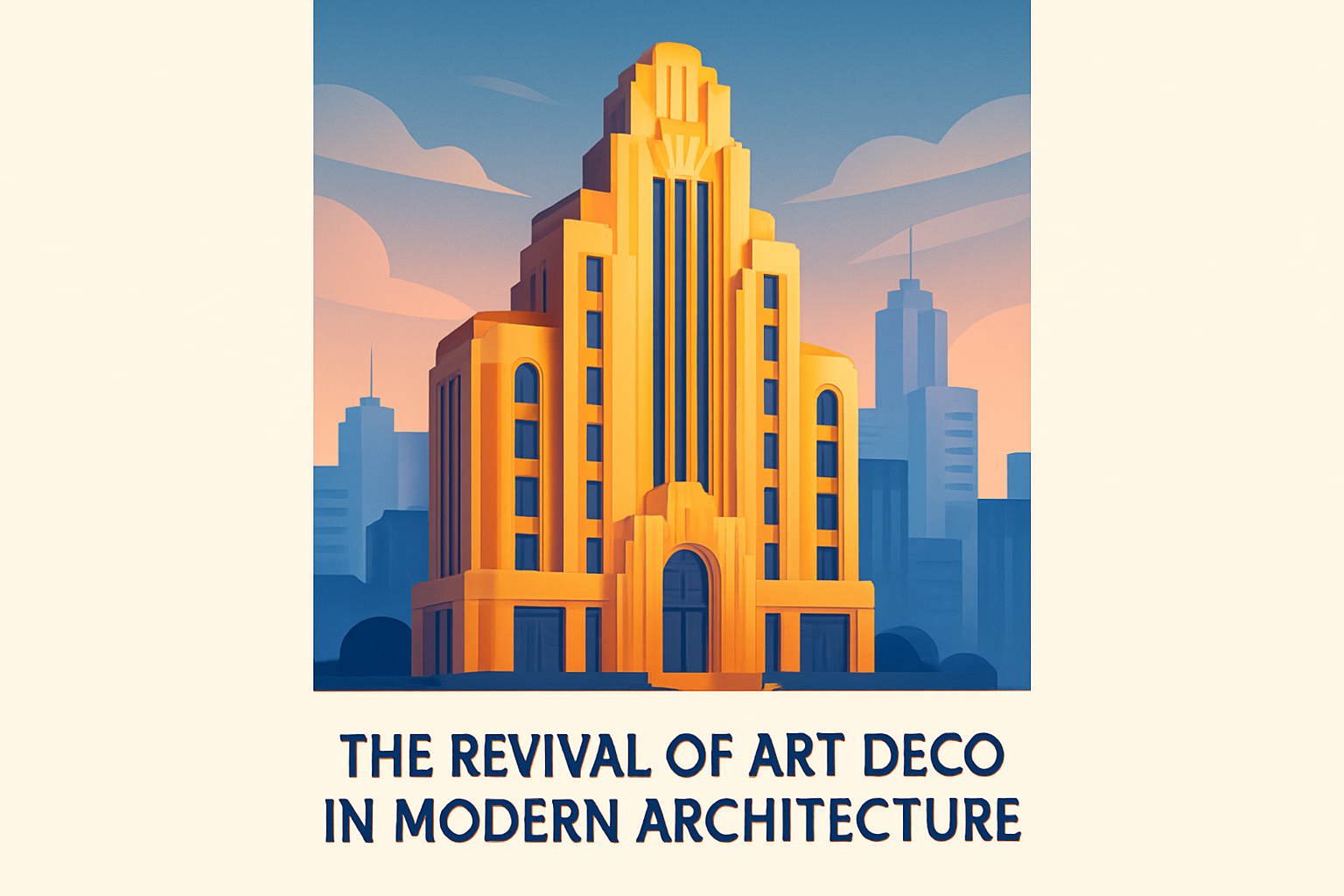
The world of architecture is one where styles ebb and flow, much like the tides of an immense ocean. One such style, which faded into the background only to make a surprising return, is Art Deco. This eclectic artistic and design style had its heyday in the early-to-mid 20th century and is now experiencing a compelling resurgence in modern architectural practices. The essence of Art Deco lies in its bold geometric forms, lavish ornamentation, and the use of rich materials, creating an illusion of luxury and glamour. This romantic style is significant today as it harmoniously merges the elegance of the past with the demands of the present, reflecting a society’s hybridization of nostalgia and innovation. By reinstating Art Deco elements in contemporary architecture, designers are able to craft spaces that resonate with historical depth while simultaneously embracing modernity. This synthesis is not only aesthetically pleasing but also provides architectural solutions that cater to contemporary tastes and functional requirements.
The Origins and Characteristics of Art Deco
Art Deco originated in France just before World War I and was a major style in Western Europe and the United States during the 1920s and 1930s. It represented luxury, glamour, exuberance, and a faith in social and technological progress. The style was a pastiche of many different influences, combining the bold geometric shapes of Cubism, the bright colors of Fauvism, the craftsmanship of furniture design, and the sleek lines of modern industrial design. It was characterized by precision and boldness, symmetry and exaggerated styles, the lavish use of materials such as chrome, steel, and wood, and lavish decorations. Materials like stainless steel, inlaid wood, and enamel were frequently used, with motifs often evoking the rise of the machine age. A prime example is the Chrysler Building in New York City, one of the few remaining skyscraper remnants of that era, which exemplifies Art Deco’s capacity to marry art with function.
Art Deco’s Cultural Impact and Revival
The cultural impact of Art Deco was profound, permeating not just architecture, but also furniture, fashion, and even automobiles. Its decline was instigated by the austerity introduced by World War II, leading to the rise of minimalist styles that favored function over form. However, the allure of Art Deco never truly vanished. Beginning in the 1980s, with a renewed interest in vintage designs, Art Deco began infiltrating modern design concepts. This revival can be observed in urban centers worldwide, where refurbishments and new constructions hark back to the stylings of the 20s and 30s. Miami Beach, for instance, stands as a testament to this by preserving a historic Art Deco district that draws tourists and inspires modern designers alike.
Modern Implementations: Blending Old with New
The revival of Art Deco in modern architecture is evident in various new constructions that adopt this historical style, blending old with new to create spaces both nostalgic and futuristic. These new interpretations often seize the characteristic geometric forms and opulent materials of traditional Art Deco and infuse them with contemporary technology and building techniques. A notable example is the Walker Tower in New York City, which has undergone a transformation to preserve its Art Deco façade while fitting it with state-of-the-art amenities. This merger ensures that while the building maintains its historical charm, it can also cater to current lifestyle needs. By reintegrating Art Deco elements, architects not only redefine city skylines but also invigorate cultural appreciation within urban design.
Art Deco’s Role in Sustainability
With the increasing importance of sustainable architecture, Art Deco provides unique opportunities for eco-friendly design. The robust materials common to Art Deco structures—steel, aluminum, glass—are long-lasting and often recyclable. When architects incorporate these elements into sustainable building designs, they marry endurance with environmental responsibility. As an illustration, consider the restoration of the Rand Tower in Minneapolis. This historical building retains its original Art Deco opulence while integrating modern energy-saving technologies, making it an exemplar of blending aesthetics with ecological mindfulness.
- Modern restorations incorporate energy-efficient systems without compromising on Art Deco’s unique charm.
- The choice of durable and recyclable materials aligns with modern sustainability goals.
- Art Deco’s symmetry and geometry can be optimized for passive solar design.
The Economic Benefits of Art Deco in Urban Renewal
Architectural styles often impact not only aesthetics but also urban economics and revitalization. Art Deco is no different; the resurrection of this style plays a significant role in urban renewal projects by attracting tourism, increasing property values, and sparking neighborhood revitalization. The Art Deco Historic District in Miami, for example, is both a cultural landmark and an economic engine, drawing visitors from across the globe and offering unique retail and dining experiences. This tourism boost fuels the local economy and invigorates community spirit, exemplifying how architectural styles can have multifaceted effects on urban development.
Challenges and Considerations in Art Deco Revivals
While the revival of Art Deco architecture offers numerous benefits, it does not come without challenges. One such challenge lies in balancing historical preservation with contemporary demands. Careful consideration must be given to maintaining the integrity and character of original designs while introducing necessary updates for safety, accessibility, and technology. Preservationists and architects must work collaboratively to ensure refurbishments are respectful of history yet practical and viable for the future. Moreover, economic constraints and regulations often pose difficulties in maintaining Art Deco’s lavish decoration and expensive material requirements. Professionals need innovative solutions to preserve the essence of Art Deco within more economical and environmentally conscious frameworks.
The Reader’s Next Steps: Embracing Art Deco in Personal Spaces
For those inspired by the allure of Art Deco, its revival presents plenty of opportunities to introduce a piece of this iconic style into personal environments. Whether through interior design or structural design, the inclusion of Art Deco elements can transform a modern space into one that shares the breath of a past era. Begin by incorporating signature elements such as geometric patterns, metallic finishes, or opulent furnishings. Even the simple addition of Art Deco-inspired motifs can suffuse a living space with sophistication and grandiosity. Experimentation with color plays a pivotal role too—consider using bold and rich palettes reminiscent of those favored in the Art Deco period. This reimagining of personal space can create a connection to the glamour and elegance of yesteryear while providing comfort and modern functionality in everyday living.
Final Reflections and Call to Action
In conclusion, the revival of Art Deco in modern architecture serves as a testament to the enduring appeal of this sophisticated style. It not only enriches our architectural landscapes with its opulent beauty and intricate patterns but also enhances urban cultural appreciation and economic vitality. Furthermore, its integration with sustainable practices promises a balanced future enriched with aesthetics and function. For readers and enthusiasts alike, the journey into Art Deco can begin right at home, bringing a touch of historical elegance into everyday life. Embrace this opportunity to delve into the glamorous past and foster a deeper connection with the art and architecture that continue to shape our vibrant world. Start today by exploring Art Deco influences that resonate with you, be it through literature, local architecture, or even engaging in community preservation efforts that aim to sustain this beautiful legacy. Experience the revival firsthand, and let Art Deco inspire your next architectural adventure.
Frequently Asked Questions
1. What is Art Deco, and why is it experiencing a revival in modern architecture?
Art Deco is an influential visual arts design style that first appeared in France just before World War I and flourished internationally in the 1920s, 1930s, and 1940s before fading in popularity. Its characteristic features include bold geometric forms, lavish ornamentation, and the use of luxurious materials such as marble, stainless steel, and inlaid wood. During its initial emergence, Art Deco represented luxury, glamour, and faith in technological progress. The recent revival of Art Deco in modern architecture can be attributed to a nostalgia for its elegance and a desire to incorporate its bold, dazzling aesthetics into contemporary design.
In today’s world, many architects and designers are drawn to Art Deco’s ability to combine form and function while maintaining visual appeal. This resurgence is also fueled by advances in technology and materials, allowing contemporary architects to reinterpret classic Art Deco motifs and combine them with modern efficiency and sustainability. Another aspect driving this revival is the versatility of Art Deco; its timeless style easily adapts to both commercial and residential spaces, making it attractive for a wide range of architectural applications.
2. How are modern architects incorporating Art Deco elements into contemporary designs?
Modern architects are ingeniously weaving Art Deco elements into contemporary architecture by selectively incorporating its signature features while also introducing innovation and modernity. Architects might incorporate geometric shapes into the façade of buildings or employ the use of sleek lines that characterize classic Art Deco designs. Additionally, they might use richly decorative motifs, like chevrons and zigzags, either as part of the structure or in interior design.
Color plays a significant role in Art Deco’s revival. Deep, vibrant colors often paired with contrasting metallics like gold, silver, or chrome can enhance a building’s exterior and interior, creating visually striking contrasts that resonate with Art Deco’s affinity for opulence. In addition to aesthetics, many modern designs focus on practicality, using these decorative elements to enhance natural light or provide passive cooling through strategic placements, such as windows and shading.
Moreover, materials such as glass, concrete, and steel are frequently used in the modern resurgence of Art Deco, providing the strength and durability that contemporary structures require while preserving the lush visual appeal of the style’s golden age. The versatility of these materials allows architects to apply Art Deco’s essence in a manner suitable for today’s urban landscapes and environmental considerations.
3. How does the Art Deco style differ from other architectural styles, and what makes it unique?
Art Deco differs from other architectural styles mainly due to its distinct blend of various influences including cubism, early modernism, and Bauhaus, resulting in an eclectic style that stands out for its characteristic opulence and geometric articulation. Unlike the ornamental features of Victorian or Gothic architecture, which focus on intricate detailing and embellishments, Art Deco emphasizes streamlined, symmetrical patterns, often featuring sunbursts, zigzags, and stark outlines.
A unique aspect of Art Deco is its embrace of luxurious materials such as marble, inlaid wood, and metal finishes, which contribute to a sense of glamour and sophistication. It perceives beauty in the industrial and the mechanical, often highlighting them instead of hiding them, which is different from the minimalist and function-centered approach of modernist architecture that emerged after World War II.
Moreover, Art Deco’s adaptability and ornamental flair enable it to transform the mundane into expressive statements, whether in product design or large-scale architecture. This flexibility makes it a unique contributor to the aesthetic tapestry of the 20th and 21st centuries, allowing it to stand alone by bringing elegance in a future-forward context as opposed to the simplicity of contemporary rustic or industrial styles.
4. What are some famous examples of Art Deco architecture that continue to inspire modern designs?
There are numerous iconic examples of Art Deco architecture from its original period that continue to serve as sources of inspiration for modern designs. Perhaps the most famous example is the Chrysler Building in New York City. Its radiant terraced crown and extensive use of metallic details and luxurious materials make it an enduring symbol of Art Deco style. Likewise, the Empire State Building, also in New York, showcases elegant Art Deco design through its geometric form and meticulously crafted limestone and stainless steel exteriors.
Beyond the boundaries of New York, the city of Miami is renowned for its abundance of historic Art Deco buildings, especially in the South Beach district. Structures such as the vibrant Colony Hotel and the streamlined forms of the Delano hotel exemplify classic Art Deco elements in a tropical setting.
Internationally, the Palais de Chaillot in Paris, the quintessentially Art Deco Hoover Building in London, and the Radiant City ensemble in Riccione, Italy, are just a few examples that exemplify the global reach and lasting influence of Art Deco design. These buildings illustrate the versatility and timeless appeal of Art Deco architecture, informing the modern reimagining and adaptation of this style worldwide.
5. Why is Art Deco considered both timeless and modern, and how does it align with today’s architectural values?
Art Deco is considered both timeless and modern because of its inherent ability to merge beauty and innovation. Its geometric simplicity, attention to detail, and celebration of materials make it adaptable to various contexts and time periods, allowing it to seamlessly integrate with contemporary design principles while retaining its cultural significance. The style bridges classical designs and futuristic visions, offering a blend that appeals to nostalgia and aspiration alike.
In today’s architectural discourse, there is a renewed emphasis on blending aesthetics with sustainability, leading to a greater appreciation for Art Deco’s distinctive elements that naturally align with these values. Its use of high-quality materials that stand the test of time and techniques that enhance structural efficiency and natural lighting offers sustainable solutions for modern contexts. Furthermore, Art Deco’s devoid stance against superfluous ornamentation resonates with current minimalist trends, highlighting the enduring quality of its simplicity and symmetry.
As architects strive to create spaces that hold charm and character in addition to functionality, the revival of Art Deco strikes a chord in demonstrating how aesthetic consideration can drive innovation, making it an invaluable source of inspiration for envisioning the future of architecture without losing sight of the past.