
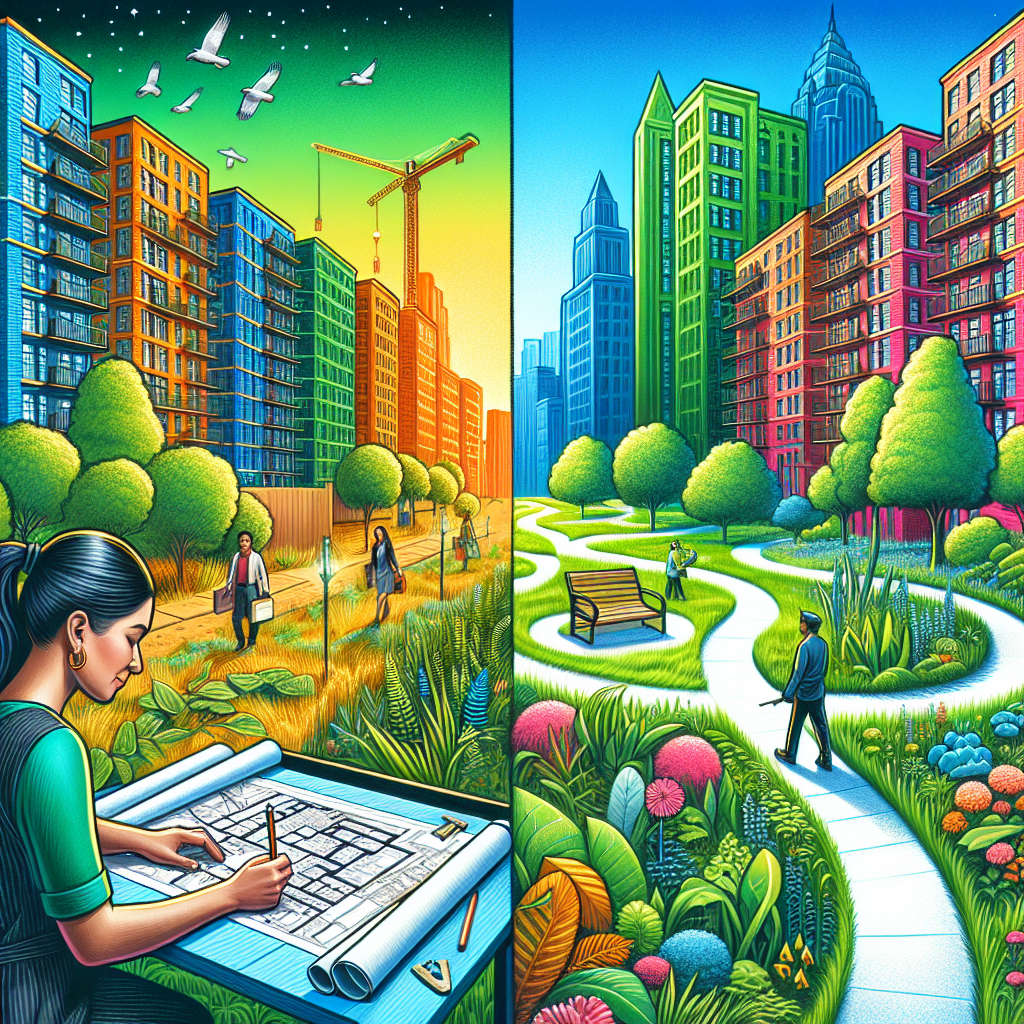
Affordable housing is increasingly becoming a focal point for urban planners, policymakers, and social advocates. As cities expand and economies fluctuate, the need for affordable, accessible living accommodations has never been more pressing. Affordable housing refers to housing units that are economically feasible for individuals with median household incomes, enabling them to live without financial distress. Typically, households should not spend more than 30% of their income on housing costs, including rent or mortgage and utilities.
Yet, the development of affordable housing frequently clashes with another urban necessity: green spaces. Urban green spaces include parks, community gardens, green roofs, and other vegetated areas that provide recreational opportunities, enhance biodiversity, and contribute to the overall health and well-being of city inhabitants. These areas serve as the lungs of urban environments, offering ecological, social, and economic benefits.
Discussing the intersection of affordable housing and green spaces requires an understanding of urban revitalization agendas, development constraints, and community needs. On one hand, policymakers argue that building more affordable housing units should be prioritized to address the growing housing crisis. On the other hand, conservationists highlight the essential role of urban green spaces in creating livable, sustainable cities. This dialogue becomes even more complex as urban populations rise, climate change impacts intensify, and land becomes a contentious commodity.
The question, then, is how to balance these competing needs. How can we ensure that affordable housing development does not come at the expense of our precious green spaces? This article aims to investigate these challenges and potential solutions, offering a comprehensive analysis of the ways in which affordable housing can coexist with urban green spaces.
The Importance of Affordable Housing
Affordable housing is imperative for creating inclusive cities. When housing costs are manageable, families have more disposable income to spend on necessities like food, education, healthcare, and transportation. Affordable housing stabilizes families, reducing stress and enhancing overall life quality. It also plays a crucial role in economic development, as it allows lower-income workers to live closer to employment centers, reducing commuting times and transportation costs.
Moreover, affordable housing has significant social benefits. It fosters diversity and inclusion by allowing people from various socio-economic backgrounds to live together. Communities with mixed-income housing tend to be more vibrant and resilient. They offer a variety of perspectives and experiences, which can lead to a greater sense of community and mutual understanding.
From an urban planning perspective, affordable housing is instrumental in curbing urban sprawl. By embedding affordable housing within city centers, planners can mitigate the negative effects of suburban expansion, such as increased traffic, pollution, and the loss of agricultural land. Compact urban forms are more sustainable and can lead to more efficient use of public services and infrastructure.
Despite its importance, the development of affordable housing faces several challenges. High land costs, regulatory barriers, and community opposition are common hurdles. Additionally, funding for affordable housing projects is often limited, relying on public subsidies, grants, and non-profit organizations. These barriers necessitate innovative solutions and collaborative efforts to ensure that affordable housing becomes a reality for those in need.
The Role of Urban Green Spaces
Urban green spaces are not just aesthetic assets; they are vital for sustainable urban living. These spaces provide numerous environmental benefits, including air purification, temperature regulation, and stormwater management. Trees and plants absorb pollutants and release oxygen, improving air quality. They also offer shade and evaporative cooling, which can significantly reduce the urban heat island effect.
Green spaces are also essential for public health. They provide venues for physical activities like walking, jogging, and sports, which are crucial for physical well-being. Additionally, spending time in nature has been proven to reduce stress, anxiety, and depression. Parks and gardens offer a sanctuary from the hustle and bustle of city life, promoting mental health and well-being.
From a social perspective, urban green spaces are gathering places that foster community interaction and cohesion. They provide settings for social events, cultural activities, and recreational opportunities that bring people together. These spaces can also serve as educational resources, teaching communities about ecology, conservation, and sustainable practices.
Economically, green spaces can increase property values and attract businesses. Proximity to parks and recreational areas makes neighborhoods more desirable, leading to higher real estate prices and increased tax revenues for the city. Businesses are also more likely to invest in areas with ample green spaces, as they enhance the quality of life for employees and customers.
Balancing the development of affordable housing with the preservation of urban green spaces requires a nuanced approach. Both are indispensable for creating livable, sustainable cities. The challenge lies in finding ways to integrate these elements harmoniously, ensuring that one does not come at the expense of the other.
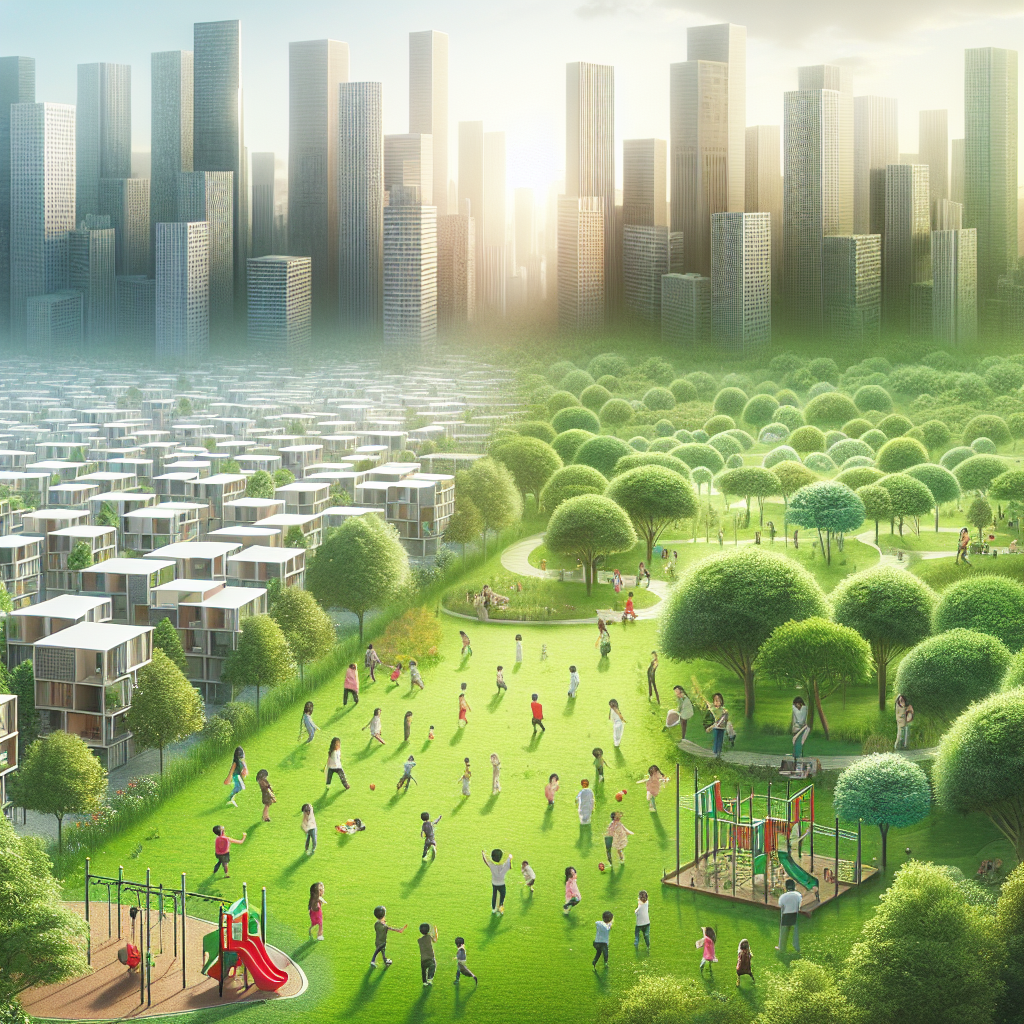
Integrating Affordable Housing with Green Spaces
One of the most promising ways to harmonize affordable housing and green spaces is through innovative urban design and planning. Mixed-use developments that incorporate housing, commercial spaces, and green areas can create holistic communities where residents have access to all necessary amenities. Vertical gardens, green roofs, and green walls can be utilized to introduce greenery into urban landscapes without occupying valuable ground space.
Another approach is the development of community land trusts (CLTs). These organizations acquire and hold land on behalf of the community, ensuring that it is used for affordable housing and public green spaces. By separating the ownership of land from the ownership of buildings, CLTs can stabilize housing costs and protect green spaces from development pressures.
Incorporating green spaces into affordable housing projects can also enhance the quality of life for residents. Gardens, courtyards, and rooftop parks can provide residents with recreational opportunities and a connection to nature. Furthermore, these green areas can be designed to promote social interaction, fostering a sense of community and belonging.
Policy measures are crucial in balancing affordable housing and green spaces. Zoning regulations and land use policies can be adjusted to encourage the development of both housing and green areas. Incentives for developers who include green spaces in their projects can drive more sustainable and inclusive urban growth.
Public participation is essential in this process. Engaging communities in the planning and development stages can ensure that their needs and preferences are considered. Residents are more likely to support projects that offer tangible benefits and address their concerns.
Case Studies and Best Practices
Several cities around the world have successfully integrated affordable housing and green spaces, offering valuable insights and best practices.
- Vienna, Austria: The city’s social housing model is renowned for its inclusivity and design. Vienna integrates ample green spaces within housing estates, ensuring that residents have access to parks, playgrounds, and gardens. This model promotes social cohesion and enhances the quality of life for all residents.
- The High Line, New York City: This once-abandoned elevated railway line has been transformed into a 1.45-mile-long linear park. It runs through several low-income neighborhoods and has spurred the development of affordable housing. The project demonstrates how innovative use of urban space can create green areas that benefit the community and stimulate economic growth.
- Bosco Verticale, Milan, Italy: This pioneering example integrates greenery into residential buildings. The twin towers feature over 900 trees, 5,000 shrubs, and 11,000 plants across their facades. The project combines high-density housing with urban greening, providing residents with a unique living environment that mitigates pollution and enhances biodiversity.
- Singapore’s “Garden City” Vision: The government integrates green spaces throughout the city, including within public housing projects. The Housing & Development Board (HDB) ensures that green spaces are accessible to all residents, promoting environmental sustainability and social well-being.
These case studies highlight the importance of innovative design, policy support, and community engagement in creating balanced urban environments. By learning from these examples, cities can develop strategies that ensure affordable housing and green spaces coexist harmoniously.
Challenges and Solutions
Despite successful examples, integrating affordable housing and green spaces presents several challenges. High urban land costs and competing land uses can make it difficult to allocate space for green areas. Furthermore, funding constraints and regulatory barriers can hinder the development of projects that combine both elements.
To address these challenges, several solutions can be employed:
- Land Use Optimization: Repurposing underutilized or vacant spaces for affordable housing and green spaces. This can include converting brownfields, abandoned lots, and rooftops into community gardens or parks.
- Public-Private Partnerships (PPPs): Leveraging private investment and expertise to create mixed-use developments that include affordable housing and green spaces. PPPs offer innovative financing mechanisms and risk-sharing arrangements that make such projects more viable.
- Policy Interventions: Streamlining approval processes and offering incentives for developers who incorporate green spaces can encourage more sustainable development. Inclusionary zoning, which requires a certain percentage of new housing developments to be affordable, can ensure that affordable housing is integrated into all areas of the city, including green neighborhoods.
- Education and Advocacy: Raising awareness about the importance of affordable housing and green spaces can garner public support and drive policy changes. Community engagement is vital, as involving residents in the planning process ensures their needs are met and builds support for projects.
Conclusion
Balancing the development of affordable housing and urban green spaces is a complex but necessary task for creating sustainable and inclusive cities. Both elements are essential for the well-being of urban residents and the overall health of the city. Affordable housing provides stability and economic opportunities for low- and moderate-income families, fostering diverse and vibrant communities. At the same time, urban green spaces offer environmental, social, and economic benefits, contributing to the livability and sustainability of cities.
Innovative urban design, policy measures, and community engagement are critical in integrating affordable housing with green spaces. Examples from cities around the world demonstrate that with the right approach, it is possible to create harmonious urban environments that offer the best of both worlds.
As cities continue to grow and face new challenges, it is imperative to prioritize both affordable housing and green spaces. By doing so, we can ensure that urban development is not only inclusive and equitable but also sustainable and resilient. It is a delicate balance, but with thoughtful planning and collaboration, we can create urban environments that enhance the quality of life for all residents.
Frequently Asked Questions
1. What is the relationship between affordable housing development and urban green spaces?
The emergence and development of affordable housing are crucial in urban settings where population density and economic disparity can be particularly pronounced. One of the debates in urban planning involves balancing the need for affordable housing with the preservation and creation of urban green spaces. Green spaces, such as parks and community gardens, are vital for mental health, social cohesion, and ecological diversity. As cities expand, space for development becomes increasingly limited. Affordable housing projects are sometimes perceived as competing with green spaces. However, many urban planners and architects are actively integrating green spaces into affordable housing projects to ensure that both housing needs and environmental quality are met. These integrated projects aim to provide the psychological and health benefits of greenspace while alleviating housing shortages.
2. How can urban planners ensure that affordable housing doesn’t come at the cost of green spaces?
Urban planners have numerous strategies at their disposal to ensure that the development of affordable housing does not detract from urban green spaces. One effective method is the incorporation of vertical gardens and green roofs within the architecture of housing projects, which extend the amount of greenery and can help improve air quality. Moreover, mixed-use development, which integrates residential, commercial, and green space, can make efficient use of space while maintaining urban vibrancy and biodiversity. The introduction of policies incentivizing developers to allocate a percentage of land or funding for green spaces in their projects is another approach. Collaborative planning with the community, including stakeholders and local governments, ensures that development meets the social, economic, and environmental needs of those living in the area.
3. Why are urban green spaces important for residents of affordable housing?
Urban green spaces are essential for residents living in affordable housing for several reasons. These spaces provide opportunities for recreation and relaxation, which are crucial for physical health and mental well-being. Having access to nature and greenery can reduce stress levels, encourage physical activity, and foster a sense of community by providing venues for social interaction. Also, green spaces play a critical role in improving air quality and reducing urban heat island effects, thus creating a more habitable and pleasant environment for residents. Consequently, integrating green spaces not only enhances the quality of life for affordable housing residents but also contributes to broader urban sustainability goals.
4. Are there examples of successful affordable housing projects that include green spaces?
Yes, there are several successful examples worldwide where affordable housing projects have been implemented alongside urban green spaces. One such example is the Via Verde development in the South Bronx, New York City, which integrates diverse green features such as rooftop gardens, green walls, and courtyards, all aimed to promote healthy living. Similarly, The Grove at Shoal Creek in Austin, Texas, combines affordable housing with significant green spaces through active community engagement and planning. These projects highlight the achievable balance between expanding urban living spaces and maintaining environmental integrity. By studying and learning from these successful models, other cities can adopt similar strategies to create equitable and sustainable urban environments.
5. What challenges do cities face in balancing affordable housing development and the preservation of green spaces?
Cities face numerous challenges in balancing the development of affordable housing with the preservation of green spaces. One major challenge is financial constraints. Affordable housing projects require substantial investment, and limited budgets can make it difficult for cities to fund both housing and expansive green spaces. Another challenge is land availability; as urban populations grow, there’s increased competition for available land, leading developers to prioritize housing over green spaces. Additionally, regulatory and zoning policies can sometimes hinder the integration of green spaces into urban development plans. Overcoming these challenges often requires innovation, collaboration between government agencies, private developers, and community organizations, and a commitment to long-term urban sustainability goals. By addressing these issues, cities can develop more inclusive, healthy, and vibrant urban areas that benefit all residents.


