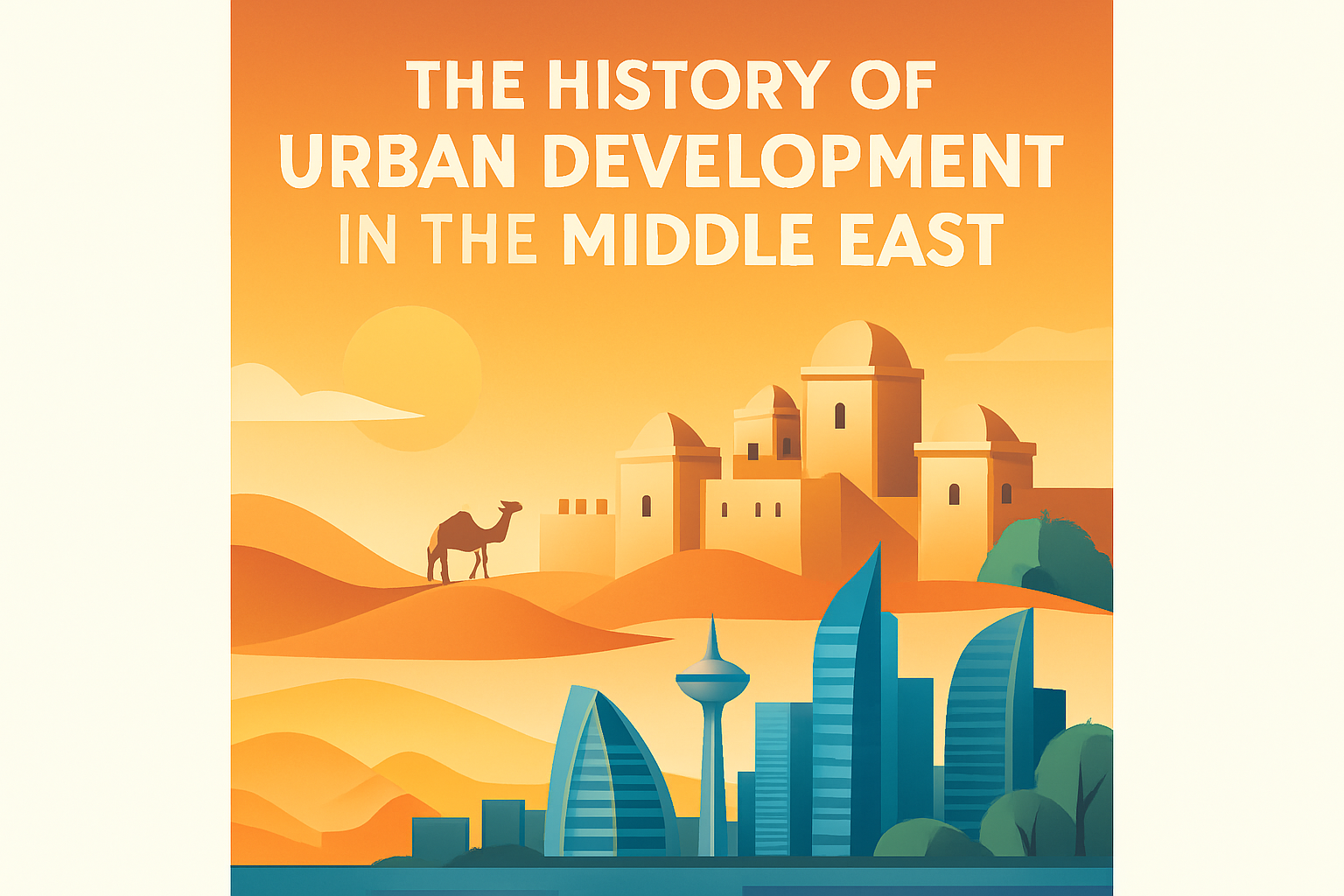
The Middle East, a region often associated with its rich cultural heritage and complex political dynamics, has a long and storied history of urban development. These urban centers have played significant roles in global commerce, cultural exchange, and technological innovation. Understanding the evolution of urban development in the Middle East provides key insights into the social, economic, and political foundations that have shaped modern urban settlements. This article delves into the multifaceted history of these cities, revealing the influences of geographic, religious, and economic factors. Grasping this history is crucial not only for understanding past dynamics but for envisioning future urban planning and policy-making in the region.
Urban development in the Middle East matters for several reasons. Firstly, the region is home to some of the world’s earliest cities, which laid the groundwork for urbanization across the globe. Secondly, its strategic location has historically made it a hub for trade and cultural exchanges. Lastly, given the current challenges of rapid population growth, climate change, and political instability, learning from the past provides vital lessons for sustainable development. As we explore the history of urban development in the Middle East, we will uncover how these cities were designed, how they adapted to external influences, and what secrets they hold for future urban landscapes.
Early Urbanization: The Cradle of Civilization
The Middle East is often referred to as the “Cradle of Civilization” because it is where some of the world’s first cities emerged. Mesopotamia, located in present-day Iraq, is known for cities like Uruk and Ur, which date back to around 4000 BCE. These early cities were characterized by the development of writing, architecture, and centralized governments. Urban planning was crucial, with the cities featuring ziggurats (massive structures built for religious purposes), complex irrigation systems, and marketplaces that facilitated trade.
Uruk, one of the earliest known cities, serves as a prime example of early urban development. It had a highly organized layout, with distinct residential, religious, and commercial areas. The invention of cuneiform writing in Uruk around 3200 BCE marked a significant advancement in record-keeping and administrative control, essential elements of urban governance and societal structure. The city’s governance and infrastructure innovations set foundational patterns that would influence urban planning in the region for millennia.
The Islamic Golden Age: Flourishing Urban Centers
During the Islamic Golden Age, approximately from the 8th to 14th centuries CE, the Middle East saw a resurgence in urban development. Cities such as Baghdad, Damascus, and Cairo became centers of learning, culture, and commerce. This period was marked by significant advancements in science, medicine, and technology, which were often facilitated by the urban environment.
- Baghdad: Founded in 762 CE as the capital of the Abbasid Caliphate, Baghdad was meticulously planned as a circular city and became a hub of trade. It housed the famed House of Wisdom, where scholars of various backgrounds gathered, contributing to the city’s reputation as an epicenter of knowledge.
- Damascus: Known for its strategic location on trade routes, Damascus thrived during the Umayyad period. Its urban layout featured expansive markets and public baths, serving both locals and travelers.
- Cairo: Emerging as the capital of the Fatimid Caliphate in 969 CE, Cairo grew to be a leading intellectual center in the Muslim world, famous for the esteemed Al-Azhar University.
These cities were not only political capitals but also centers of learning and trade, effectively integrating diverse cultural influences. Their design reflected advanced architectural techniques and urban planning principles that balanced commercial, residential, and religious spaces.
Impact of Trade and Commerce on Urban Layouts
Throughout history, trade and commerce have profoundly influenced urban development in the Middle East. The growth of trade routes such as the Silk Road and the Spice Route facilitated the exchange of goods, ideas, and cultures, transforming cities into melting pots of diversity and innovation.
A notable example is the city of Aleppo in Syria. Situated at the crossroads of several major trade routes, Aleppo became a significant economic center during the 16th and 17th centuries. Its urban landscape reflected its commercial importance, with sprawling souks (markets), caravanserais (inns for travelers), and well-developed infrastructure to support trade activities. The bustling commerce in Aleppo fostered not only economic prosperity but also cultural exchanges, which were critical in shaping the city’s cosmopolitan character.
The intricate network of trade routes and the wealth generated from commerce enabled cities to invest in various urban developments, ranging from public infrastructures such as roads and bridges to religious edifices and educational institutions. The bustling markets also encouraged population growth and urban expansion, leaving a lasting legacy in the region’s urban architecture and culture.
Colonial Influence and Modernization
The colonial era introduced new dynamics into the Middle Eastern urban landscape. European powers, including the British and the French, left indelible marks on the region’s cities through both direct colonization and economic influence. This period saw a mix of traditional urban design with the introduction of modern Western-style infrastructures and governance models.
Cairo serves as a compelling example of this transitional period during the late 19th and early 20th centuries. Under the influence of British colonial rule, Cairo underwent a significant transformation. Modern infrastructure such as railways, bridges, and roads was introduced, aimed at facilitating trade and consolidating British economic interests. At the same time, the city expanded beyond its historic core, with new, Western-style neighborhoods emerging to cater to European tastes and administrative needs. This blend of traditional and modern urban planning created a unique architectural and cultural tapestry that continues to define Cairo today.
While the introduction of Western urban planning elements aimed at modernization, it also caused cultural tensions and social divides. Traditional urban areas often faced neglect, as resources were redirected to areas prioritized by colonial powers. This period was thus marked by both the advancement of infrastructure and the challenges of reconciling differing urban visions and identities.
Urban Development Challenges in the Modern Middle East
In the contemporary Middle East, urban development faces various challenges, from political instability and war to rapid population growth and environmental considerations. Modern cities in the region must navigate these complexities while continuing to evolve and adapt.
The city of Dubai in the United Arab Emirates illustrates the modern era of urban development in the Middle East. Dubai has undergone dramatic growth since the turn of the 21st century, transforming from a modest trading port into a global metropolis known for its skyscrapers, luxury developments, and innovative architecture. The city exemplifies new urbanism and the shift towards service-based economies. However, this rapid expansion raises questions about sustainability, social inequality, and resource management.
Today’s Middle Eastern cities must balance economic ambitions with environmental sustainability to address issues such as water scarcity, waste management, and energy consumption. Innovative approaches in urban planning and policy, community engagement, and cross-sector partnerships are essential for developing cities that are resilient and livable.
Conclusion
Throughout history, urban development in the Middle East has been shaped by diverse influences, from the ancient civilizations of Mesopotamia to the vibrant cultural exchanges of the Islamic Golden Age, the transformative impacts of trade and commerce, and the complex legacies of colonial influences. As modern cities rise and evolve, they continue to embody the region’s dynamic spirit while facing new challenges. By studying the region’s urban history, we gain insights into patterns of growth, adaptation, and resilience that can inform future urban planning.
The history of urban development in the Middle East highlights the intertwined nature of culture, economy, and technology in shaping cities. It underscores the importance of thoughtful urban planning in fostering sustainable and inclusive communities. As current and future urban planners, policymakers, and citizens reflect on these lessons, they can strive towards creating urban environments that honor the past while skillfully navigating contemporary challenges.
Readers are encouraged to engage with local initiatives aimed at making their communities more sustainable and inclusive. Consider visiting historical cities in the Middle East to experience firsthand the unique blend of tradition and modernity that characterizes the region’s urban landscapes.
Frequently Asked Questions
1. What are some of the earliest examples of urban development in the Middle East?
The roots of urban development in the Middle East can be traced back to ancient Mesopotamia, often referred to as the “Cradle of Civilization.” Cities like Uruk and Ur in present-day Iraq were among the first urban centers in history, emerging around 4000 BCE. These early cities were characterized by complex societies supported by agricultural innovation and trade. The Sumerians, who inhabited these areas, established organized government structures and developed writing systems like cuneiform, which facilitated record-keeping and administrative tasks. This period of urban development set foundational principles for city planning, governance, and cultural evolution that influenced subsequent civilizations in the region.
Another important early urban center was Ancient Egypt, where cities like Memphis and Thebes thrived along the Nile River. These cities were notable for their monumental architecture, including pyramids and temples, which reflected the sophisticated societal organization and religious beliefs. The strategic location along the Nile enabled these cities to become central hubs for agriculture, commerce, and political power, further propelling urban growth in the Middle East.
2. How did the Islamic Golden Age impact urban development in the Middle East?
The Islamic Golden Age, spanning roughly from the 8th to the 14th century, marked a period of remarkable urban transformation in the Middle East. Cities like Baghdad, Cairo, and Cordoba became epicenters of learning, trade, and cultural fusion. The growth of trade routes, such as the Silk Road, facilitated the exchange of ideas, goods, and technologies, which enriched the urban tapestry of the region. Baghdad, established as the capital of the Abbasid Caliphate in the 8th century, epitomized this era. It was designed as a circular city, renowned for its impressive public works including hospitals, libraries like the famed House of Wisdom, and advanced urban infrastructure.
This period also saw advancements in architecture and engineering, with the development of iconic structures such as mosques, madrasas, and caravanserais. The architectural legacy from this era still informs Middle Eastern urban design today. Moreover, the emphasis on knowledge, evidenced by the establishment of universities and libraries, not only prompted advances in science and technology but also fostered a vibrant urban culture.
3. What role did the Ottoman Empire play in the development of urban centers in the Middle East?
The Ottoman Empire, which spanned from the late 13th century until the early 20th century, greatly influenced urban development across the Middle East. Istanbul, formerly Constantinople, served as the capital and a significant cultural and commercial metropolis. Under Ottoman rule, cities experienced significant transformations, with the construction of monumental architecture, including mosques, bridges, and public baths, which improved both aesthetics and public welfare.
The Empire’s administrative and civic policies promoted urban planning and the establishment of regulated marketplaces and trade centers. Cities such as Aleppo, Damascus, and Cairo thrived as key nodes in a vast network that facilitated the movement of goods from Europe, Africa, and Asia. The Ottomans also endorsed urban governance through local administrators known as “vali” or “governors,” who managed the day-to-day affairs of the cities, further solidifying their urban structures and operations.
4. How did European colonization affect urban development in the Middle East?
European colonization in the late 19th and early 20th centuries had profound impacts on the urban development of the Middle East. Colonial powers like Britain and France imposed Western urban models that significantly altered the traditional cityscapes, leading to both modernization and cultural tensions. Colonial authorities often focused on developing infrastructure that served their economic interests, such as railways, ports, and administrative buildings.
In cities such as Beirut and Alexandria, there were attempts to blend European architectural styles with local traditions, resulting in unique urban identities. However, this period also witnessed disruptions in local communities and indigenous urban practices. Colonial urban policies frequently favored European residents and interests, leading to social and economic inequalities that have had lasting influences on the post-colonial urban landscapes. Despite the negative impacts, this period laid groundwork for infrastructural advancements and introduced new urban planning concepts that continue to shape contemporary urbanization in the region.
5. What are some contemporary challenges faced by Middle Eastern cities in terms of urban development?
Today, cities in the Middle East face a multitude of challenges in urban development, ranging from rapid population growth, environmental sustainability, to socio-political instability. The region has some of the world’s fastest-growing cities, such as Dubai, Doha, and Riyadh, which grapple with issues of infrastructure strain, traffic congestion, and housing shortages. The swift urban expansion often outpaces the available infrastructure, creating tensions in resource allocation and public services.
Environmental concerns, particularly water scarcity and climate change, pose serious threats to sustainable urban living. Moreover, conflicts and political volatility in parts of the region lead to urban displacement and humanitarian crises, impacting urban dynamics significantly. The ongoing Syrian Civil War, for example, has led to mass migrations, reshaping urban populations in neighboring countries like Lebanon and Jordan.
Nevertheless, innovative solutions are being implemented to address these challenges. Middle Eastern cities are increasingly focusing on sustainable urban planning, integrating renewable energy sources, and leveraging technology to improve public services and enhance civic engagement. The establishment of smart cities and investment in green infrastructure reflects a growing recognition of the need to build resilient and inclusive urban environments for future generations.