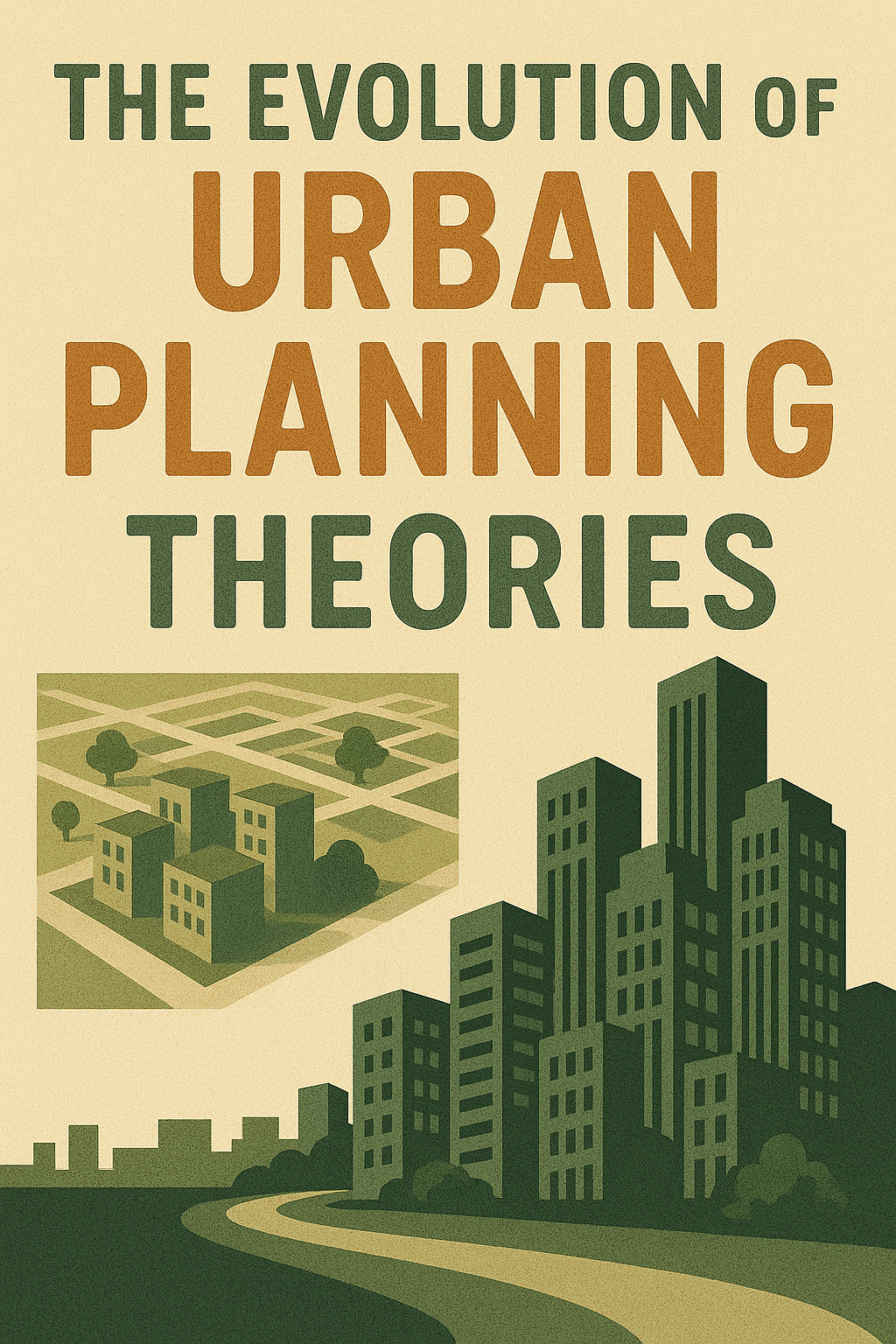
Urban planning is an ever-evolving discipline that plays a crucial role in shaping cities to ensure they are livable, sustainable, and efficient. As societies grow and change, so do the ideas and principles that underpin urban planning. These theories have evolved over time, responding to the demands and challenges of urbanization, environmental concerns, and socioeconomic shifts. In essence, urban planning is the art and science of developing policies and plans to steer the growth and development of urban areas, envisioning how they will look and function in the short and long term. This discourse examines the evolution of urban planning theories, exploring key concepts, real-world applications, and the importance of these paradigms in addressing contemporary urban issues. Understanding this evolution is essential for anyone involved or interested in city planning, architecture, or community development as it not only guides their professional practice but also impacts the lives of millions who inhabit urban areas.
The Beginnings: Traditional Planning Models
In the early stages of urban planning, traditional planning models were largely concerned with the geometric and aesthetic layout of cities. One of the earliest theories was the grid model, commonly observed in ancient civilizations such as the Roman Empire. The grid system was simple, orderly, and facilitated ease of movement within the city. It exemplified a functional approach to urban design where streets were laid out in straight lines and intersected at right angles.
This model was not only a practical solution for the time but also a symbolic representation of control and order. An example of the grid model can be seen in the layout of ancient Roman military camps and settlements, which later influenced the development of cities such as New York and Chicago. The grid model simplified navigation, improved land division, and has remained influential in urban planning even to this day. Its impact is evident in modern city planning where the grid is often used to create cohesive and easily navigable urban landscapes.
The Garden City Movement: Integrating Nature and Urban Living
As industrialization advanced in the late 19th and early 20th centuries, cities around the world experienced rapid growth, often at the expense of residents’ quality of life. This led to the emergence of the Garden City Movement, pioneered by Sir Ebenezer Howard in England. Howard envisioned cities that combined the benefits of urban and rural environments, proposing a layout that emphasized green, open spaces within urban settings to promote healthier living conditions.
The foundational principle of a garden city was to combat urban congestion and improve the living environment by integrating nature into urban landscapes. The city was to be encircled by a belt of agricultural land, designed to prevent urban sprawl. This proactive approach to urban planning can be seen in the development of Letchworth Garden City and Welwyn Garden City in England, which became prototypes for many suburban developments worldwide. The influence of the Garden City Movement can still be seen today, particularly in suburbs surrounding major global cities, where the emphasis on green spaces remains a priority in urban planning.
The Chicago School: Urban Sociology and Planning
The Chicago School emerged in the early 20th century, emphasizing a sociological approach to urban planning. This theory was born from the University of Chicago’s sociology department, which focused on understanding urban life through the lens of social science. The Chicago School posited that cities evolved in concentric rings with different social groups and activities naturally organizing themselves into zones. This model, known as the concentric zone model, sought to explain the logic behind land use patterns in urban areas.
A real-world example of this theory in practice can be observed in Chicago itself, where distinct socio-economic zones developed around the central business district. This zoning model informed urban planning policies such as zoning laws, which sought to regulate urban development, accommodate population growth, and address the needs of diverse communities. The Chicago School’s approach deeply influenced how cities were designed and managed, highlighting the interplay between human behavior and urban form.
Modernism and the International Style: Functionality Above All
Come the mid-20th century, there was a significant shift towards Modernism and the International Style in urban planning. This school of thought emphasized simplicity, functionality, and the use of new construction technologies. Architects and urban planners like Le Corbusier championed the idea of cities functioning like machines for living, where rationalization of space and form took precedence over traditional aesthetics.
Le Corbusier’s concept of “The Radiant City” epitomized this theory with its emphasis on high-rise residential blocks separated by highways and open spaces. This approach aimed to maximize efficiency and accommodate increasing urban populations by concentrating them vertically. One notable implementation of Modernist planning was the development of Brasília, the capital of Brazil, which was designed to incorporate vast open spaces with minimalist architectural elements. While the International Style provoked criticism for its lack of human scale and warmth, it introduced new possibilities in terms of structural engineering and urban efficiency that continue to inform modern-day urban development.
Postmodernism and the New Urbanism
As critiques of Modernism grew, the postmodern era ushered in a more human-centric approach to urban planning known as New Urbanism. This theory emerged in the late 20th century, advocating for mixed-use development, walkability, and community-oriented public spaces. New Urbanism focuses on creating neighborhoods that prioritize the human experience and encourage social interaction.
A quintessential example of New Urbanism can be seen in the town of Seaside, Florida. It was designed as a pedestrian-friendly community with a focus on communal amenities and accessible public spaces. This approach seeks to combat the alienation and environmental issues often associated with suburban sprawl and car-dependent urban designs by emphasizing sustainability and community connectivity. New Urbanism has greatly influenced urban redevelopment projects across the globe, promoting environmentally friendly transportation options, diversified land use, and inclusive neighborhood designs.
Smart Growth and Sustainable Development
In response to challenges such as climate change and resource depletion, contemporary urban planning theories are increasingly centered around sustainability and resilience. Smart Growth is a theory that promotes environmentally responsible planning that seeks to curb urban sprawl while fostering vibrant, livable communities. This approach emphasizes high-density development, public transit accessibility, and the preservation of open spaces and farmlands.
One success story of Smart Growth is Portland, Oregon, where planners have employed urban growth boundaries to concentrate development and preserve natural surroundings. These strategies have enabled efficient public transit systems and reduced ecological footprints. Similarly, sustainable development as a planning theory prioritizes the creation of cities that are environmentally, economically, and socially sustainable. It integrates renewable energy sources, green building standards, and community resilience to adapt to future challenges.
- High-density development
- Public transit accessibility
- Preservation of open spaces
- Use of renewable energy sources
- Green building standards
- Community resilience
Technological Integration: The Rise of Smart Cities
The integration of technology into urban planning has led to the emergence of smart cities. This contemporary theory incorporates the use of data analysis, information technologies, and IoT (Internet of Things) to enhance urban living. Smart city planning aims to optimize urban operations, improve resource management, and engage citizens through enhanced connectivity.
For instance, Barcelona has implemented a wide array of smart technologies to manage resources such as water and energy more efficiently, as well as to improve public services. By using data-driven insights, smart cities strive to enhance the quality of life for residents through increased efficiency, safety, and economic opportunities. This approach represents the cutting edge of urban planning, offering adaptive solutions through technology for evolving urban challenges.
Concluding Thoughts on Urban Planning Evolution
The evolution of urban planning theories demonstrates a rich tapestry of innovation and adaptation in response to changing societal needs and environmental pressures. From the orderly grids of ancient cities to the sustainable complexity of smart urban systems, these theories have collectively shaped the modern urban landscape. They reflect a continuous effort to harmonize the built environment with human needs and ecological imperatives.
Understanding these theoretical evolutions offers valuable insights into effective urban development strategies and accentuates the critical role urban planners play in creating cities that not only accommodate growth but also enhance quality of life and sustainability. As these theories continue to evolve with emerging trends and technologies, they invite urban planners, architects, policymakers, and communities alike to push boundaries and imagine bright, inclusive future cities.
A heartfelt encouragement for anyone interested in urban planning is to engage with these theories and innovations actively. Recognizing their historical and contemporary significance empowers individuals and communities to participate meaningfully in shaping their environment. By understanding how cities come together, both can appreciate their complexity and contribute to their betterment.
Frequently Asked Questions
1. What is the role of urban planning theories in shaping cities?
Urban planning theories play a foundational role in shaping cities by providing a framework that guides the development and growth of urban areas. These theories help urban planners make informed decisions about land use, transportation, housing, economic development, and environmental stewardship. They address crucial questions about how cities should grow, what amenities are needed, and how to balance the different needs of urban populations. By aligning urban planning practices with theoretical insights, planners can create cities that are more livable, sustainable, and equitable. Over time, these theories have evolved in tandem with changing societal values and technological advancements, ensuring that urban planning adapts to contemporary challenges such as climate change and rapid urbanization.
2. How have urban planning theories evolved over time?
The evolution of urban planning theories reflects the dynamic process through which society responds to new challenges and opportunities. Initially, urban planning was heavily influenced by the challenges of managing rapidly growing industrial cities in the late 19th and early 20th centuries, focusing on sanitation, housing conditions, and infrastructure. Early theories such as Howard’s Garden City concept proposed more integrated environments, prioritizing open spaces and self-contained communities. Moving into the mid-20th century, modernist theories emphasized efficiency and order, often resulting in large-scale, high-density developments. The backlash against some of these approaches in the 1960s and 70s gave rise to more human-centered theories that emphasized mixed-use developments and pedestrian-friendly environments. In recent decades, sustainable development, resilience, and smart growth have become central themes, driving the incorporation of green technologies, and policies that adapt to climate change, and prioritize social equity within cities.
3. What impact has the shift towards sustainability had on urban planning theories?
The shift towards sustainability has profoundly influenced urban planning theories, pushing them to integrate environmental considerations into every aspect of city development. Sustainable urban planning focuses on minimizing the ecological footprint of cities while ensuring that they remain vibrant and livable. This involves strategies such as promoting public transportation and cycling over car dependency, increasing green spaces, enhancing energy efficiency, and implementing waste reduction policies. Urban planners are also exploring ways to integrate renewable energy resources and foster urban agriculture. The shift towards sustainability has facilitated a more holistic approach to planning, where economic, environmental, and social factors are seen as interconnected and mutually reinforcing. This shift is crucial as cities face the dual pressures of growing populations and worsening environmental conditions.
4. How do socioeconomic shifts influence urban planning theories?
Socioeconomic shifts are key drivers of change in urban planning theories, as they reflect the evolving needs and aspirations of urban populations. As societies experience changes in demographics, economic structures, and cultural norms, urban planning must adapt to accommodate these new realities. For example, the growing awareness of social equity issues has prompted urban planners to focus on inclusive strategies that promote affordable housing, improve access to services, and address the needs of marginalized communities. Economic shifts, such as the transition to a knowledge-based economy, have also influenced urban planning by emphasizing the creation of innovation districts and creative hubs. Moreover, demographic changes, like aging populations and increased migration, necessitate planning solutions that consider diverse housing needs and social services to support a varied urban populace. By responding to these shifts, urban planning theories remain relevant and effective in crafting cities that meet the expectations of their residents.
5. What are the challenges of adapting urban planning theories to rapid urbanization?
Adapting urban planning theories to the realities of rapid urbanization presents a host of challenges. As urban areas witness unprecedented levels of growth, urban planners are pressured to develop solutions that accommodate expanding populations without compromising quality of life. One significant challenge is ensuring that infrastructure development keeps pace with population growth. This includes building and maintaining transportation networks, utility systems, and social services such as healthcare and education. Another challenge is preventing urban sprawl, which can lead to greater car dependency, loss of agricultural land, and increased greenhouse gas emissions. Additionally, rapid urbanization often exacerbates social inequalities, making it vital for planners to prioritize affordable housing and accessible amenities. Planners must also navigate complex political, economic, and cultural contexts to implement effective strategies. To address these challenges, urban planning theories are increasingly emphasizing resilience, adaptability, and collaboration across different sectors and stakeholders.