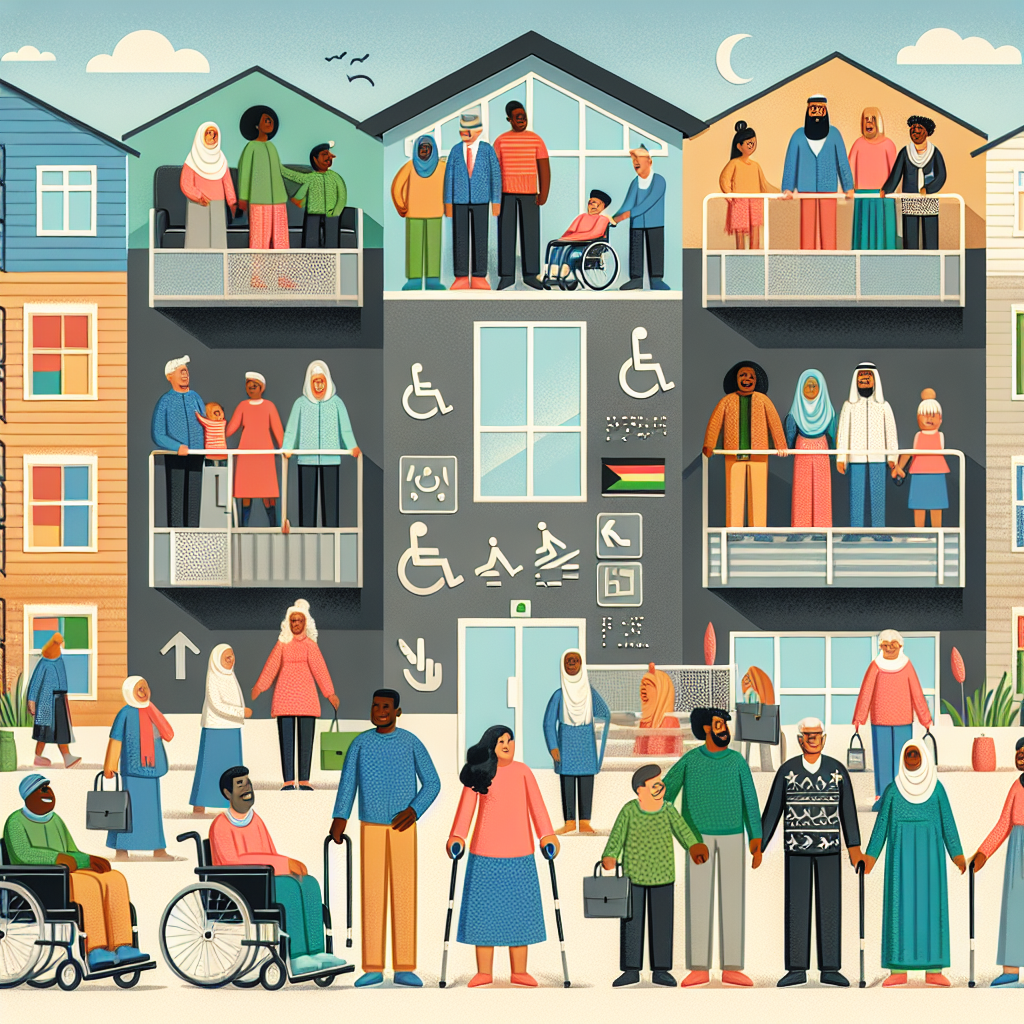
The housing market is inherently dynamic, constantly evolving with societal changes, economic fluctuations, and shifts in population demographics. One of the most significant trends in the housing market today is the growing demand for accessible and inclusive housing. This demand stems from various factors, including an aging population, a greater awareness of disability rights, and an overarching push towards greater inclusivity and equity in all aspects of life.
Accessible and inclusive housing ensures that homes are designed and built to be usable by people with a diverse range of abilities and requirements. This means going beyond the minimum standards of building regulations and aiming to create spaces that promote independence, dignity, and participation for everyone. As such, features like step-free entry, wider doorways, adjustable countertops, and smart home technologies tailored to specific needs are becoming not just special customizations, but expected standards in modern housing.
There is a growing recognition that when homes are built to be accessible and inclusive from the start, it benefits society as a whole. Not only does it address the immediate needs of the physically disabled and elderly, but it also enhances the living experience for their family members and caregivers. As the housing market begins to respond to this need, various stakeholders—developers, architects, policy makers, and communities—must work in tandem to foster environments that promote accessibility and inclusivity as a norm rather than an exception.
Factors Driving Demand for Accessible and Inclusive Housing
Several key factors are driving the heightened demand for accessible and inclusive housing. One of the primary factors is the aging global population. As people live longer, the number of elderly individuals, particularly those over the age of 65, is increasing. This demographic shift means there is a burgeoning need for homes that accommodate age-related mobility and health issues.
Another vital factor is the growing recognition and advocacy for disability rights. Over recent decades, there have been significant strides in promoting the rights of individuals with disabilities, emphasizing the importance of accessible public spaces, transportation, and housing. Legislation such as the Americans with Disabilities Act (ADA) in the United States has paved the way for similar laws globally, reinforcing the necessity of creating living spaces that are accessible to all.
Additionally, there is a stronger societal focus on inclusivity and equality. Contemporary social movements emphasize breaking down barriers for marginalized communities, and this is reflected in the housing market. Developers and city planners are increasingly aware of the need to incorporate inclusive principles into housing designs to meet both regulatory requirements and the evolving expectations of modern society.
Design Principles of Accessible Housing
The principles of designing accessible housing are rooted in the idea that homes should be usable by everyone, irrespective of their physical abilities. These principles include universal design, flexibility, simplicity, and low physical effort.
Universal design entails creating spaces that are inherently accessible to everyone without the need for adaptation or specialized design. This includes features such as level entrances, wide hallways and doorways that can accommodate wheelchairs, and accessible light switches and electrical outlets.
Flexibility in design is equally important. This means that homes should be adaptable to the changing needs of its occupants. For example, adjustable kitchen counters, removable cabinetry, and the capacity to install grab bars in bathrooms are small changes that can have a significant impact on accessibility.
Simplicity in design is also crucial. Homes should be easy to navigate, have clear and intuitive layouts, and include features that are straightforward to use. This reduces cognitive and physical efforts required to move around the home, making it more comfortable for everyone.
Technological Innovations Supporting Accessibility
Technology plays a pivotal role in the evolution of accessible and inclusive housing. Modern innovations enable individuals with disabilities to live more independently and comfortably.
Smart home technology, for example, includes systems that allow control over various home functions such as lighting, heating, and security through voice commands or smartphone applications. These technologies reduce the physical effort required to perform everyday tasks and can be tailored to meet specific accessibility needs.
Assistive technologies such as automated doors, stairlifts, and specialized kitchen gadgets also enhance the functionality of homes for individuals with physical disabilities. Moreover, advances in materials science have led to the development of construction materials that are both aesthetically pleasing and conducive to accessible design.
Technology further facilitates virtual consultations with healthcare providers and remote monitoring of health conditions, making it easier for individuals with medical needs to manage their health from home.
Government Policies and Regulations
Government policies and regulations significantly influence the availability and quality of accessible and inclusive housing. In many countries, building codes and standards are being revised to ensure new constructions meet accessibility requirements.
In the United States, the Fair Housing Act and the ADA set out clear guidelines for accessible housing, mandating features such as accessible routes, doorways, and switches. Other countries have similar legislation, such as the Disability Discrimination Act in the UK and the National Construction Code in Australia.
Governments are also introducing incentives for developers to include accessible features in their projects. These include tax credits, grants, and reduced permit fees. Such initiatives not only promote accessible design but also make it financially viable for developers.
Furthermore, there is a push for inclusive zoning laws that encourage the development of mixed-use communities. These communities integrate residential, commercial, and recreational spaces, creating neighborhoods that are accessible to individuals of all abilities.
The Role of Stakeholders
The successful integration of accessible and inclusive housing into mainstream development hinges on the collaboration of various stakeholders, including developers, architects, policymakers, and the community.
Developers play a crucial role by incorporating accessible design features from the initial planning stages. This proactive approach ensures that accessibility is not an afterthought but a fundamental aspect of the development.
Architects and designers must stay abreast of the latest accessibility standards and inclusive design principles. This knowledge allows them to create innovative and functional living spaces that cater to a diverse population.
Policymakers are responsible for enforcing regulations and providing incentives that encourage accessible housing development. They must also engage with the community to understand the unique needs of their constituents and work towards creating inclusive policies.
Community engagement is essential in the planning process. It ensures that the voices of individuals with disabilities and other marginalized groups are heard and considered. This collaborative approach leads to the creation of housing that truly meets the needs of all residents.
Conclusion
The demand for accessible and inclusive housing is reshaping the landscape of the housing market. As society progresses towards a more inclusive future, the importance of creating homes that cater to diverse needs cannot be overstated.
Accessible and inclusive housing not only addresses the immediate needs of individuals with disabilities and the aging population but also creates a more equitable and supportive environment for all. It promotes independence, dignity, and participation, which are fundamental to a high quality of life.
To meet this growing demand, a concerted effort from all stakeholders is required. Developers, architects, policymakers, and communities must work together to implement accessible design principles and create housing that is inclusive by design.
Ultimately, the goal is to create communities where everyone, regardless of their abilities, can live comfortably and fully participate in all aspects of life. As we move forward, the push for accessible and inclusive housing will continue to play a crucial role in shaping a more equitable and inclusive society.
Frequently Asked Questions
1. Why is there a growing demand for accessible and inclusive housing?
The demand for accessible and inclusive housing is increasing due to several societal developments. First, the world’s population is aging, with a significant number of individuals requiring homes that can accommodate mobility issues and other age-related needs. Furthermore, there is heightened awareness and advocacy for disability rights, which has fueled the demand for housing that includes features like ramps, wider doorways, and adapted bathrooms to improve accessibility for everyone. Additionally, there’s a broader cultural shift towards inclusivity and equity, which emphasizes that all individuals, regardless of their physical or mental abilities, should have equal access to housing. This trend is also propelled by legal requirements in many areas mandating accessible housing options, as well as advancements in construction technology that make it feasible to build homes that cater to a diverse range of needs.
2. What features define an accessible and inclusive home?
Accessible and inclusive homes are designed with features that accommodate a wide variety of needs, ensuring comfort and functionality for everyone. Key features include step-free entrances to allow wheelchair access, wider hallways and doorways to ensure easy movement, and barrier-free floors to prevent tripping hazards. Inside the home, bathrooms might have roll-in showers, grab bars, and adjustable-height fixtures, while kitchens could be equipped with lower countertops and pull-out shelves to accommodate both standing and seated users. Lighting is often plentiful and strategically placed to assist individuals with visual impairments. Additionally, smart home technologies can be implemented, such as voice-activated systems or automated lighting and temperature controls, which aid those with limited mobility or dexterity. These features collectively enhance independence, safety, and the overall quality of life for the occupants.
3. Who benefits from accessible and inclusive housing?
A diverse range of individuals benefit from accessible and inclusive housing, extending beyond those with disabilities. Elderly individuals who may struggle with mobility find these homes significantly improve their day-to-day lives, allowing them to live comfortably and independently for longer periods. Families with young children also benefit as they navigate strollers and teach children to walk in safer, obstacle-free environments. Even able-bodied individuals can appreciate the convenience and added safety features that come with an accessible home. Moreover, incorporating inclusive design from the start means less need for costly renovations in the future, making it financially advantageous. The benefits ripple further to the wider community, fostering a more inclusive and diverse neighborhood environment.
4. How can developers and policymakers support the growth of accessible and inclusive housing?
Developers can support the growth of accessible and inclusive housing by integrating universal design principles into all new projects, regardless of target demographics, ensuring that homes are inherently adaptable to meet diverse needs. This approach not only caters to current demands but also prepares them for future market shifts. Policymakers can assist by offering incentives like tax breaks or grants for building inclusive housing. Regulations and zoning laws can be reformed to encourage and even require accessible features in new builds and significant renovations. Public-private partnerships can be fostered to share the cost burden and take advantage of shared expertise in accessibility. Additionally, community education initiatives can raise awareness of the importance and benefits of inclusive housing, encouraging both demand and acceptance from the public.
5. What challenges exist in increasing the availability of accessible and inclusive housing?
Several challenges currently impede the widespread availability of accessible and inclusive housing. Cost is a significant barrier. The initial expense of incorporating specialized design features could be higher than standard building practices, discouraging some developers from undertaking such projects without adequate incentives. There is also a lack of knowledge and understanding among both developers and consumers about what constitutes inclusive design, meaning valuable features might be overlooked or undervalued. Furthermore, existing housing stock is largely outdated and not easily modified, requiring significant investment to transform these properties into accessible living spaces. Public perception is another hurdle; sometimes, the need for accessible housing is underestimated or perceived as less urgent. Overcoming these challenges involves a concerted effort from government agencies, private developers, and community organizations to innovate practical and economical solutions while raising awareness across society.