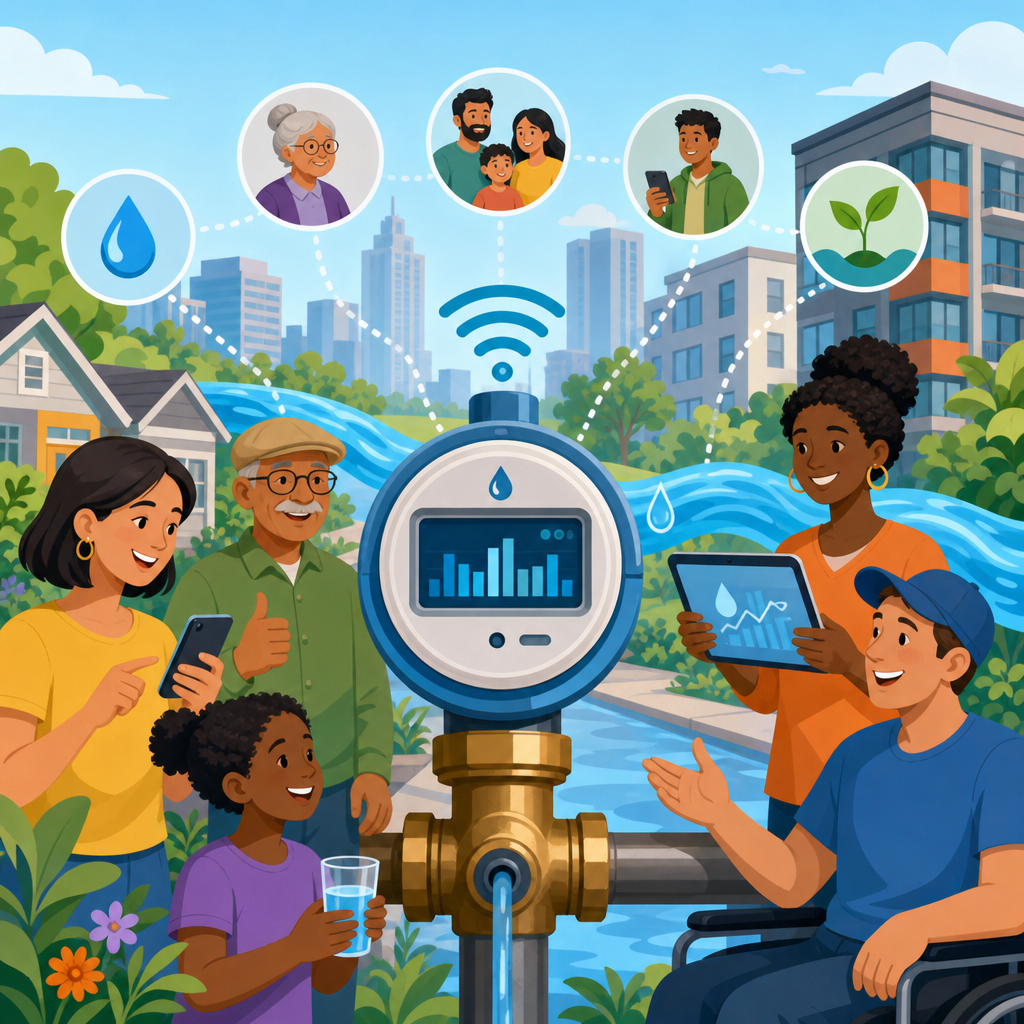
Smart water meters are changing how cities, utilities, landlords, and residents understand household water use, and the equity question is no longer optional. A smart water meter is a digital device that records consumption at short intervals and sends readings automatically through radio, cellular, or fixed network systems, unlike a conventional meter that is read manually once a month or once a quarter. Real-time utility data means near-live information about when water is used, how much is used, whether flow is continuous, and sometimes whether unusual patterns suggest a leak. In housing markets, those details affect operating costs, tenant protections, insurance claims, code enforcement, and the long-term affordability of homes and apartments.
I have worked on utility-data projects where the same meter data that helped one owner catch a slab leak also triggered fear among tenants who were never told what would be collected or how it would be used. That tension explains why this topic matters. Smart meters can lower bills, reduce water loss, and improve drought resilience. They can also deepen inequality if installation costs are shifted to low-income households, if language access is poor, if digital dashboards are hard to use, or if shutoff policies become more aggressive because billing data is more granular. The core issue is not whether smart water meters are good or bad. The real issue is who captures the value created by better data, and who absorbs the risk.
For housing professionals, this is a market trend with direct implications. Water costs are increasingly embedded in rent, homeowners association fees, and underwriting assumptions. Multifamily investors look at submetering and leak detection to control expenses. Municipal utilities use advanced metering infrastructure to manage peak demand and non-revenue water. Regulators and advocates ask whether benefits are shared fairly across renters, owners, and neighborhoods with older pipes. A useful definition of equity here is practical: people in different housing situations should have a fair opportunity to receive savings, understand the data, challenge errors, and avoid disproportionate harm from pricing, surveillance, or service disruption.
This article serves as a hub for the topic by answering the main questions decision-makers ask. What do smart water meters actually do? Who tends to save money? Where do inequities show up in billing, access, and enforcement? What policies and design choices make outcomes fairer? By grounding those questions in utility operations, housing economics, and consumer protections, it becomes easier to evaluate smart meter programs beyond the sales pitch. Better information can improve housing stability, but only when governance, communication, and pricing are designed with the same care as the technology itself.
How smart water meters work in homes, rentals, and multifamily buildings
Smart water meters combine a physical meter, a communication module, and software that turns meter reads into usable information. Most systems log usage in intervals ranging from every few minutes to every hour. Data is then transmitted through advanced metering infrastructure, often called AMI, or through drive-by automated meter reading systems. In practical terms, that means a utility can see daily or hourly consumption instead of waiting for a technician to read a dial. For a homeowner, the most visible features are leak alerts, usage graphs, and bills based on actual reads rather than estimates. For a multifamily operator, the advantages include faster detection of running toilets, irrigation failures, or common-area losses.
The technology matters because water use is highly uneven over time. A monthly bill can hide the difference between normal shower use and a burst pipe that ran all weekend. I have seen properties lose thousands of gallons before maintenance staff realized there was a problem, especially in vacant units or seasonal homes. Smart meters reduce that delay. Utilities like Thames Water, New York City DEP in selected programs, and many western U.S. agencies have promoted digital metering because non-revenue water from leaks and inaccuracies is expensive. The American Water Works Association has long supported improved metering accuracy because better measurement improves both revenue integrity and conservation planning.
Housing type shapes how benefits flow. In a detached single-family house with a direct account, the resident sees the meter data and can act quickly. In a master-metered apartment building, the utility may see aggregate building use while tenants see nothing unless the owner provides submeter access. In condominiums, boards may use common-area analytics to spot irrigation waste, but individual owners can remain disconnected from the information. That is why “real-time utility data” should never be treated as if it automatically reaches the person who can respond. The chain of access runs through utilities, property managers, billing vendors, and sometimes app platforms. Every link affects equity.
Who benefits most from real-time water data
The first clear beneficiaries are utilities. Smart meters cut the cost of manual reading, reduce estimated bills, and improve outage and leak response. They also help with demand management during droughts because utilities can target messaging using actual patterns rather than generic conservation advice. The second major beneficiaries are owners of older housing stock. Buildings with aging plumbing, irrigation systems, or intermittent vacancies generate the most preventable losses, so interval data often produces immediate savings. Insurance carriers increasingly care about this. A leak detected within hours costs less than one discovered after days of saturation, mold growth, and flooring damage.
Many households benefit too, especially when they receive timely alerts and clear bill explanations. The most common savings come from fixing silent toilet leaks, broken sprinkler heads, pressure issues, and unusually high outdoor use in summer. The U.S. Environmental Protection Agency has estimated that household leaks can waste nearly 10,000 gallons of water each year on average, and much larger losses are common in a subset of homes. When residents get a text after continuous flow is detected overnight, the savings can be real and immediate. In drought-prone regions, that can also mean avoiding water budget penalties or higher tier charges.
Still, the gains are not evenly distributed. Higher-income homeowners generally have better internet access, more flexible schedules, and more capacity to pay for repairs after an alert. A renter who receives no dashboard access cannot benefit in the same way, even if the building is smart-metered. A low-income owner may learn about a leak but still lack the cash to replace a failed service line. Language barriers matter as well. If alerts are only available in English or through a smartphone app, some households are effectively excluded. The technology creates opportunity, but opportunity is not the same thing as realized benefit.
| Group | Typical benefit | Main equity risk | Best safeguard |
|---|---|---|---|
| Utilities | Lower reading costs and better system visibility | Using granular data without clear customer protections | Strong privacy, appeal, and notice rules |
| Homeowners | Leak detection and more accurate bills | Repair costs after alerts | Emergency repair assistance and easy-to-read dashboards |
| Renters | Potentially fairer allocation with submeters | Opaque billing and limited data access | Tenant rights to usage records and dispute resolution |
| Multifamily owners | Lower losses and better maintenance planning | Passing costs through without transparency | Disclosure standards and billing audits |
Where inequity appears: billing, shutoffs, privacy, and digital access
The biggest equity failures usually appear after installation, not during the ribbon cutting. Billing is the first pressure point. Smart meters can improve accuracy, but they can also reveal high usage that was previously masked by estimated billing or building-wide averaging. That may sound neutral, yet the impact is not neutral when residents in older, poorly maintained housing are charged for infrastructure problems they do not control. In rental housing, a faulty toilet flapper or hidden pipe leak may drive up a submetered bill while the tenant waits for maintenance. Unless regulations clearly assign responsibility, granular data can make it easier to charge vulnerable households for costs created by deferred maintenance.
Shutoff practices are another concern. Near-real-time data allows utilities to identify arrears and anomalies faster, but operational efficiency can harden collection practices unless affordability rules keep pace. Several U.S. cities have faced criticism over water debt burdens concentrated in lower-income neighborhoods, and digital systems do not fix that by themselves. In fact, they can intensify enforcement if payment plans, medical exceptions, and right-to-cure notices are weak. Fair programs separate conservation goals from punitive debt collection. They also recognize that a leak alert is not useful when the resident cannot afford a plumber and is already behind on bills.
Privacy is often underestimated. Water data can reveal occupancy patterns, periods of vacancy, and routine behaviors. Most utilities are not trying to monitor daily life, but data retention, vendor contracts, and law-enforcement access policies matter. In my experience, utilities that publish plain-language privacy notices build more trust than those that bury data practices in tariff documents. Digital access is the final barrier. Portals that require strong broadband, frequent password resets, or high digital literacy leave out many older adults and lower-income households. Equity requires more than an app. It requires multilingual communications, paper options, call-center support, and community-based outreach that meets people where they are.
Why smart water meters matter in housing markets and property operations
Water data is becoming part of how housing assets are priced, managed, and regulated. For landlords and investors, utility efficiency affects net operating income, capital planning, and insurance risk. A building that consistently loses water through undetected leaks has higher expenses and often hidden deferred maintenance. With interval data, operators can benchmark consumption by unit type, identify common-area waste, and verify whether conservation retrofits are working. In markets with high sewer charges linked to water use, the savings can materially change building economics. That is one reason multifamily firms increasingly pair smart meters with work-order systems and leak sensors.
There is also a tenant stability angle. Utility volatility contributes to housing insecurity, especially where residents pay water directly or through ratio utility billing systems. Better data can reduce surprise bills, but only if residents get understandable information before charges escalate. In affordable housing portfolios, I have seen the best results when property staff use meter alerts as a service tool rather than a compliance hammer. They contact residents, inspect fixtures quickly, and document repairs so nobody is billed unfairly. When owners treat the meter as a diagnostic instrument instead of a collection device, the technology supports habitability and trust.
At the neighborhood scale, smart metering can influence public investment decisions. Utilities can identify areas with chronic leaks, pressure problems, or abnormal night flow that may indicate aging infrastructure. That should help target pipe replacement and conservation funding. The equity test is whether those investments reach communities with the greatest burden, not just neighborhoods with the loudest political voice or the highest property values. Housing markets respond to infrastructure quality over time. Reliable water service, fewer surprise bills, and lower damage risk make homes more stable assets. But if advanced metering mostly benefits already well-resourced areas, the gap in housing resilience widens.
What fair implementation looks like for utilities, cities, and housing providers
Fair implementation starts with program design, not public relations. Utilities should define the customer benefit before procurement begins: fewer estimated bills, faster leak alerts, stronger affordability support, and transparent dispute processes. Contracts with meter vendors must specify data ownership, retention limits, cybersecurity standards, and performance metrics for alert accuracy. The National Institute of Standards and Technology cybersecurity framework is a useful baseline for governance, while AWWA guidance helps utilities align operational practices with sector norms. Strong implementation also means testing the customer portal with real users, including seniors, renters, and households with limited English proficiency.
Cities and regulators should require clear rules for submetering and third-party billing. Residents need access to their own usage history, itemized charges, and a fast path to dispute bills linked to leaks or malfunctioning fixtures. Landlords should not be allowed to shift infrastructure losses onto tenants through opaque formulas. Where affordability is a concern, leak forgiveness programs, emergency repair grants, and arrearage management plans are more effective than relying on alerts alone. Some of the strongest programs combine digital notices with human follow-up from customer service teams or community partners, because a text message cannot replace trust.
Housing providers have a distinct responsibility. If a building installs smart submeters, tenants should receive advance notice, plain-language training, and confirmation of who pays when leaks occur behind walls, under slabs, or in owner-controlled systems. Maintenance teams need service-level targets for investigating abnormal flow. In practice, the fairest operators track three metrics: time from alert to inspection, percentage of disputed bills resolved in the resident’s favor when owner-side defects are found, and reduction in common leak categories over time. Those measures show whether the data is improving housing conditions rather than simply refining cost recovery. That is the standard smart water metering should meet.
Key takeaways for equitable adoption
Smart water meters can produce real public value. They improve billing accuracy, detect leaks sooner, support drought planning, and give owners and utilities a clearer view of how water is used. In housing, that can mean lower operating costs, fewer catastrophic losses, and more stable monthly expenses. But the benefits do not flow automatically to everyone connected to the system. Households with money, time, digital access, and control over repairs are positioned to gain first. Renters, low-income owners, residents in older buildings, and communities with weak consumer protections face the greatest risk of being left with the costs while others capture the savings.
The practical lesson is simple: meter technology should be evaluated as part of a housing system, not as a stand-alone gadget. Ask who sees the data, who can act on it, who pays for repairs, how disputes are handled, and what happens before a shutoff. Look for privacy rules, multilingual support, emergency assistance, and transparent submetering standards. When those pieces are in place, real-time utility data becomes a tool for conservation and housing stability at the same time. When they are missing, digital efficiency can mask old inequities under a modern interface.
For anyone shaping housing policy, utility programs, or property operations, now is the time to treat equity as a design requirement. Review current metering practices, audit tenant and customer protections, and compare who receives alerts with who receives bills. The strongest smart water meter programs do more than measure usage. They help people avoid waste, prevent damage, and stay securely housed. Build your next decision around that outcome, and the data will serve the community rather than the other way around.
Frequently Asked Questions
What is a smart water meter, and how is it different from a traditional water meter?
A smart water meter is a digital metering device that measures water consumption in short intervals and automatically sends that information to a utility, property manager, or data platform through radio, cellular, or fixed network communication. By contrast, a traditional water meter is usually read manually once a month or once a quarter, which means customers and utilities often see only a single total usage number for an entire billing period. The practical difference is significant: smart meters can reveal patterns such as overnight leaks, irrigation spikes, unusual occupancy changes, or periods of no use that may indicate a service interruption or vacancy. That near-real-time visibility changes water management from a reactive process to a proactive one.
In the context of equity, the distinction matters because access to timely information can influence who is able to reduce costs, prevent damage, and respond quickly to billing issues. Households with sudden leaks or inefficient fixtures may benefit from alerts before a minor problem becomes an unaffordable bill. Utilities may also use interval data to improve system planning, detect losses, and target conservation efforts more precisely. However, the benefits are not distributed automatically. If the data is difficult to access, available only in English, dependent on smartphones, or routed primarily to landlords rather than tenants, then the advantages of smart metering can bypass the people most affected by water costs and service decisions.
Who benefits most from real-time utility data from smart water meters?
Real-time utility data can benefit several groups at once, but the biggest gains often go first to whoever has the easiest access to the information and the power to act on it. Utilities benefit by reducing manual meter-reading costs, identifying system losses, improving demand forecasting, and detecting anomalies faster. Cities can use aggregated data to support drought planning, infrastructure investment, and conservation policies. Property owners and landlords may benefit from better visibility into building performance, leak detection, and submetering insights that help allocate costs or identify maintenance needs.
Residents can benefit greatly as well, especially when they receive clear, usable alerts and practical tools rather than raw data. A tenant or homeowner who learns about a toilet leak within a day instead of after a 60-day billing cycle may avoid a large bill and prevent water waste. Families on tight budgets may use consumption trends to manage usage more carefully. Seniors, multilingual households, and people with disabilities can benefit when systems are designed with accessibility in mind, such as text alerts, translated notifications, and easy-to-read dashboards.
That said, equity concerns arise when some groups receive the benefits while others mainly experience new forms of oversight or cost shifting. For example, if a landlord receives all usage data but tenants are still responsible for the bill, the people paying may have the least visibility. If conservation incentives are tied to online account tools that require broadband or digital literacy, lower-income households may be excluded. So the short answer is that many parties benefit from smart water data, but the key equity question is whether the people who bear the risks and costs also receive timely access, understandable information, and realistic options to respond.
How can smart water meters improve equity for residents and communities?
Smart water meters can improve equity when they are used to reduce avoidable harm, expand access to information, and support fairer utility practices. One of the clearest advantages is early leak detection. Water leaks can create disproportionately large financial burdens for low-income households, renters, and small property owners, especially when problems go unnoticed until a high bill arrives. Near-real-time alerts can help residents address leaks sooner, avoid debt, and prevent housing damage. For communities facing drought or aging infrastructure, interval data can also help utilities identify pressure issues, service irregularities, or neighborhood-level losses that might otherwise persist unnoticed.
Another equity benefit is billing transparency. Traditional billing systems often leave customers guessing how and when water was used. Smart meter data can help explain spikes, verify occupancy changes, and support dispute resolution with more accuracy. When presented well, it can empower residents to make informed choices about irrigation, appliance use, or repairs. In multifamily housing, submetering or building-level analytics may also reveal chronic plumbing problems that affect tenants but are not easily documented through monthly bills alone.
At the community level, utilities can use smart water data to design more targeted conservation programs instead of relying on one-size-fits-all messaging. That can mean directing leak assistance, fixture replacement programs, or emergency outreach to households that show signs of persistent high use caused by infrastructure problems rather than wasteful behavior. Equity improves most when the technology is paired with consumer protections, multilingual communication, affordability programs, and clear rules about who sees the data and how it can be used. In other words, the meter itself does not create fairness; thoughtful policy and implementation do.
What are the main equity risks and concerns associated with smart water meters?
The main equity risks include unequal access to data, privacy concerns, potential misuse of consumption information, and the possibility that smart metering costs are passed on without corresponding customer benefits. Real-time water data can reveal household patterns, such as when people are home, sleeping, traveling, or experiencing unusual activity. Even if utilities use the data responsibly, residents may reasonably worry about surveillance, third-party sharing, or unclear data retention practices. These concerns become more serious when policies are vague, opt-out options are limited, or customers are not told in plain language what is being collected and why.
Another major issue is digital inequality. If customers need internet access, a smartphone, or a complex online portal to benefit from smart meter data, some households will be left behind. Renters may face an additional barrier if the account holder is the landlord or property manager. Language access is also critical. Alerts that are only available in English, or dashboards built without accessibility features, can exclude the very communities that utilities often say they want to support. In those cases, the technology may widen existing disparities instead of reducing them.
There are also financial concerns. Smart meter programs require capital investment, and residents may ask whether the resulting savings are real, who pays for installation, and whether the technology could lead to stricter enforcement or faster shutoff processes. Without safeguards, interval data might be used more aggressively to identify billing violations or justify penalties rather than to offer assistance. Equity-focused implementation should therefore include transparent rate communication, privacy rules, non-digital access options, customer education, and policies that prioritize leak relief and support before punishment. The central concern is not simply whether the data exists, but whether its use is fair, accountable, and beneficial to those with the least margin for error.
What should utilities, cities, and landlords do to make smart water meter programs more equitable?
To make smart water meter programs more equitable, utilities, cities, and landlords should start with the principle that data access must align with responsibility. The people who pay the bill or experience the direct consequences of water use should have timely, understandable access to the information. That means offering alerts by text, phone, mail, and email; providing multilingual support; designing portals that are easy to use on low-cost devices; and making sure renters are not excluded simply because the account is held by a property owner. Communication should focus on practical action: what happened, why it matters, and what the resident can do next.
Policies should also address privacy, affordability, and accountability upfront. Utilities should clearly state what data is collected, how often it is transmitted, who can view it, how long it is stored, and whether it is shared with third parties. Cities and utilities should create protections against punitive uses of the data, especially for vulnerable households. Leak forgiveness policies, repair assistance, payment plans, and targeted conservation support can turn interval data into a public benefit rather than just an operational tool. In multifamily housing, landlords should be required to maintain plumbing systems responsibly and share relevant usage information when tenants bear water costs directly or indirectly.
Finally, equitable implementation requires measurement and feedback. Utilities and public agencies should track who is enrolling in alerts, who is resolving leaks successfully, which neighborhoods are benefiting, and where barriers remain. Community organizations can play an important role in outreach and trust-building, particularly in areas with historic underinvestment or skepticism about utility programs. When smart meter deployment includes resident engagement, strong tenant protections, accessible design, and clear standards for fair data use, real-time water information can support both efficiency and equity. Without those steps, the technology may improve visibility for institutions while leaving households with the same old burdens in a more data-driven form.