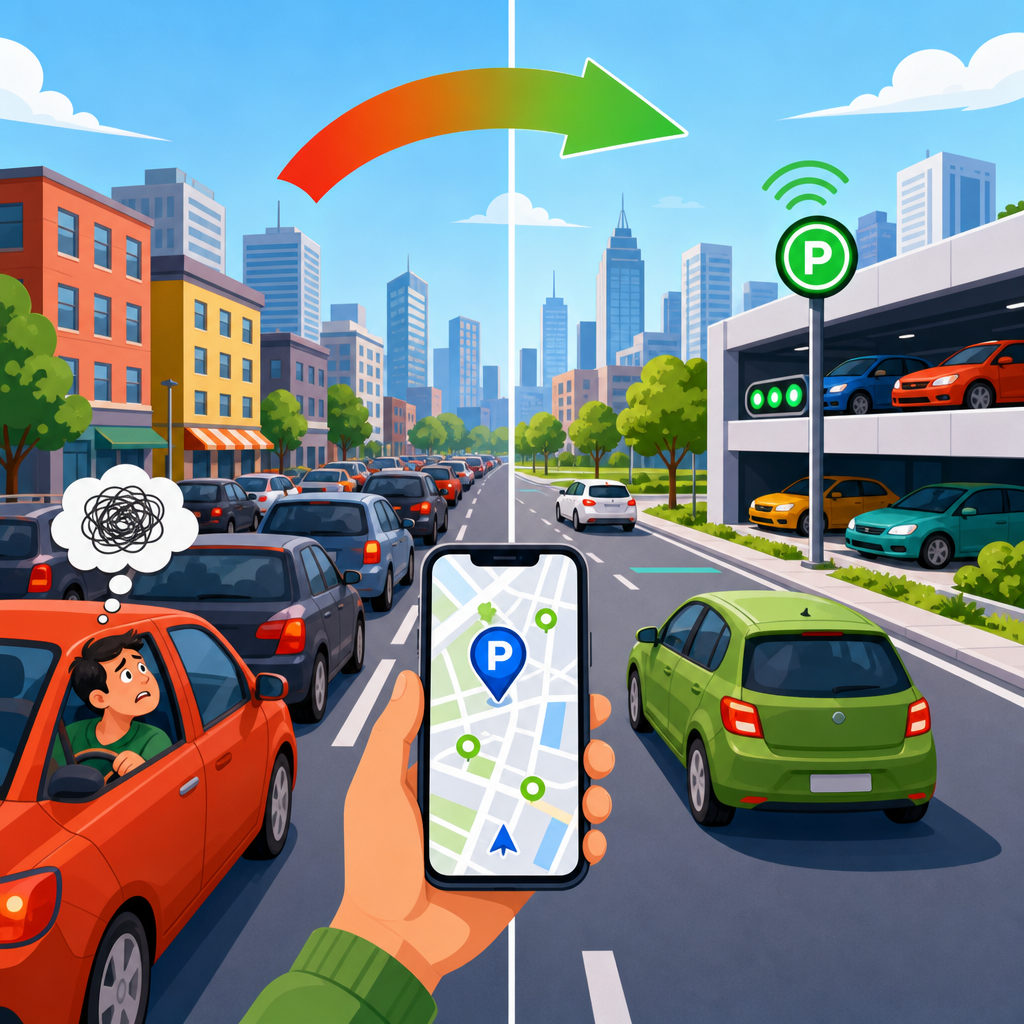
Smart parking systems are reshaping how cities manage curb space, garages, and driver behavior, and the central question is straightforward: do they actually reduce cruising and congestion? In practice, the answer is yes, but only when the technology is paired with pricing, enforcement, clear wayfinding, and policies that reflect real demand instead of wishful thinking. A smart parking system uses sensors, cameras, payment platforms, reservation tools, signage, and analytics to detect occupancy, guide drivers to available spaces, and help operators adjust supply and rules in real time. Cruising refers to the extra vehicle miles traveled by drivers circling blocks or ramps in search of parking. Congestion is the broader slowdown that affects entire corridors when too many vehicles compete for limited road space. I have worked with parking data from municipal districts and private mixed-use sites, and the pattern is consistent: parking is not a side issue in urban mobility. It is one of the hidden engines of traffic delay, emissions, delivery friction, and neighborhood frustration. For housing market trends, this matters because parking availability and management influence residential desirability, development costs, retail vitality, transit use, and the feasibility of denser infill projects.
What Smart Parking Systems Include and How They Work
A smart parking system is not a single device. It is a coordinated operating model that combines field hardware and software. Common components include in-ground occupancy sensors, overhead camera systems with computer vision, license plate recognition, meter and app payments, digital permits, garage count systems, dynamic message signs, and dashboards that show utilization by block, hour, permit type, and payment channel. The most effective deployments integrate these tools into a parking guidance system that tells drivers where spaces are likely available before they turn onto the most crowded block. In garages, that may mean color-coded indicators above each bay and signs at entry points showing open levels. At the curb, it often means mobile apps, interactive maps, or roadside signs that direct drivers to underused facilities nearby.
The immediate mechanism for reducing cruising is information. Drivers waste time when they do not know whether an open space exists, whether they are eligible to use it, and whether the price is worth the search. If a system can answer those questions early, fewer vehicles circulate aimlessly. The second mechanism is turnover. Better payment and enforcement reduce overstays, which makes short-term spaces function as intended. The third mechanism is demand management. If operators can see that one block is full at 6:30 p.m. while a garage two minutes away is half empty, they can rebalance through signs, pricing, reservations, validations, or permit rules. That is where smart parking moves beyond convenience and becomes traffic management.
Do Smart Parking Systems Reduce Cruising?
They can, and multiple city studies show measurable effects, but the size of the improvement depends on baseline conditions. In older downtowns with high occupancy and fragmented parking rules, drivers often circle because the cheapest and closest spaces are oversubscribed. In those settings, occupancy data and guidance reduce search time quickly. In low-density areas where parking is abundant, the same technology may improve payment compliance more than traffic flow. Researchers have long estimated that a meaningful share of downtown traffic in busy districts comes from drivers searching for parking. Donald Shoup’s work brought public attention to this issue by documenting excessive cruising where curb spaces were underpriced and heavily occupied. More recent pilots using sensor-based management and demand-responsive pricing have shown that keeping occupancy around 70 to 85 percent leaves one or two spaces available per block face, sharply lowering the need to circle.
San Francisco’s SFpark remains the best-known example because it paired occupancy monitoring with adjusted meter rates. The program reported reductions in time spent searching for parking, declines in parking citations and double parking in some areas, and less block-by-block variation in occupancy. Los Angeles, Barcelona, and parts of London have also used combinations of sensors, guidance, and variable pricing to direct drivers more efficiently. The lesson from these projects is not that sensors alone solve cruising. The lesson is that drivers need both accurate availability signals and a system that preserves some availability in the first place. If every low-cost space remains occupied all day, an app simply tells drivers that scarcity exists. It does not remove the cause.
How Smart Parking Affects Congestion Beyond the Parking Search
Congestion falls when fewer drivers circulate, but the secondary effects can be just as important. Illegal stopping, double parking, and delivery conflicts often stem from poorly managed curb space rather than sheer traffic volume. Smart parking platforms can designate loading zones, passenger pick-up areas, accessible spaces, and resident permits more precisely, then enforce those rules with digital records and plate-based validation. That reduces lane blockages that ripple into corridor delays. In mixed-use districts, I have seen intersections perform noticeably better after curb regulations were updated using occupancy and dwell-time data, even when total car volumes changed little. The reason is simple: smoother curb operations prevent through lanes from becoming ad hoc staging areas.
Garage guidance also matters. A driver who queues at the entrance of a full garage adds friction to every vehicle behind them. Systems that show counts by facility and by level reduce those stoppages. Reservation tools help during event peaks, when the main problem is synchronized arrivals. Airports, hospitals, universities, and stadium districts benefit most because demand surges are predictable and localized. On residential streets, digital permits and guest management can limit spillover parking that otherwise pushes visitors deeper into neighborhoods, adding local circulation and resident complaints. Congestion relief, then, is not only about faster parking. It is about fewer disruptive maneuvers, less uncertainty, and curb space assigned to its highest-value use at the right time of day.
Which Technologies Deliver the Strongest Results
Not all smart parking technologies produce the same transportation outcomes. The highest returns usually come from tools that influence driver decisions before the search begins. Real-time availability maps, dynamic signs, reservations, and pricing changes alter route choice and destination parking choice early enough to avoid unnecessary circling. By contrast, systems that only digitize payment are valuable operationally but have weaker direct effects on congestion unless they also improve turnover and compliance. Camera-based occupancy detection often outperforms single-space sensors in large facilities because maintenance is easier and zone-level counts may be sufficient for guidance. For on-street management, however, space-level data can support finer pricing and enforcement policies.
| Technology | Main function | Best use case | Congestion impact |
|---|---|---|---|
| Occupancy sensors | Detect whether a space is occupied | High-turnover curb zones | Moderate alone, high with pricing and guidance |
| Camera analytics | Count vehicles and classify use | Garages, lots, and curb corridors | High when used for guidance and curb enforcement |
| Mobile parking apps | Show availability and enable payment | Downtown districts and campuses | High if drivers check before arrival |
| Dynamic pricing | Adjust rates to maintain availability | Premium curb segments | Very high where occupancy is consistently above target |
| Guidance signage | Direct drivers to open facilities | Event areas, airports, medical centers | High during peak periods |
| Digital permits and LPR | Validate resident or authorized access | Residential zones and mixed-use districts | Indirect but meaningful through reduced spillover |
Limits, Tradeoffs, and Why Some Projects Underperform
Smart parking does not automatically reduce congestion, and weak implementations can disappoint. The biggest failure point is treating technology as a substitute for policy. If occupancy remains near 100 percent for hours, guidance systems simply direct more drivers into a full market. If enforcement is lax, turnover collapses and the data lose value because posted rules no longer match actual use. If prices are set politically rather than operationally, premium curb spaces stay clogged while nearby garages sit half empty. I have also seen projects struggle because data feeds were delayed, app maps were inaccurate, or drivers did not trust the information after a few bad experiences. Reliability matters more than novelty. A guidance sign that is wrong during the Friday evening peak is worse than no sign because it sends vehicles to dead ends.
There are also equity and privacy questions. Dynamic pricing can improve availability, but it may shift lower-income drivers to farther locations unless paired with accessible alternatives such as transit, validated parking, or time-limited lower-cost options. Camera systems and license plate recognition improve enforcement and permit management, yet they require clear retention rules, procurement standards, and public communication. Another tradeoff is induced convenience. If parking search becomes significantly easier, some trips may shift from transit or active modes to driving, offsetting a portion of the congestion gains. That is why the strongest programs align parking with broader mobility goals rather than maximizing car access in isolation.
Why This Matters for Housing Market Trends
Parking management has direct consequences for housing supply, pricing, and neighborhood change. In residential development, structured parking is expensive. Depending on market and design, a single structured space can add tens of thousands of dollars to project cost, while underground parking is often more expensive still. When developers or lenders assume every resident needs a dedicated stall, projects become harder to pencil, especially on infill sites with small footprints. Smart parking systems can support shared parking, unbundled parking leases, digital permit programs, and better use of existing garages, reducing the amount of parking a project must build. That can make missing-middle housing, mixed-use redevelopment, and adaptive reuse more feasible.
For residents, better parking operations affect daily quality of life. Blocks with unmanaged spillover traffic experience more noise, more idling, and more conflict over curb access. Retail streets with fast turnover and clear visitor guidance support local businesses, which strengthens neighborhood amenities that homebuyers and renters value. Transit-oriented developments also benefit when parking is managed precisely rather than oversupplied by default. In growing metros, the question is no longer whether every building can provide abundant parking. The question is whether cities can manage limited curb and garage space intelligently enough to support more housing without paralyzing nearby streets. Smart parking, used well, helps answer yes.
How Cities and Property Owners Should Evaluate Success
The right metric is not app downloads or sensor uptime. Success should be measured by transportation and land-use outcomes. Start with parking search time, occupancy by block face and hour, turnover, citation patterns, double-parking incidents, garage utilization, and average dwell time. Then connect those data to corridor travel speeds, bus reliability, delivery performance, and resident permit pressure. A credible before-and-after study should account for seasonality, event calendars, construction, and changes in fuel prices or transit service. For housing-related applications, also track lease-up rates, parking attachment rates in unbundled buildings, visitor access complaints, and the share of residents choosing not to lease a stall.
Property owners should test operational changes, not just install hardware. For example, a multifamily building near a retail corridor might reserve visitor spaces during daytime hours, convert underused stalls into shared evening parking, and use plate-based access to reduce gate queues. A downtown municipality might combine wayfinding signs with revised meter prices and dedicated loading windows. The common principle is iterative management. Smart parking works best when operators review data weekly, refine rules, and communicate changes clearly. Cities that treat parking as a static asset miss the value of the system. Cities that treat it as a managed network usually see the most durable congestion benefits.
Smart parking systems do reduce cruising and congestion when they are deployed as part of a disciplined parking management strategy. The evidence is strongest in high-demand districts where search traffic, curb conflicts, and uneven occupancy create avoidable delay. The core formula is simple: collect accurate occupancy data, guide drivers early, keep some spaces available through pricing and enforcement, and allocate curb space to the uses that matter most by time and location. When those pieces work together, drivers circle less, buses and deliveries move more smoothly, and neighborhoods gain a better balance between access and livability.
For housing market trends, the larger benefit is flexibility. Smarter parking supports denser housing, better retail streets, and more realistic project economics without pretending that demand disappears. It gives cities and property owners a practical way to manage scarcity rather than overbuilding around it. If you are evaluating urban development, a residential project, or a downtown revitalization plan, look closely at the parking operating model. It often tells you more about future congestion and neighborhood performance than a traffic count alone. Review the data, compare occupancy patterns, and make parking policy a central part of your next housing decision.
Frequently Asked Questions
Do smart parking systems actually reduce cruising for parking?
Yes, smart parking systems can reduce cruising for parking, but the key word is can. The biggest benefit comes when drivers are given accurate, timely information about where parking is available before they circle a block or enter a full garage. Sensors, cameras, payment platforms, reservation tools, and digital signage help cities and operators detect occupancy in real time and direct drivers toward open spaces more efficiently. That cuts down on the repeated slow-speed loops that waste fuel, increase frustration, and add unnecessary vehicles to already busy streets.
That said, technology alone is not a magic fix. If parking is underpriced in high-demand areas, if rules are poorly enforced, or if signage is confusing, drivers may still cruise because the cheapest or most convenient spaces remain hard to access. In the real world, the most successful systems pair occupancy data with demand-based pricing, strong turnover policies, and clear wayfinding. When those pieces work together, smart parking systems reduce search time, improve circulation, and make traffic patterns more predictable. Without those supporting policies, the impact is often smaller than cities expect.
How do smart parking systems help reduce traffic congestion in cities?
Smart parking systems reduce congestion by addressing one of the quieter sources of urban traffic: drivers searching for parking near destinations. When a meaningful share of vehicles on busy streets is cruising for curb spaces or garage entries, those cars contribute to bottlenecks, lane changes, double-parking, and stop-and-go conditions. By guiding drivers to available parking faster, smart systems lower unnecessary vehicle miles traveled and reduce the amount of time cars spend circulating in crowded districts.
They also improve traffic flow in indirect ways. Digital wayfinding can steer drivers away from full facilities before queues form at entrances. Reservation systems can distribute demand across multiple garages instead of overloading a single location. Occupancy analytics help cities adjust loading zones, curb regulations, and pricing by time of day, which can reduce conflicts between private vehicles, delivery fleets, ride-hail pickups, and transit operations. In other words, congestion relief does not come only from finding spaces faster. It also comes from managing curb space and parking supply more intelligently so traffic moves with fewer disruptions.
What features make a smart parking system effective instead of just high-tech?
An effective smart parking system does more than collect data. It turns that data into better decisions for drivers, operators, and city agencies. The most important features usually include reliable occupancy detection, user-friendly payment options, clear signage, mobile guidance, reservation capabilities where appropriate, and analytics dashboards that reveal demand patterns over time. Accuracy matters a great deal. If the system tells drivers spaces are available when they are not, trust disappears quickly and the congestion benefit fades.
Just as important are the operational and policy features behind the technology. Effective systems are supported by pricing that reflects real demand, enforcement that keeps spaces available for their intended use, and curb rules that are updated based on actual conditions rather than assumptions. Integration also matters. A system that connects garages, on-street spaces, payment tools, permits, and wayfinding signs can shape behavior far better than a collection of disconnected apps and sensors. In practice, the smartest parking systems are the ones that combine technology, operations, and policy into a coordinated strategy, not the ones with the longest feature list.
Are smart parking systems enough on their own, or do cities need pricing and enforcement too?
Cities absolutely need pricing and enforcement too. Smart parking systems provide visibility into where parking is used, when it fills up, how long vehicles stay, and where demand spills over. That information is powerful, but it does not by itself change driver behavior enough to solve cruising and congestion. If premium curb spaces are consistently occupied for long periods because rates are too low or time limits are ignored, drivers will still circle in search of a spot, even if the city has excellent sensors and a polished app.
Pricing helps create availability by encouraging turnover and matching cost to demand. Enforcement ensures that loading zones, accessible spaces, short-stay spaces, and permit areas function as intended. Together, they make the information from a smart system actionable. For example, if data shows a corridor is full every weekday at lunchtime, the city can adjust rates, revise time limits, add loading capacity, or improve wayfinding to nearby garages. Without those policy responses, the system is mostly observing a problem rather than solving it. The strongest results come when technology informs active management, not passive monitoring.
What are the limits of smart parking systems, and when do they fall short?
Smart parking systems fall short when expectations are unrealistic or implementation is weak. One common limitation is data quality. Sensors can fail, camera views can be obstructed, and occupancy estimates can drift if systems are not maintained. Another limitation is coverage. If only a small number of spaces are monitored, the guidance may not be comprehensive enough to meaningfully change traffic patterns. Driver adoption is also a factor. If visitors do not know the tools exist, do not trust them, or find them difficult to use, the congestion benefits will be limited.
They can also underperform when the broader transportation context is ignored. In districts with extremely high demand, scarce curb space, frequent deliveries, heavy ride-hail activity, and weak transit alternatives, parking technology alone cannot eliminate congestion. It can help manage it, but it cannot create unlimited capacity. In some cases, better parking search efficiency may even make driving more attractive unless cities balance it with broader mobility goals. That is why the best view of smart parking is practical rather than promotional: it is a valuable management tool that can significantly reduce cruising and improve traffic conditions, but only when deployed with sound pricing, clear rules, consistent enforcement, and realistic urban policy.