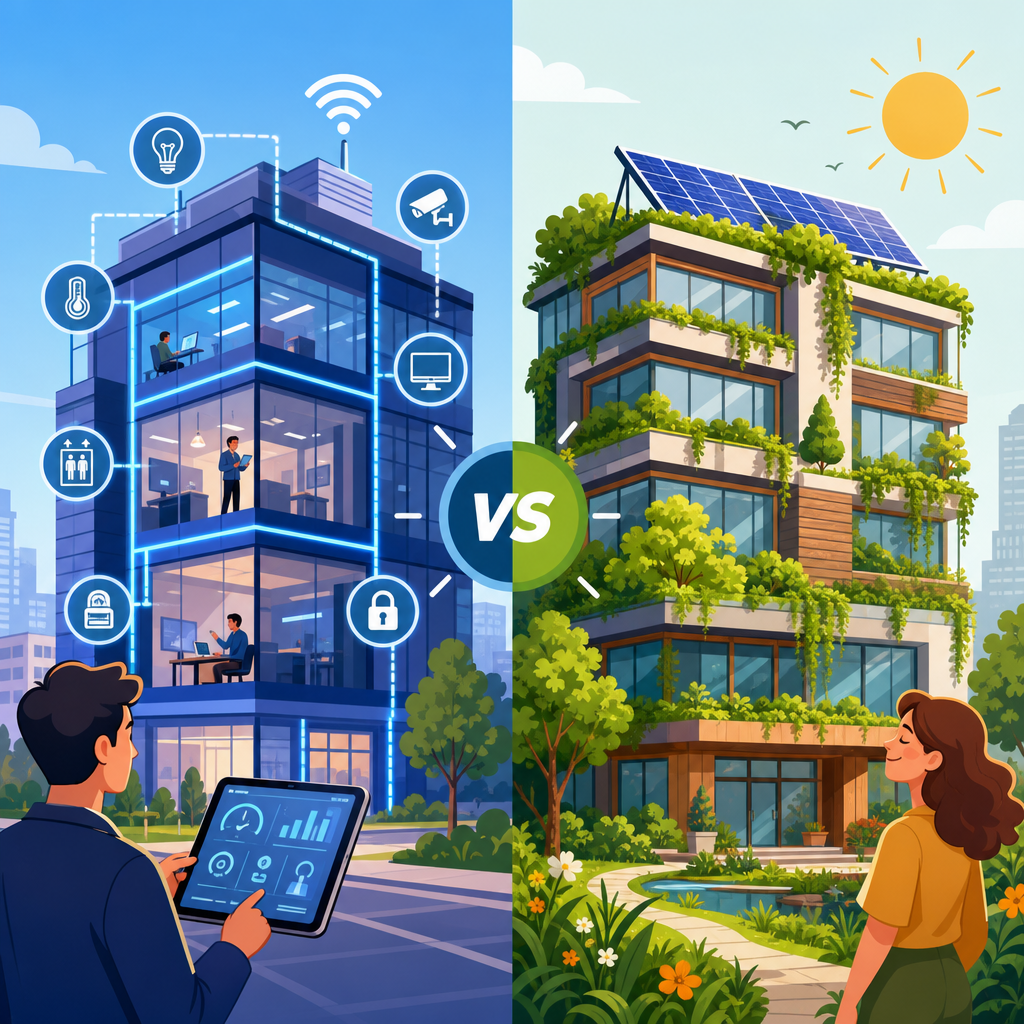
Smart buildings are often marketed as the future of real estate, but a truly efficient building is judged by measurable performance, not by how many sensors, apps, or dashboards it contains. In practice, the difference matters because owners, investors, tenants, and cities increasingly care about operating costs, resilience, indoor comfort, emissions, and compliance with stricter building standards. A smart building uses connected systems such as building automation, occupancy sensors, submetering, and cloud-based controls to monitor and adjust operations. An efficient building reduces energy, water, maintenance, and lifecycle waste while delivering stable comfort and reliable performance. Those goals can overlap, but they are not the same. I have worked on property reviews where expensive automation platforms produced little savings because the envelope leaked air, schedules were poorly commissioned, and facility teams never received usable trend data. I have also seen plain-looking multifamily and office buildings outperform newer “smart” properties because insulation, HVAC sizing, controls logic, and preventive maintenance were handled correctly from the start.
For the housing market, this distinction affects valuation, rent growth, operating income, retrofit strategy, and tenant retention. Rising utility prices, local benchmarking ordinances, disclosure rules, and corporate climate targets are turning building performance into a financial metric rather than a branding feature. Buyers now ask practical questions: Does the property have a high ENERGY STAR score? Has it been retro-commissioned? Are heat pumps properly staged? What is the energy use intensity? Can maintenance staff actually operate the system without a vendor login? These questions reveal the central issue. Intelligence is a toolset; efficiency is an outcome. Understanding that difference helps developers avoid overspending on technology, helps landlords prioritize upgrades with shorter paybacks, and helps occupants recognize which properties will stay comfortable and affordable over time.
What makes a building smart, and what makes it efficient?
A smart building is defined by connected capability. Its equipment communicates through protocols such as BACnet, Modbus, KNX, Zigbee, or LoRaWAN. Data flows from thermostats, variable frequency drives, lighting controls, indoor air quality sensors, access systems, elevators, and submeters into a building management system or integrated workplace platform. The promise is visibility and optimization. Operators can detect faults, automate schedules, reduce after-hours energy use, and respond to occupancy patterns in near real time. In newer projects, digital twins and fault detection and diagnostics software add another layer by comparing expected performance with actual trends. This can be valuable, especially in large mixed-use assets where manual oversight is unrealistic.
An efficient building, by contrast, is defined by results that can be measured against benchmarks. Common indicators include energy use intensity, source versus site energy, peak demand, water use per square foot, greenhouse gas emissions, maintenance cost, thermal comfort, ventilation effectiveness, and equipment uptime. A building becomes efficient through good design and disciplined operation: a tight envelope, low thermal bridging, right-sized HVAC, balanced ventilation, effective shading, quality insulation, commissioning, demand control where appropriate, and maintenance practices that preserve performance. A property can be highly efficient with modest technology if its fundamentals are strong. Likewise, a highly instrumented building can still waste energy if simultaneous heating and cooling are occurring, economizers are disabled, chilled water resets are missing, or occupants override every schedule.
The cleanest way to distinguish the two is this: smart describes capability; efficient describes outcome. Smart systems can support efficiency, but only when the data is actionable, controls sequences are sound, and staff have the training and authority to respond. Without that chain, a building becomes digitally busy rather than operationally effective.
Why smart features do not automatically create efficiency
The most common mistake in commercial and residential development is assuming automation equals optimization. It does not. Sensors can identify conditions, but they do not fix design flaws. If a multifamily building has poor air sealing, inadequate insulation at slab edges, or oversized rooftop units that short-cycle, connected controls will not erase those losses. They may reveal them, but only if someone reviews trends, interprets root causes, and funds corrective work. In many portfolios, dashboards are installed, then largely ignored because facility teams are already stretched. Owners end up paying software subscription fees while core inefficiencies remain untouched.
I have seen this repeatedly during operational reviews. A property boasted occupancy-based lighting and app-controlled room settings, yet common areas ran at full ventilation overnight because schedules had never been updated after a tenant mix change. Another building had sophisticated submeters but no monthly reconciliation process, so a leaking domestic hot water recirculation loop went unnoticed for months. In both cases, the technology worked. The operations model did not. Efficiency depends on governance as much as hardware: clear setpoints, routine trend analysis, seasonal recommissioning, alarm rationalization, and accountability for corrective action.
There is also a rebound risk. When buildings become easier to control, occupants and managers sometimes use more services because the interface feels convenient. Wider temperature deadbands may be narrowed. Lights may be scheduled more generously. Plug load growth from displays, chargers, and amenities can offset gains elsewhere. This is why serious energy managers rely on normalized performance metrics, weather-adjusted comparisons, and measurement and verification principles drawn from frameworks such as IPMVP, not just attractive dashboards.
The building fundamentals that drive real efficiency
Real efficiency starts with the envelope. Air leakage can account for large heating and cooling losses, especially in climates with extreme temperatures. Better windows, continuous insulation, thermal break detailing, weather-stripped penetrations, and reduced infiltration often deliver more durable savings than any app. Envelope upgrades also improve comfort by reducing drafts, cold surfaces, and overheating near glazing. In residential assets, these comfort gains can matter as much as the utility reduction because they support occupancy and renewal.
Mechanical design comes next. Efficient buildings use equipment that matches actual loads rather than exaggerated worst-case assumptions. Variable refrigerant flow systems, heat pumps, condensing boilers, energy recovery ventilators, dedicated outdoor air systems, and variable speed pumping can all help, but only if selected for the right context. Oversized equipment cycles inefficiently and wears faster. Poorly balanced systems create hot and cold complaints that trigger constant overrides. Commissioning is therefore essential. ASHRAE guidance and LEED practices emphasize functional testing because efficient design on paper often drifts during installation and handover.
Controls still matter, but the best controls strategy is usually simpler than vendors suggest. Start-stop schedules aligned with occupancy, supply air temperature resets, static pressure resets, optimized start, daylight harvesting, and demand-controlled ventilation are proven measures. The key is stable sequencing and maintainability. If no one onsite can troubleshoot the logic, a theoretically advanced setup may degrade faster than a simpler one. In affordable housing and mid-market multifamily, robust and understandable systems often outperform highly customized integrations over the long term because maintenance budgets are tighter and staff turnover is real.
How to compare smart buildings and truly efficient buildings
When evaluating a property, compare operational outcomes before comparing feature lists. Ask for utility data covering at least 24 to 36 months, adjusted for occupancy and weather where possible. Review ENERGY STAR Portfolio Manager records, interval meter data, maintenance logs, and commissioning reports. Check whether the building has an energy use intensity better than peers for its climate and use type. If the owner cannot produce trend logs, alarm histories, or evidence of corrective action, the intelligence layer may be more cosmetic than functional.
| Category | Smart Building Signal | Truly Efficient Building Signal |
|---|---|---|
| Controls | Connected thermostats, occupancy sensors, mobile interfaces | Verified schedules, stable setpoints, documented sequences, lower runtime |
| Energy | Real-time dashboard and submetering | Lower EUI, reduced peak demand, verified year-over-year savings |
| Envelope | Window shade automation | Low air leakage, continuous insulation, reduced thermal bridging |
| HVAC | Remote monitoring and app alerts | Right-sized equipment, balanced ventilation, fewer comfort complaints |
| Operations | Large volume of data | Routine commissioning, tracked KPIs, closed maintenance work orders |
| Financials | Higher upfront technology spend | Lower utility costs, stronger NOI, clearer retrofit payback |
This comparison matters because buyers can be distracted by visible technology. Touchscreen lobbies and tenant apps are easy to market. Air sealing reports, balancing records, and boiler reset strategies are less glamorous, but they are often where the value sits. A truly efficient building may include smart features, yet it proves itself through bills, comfort, reliability, and maintenance outcomes.
What this means for owners, investors, and residents
For owners and investors, the difference shows up first in net operating income. Lower energy and water use reduce expenses directly, while better commissioning and maintenance lower emergency repair costs and extend equipment life. In markets with building performance standards, efficient properties also face less regulatory risk. Cities such as New York, Boston, Washington, DC, and several European jurisdictions increasingly penalize underperforming buildings or require emissions reductions. A “smart” label offers little protection if actual consumption stays high. Investors underwriting acquisitions now look beyond amenity packages toward decarbonization readiness, reserve planning, and retrofit feasibility.
For residents and tenants, efficient buildings usually feel better to live in. Stable indoor temperatures, fewer drafts, lower noise from mechanical systems, better humidity control, and healthier ventilation all improve daily experience. Smart features can add convenience, such as app-based access or room booking, but convenience does not compensate for poor comfort. In residential leasing, complaints about overheating, underheating, condensation, and stale air damage reputation faster than a property app can repair it. Efficient operation also supports affordability. Lower utility costs matter in both market-rate and affordable housing, especially where residents pay electric bills directly.
The strongest projects combine the two approaches intelligently. They use smart systems to protect efficient fundamentals. For example, a well-insulated apartment building with heat pumps and energy recovery ventilation may use smart fault detection to identify refrigerant issues early, occupancy-based common-area lighting to trim waste, and leak sensors to prevent water damage. Here, intelligence amplifies performance instead of masking weak design. That is the model the housing market should reward.
How to decide where to invest first
If you are planning upgrades, start with an audit and baseline. Review utility bills, interval data, maintenance history, comfort complaints, and capital needs together rather than in isolation. In many existing buildings, the highest-return measures are not the most digital ones. Air sealing, insulation improvements, LED lighting, domestic hot water optimization, variable speed drives, and control recommissioning often beat flashy interface upgrades on payback. For larger assets, an ASHRAE Level II energy audit or a retro-commissioning study provides a disciplined path to prioritization.
Next, separate no-regret improvements from complex projects. No-regret moves include repairing economizers, calibrating sensors, resetting schedules, fixing simultaneous heating and cooling, insulating valves and piping, and installing submeters where a major blind spot exists. Larger projects such as central plant replacement, electrification, facade upgrades, or full building automation overhauls should be justified with lifecycle costing, not vendor promises alone. Consider training and staffing before buying sophisticated platforms. If the onsite team cannot manage alarms, trends, and sequence changes, budget for service support or choose simpler systems.
Finally, define success in operational terms. Set targets for energy use intensity, comfort complaints, ventilation performance, water use, and response times. Measure results quarterly and after each major change. Buildings improve when owners treat performance as an ongoing management discipline, not a one-time technology purchase. That mindset is the real dividing line between smart buildings and truly efficient buildings.
The core lesson is straightforward: a smart building is not automatically an efficient building, because intelligence without performance discipline is just infrastructure waiting for direction. Truly efficient buildings deliver measurable outcomes through strong envelopes, right-sized systems, stable controls, commissioning, and consistent operations. Smart tools can enhance those results by making faults visible, refining schedules, and supporting better maintenance, but they cannot compensate for weak design or neglected operations. In the housing market, that distinction affects valuation, affordability, tenant satisfaction, compliance exposure, and long-term resilience. Buyers and owners should therefore ask for proof, not promises: benchmarked utility data, maintenance records, commissioning documentation, and evidence that the building performs well in normal use.
If you are comparing properties or planning upgrades, prioritize the fundamentals first and use technology where it clearly supports them. Look for buildings that are comfortable, measurable, maintainable, and cost-effective to run. Those are the assets that hold value better, adapt more easily to regulation, and create better living conditions over time. Use this page as your starting point for evaluating building performance decisions across the broader housing market, then turn that understanding into smarter investment and retrofit choices.
Frequently Asked Questions
What is the main difference between a smart building and a truly efficient building?
The simplest distinction is that a smart building is defined by its technology, while a truly efficient building is defined by its results. A smart building may include connected controls, building automation systems, occupancy sensors, submeters, cloud dashboards, mobile apps, and other digital tools designed to monitor or automate operations. Those features can be valuable, but they do not automatically make a building high-performing. A truly efficient building is one that consistently delivers measurable outcomes such as lower energy use, reduced operating costs, stable indoor comfort, lower emissions, better resilience, and stronger compliance with building performance requirements.
In other words, “smart” describes capability, but “efficient” describes performance. A building can be packed with advanced systems and still waste energy if equipment is poorly commissioned, schedules are wrong, controls are overridden, ventilation is unbalanced, or maintenance practices are inconsistent. On the other hand, a building with simpler systems can be highly efficient if it has a strong envelope, well-tuned mechanical equipment, effective controls, and disciplined operational management. The real question is not how much technology is installed, but whether that technology is helping the building achieve verifiable operational improvements over time.
This difference matters more than ever because owners, investors, tenants, and regulators are increasingly focused on outcomes. They want to know whether the building performs well in real conditions, not whether it looks advanced on a specification sheet. That is why truly efficient buildings are judged using data such as energy use intensity, demand patterns, maintenance trends, occupant comfort indicators, carbon emissions, and lifecycle cost performance. Technology can support those goals, but it is not the goal itself.
Can a building be smart but still inefficient?
Yes, absolutely. This is one of the most common misunderstandings in commercial real estate and facility management. A building can have sophisticated automation, real-time monitoring, and polished dashboards, yet still consume more energy than necessary and deliver uneven comfort. The presence of sensors and software does not guarantee that systems are configured correctly, that teams are acting on the data, or that the building is operating according to a clear performance strategy.
For example, a property may have occupancy sensors installed throughout the space, but if HVAC schedules are still running at full output during unoccupied periods, the savings opportunity is largely lost. A building may also have submeters and trend logs, but if no one reviews the data regularly or if alarms are so frequent that operators ignore them, the value of the technology drops sharply. In some cases, smart systems even add complexity that masks underlying inefficiencies. Poorly integrated controls, conflicting setpoints, excessive overrides, and lack of staff training can all lead to waste despite a highly connected infrastructure.
Another issue is that many buildings are designed to be smart but are never fully commissioned for long-term performance. Initial programming may not reflect real occupancy patterns, seasonal changes, tenant requirements, or equipment degradation over time. Without continuous optimization, performance drifts. This is why efficient buildings require more than installed technology. They require strong design intent, proper commissioning, ongoing tuning, clear accountability, and regular performance verification. Smart features are only useful when they translate into better operational decisions and sustained outcomes.
How do you measure whether a building is truly efficient?
A truly efficient building is measured by objective performance indicators, not by marketing language or the number of connected devices on site. One of the most important metrics is energy use intensity, often expressed as energy consumed per square foot or square meter. This helps owners compare buildings of similar type and size and determine whether actual usage aligns with expectations. Peak demand, load profiles, and seasonal energy patterns also matter because they reveal how efficiently the building responds under different operating conditions.
Efficiency should also be evaluated through operating cost trends, maintenance records, indoor environmental quality, and emissions data. A building that lowers utility bills but creates comfort complaints or poor ventilation is not truly performing well. Likewise, a property that uses advanced controls but experiences frequent equipment failures may be missing the operational discipline needed for long-term efficiency. Strong performance typically shows up as reduced waste, more stable temperatures, fewer reactive maintenance events, lower carbon output, and better alignment between occupancy and system operation.
It is also important to look at persistence over time. A building is not truly efficient because it performed well for one month after a retrofit or system upgrade. The stronger test is whether it continues to perform across seasons, occupancy changes, utility rate shifts, and equipment aging. Benchmarking, measurement and verification practices, retro-commissioning, and fault detection can all help validate efficiency. Increasingly, cities and regulators are pushing the market in this direction through building performance standards, emissions caps, and disclosure rules. In that environment, measurable and repeatable performance is what separates a genuinely efficient building from one that is simply digitally enabled.
Why does the difference matter to owners, investors, tenants, and cities?
The difference matters because each stakeholder is affected by building performance in practical and financial ways. For owners, a truly efficient building can reduce utility expenses, improve net operating income, limit exposure to rising energy prices, and lower the risk of future capital surprises. For investors, measurable efficiency is increasingly tied to asset resilience, regulatory readiness, tenant demand, and long-term value. An office tower or multifamily property that is labeled smart but underperforms operationally may face higher costs, weaker leasing outcomes, and greater transition risk as standards become stricter.
Tenants care because efficiency affects comfort, reliability, and occupancy costs. A building that runs efficiently usually does a better job of maintaining consistent temperature, ventilation, lighting quality, and system uptime. Those factors influence satisfaction, productivity, and retention. Tenants are also paying closer attention to sustainability commitments and carbon footprints, especially large organizations that report on environmental performance. They increasingly want spaces that deliver both comfort and credible performance data, not just technology branding.
Cities and regulators care because buildings play a major role in energy consumption and emissions. A portfolio full of “smart” buildings that do not deliver real reductions will not help meet climate, grid, or public policy goals. That is why many jurisdictions are shifting from incentive structures based purely on equipment upgrades toward frameworks focused on actual building outcomes. In that context, the distinction between smart and truly efficient becomes critical. Smart systems can support compliance, decarbonization, and demand flexibility, but only if they are used to improve measurable performance. Stakeholders are no longer satisfied with promises of optimization; they want evidence of it.
What does it take to turn a smart building into a truly efficient building?
Turning a smart building into a truly efficient one requires a shift from installing technology to managing performance. The first step is establishing clear goals tied to outcomes such as energy reduction, emissions reduction, occupant comfort, maintenance efficiency, and resilience. Once those targets are defined, the building’s systems and data streams must be aligned to support them. That means reviewing control sequences, verifying schedules, calibrating sensors, integrating systems properly, and confirming that data is accurate enough to guide decisions.
Commissioning and ongoing optimization are essential. Even well-designed smart systems can underperform if they are not configured for the building’s actual operating conditions. Facility teams need to understand how systems interact, how to respond to fault alerts, and when to update settings based on occupancy, weather, tenant use patterns, and changing utility conditions. Regular analysis of interval data, submetering trends, and equipment performance can uncover issues such as simultaneous heating and cooling, after-hours energy waste, short cycling, ventilation imbalance, and drifting setpoints. Those are the kinds of operational problems that quietly erode efficiency even in highly connected buildings.
Just as important, owners need governance and accountability. Someone must be responsible for reviewing performance, prioritizing corrective actions, and making sure savings persist. In many buildings, the missing ingredient is not technology but process. The most successful properties combine efficient design, a well-maintained envelope, right-sized equipment, effective controls, trained operators, and continuous performance review. When that happens, smart tools become powerful enablers rather than expensive accessories. The result is a building that not only collects data, but uses it to lower costs, improve comfort, reduce emissions, and prove its value through measurable outcomes.