Public spaces are universally valued as key components of urban life, contributing to the quality of life in cities around the world. These are areas that are open and accessible to all members of the community, providing a venue for social interaction, recreation, and cultural expression. Urban connectivity, on the other hand, refers to the seamless integration of transportation systems, digital networks, and physical infrastructure within the city. It is about how well different parts of the city are linked to one another both physically and digitally. The interplay between public spaces and urban connectivity significantly impacts the way cities function and enhance the human experience of urban environments. In recent years, these ideas have gained prominence due to their role in promoting sustainable urban development, fostering community engagement, and enhancing overall urban livability.
Understanding the relationship between these two aspects is vital as cities across the globe become increasingly dense and complex. Public spaces serve as much-needed breathing room in urban areas, while effective connectivity ensures that they are accessible and are integrated into the urban fabric. Together, they underpin the sustainability, accessibility, and inclusiveness of modern cities. By exploring these concepts, we can better appreciate how they work in tandem to create vibrant, livable urban environments which improve the quality of life for residents and visitors alike.
The Role of Public Spaces in Urban Life
Public spaces are often seen as the heart of a city, connecting people and fostering a sense of community. These spaces include parks, plazas, streets, and even markets that are open for public use. They are essential for social interaction, providing venues for cultural expression, leisure activities, and sometimes even political demonstrations. The famous Central Park in New York City is an ideal example of a public space that offers a multitude of recreational activities while serving as a green sanctuary amidst the bustling city.
Public spaces encourage interaction among different social, economic, and cultural groups, fostering inclusivity and community cohesion. For instance, parks offer a place for children to play, adults to exercise, and seniors to relax. With urban areas continually expanding, public spaces act as important counterbalances to high-density living, offering residents a much-needed escape and connecting them with nature.
Urban Connectivity: Linking the City
Urban connectivity focuses on how easily different areas within a city can be accessed. This includes transportation networks such as roads, railways, and cycling lanes, as well as the digital infrastructure that connects us, like internet and mobile networks. In cities like Tokyo, urban connectivity is epitomized by an extensive and efficient public transit system that allows millions of people to travel seamlessly across various neighborhoods.
Beyond improving ease of movement, strong urban connectivity enhances economic activity by providing businesses access to a larger pool of consumers and workers. It also reduces reliance on personal vehicles, thereby mitigating traffic congestion and lowering carbon emissions. Furthermore, connectivity encompasses digital access, which supports smart city initiatives where technology is utilized to improve urban services.
Integrating Public Spaces with Urban Connectivity
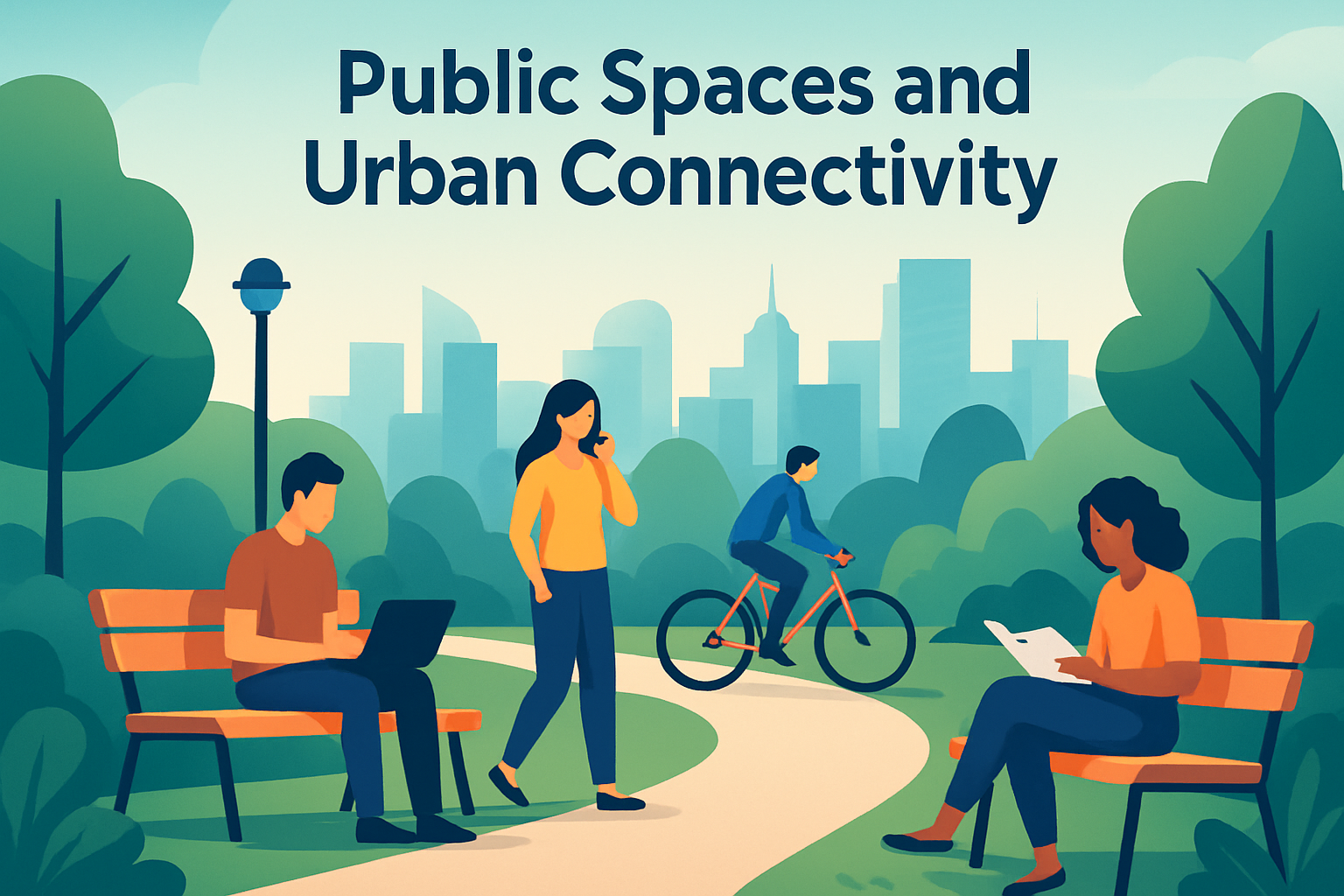
The integration of public spaces and urban connectivity transforms how people interact with their urban environment. This symbiosis can be observed in pedestrian-friendly areas designed to enhance walkability and allow for easier movement between public spaces and transit hubs. For example, Copenhagen has integrated its public spaces with bicycle and pedestrian networks, enabling seamless travel across the city without reliance on cars.
Integrating public spaces with transport nodes such as bus stops or train stations ensures these areas become vibrant centers for activity, making them convenient for users who can easily shift from transit to recreation. Moreover, digital connectivity in public spaces is becoming increasingly vital, from offering free Wi-Fi to employing smart city solutions like real-time transit updates.
Challenges in Public Space and Connectivity
Despite their benefits, developing public spaces and enhancing urban connectivity present significant challenges. Urban planners often face constraints such as limited space, competing land uses, and funding issues. An example of these challenges can be seen in Mumbai, where rapid population growth has strained public spaces and urban connectivity networks.
Striking a balance between development and preserving green spaces is crucial. Additionally, achieving equitable connectivity across different urban regions remains an ongoing concern. Underserved communities may lack access to both quality public spaces and reliable urban infrastructure, exacerbating social inequalities.
Real-World Solutions and Innovations
Cities around the world are coming up with innovative solutions to overcome these challenges. The High Line in New York City, a public park built on a historic freight rail line elevated above Manhattan, is a striking example of transforming urban infrastructure into valuable public space. Similarly, digital tools such as apps and platforms are being used to map public spaces and find the most efficient travel routes, thereby enhancing urban connectivity.
Local governments and private sectors are increasingly collaborating to fund and implement projects that improve urban environments. Initiatives such as Europe’s largest car-free zone in Oslo aim to reduce traffic congestion in city centers, allowing more room for people and public spaces. These solutions demonstrate how creativity and collaboration can address urban challenges.
| City | Public Space Initiative | Connectivity Improvement |
|---|---|---|
| New York City | High Line Park | Public Transit Integration |
| Copenhagen | Pedestrian Zones | Bicycle Network |
| Oslo | Car-Free Zones | Enhanced Public Transit |
| Tokyo | Community Parks | Efficient Rail System |
Community Involvement and Participation
Community involvement is crucial in the success of integrating public spaces with urban connectivity. Public input helps ensure that the spaces developed are reflective of the community’s needs and preferences. Many cities now hold workshops and forums to involve community members in the planning process, ensuring that projects are equitable and inclusive. For instance, the redevelopment of Seattle’s waterfront involved extensive public input to create spaces that catered to diverse community interests.
Participation allows people to take ownership of their public spaces, leading to higher levels of engagement and maintenance. It also ensures that the benefits of urban connectivity are not limited to a few but extend to all city residents.
Sustainability and Future Prospects
The sustainability of public spaces and urban connectivity is a key concern as we move forward. Sustainable urban design principles advocate for green infrastructure, the reduction of carbon footprints, and resilience to climate change. Rotterdam, with its “Water Squares” that serve both as public spaces and flood mitigation infrastructure, exemplifies how cities can create multifunctional, sustainable solutions.
Future urban environments will need to be flexible and adaptable to changing needs. The rapid evolution of technology will likely lead to new possibilities in urban connectivity, such as autonomous transit systems and further integration of digital platforms. Emphasizing sustainability will ensure that our public spaces and connectivity solutions continue to enhance urban life for generations to come.
Conclusion: The Path Forward
The relationship between public spaces and urban connectivity is essential in crafting urban environments that are vibrant, inclusive, and sustainable. As cities continue to grow and evolve, the seamless integration of these elements will play an increasingly important role in enhancing the quality of urban life.
Investing in public spaces and improving urban connectivity should be seen as integral to urban planning, impacting not just individual satisfaction but community wellbeing and environmental sustainability. To that end, engaging communities in the design and implementation processes, being mindful of sustainability, and embracing innovative solutions will be crucial.
By fostering a deeper understanding of the relationship between public spaces and urban connectivity, city planners, policymakers, and citizens can work together to shape dynamic urban environments that serve the needs of all. The task ahead is to continue this dialogue, pushing the boundaries of what’s possible in urban development. The call to action is clear: participate in community planning initiatives, advocate for sustainable solutions, and support policies that prioritize the harmonization of public spaces and urban connectivity.
Together, we can help cities become not just places where people live, but thriving communities where everyone can flourish.
Frequently Asked Questions
1. What are public spaces, and why are they important in urban areas?
Public spaces are any areas within a city that are open and accessible to everyone, regardless of age, gender, ethnicity, or economic status. These include parks, town squares, streets, plazas, and even certain semi-public areas like shopping malls and libraries. The importance of public spaces in urban areas cannot be overstated; they are the heart of community life, serving as hubs for social interaction, cultural events, and leisure activities.
Public spaces improve the quality of life by providing inhabitants with places to gather, relax, exercise, and enjoy nature. They can also host markets, festivals, and performances, contributing to the cultural richness and economic vitality of an area. Furthermore, well-designed public spaces can promote social inclusion by bringing together people from diverse backgrounds, fostering a sense of community and belonging. They also help in enhancing urban beauty and serenity, balancing the built environment with nature.
2. How does urban connectivity enhance city living?
Urban connectivity is about creating seamless and efficient links between different parts of a city through its transportation systems, digital networks, and physical infrastructures. This connectivity ensures that people, goods, and information can move quickly and easily, enhancing overall city living.
Urban connectivity reduces travel times, making it easier and more convenient for people to access jobs, schools, healthcare, and leisure activities. It supports economic growth by facilitating business operations and encouraging investments. High levels of connectivity also reduce traffic congestion and pollution, improving public health and the environment. On the digital front, strong urban connectivity ensures that citizens have reliable access to essential services and opportunities through the internet, enhancing education, employment, and social connections.
3. How do public spaces contribute to economic development in urban areas?
Public spaces play a significant role in economic development within urban areas. By attracting visitors and residents alike, they boost local businesses, including cafes, shops, and restaurants that often line these spaces. Events such as markets, concerts, and festivals held in public spaces draw crowds, generate revenue, and create jobs. Additionally, public spaces can increase the value of surrounding properties and stimulate investment in nearby areas by improving perceived neighborhood value and desirability.
Moreover, attractive and well-maintained public spaces can attract tourists and new residents, contributing to the city’s overall economic growth. In the long term, these spaces serve as catalysts for urban renewal and redevelopment, bringing life back to underutilized or declining areas, promoting sustainability, and drawing commercial interest.
4. What role do public spaces play in promoting social cohesion within cities?
Public spaces play a crucial role in fostering social cohesion, as they provide a common ground where people from diverse backgrounds can meet and interact. They serve as venues for social encounters, community events, and cultural expressions, encouraging dialogue and mutual understanding among different societal groups.
The inclusive nature of public spaces helps bridge social gaps by providing opportunities for all community members to participate in shared experiences, regardless of individual differences such as socioeconomic status, ethnicity, or age. These interactions can reduce prejudices, build trust, and strengthen community ties, leading to a more harmonious urban society. Public spaces also serve as outlets for community-led initiatives and activism, empowering citizens to have a voice and actively contribute to the urban environment.
5. What are some challenges cities face in maintaining and enhancing public spaces and urban connectivity?
Cities face numerous challenges in maintaining and enhancing public spaces and urban connectivity. One of the primary issues is funding, as public spaces require continual investment in maintenance, safety, and improvements to remain functional and appealing. Budget constraints can lead to neglected spaces, reducing their utility and attractiveness.
Balancing development pressures is another challenge, as urban growth can threaten the availability of open spaces or natural areas. Ensuring accessibility and ease of movement within these spaces for people of all abilities is a constant consideration. Integrating modern technology with existing urban infrastructure to improve connectivity without overwhelming the existing systems is a complex task.
Furthermore, cities must address growing environmental concerns by incorporating sustainable practices in the design and management of public spaces and connectivity frameworks. This includes considering climate change impacts, such as increased flooding risks or extreme weather conditions, and ensuring that these spaces contribute positively to ecological stability and biodiversity.