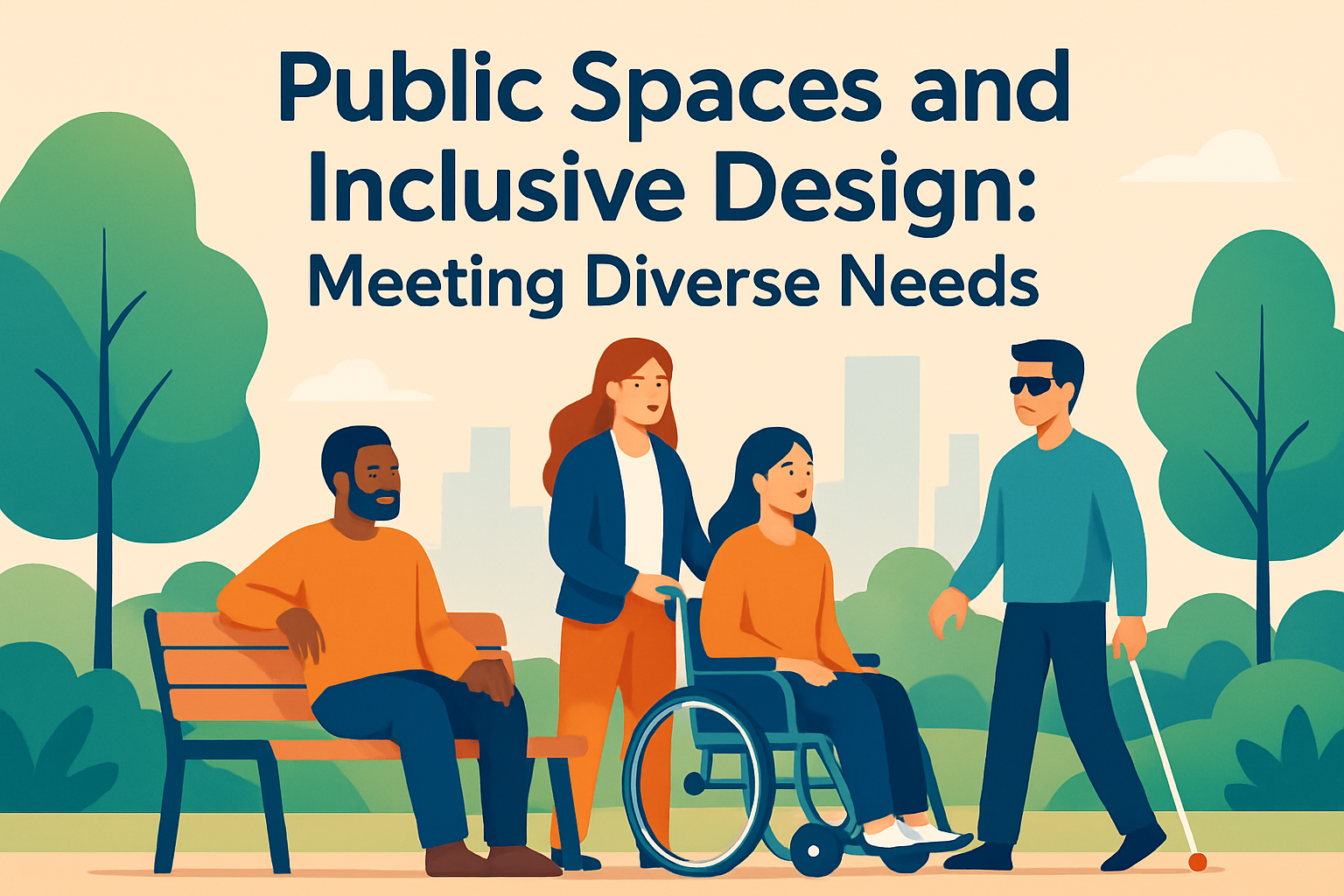
In recent years, there has been a growing awareness around the concept of inclusive design, particularly in the realm of public spaces. Inclusive design is a methodology that ensures environments, products, and services are accessible to, and usable by, as many people as reasonably possible. This concept stands in stark contrast to traditional design approaches, which often prioritize aesthetics or cost-efficiency over accessibility. The significance of inclusive design lies in its potential to promote equity, inclusion, and participation for a diverse population.
Public spaces are integral to modern society, acting as communal areas where individuals from various walks of life converge for leisure, work, and socialization. Hence, the design of these spaces not only impacts how effectively they are utilized but also shapes people’s experiences and interactions within them. This is why inclusive design is crucial—when public spaces are designed to meet diverse needs, they become welcoming, functional, and empowering for everyone, including the elderly, differently-abled, and those with sensory impairments. These efforts can break down barriers, increase independence, and profoundly enhance the quality of life for countless individuals.
Understanding Inclusive Design Principles
Inclusive design is guided by fundamental principles that aim to accommodate a broad spectrum of needs without the need for separate or special solutions. Key principles include flexibility in use, equitable use, simple and intuitive design, perceptible information, and tolerance for error. These principles aim to foster designs that can be used by people with a wide range of abilities, thereby minimizing the potential for discrimination or exclusion.
A renowned example of inclusive design in practice is the design of curb cuts in sidewalks. Initially created to aid wheelchair users, curb cuts have proven beneficial to parents pushing strollers, travelers with wheeled suitcases, or even those on bicycles. This example illustrates how designs meant for inclusivity often become universally beneficial, improving access and convenience for all, while also highlighting the importance of perceptible information and intuitive design. The broader societal and human benefits are evident, emphasizing why urban planners are increasingly adopting inclusive principles.
The Role of Technology in Enhancing Accessibility
Technology plays a critical role in enhancing the accessibility of public spaces. Over the years, technological advancements have significantly influenced the way public spaces are utilized. From auditory signals at pedestrian crossings to assistive navigation apps for visually impaired individuals, technology has been pivotal in addressing diverse needs.
An exemplary model is the use of beacon technology. In places like airports or shopping malls, beacons can guide visually impaired individuals through audio descriptions provided directly to smartphones, creating a seamless and independent navigation experience. By integrating such technologies, public spaces transcend conventional limitations, thereby sculpting a more inclusive environment where individuals feel comfortable and supported, reinforcing the vital role of technology in contemporary urban design.
Inclusive Playground Design
Playgrounds can be places of joy and creativity, and their design holds immense potential for inclusive practices. When designed inclusively, playgrounds are not merely for entertainment but also for socialization and learning through play. Creating a space where children of all abilities can interact teaches valuable lessons about diversity, empathy, and cooperation.
Take, for instance, the Magical Bridge Playground in California. Celebrated as a pioneer in inclusive playground design, it features elements that cater to previously overlooked needs such as sensory-friendly zones, ramps for wheelchair access, and swings that can be used by individuals with varying abilities. This integration has fostered an environment where every child and family can participate in shared experiences without barriers, thus reflecting the essence of inclusivity. By embracing such models, communities can harness the power of play to bridge divides and cultivate inclusivity from an early age.
| Inclusive Design Principle | Description | Example |
|---|---|---|
| Equitable Use | Design is useful to people with diverse abilities. | Automated door openers at entrances for wheelchair access. |
| Flexibility in Use | Accommodates a range of individual preferences. | Adjustable seating heights in public transport. |
| Simple and Intuitive Use | Easy to understand, regardless of the user’s experience. | Clear signage with symbols and simple language. |
| Perceptible Information | Communicates necessary information effectively. | Audio guidance in elevators for the visually impaired. |
| Tolerance for Error | Minimizes hazards and adverse consequences of misuse. | Safe walking paths with tactile paving. |
Addressing Cultural Diversity in Public Spaces
Beyond physical accessibility, inclusive design in public spaces also considers cultural diversity. It is essential that spaces reflect the cultural nuances and identities of the communities they serve. This consideration goes beyond visual elements and extends to how spaces are organized and used.
One illustrative example is the redesign of Toronto’s ‘The Bentway’, which has adapted the space to accommodate year-round activities reflecting the city’s diverse cultural tapestry. From traditional dance workshops to art installations reflecting indigenous cultures, these initiatives promote inclusivity by celebrating an array of cultures. This fosters a sense of belonging and community, and encourages individuals from varying backgrounds to engage and participate in public life more fully. In recognizing cultural diversity, public spaces can become platforms for cultural exchange and learning, encouraging broader societal cohesion.
Key Takeaways and Call-to-Action
Inclusive design in public spaces is more than a trend—it is a commitment to equity and quality of life for all. From technological advancements that support accessibility to the integration of cultural elements, inclusive design ensures that public spaces serve the diverse needs of communities. It fosters environments that empower individuals, reduce inequalities, and facilitate engagement and interaction among people of all abilities and backgrounds.
For urban planners, designers, and policymakers, the journey does not end with the implementation of a few inclusive elements. It requires ongoing evaluation, community input, and a willingness to adapt and expand efforts to address emerging challenges and opportunities. As communities continue to grow and evolve, so too should the spaces we inhabit.
For anyone wanting to advocate or participate further, consider engaging with local planning meetings, supporting design initiatives that prioritize inclusivity, or even offering feedback on public spaces in your own community. Whether you are designing, influencing, or using these spaces, everyone has a role to play in shaping environments that are inclusive and accessible to all. Our collective action and engagement can drive meaningful change, ensuring public spaces are not only diverse in activity but in the people they welcome and enable.
Frequently Asked Questions
1. What is inclusive design in the context of public spaces?
Inclusive design in the context of public spaces refers to designing environments that accommodate and are accessible to individuals with diverse needs, backgrounds, and abilities. The goal is to create spaces where everyone feels welcome, safe, and included, regardless of mobility, age, cultural background, or other factors. By focusing on inclusivity, designers aim to ensure that public areas are not just accessible in the physical sense but are also engaging and meaningful for all members of the community. For example, inclusive playgrounds provide equipment that children of all abilities can use together, promoting social interaction and play.
2. How does inclusive design differ from traditional design approaches?
Inclusive design diverges significantly from traditional design paradigms by prioritizing accessibility and inclusivity over only aesthetics or cost efficiency. Traditional designs might appeal to the majority but often overlook specific groups who encounter barriers when using these spaces. For instance, a beautiful staircase may be an architectural feature in a public space, but if it fails to provide an alternative for those using wheelchairs, it is not inclusive. Inclusive design, conversely, integrates features such as ramps, elevators, and tactile paving from the outset, ensuring equal access for all. This approach recognizes diversity as a fundamental aspect and considers the varying needs of all potential users right from the planning stages.
3. Why is inclusive design important for public spaces?
The importance of inclusive design in public spaces is multifaceted. It fosters social equity by enabling individuals of different abilities to engage equally in public life. This can lead to improved community integration, more harmonious social interactions, and a reduction in feelings of isolation among those who may otherwise feel marginalized. By removing barriers, inclusive design promotes active participation, encouraging everyone to use public spaces confidently and independently. Furthermore, it reflects contemporary societal values of respect and equality, helping to create environments where diversity is celebrated and differences are embraced. From a practical standpoint, inclusive design can also lead to increased use of public facilities, fostering vibrant, active communities and, potentially, boosting local economies.
4. What are some examples of inclusive design features in public spaces?
Inclusive design features in public spaces encompass a wide array of solutions aimed at enhancing accessibility and usability for diverse users. Examples include:
- Accessible Entrances: Ramps, automatic doors, and wide doorways accommodate individuals with mobility impairments.
- Wayfinding Aids: Signage with large print, Braille, and symbols aid navigation for people with visual impairments.
- Adaptive Seating: Benches designed to support different postures and wheelchair-accessible seating areas allow comfortable rest for everyone.
- Safety Features: Tactile paving and audible signals at pedestrian crossings help individuals with visual impairments navigate streets safely.
- Sensory-Friendly Spaces: Areas with reduced noise levels and calming environments cater to those with sensory sensitivities.
5. How can communities ensure their public spaces are inclusively designed?
Ensuring that public spaces are inclusively designed is a collaborative process involving designers, community members, policy-makers, and accessibility experts. Here are some strategies communities can adopt:
- Engage Diverse Stakeholders: Invite input from a wide range of community members, including those with disabilities, to understand their unique needs and challenges.
- Conduct Accessibility Audits: Regularly assess public spaces for accessibility issues and identify areas for improvement through detailed audits.
- Education and Training: Offer training for designers and planners on inclusive design principles to ensure they have the knowledge needed to create accessible environments.
- Incorporate Feedback Loops: Establish mechanisms for ongoing feedback from community users to continually refine and enhance accessibility features.
- Adopt Inclusive Policies: Implement policies and standards that prioritize accessibility and inclusivity in all public space projects.