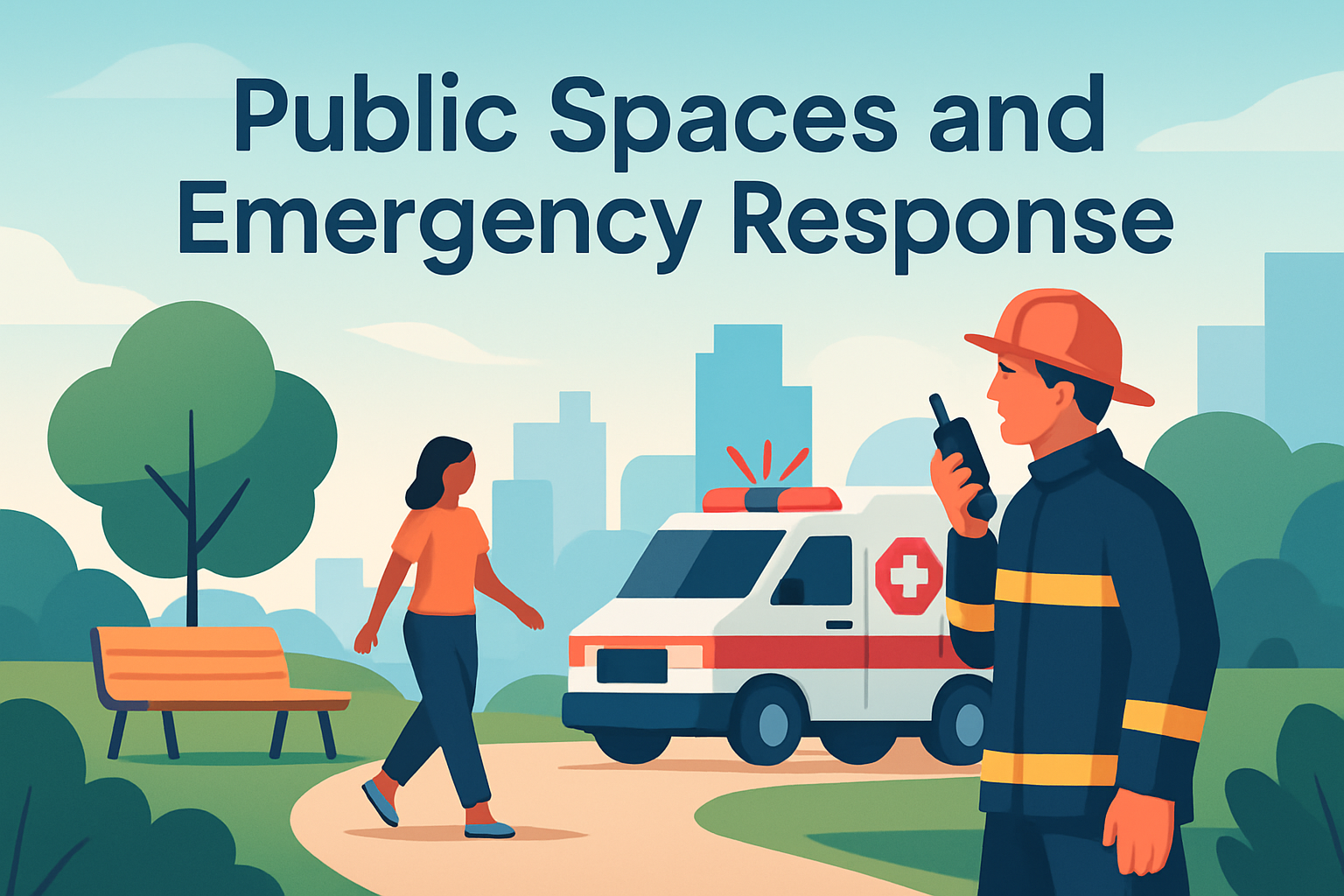
The existence of public spaces is a hallmark of civilized societies. From parks, squares, and markets to libraries and beaches, these areas are both functional and symbolic. They serve as venues for social interaction, recreation, cultural expression, and commerce. Equally important is their role during emergencies, when they become critical for the safety, well-being, and resilience of any community. The way public spaces are designed and managed can significantly affect emergency response effectiveness. An understanding of public spaces includes recognizing their diverse physical characteristics and knowing how people utilize them in times of crisis. In this article, we’ll analyze the intersection of public spaces and emergency responses and explore why this amalgamation matters considerably. The ability of communities to leverage public spaces for emergency responses can mitigate disasters’ impacts, save lives, and improve the quality of life in the long term. This topic’s importance rests on practical considerations, ethical responsibilities, and societal benefits.
The Role of Design in Emergency Response
Effective design is at the heart of utilizing public spaces during emergencies. Design interventions ensure these spaces are not only accessible but also operational during crises. Primarily, this involves considering infrastructure that includes exits, signage, emergency equipment, and wayfinding systems built right into the urban fabric. For instance, Sydney, Australia, redesigned its central business district with emergency preparedness in mind. The design included wider footpaths, clear sightlines, and strategically placed lighting, enabling smoother evacuations. Such thoughtful design ensures that in the case of emergencies like fires, floods, or terrorist attacks, evacuation processes are expedited, thereby reducing injury and saving lives. Good design hinges on an understanding of both the space and the potential emergencies it might face. Public spaces need to be user-friendly and accommodative under dire conditions, ensuring human safety is the first priority.
Technology’s Impact on Emergency Response
Technology is another powerful tool enhancing emergency response in public spaces. With the continued advancements in mobile technologies, GPS, and the internet, real-time data sharing between emergency services and the public is facilitated. A case in point is the public spaces designated for large-scale events, such as Olympic Games or national parades, where technology plays a pivotal role. In London, during the 2012 Olympics, a sophisticated infrastructure used technology to manage public space, synchronize surveillance, and guide the crowd’s movement. Emergency services could instantly reroute people or resources with this real-time information. By embedding technology into public areas, future emergencies can be managed more efficiently, reducing the overall impact on human life and property.
| Technologies | Applications |
|---|---|
| Mobile Alerts | Disseminating urgent information |
| GPS Services | Navigating through emergency routes |
| Surveillance Cameras | Monitoring crowd movement |
| Digital Signage | Providing real-time updates and directions |
Community Engagement and Its Crucial Role
The community’s involvement is indispensable in leveraging public spaces for emergency response. Community engagement ensures that local knowledge and resources are tapped efficiently during emergencies. In Kobe, Japan, a city prone to frequent earthquakes, regular community training is held in public spaces. These drills include teaching citizens about the various uses of public areas during an emergency, such as evacuation shelters or temporary medical centers. Such programs depend on active participation, which, in turn, relies on effective communication methods and socio-cultural acceptance. By integrating community resources, initiatives, and feedback into public space planning, cities enhance their emergency response capabilities.
Policy and Governance in Public Spaces
Public spaces require frameworks of governance and policies that consider emergency responses cohesively. Access to resources, maintenance, and preparedness programs are pivotal aspects of governance strategies. The city of New York’s governance model for public parks includes comprehensive emergency response strategies. Policies dictate the frequent inspection and maintenance of rescue resources, such as first aid stations and defibrillators, to ensure readiness during disasters. Clearly defined responsibilities between city agencies, stakeholders, and the public specify actions during emergencies, culminating in effective incident handling. Good governance strives to prioritize the safety and accessibility of public spaces for everyone, especially during crises.
Case Study: Paris and Its Approach to Emergency Responses in Public Spaces
In the aftermath of the tragic attacks in November 2015, Paris transformed its approach to using public spaces for emergency response. Public squares and parks were equipped with enhanced lighting, and additional fixed and mobile barriers were placed to manage access better. Coordination between emergency services and the police was heightened for quicker intervention. Fund allocations were made to upgrade public space infrastructure to cater to emergency needs. The city prioritized involving local communities in emergency training, focusing on swift response and consideration of cultural sensitivities. Paris demonstrates how redesigning and reevaluating public spaces can significantly improve emergency readiness. The transformation was not just in physical structures but also in policy, community engagement, and technological synchronization.
Public Spaces: The Unseen Resources in Crisis
It is often easy to overlook the inherent value of public spaces as resources to be optimized in emergencies. Besides serving as gathering or evacuation points, they can be used strategically to deploy relief and medical interventions or to establish temporary shelters. In India, during annual floods, public schools double up as relief centers, providing shelter and essentials to displaced communities. Similarly, San Francisco’s public parks serve as landing zones for helicopters in fire evacuations. Identifying and utilizing these latent resources proactively is crucial to efficient emergency management. Public spaces are not merely venues for usual urban life but vital components in a city’s resilience against unforeseen crises.
Conclusion: Harnessing Public Spaces for a Safer Future
Public spaces, when strategically integrated with emergency response systems, hold the potential to significantly enhance a community’s resilience to disasters. Effective design, technology incorporation, community engagement, and well-formulated governance emerge as pillars in achieving this integration. Such alignment minimizes risks, facilitates smooth evacuation processes, and orchestrates swift rescues. For the reader, this discussion underscores the importance of recognizing and advocating for robust emergency response strategies that incorporate public spaces. Ultimately, the collective efforts in redesigning, managing, and leveraging these areas pivot towards creating resilient and safe communities. As a proactive step, citizens, city planners, and policymakers must unite in discussions and planning to ensure public spaces serve their full potential during crises. Their informed involvement and dedicated focus today will make for safer and more robust urban environments in the foreseeable future.
Frequently Asked Questions
1. What role do public spaces play during emergencies?
Public spaces are crucial during emergencies for a variety of reasons. Firstly, they often serve as natural gathering places for people who might be seeking safety from disasters or evacuation orders. The spaciousness of parks, squares, and sports fields makes them ideal for setting up emergency shelters or providing temporary housing with tents or other makeshift structures. Secondly, these areas can act as hubs for distributing emergency supplies like food, water, and medical aid. Such distribution points are essential in making sure that everyone in a community is able to access life-saving resources efficiently and effectively. Moreover, during crises, these spaces provide room for emergency workshops, counseling, and support groups, helping people cope with anxiety and stress. In summary, public spaces offer flexibility and accessibility during emergencies, making them a pillar of disaster management and community resilience.
2. How can the design of a public space affect emergency response?
The design of a public space can significantly influence the effectiveness of emergency response operations. For instance, wide, unobstructed paths can facilitate the movement of emergency vehicles such as fire trucks, ambulances, and police cars. On the other hand, poorly designed spaces with narrow walkways and congested areas may impede these crucial services. Additionally, clear signage is vital, especially when it comes to directing people to exits or safe zones during an emergency. Spaces designed with visibility in mind can also aid rescues by ensuring no blind spots or hidden areas. Additionally, features like ample lighting, accessibility ramps for individuals who are differently-abled, and open areas for evacuation are essential for a safe and quick evacuation process. The thoughtful design of public spaces makes them versatile and resourceful, enhancing their utility during any emergency situation.
3. What considerations should be made for public spaces to be better equipped for emergency situations?
There are several considerations to ensure that public spaces are adequately prepared for emergencies. First, it’s important to have an emergency plan that is regularly updated and tested. This should outline procedures for different scenarios, like natural disasters, fires, or pandemics. Emergency equipment, such as fire extinguishers, first aid kits, emergency alarms, and lighting, should be easily accessible and well-maintained. Communication systems are also a key component—those in charge of managing the space should have a system in place to quickly alert the public and coordinate with law enforcement and other emergency services. Additionally, training exercises conducted with staff and regular attendees of the space can foster a culture of readiness and response rather than panic. Considering these elements when managing or designing a public space ensures that it can stand up to any emergency challenge effectively.
4. How do public spaces contribute to community resilience in the face of emergencies?
Public spaces contribute significantly to community resilience before, during, and after emergencies. Before any event, they serve as places for building social networks and community ties that can provide support and care during times of crisis. This sense of community is something that smaller or more isolated individuals and families can rely on for assistance. During emergencies, public spaces being used as shelter or aid distribution points help communities respond quicker and more efficiently by having resources nearby. After an emergency, these spaces provide an area for recovery efforts and community gatherings aimed at rebuilding and healing. Holding events, meetings, vigils, or informational sessions in these venues can boost collective morale and facilitate the flow of information. In essence, public spaces serve as a critical component in the cycle of preparedness, response, and recovery, enhancing the resilience of the community at large.
5. Can technology improve the management of public spaces during emergency situations?
Absolutely, technology can greatly enhance the management of public spaces in emergencies. For starters, emergency alert systems are vital, and many cities employ technology that can send mass notifications to people’s phones or through loudspeaker systems. Public spaces equipped with smart technology, such as sensors, can improve real-time monitoring of crowd sizes and weather conditions, feeding crucial data back to emergency management teams. Digital kiosks and signage offer real-time updates to those within the space about any changes to emergency procedures or where to find help and resources. Furthermore, technology can guide infrastructure planning by providing insights and forecasts that inform more resilient structures. Integration of technological systems into public spaces makes them smarter and more responsive to emergencies, ultimately protecting lives and maintaining order more effectively during crises.