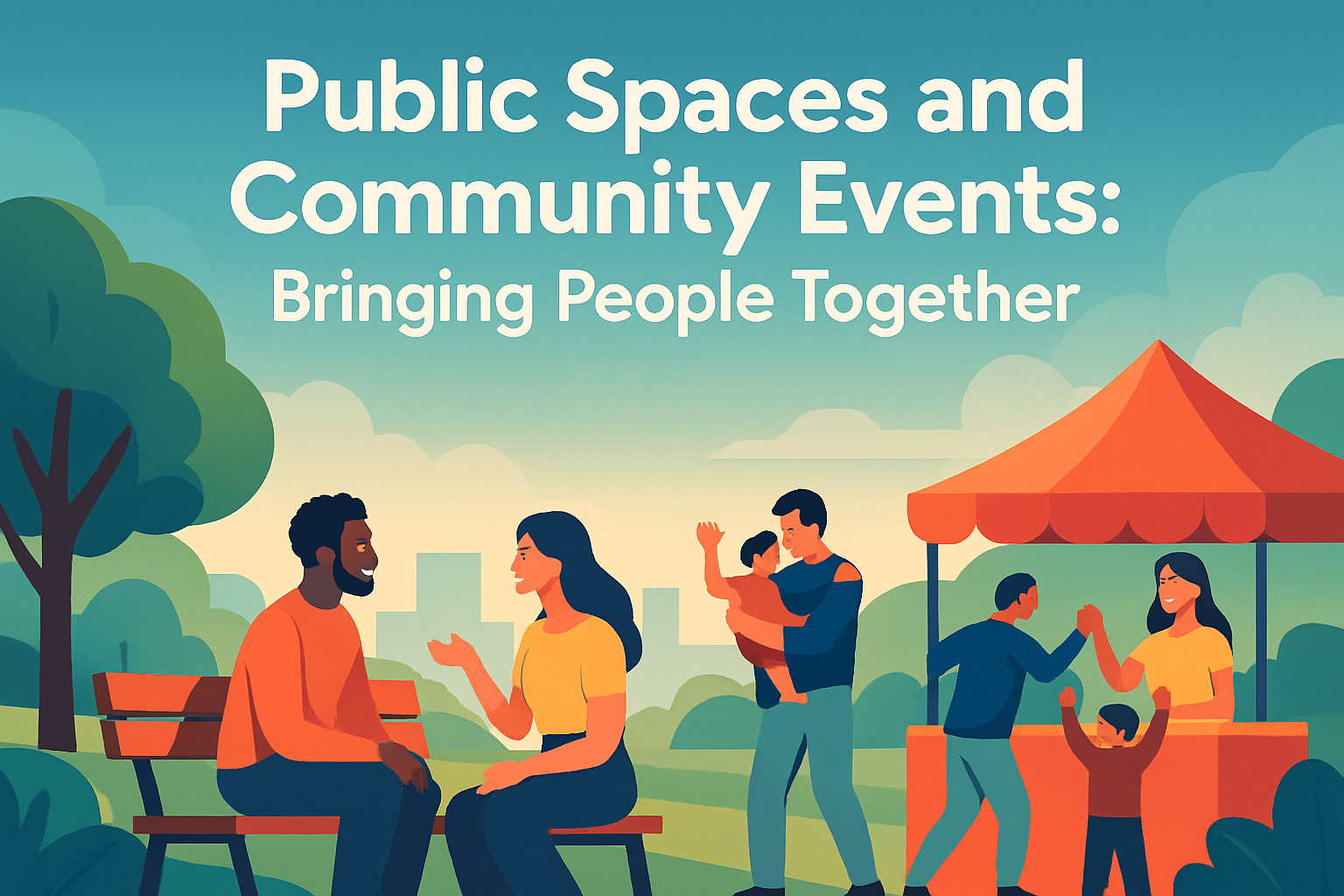
Public spaces and community events are integral components of urban life, offering platforms where individuals from diverse backgrounds can connect, share experiences, and collaborate. They serve as vital conduits for community engagement and cohesion, providing opportunities not only for recreation and relaxation but also for fostering a sense of belonging and mutual understanding among residents. These spaces and events encompass parks, plazas, libraries, festivals, and local markets, among others, tailoring to the various needs and interests of the community.
Understanding the significance of public spaces and community events is crucial in today’s fast-paced world, where digital interactions often overshadow face-to-face communication. They provide physical locales where people can break away from the isolation of digital worlds, engage in organic interactions, and build social capital. Moreover, these spaces often play a role in the local economy, driving foot traffic and boosting local businesses. This article explores how public spaces and community events act as catalysts for social interaction, examining their impact on urban life through real-world examples and offering insights into their broader implications.
The Role of Parks and Recreation Areas in Community Building
Parks and recreation areas are quintessential public spaces, offering a natural respite from the urban hustle. They are designed to encourage outdoor activity and foster a sense of community through shared experiences. Central Park in New York City is one of the most famous examples of a park that functions as the green heart of the city, attracting millions of visitors annually. The park hosts numerous community events, such as concerts, art installations, and sports activities, providing venues for interactions among locals and tourists alike.
Parks offer people a chance to congregate and partake in leisure activities, ranging from picnicking and playing sports to walking dogs and enjoying live performances. This provision of a neutral ground where people can meet and interact naturally boosts community bonds. For instance, community sports events or yoga sessions in a park not only promote health and wellness but also encourage the formation of informal social networks. As individuals participate in group activities, they engage in dialogues, share experiences, and form friendships that often extend beyond the park’s confines.
Libraries as Community Hubs
While traditionally seen as sanctuaries of knowledge, libraries are increasingly recognized as community hubs that facilitate diverse forms of interaction and learning. They are spaces where people gather not just for reading, but for workshops, cultural events, and educational programs. Take the example of the Seattle Public Library, which offers free accessible cultural programming. This includes workshops on digital literacy, language exchange meetups, and author readings.
Libraries serve all age groups, which makes them ideal melting pots for varied demographics. People can participate in book clubs, attend lectures, or engage in hands-on activities, paving the way for knowledge exchange and collaboration. Furthermore, libraries often partner with local organizations to host events that cater to specific community needs, such as job fairs or health awareness seminars. Such initiatives go a long way in fostering a well-informed and engaged community where citizens feel empowered and connected.
Impact of Community Markets on Local Economies
Community markets, such as farmers’ markets and flea markets, are vibrant public spaces where commerce and community blend seamlessly. These markets not only support local farmers and artisans by providing them a platform to sell their goods but also serve as lively meeting places for residents. The Ferry Building Marketplace in San Francisco is a prime example, featuring local vendors and drawing in tourists and locals alike.
By attending these markets, individuals reinforce their ties to the local economy and culture. They have the opportunity to support small businesses, taste local goods, and exchange stories with vendors. Moreover, these markets often become stages for other community-centric activities, like live music performances or cooking demonstrations, adding an extra dimension of engagement. This not only enhances the visitor experience but solidifies the market’s role as a communal gathering point where economic and social interactions benefit one another.
| Public Space Type | Key Activities | Real-world Example |
|---|---|---|
| Parks | Sports, Concerts, Festivals | Central Park, NYC |
| Libraries | Reading, Workshops, Talks | Seattle Public Library, WA |
| Markets | Buying/Selling, Socializing | Ferry Building Marketplace, SF |
Festivals: Cultural Celebrations Bringing Communities Together
Festivals are another powerful facet of public spaces and community events, celebrating cultural heritage, traditions, and shared human experiences. These events often draw large crowds, creating a unique atmosphere of collective celebration. The annual Diwali festival in Leicester, UK, is one of the largest outside of India, showcasing vibrant performances, traditional food, and community prayers.
Such festivals offer community members a platform to express cultural identities and foster inclusivity. People of diverse backgrounds can celebrate together, breaking down ethnic and cultural barriers. Moreover, festivals often have economic benefits, drawing tourists and boosting local business revenues. By engaging in these shared cultural experiences, people strengthen community ties, gaining a renewed appreciation for diversity and cultural richness.
Revitalizing Urban Spaces with Public Art Installations
Public art installations have become invaluable in transforming urban spaces into interactive canvases that provoke thought, engagement, and discourse. These works of art provide a distinctive experience that transcends traditional art viewing. The Chicago Bean, formally known as “Cloud Gate,” is a landmark example, attracting locals and tourists with its reflective surface that invites photography and personal reflection.
Art installations instigate spontaneous interactions as people admire and interpret the works together. They often serve as focal points for social gatherings, conversations, and even local events, fostering a sense of pride and ownership among residents. Furthermore, public art can be a catalyst for urban renewal, drawing attention to underutilized or neglected spaces and providing a foundation for further community-centric development.
The Importance of Playgrounds and Sports Facilities
Playgrounds and sports facilities are crucial public amenities that offer more than just recreational opportunities for children and athletes. These spaces encourage physical activity, teamwork, and social interaction. The installation of the “Imagination Playground” in Manhattan exemplifies such spaces that are designed to stimulate creativity and collaborative play among children.
Such facilities serve as important communal meeting points for families and individuals interested in sports and outdoor activities. They promote a healthy lifestyle while encouraging friendships and community building. As children and adults engage in play and sports, they develop connections with their peers, creating friendships that are often extended to parents and caregivers. The ripple effect of these interactions strengthens community bonds and fosters a nurturing environment for future generations.
Conclusion
Public spaces and community events are more than just gathering points; they are the lifeblood of engaged, connected communities. From parks and libraries to markets and festivals, each venue offers unique opportunities for social interaction, cultural enrichment, and economic vitality. By partaking in these activities, individuals forge meaningful relationships, strengthen community ties, and contribute to the common good. They act as bridges that connect disparate groups within a community, promoting understanding, respect, and cooperation.
To harness the full potential of public spaces and community events, it is imperative for individuals, local governments, and organizations to actively support and participate in these initiatives. By doing so, communities can become more vibrant, inclusive, and resilient, fostering environments where everyone feels welcomed and valued. Participating in or organizing a local community event is an excellent next step for those looking to contribute positively to their community. Whether it’s volunteering at a local market, joining a library book club, or attending a cultural festival, each action taken in these communal spaces strengthens the fabric of society.
Frequently Asked Questions
1. What role do public spaces play in fostering community bonds?
Public spaces are the lifeline of any community. These are the places where the everyday magic of community life unfolds. Think about a local park you’ve walked through or a plaza you’ve visited. They don’t just offer physical space; they create opportunities for people to engage at leisurely paces, disconnect from their daily stresses, and breathe. But more than that, they act as communal dots connecting the diverse lines of personal stories.
In bustling urban environments, public spaces are where people of different backgrounds can come together without any agenda. It’s where conversations between strangers can spark friendships, where children from varying walks of life can join hands playing tag, and where an isolated senior can simply watch life unfold, finding solace in people-watching. By providing these shared spaces, cities and towns invest in a more connected, cohesive community, where inclusion becomes the norm rather than the exception.
2. How do community events enhance social connections and cultural exchanges?
Community events are like the vibrant fireworks that momentarily illuminate our lives, but whose memories linger long after they have ended. Whether it’s an art festival, a public concert, or a farmers’ market, these events carve out special niches in the lives of townsfolk where laughter, learning, and the arts mingle freely.
Imagine the electrifying buzz at a local street fair: the air filled with aromas of global cuisine, the sounds of global beats merging with the community’s own melodies, and visual spectacles such as street performers enchanting the crowd. Here, people from all corners of the city come together to celebrate, exchange ideas, and showcase their culture. These events cultivate an atmosphere where ideas and celebrations are freely shared, enhancing mutual understanding and opening doors to new friendships and collaborations. They remind us that while we may come from different backgrounds, we all share the same space on Earth.
3. Why is inclusivity important in the design and planning of public spaces?
Inclusivity in urban planning is essential; it ensures that all individuals, irrespective of age, ability, or background, feel welcomed and valued. An inclusive public space isn’t just a space to visit but a space that feels personal and accessible to you. When planners consider the needs of a wide range of users, from children to the elderly, differently-abled to diverse cultural and socioeconomic backgrounds, they help break the barriers of accessibility and social isolation.
Just imagine a park with only steps, where a person with mobility challenges can’t enter, or a library without any children’s sections – these would unintentionally communicate exclusivity. Creating spaces that are universally designed means accessible pathways, tactile signage, varied seating for comfort, and culturally meaningful installations that reflect the diversity of the community. Inclusivity in public spaces helps seed equality, enabling a nurturing environment where all can participate in community life fully and equally.
4. How can local government and communities collaborate to improve public spaces?
Local governments cannot operate in a vacuum when it comes to creating effective public spaces; collaboration with community members is pivotal. A participatory approach in urban planning often heralds success because it allows for a democracy of ideas. It involves holding consultations, workshops, and forums where community members can express their visions, needs, and concerns regarding local public spaces.
Communities can form associations or neighborhood groups to voice collective opinions, provide volunteer support for maintaining cleanliness, or suggest improvements to enhance usability. This collaborative effort not only ensures spaces are built with the people’s desires in mind but it also encourages the community to take pride in and care for their environments. Open, two-way communication and actual integration of citizen feedback are key to crafting public areas that genuinely serve, delight, and bridge their communities.
5. How can public spaces and events help in promoting mental well-being?
Our modern world is fast-paced and demanding, often leading to stress and isolation. Public spaces provide a natural antidote by offering environments where individuals can de-stress and rejuvenate. The greenery of parks or the reflective peace of a library can act as retreats from the constant hustle, offering calm and clarity.
Beyond individual health, community events held in public spaces often foster collective well-being. Participating in cultural outings allows people to release endorphins, known as the “feel-good” hormones, due to increased social engagement and physical activity. Moreover, public events can break the cycle of loneliness by encouraging those who may otherwise feel isolated to join a group or engage in a shared experience, effectively reinforcing community ties and enhancing one’s sense of belonging. Thus, these spaces and events are invaluable, serving as buffers against the psychological wear and tear of urban living, making them critical to overall mental health and well-being.