Public art in parks and plazas can raise real place value when it does more than decorate space, because successful projects improve identity, footfall, safety, civic pride, and long-term economic performance. In urban development, public art means artworks placed in shared outdoor spaces and accessible without an admission fee, while place value refers to the combined social, cultural, environmental, and commercial worth people attach to a location. I have worked on park and streetscape projects where art was treated either as a late-stage ornament or as a core placemaking tool, and the difference in outcomes was stark. When art is integrated with landscape design, programming, maintenance, and community use patterns, people stay longer, return more often, and speak about the place with ownership. That matters for cities trying to make public space more resilient, inclusive, and economically useful without flattening local character. This hub article explains how public art creates value in parks and plazas, what kinds of value are realistic, how to evaluate success, and where common mistakes undermine good intentions.
What public art adds beyond aesthetics
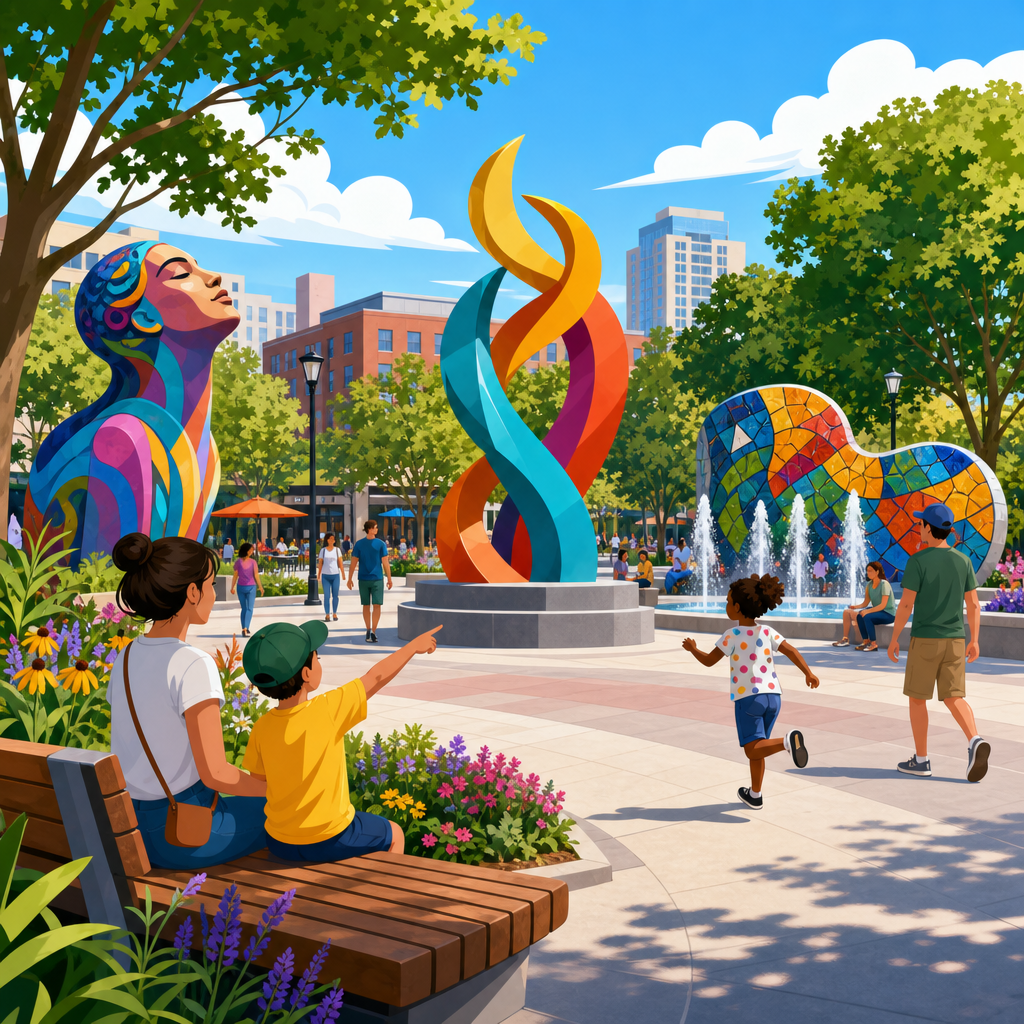
Public art adds value when it helps a place function better, not just look different. In parks and plazas, that usually happens through five mechanisms: legibility, memory, dwell time, social mixing, and symbolic meaning. A landmark sculpture can make a confusing plaza easier to navigate by creating a clear meeting point. A mural or sound installation can give a previously generic square an identity that residents actually name and recommend. Interactive pieces can increase dwell time, which supports nearby vendors and encourages casual surveillance. Culturally grounded works can signal that a park belongs to more than one user group, reducing the subtle exclusion that often comes from sterile design.
I have seen this most clearly in spaces that struggled before investment. A bare paved forecourt may technically be open, yet people cut across it quickly because it offers no reason to stop. Add shade, seating, lighting, and a well-sited artwork that frames activity rather than blocking it, and the same space can become a lunch spot, event venue, and neighborhood landmark. The art is not acting alone, but it is often the element that makes the place memorable. That memorability is not abstract. It affects event attendance, social media sharing, tourism itineraries, leasing conversations, and political support for future public realm spending.
Good public art also gives cities a way to express local stories without relying entirely on plaques or branding language. A plaza that incorporates work by artists tied to the neighborhood can communicate industrial heritage, migration history, ecological change, or Indigenous presence in ways people absorb intuitively. That is why the strongest projects are rarely generic monumental objects shipped from a catalog of safe choices. They respond to site lines, materials, microclimate, circulation, and civic history. When they do, they create attachment, and attachment is a major component of place value because people protect, advocate for, and repeatedly use places they feel connected to.
How parks and plazas turn art into measurable place value
Place value becomes real when it shows up in observable outcomes. The most reliable indicators are increased use, longer visits, broader demographics, stronger nearby business performance, and improved public perception. In park evaluations, pedestrian counts before and after installation are a basic starting point. Wi-Fi pings, mobile location data, and manual observation studies can add a more complete picture of dwell time and repeat visitation. Business improvement districts often track sales, vacancy rates, and event attendance around upgraded plazas, while parks departments may review maintenance calls, permit demand, and user surveys.
Economic effects are often discussed first, but the social effects matter just as much. If a public art project increases cross-generational use, supports community events, and makes a plaza feel comfortable in the evening, it has created value even before nearby rents or sales reflect it. In practice, cities usually need a balanced scorecard because no single metric captures public benefit. A new artwork may generate immediate media attention yet fail if people avoid sitting near it, while a modest artist-designed play element may quietly transform a park’s daily use for years. Measuring only publicity would miss the deeper success.
There are also indirect pathways to value creation. Well-curated public art can strengthen a city’s tourism brand, improve wayfinding across a district, and help justify capital upgrades such as lighting, drainage, and seating that might otherwise struggle for funding. Developers and anchor institutions often support public art because it signals confidence and care. That signal can influence office tenants, retailers, and residents deciding whether an area feels established or neglected. The key is that art must fit the operating reality of the site. Pieces that attract people but ignore heat, accessibility, maintenance, or conflict with programmed use can reduce value instead of raising it.
What types of public art work best in outdoor civic spaces
Not every artwork suits every park or plaza. Permanent sculpture is common because it provides a durable visual anchor, but permanence is not automatically better. Temporary installations can test ideas, animate seasonal dead zones, and keep a public space evolving. Murals can work well on blank retaining walls or service structures, though they need coatings, anti-graffiti planning, and a clear strategy for future repainting. Integrated art embedded in paving, seating, shade structures, lighting, or stormwater features often produces the strongest everyday value because it serves practical functions while shaping identity.
Interactive and participatory works are especially effective in plazas with high daily foot traffic. Musical elements, light-responsive installations, and climbable forms can turn pass-through areas into destinations, provided accessibility and safety are designed in from the start. In parks, artist-led ecological projects can perform multiple roles at once. I have worked with teams where artists collaborated on habitat interpretation, pollinator gardens, and water features that taught users something about urban systems while improving the landscape itself. These projects age better than purely symbolic pieces because they remain useful as well as expressive.
| Art type | Best setting | Main value created | Key risk |
|---|---|---|---|
| Permanent sculpture | Large plazas, gateway parks | Identity, wayfinding, landmark effect | Can feel static or oversized |
| Murals | Walls, underpasses, service buildings | Visual uplift, storytelling, local recognition | Weathering and graffiti maintenance |
| Integrated functional art | Seating areas, shade zones, play edges | Daily usability plus distinct character | Higher coordination during design |
| Temporary installations | Event plazas, seasonal parks | Novelty, testing, repeat visits | Short lifespan, ongoing curation needs |
| Interactive digital work | High-footfall civic squares | Engagement, dwell time, media visibility | Technical failures and energy demand |
The right choice depends on context. A neighborhood plaza with a weekly market may benefit more from artist-designed stalls, paving, and seating than from a central object that disrupts flexible use. A waterfront park exposed to salt, sun, and flooding needs materials and engineering suited to harsh conditions. Stainless steel, treated hardwood, powder-coated aluminum, high-performance concrete, and robust drainage details matter more than a dramatic rendering. The best public art specifications read like infrastructure documents because they anticipate weather, cleaning methods, replacement cycles, and user behavior.
Why community process determines whether value lasts
Public art can add value quickly, but it only holds value when communities see the work as legitimate, relevant, and cared for. That starts with process. Meaningful engagement is not a token voting exercise between three polished concepts. It is a structured effort to understand who uses the space now, who avoids it, what histories are contested, and what future role the park or plaza should play. Artists need a brief grounded in those realities. Without that foundation, even beautifully made work can feel imposed.
In practice, strong engagement combines several methods. Stakeholder interviews capture operational needs from parks staff, maintenance crews, local businesses, and event organizers. Open workshops and intercept surveys reveal how residents actually move through and experience the site. Youth sessions, elder groups, and disability advocates often identify design issues that standard public meetings miss. I have found that site walks with artists, fabricators, and maintenance staff are especially valuable because they connect creative ambition to practical constraints early, when changes are still affordable.
Community process also affects stewardship. People are far more likely to report damage, defend funding, and participate in programming when they understand why a piece is there and how it reflects local identity. Interpretation helps, but it should not rely solely on static plaques. QR-based audio, multilingual content, school partnerships, and artist talks can deepen public understanding over time. That is particularly important in diverse neighborhoods where a single visual language may not communicate equally well to every user group. Lasting place value comes from repeated relationships with the work, not one ribbon cutting.
Design, operations, and maintenance are where projects succeed or fail
The most common public art mistake in parks and plazas is treating installation as the finish line. Real value depends on operations. Siting must account for circulation, emergency access, maintenance vehicles, shade patterns, and sight lines. A sculpture placed in the wrong location can create hidden corners, block event setups, or become a skateboard conflict point. An interactive feature without clear maintenance responsibility can fail within months and become a visible symbol of civic neglect.
That is why experienced cities require close coordination between artists, landscape architects, structural engineers, lighting designers, conservators, and operations staff. Standards from bodies such as the Americans with Disabilities Act, Crime Prevention Through Environmental Design principles, and local parks maintenance protocols should shape decisions from concept design onward. Materials need to be touch-safe, slip-resistant where relevant, and durable under expected wear. Foundations, anchoring, and drainage details must be engineered for the site rather than copied from another project. In flood-prone or freeze-thaw climates, the wrong specification can create expensive failures quickly.
Maintenance planning should be written, funded, and assigned before procurement. That includes cleaning frequency, approved products, inspection intervals, spare parts, software updates for digital pieces, and conservation reviews. Public agencies often underestimate lifecycle cost. A lower-cost artwork with simple upkeep can deliver more lasting value than a headline-grabbing installation that requires specialist technicians the city cannot retain. Operational realism is not anti-art. It protects the credibility of public investment and preserves the user experience that makes place value tangible.
Common objections, tradeoffs, and how to make smarter decisions
Critics often ask whether public art is worth funding when cities also need housing, transit, trees, and basic repairs. That is a fair question. Public art is not a substitute for core services, and weak projects can feel especially tone-deaf in underinvested areas. The answer is not to treat art as untouchable, but to evaluate it against clear public outcomes. If a project is disconnected from place needs, has no maintenance plan, or crowds out more urgent public realm improvements, it should be reworked. If it is integrated with safety, landscape, accessibility, and programming goals, it can amplify the value of those investments.
Another tradeoff involves gentrification. Successful parks and plazas can increase demand around them, and signature art may accelerate attention from visitors, investors, and media. Pretending otherwise is irresponsible. Cities need complementary policies such as affordable commercial space strategies, community benefit agreements, anti-displacement measures, and inclusive programming to ensure that rising place value does not simply become exclusion. In my experience, projects that commission local artists, embed neighborhood narratives, and support free recurring events are more likely to produce shared value rather than extractive branding.
Decision-makers should ask practical questions. Who is the intended user? What behavior should change? How will success be measured in one year and five years? What is the annual maintenance budget? Can the piece accommodate climate stress, heavy use, and public scrutiny? When those questions are answered honestly, public art becomes a disciplined placemaking investment rather than a symbolic add-on.
Public art in parks and plazas adds real place value when it strengthens how a place works, how people feel in it, and how communities identify with it over time. The best projects create landmarks, support daily use, encourage longer visits, and tell local stories without sacrificing accessibility, safety, or maintenance realities. They are shaped by community process, coordinated with landscape and operations teams, and evaluated through measurable outcomes such as footfall, dwell time, perception, and programming strength. They also acknowledge tradeoffs, especially around funding priorities and displacement risk, instead of assuming every artwork is automatically beneficial.
For cities, institutions, and developers, the main benefit is clear: well-planned public art helps ordinary parks and plazas become valued civic assets that people remember, use, and defend. For residents, the benefit is even more direct. Better public spaces support social life, local business, cultural visibility, and everyday well-being. If you are planning a park or plaza project, treat public art as part of the place strategy from day one, define the value you want it to create, and build the partnerships needed to sustain that value long after installation.
Frequently Asked Questions
1. How does public art in parks and plazas actually increase place value?
Public art increases place value when it contributes to how a space works, how people feel in it, and how often they choose to return. In practical urban development terms, place value is not just about nearby property prices or retail performance. It includes social attachment, cultural meaning, perceived safety, environmental quality, civic identity, and the ability of a park or plaza to attract regular use over time. Public art can strengthen all of those factors when it is integrated into the life of a place rather than treated as a decorative extra.
Well-conceived public art helps create a distinct identity that people can recognize and remember. A generic plaza may function adequately, but a plaza with an artwork that reflects local history, landscape, community stories, or contemporary civic ambition is more likely to become a landmark. That recognition matters. It supports wayfinding, makes the place more shareable and discussable, and gives residents a stronger sense that the space belongs to their neighborhood rather than to no one in particular.
It can also increase footfall and dwell time. People are more likely to visit and linger in a public space that offers visual interest, interactive elements, shade, seating integration, or a reason to gather. That increased use can support nearby businesses, strengthen passive surveillance, and improve the everyday vitality of the area. In many park and streetscape projects, the real gain is not the artwork alone, but the way it helps animate a space that might otherwise be underused.
Another major factor is confidence in the public realm. When a city, developer, or institution invests in high-quality public art as part of a broader design strategy, it often signals long-term care and stewardship. People read that signal quickly. A well-maintained, thoughtfully curated space tends to feel safer, more valued, and more inviting. Over time, that perception can influence commercial appeal, local pride, programming potential, and the willingness of people to spend time and money there. That is where public art moves from decoration to genuine place-making value.
2. What makes a public art project successful rather than just decorative?
A successful public art project starts with a clear understanding of the site, its users, and the role the artwork is supposed to play. Decorative work may be visually pleasant, but successful public art does more. It responds to context, supports movement and activity, and contributes to the long-term identity and performance of the space. In parks and plazas, that means the artwork should not feel like an isolated object dropped into an empty setting. It should relate to circulation, gathering areas, sightlines, materials, planting, lighting, and the broader design intent.
Context is critical. The strongest projects usually emerge from a close reading of local history, culture, ecology, or community memory. People respond more positively when they can see why the artwork belongs in that location. That does not mean every project must be literal or historical, but it should feel rooted in place. Art that reflects neighborhood character or invites interpretation tied to local experience tends to create stronger emotional connection and more lasting relevance.
Function also matters. Some of the most effective public artworks are not only things to look at but also features that support use of the space. They may incorporate seating, shade, sound, water, play, lighting, or interactive components. Even when the work is primarily sculptural, it should still help shape the character of the setting, create a destination point, or support programming such as markets, performances, seasonal events, or informal gathering. If it improves how the public realm operates, it is far more likely to add real value.
Finally, successful projects account for durability, maintenance, and management from the beginning. In my experience with park and streetscape work, this is often where good intentions either become lasting assets or future liabilities. Materials must suit the climate and level of public contact. The installation should be safe, maintainable, and resilient to wear. There should also be a plan for cleaning, repairs, interpretation, and long-term ownership. Public art adds value when it remains an asset after the opening day, not just during the launch publicity.
3. Can public art improve safety and footfall in parks and plazas?
Yes, public art can improve both safety and footfall, but usually as part of a broader public realm strategy rather than as a standalone fix. Art can attract attention, create reasons to visit, and support a stronger sense of place, all of which can lead to more consistent activity in a space. More regular and diverse use often improves perceived safety because people are more comfortable in places where others are present, where sightlines are clear, and where the environment appears cared for.
Footfall increases when an artwork gives people a reason to enter a park or plaza, stop, interact, and share the experience. This is especially true for installations that are visually distinctive, culturally meaningful, interactive, or tied to events and programming. A public art feature can become a meeting point, a photo location, a conversation starter, or a focal element around which everyday activity is organized. In a streetscape or civic square, that can help convert pass-through movement into longer visits and repeat use.
Safety benefits tend to come indirectly through activation and design quality. Public art can help define entrances, mark destinations, improve legibility, and encourage occupancy in parts of a site that might otherwise feel neglected. When paired with good lighting, seating, clear pathways, open visibility, and active edges such as cafes or community uses, art can contribute to a more welcoming environment. People tend to feel safer in spaces that are legible, animated, and visibly maintained.
That said, art cannot compensate for poor layout, hidden corners, weak maintenance, or lack of management. If a plaza is uncomfortable, inaccessible, or disconnected from surrounding activity, adding a sculpture will not solve those underlying issues. The most reliable results come when public art is embedded in a thoughtful design approach that addresses programming, accessibility, maintenance, security, and local use patterns together. In that setting, art can play a powerful role in making a place feel active, cared for, and worth visiting.
4. How should cities and developers measure the return on investment from public art?
The return on investment from public art should be measured through a mix of quantitative and qualitative indicators, because its impact is broader than a single financial metric. If the goal is real place value, then the evaluation should look at how the artwork influences use, perception, identity, and economic performance over time. Focusing only on installation cost versus direct revenue will miss much of the value that public art can generate in parks and plazas.
Useful quantitative measures include changes in footfall, dwell time, event attendance, retail performance nearby, vacancy rates, leasing interest, and, where relevant, adjacent property values. Cities may also track social media mentions, visitor numbers, programmed activities, repeat visitation, and patterns of use across different times of day or seasons. These indicators help show whether the artwork is helping the space attract people and support local economic activity.
Qualitative measures are just as important. These include public perception surveys, community feedback, stakeholder interviews, media coverage, and assessments of civic pride, neighborhood identity, and perceived safety. In many projects, the strongest evidence of value is that residents start using a space differently, describe it with more affection, or treat it as a local destination rather than leftover space. Those outcomes may be less immediate to quantify, but they often signal deeper, longer-term place performance.
It is also important to evaluate the artwork in relation to the wider project. In a park or streetscape scheme, public art often works in combination with landscaping, seating, lighting, accessibility upgrades, and programming. A good evaluation framework should acknowledge that shared effect while still identifying the role art played in creating visibility, identity, and attraction. The best approach is to define success criteria early, collect baseline data before installation, and then review performance at multiple intervals after completion. That gives cities and developers a far more credible picture of whether the investment created lasting place value.
5. What are the biggest mistakes to avoid when commissioning public art for a park or plaza?
One of the biggest mistakes is treating public art as a late-stage add-on. When art is brought in after the key design decisions have already been made, it often ends up disconnected from the site and unable to influence how the space actually works. The stronger approach is to consider public art early, alongside landscape architecture, urban design, access planning, and public engagement. That allows the artwork to be integrated into circulation, gathering spaces, utilities, lighting, and the overall user experience.
Another common mistake is choosing work based only on visual impact or short-term publicity. Landmark appearance can be valuable, but it is not enough by itself. If the piece has no meaningful relationship to the place, no relevance to the community, or no role in how the space functions, its impact may fade quickly. Projects that generate lasting value usually begin with a strong brief, a realistic understanding of the site, and a clear statement of what success looks like beyond the opening event.
Insufficient community understanding is another risk. Public art does not need to be designed by committee, but it should be informed by who uses the space, who is underrepresented, what stories matter locally, and how the site is experienced day to day. Skipping that