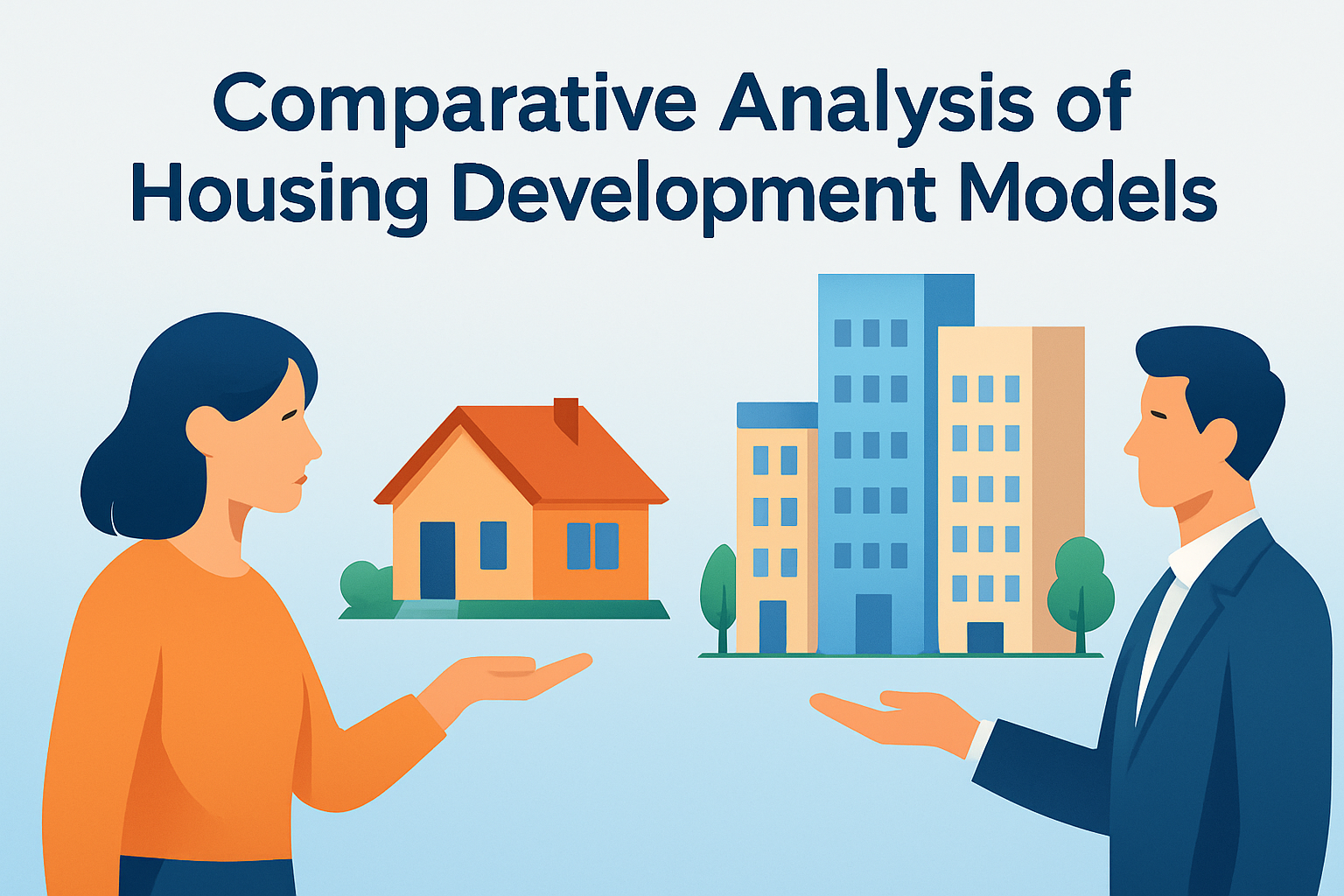
The housing landscape is a critical aspect of urban development, influencing the socio-economic dynamics of communities worldwide. As societies evolve, it becomes increasingly necessary to examine and compare various housing development models to understand their impacts and effectiveness better. This comparative analysis focuses on different housing development models, defines key concepts pertinent to them, and dives deep into why this understanding holds significant importance.
Housing development models refer to the methods and strategies used to create residential spaces. These models can vary based on factors such as government involvement, funding sources, architectural styles, and environmental considerations. The study and comparison of these models are crucial to addressing the growing housing crisis, ensuring sustainable urban expansion, and improving the living conditions of populations across the globe.
The importance of understanding these models lies in their direct effect on urban planning, economic growth, and social equity. Different regions and their respective housing policies significantly impact their citizens’ quality of life. By analyzing these models, policymakers, architects, and developers can draw lessons and adapt solutions to specific contexts, ultimately fostering healthier and more balanced communities.
Public Housing Models
Public housing models are government-initiated efforts designed to provide affordable housing options to low-income families. These models are founded on the principle that every individual has the right to decent living conditions.
A real-world example of a successful public housing model is the Housing and Development Board (HDB) in Singapore. Established in 1960, the HDB has been lauded for its comprehensive approach to urban planning and public housing. HDB focuses on creating well-designed neighborhoods equipped with amenities such as schools, parks, and shopping complexes, all while ensuring affordability for residents.
The HDB’s success lies in its holistic planning and sustainable development approach, ensuring that public housing is not just about shelter but also about creating vibrant communities. The model’s emphasis on integration and inclusivity in urban settings offers a notable paradigm for countries striving to address housing inequalities efficiently.
Private Housing Models
In contrast, private housing models rely on private sector initiatives for providing housing. These models are driven by market forces and are primarily profit-oriented, focusing on creating and selling or renting out housing units.
The United States hosts various private housing models, with developments often spearheaded by real estate companies. A prominent example is the suburban housing development boom post-World War II, where private developers constructed large suburban areas to accommodate the rapidly growing population.
While private housing models have contributed to expanding housing inventory, they often face criticism for perpetuating social inequalities due to their market-driven nature. Issues such as suburban sprawl, lack of affordable housing in urban areas, and the exclusion of low-income individuals remain challenges associated with these models.
Co-operative Housing Models
Co-operative housing models offer an alternative approach where residents collectively own and manage their housing communities. These models emphasize democratic governance and shared responsibility among members.
In Sweden, co-operative housing has been a popular model, exemplified by organizations such as HSB (Hyresgästernas Sparkasse- och Byggnadsförening). HSB focuses on providing affordable and sustainable housing while ensuring members have a say in decision-making processes. The co-operative model in Sweden highlights how shared ownership can promote social cohesion and equitable resource distribution.
Co-operative housing models offer a potential solution to housing challenges by fostering community participation and allowing residents to have greater control over their living environment. However, they require careful management and a cooperative spirit among residents for successful operation.
Sustainable Housing Models
Sustainable housing models prioritize environmental considerations and aim to minimize ecological footprints. As climate change concerns heighten, these models are becoming increasingly relevant.
One notable example is the Vauban neighborhood in Freiburg, Germany. Vauban is touted as an exemplary sustainable housing development, featuring energy-efficient buildings, extensive use of renewable energy sources, and a strong emphasis on green spaces and pedestrian-friendly design.
Through innovative practices like car-free zones and passive housing standards, Vauban demonstrates how sustainable housing models can contribute to reducing carbon footprints and creating healthier living environments. Such models offer crucial insights into designing future communities that balance human and environmental needs.
Inclusive Housing Models
Inclusive housing models focus on fostering diversity and ensuring housing accessibility for all social groups, including marginalized and vulnerable populations.
The “Inclusionary Zoning” policies in cities like San Francisco exemplify inclusive housing models. These policies mandate that a percentage of new residential developments be reserved for affordable housing, thus ensuring socio-economic diversity and mitigating segregation.
Inclusive housing models highlight the importance of integrating various social groups within neighborhoods, promoting interaction, and reducing disparities. These models contribute significantly to social justice and equality, addressing the needs of the underprivileged and enhancing communal bonds.
| Model Type | Main Focus | Example |
|---|---|---|
| Public Housing | Affordable housing for low-income families | Singapore’s HDB |
| Private Housing | Market-driven housing development | Suburban developments in the USA |
| Co-operative Housing | Collective ownership and management | HSB in Sweden |
| Sustainable Housing | Environmentally friendly housing | Vauban, Freiburg |
| Inclusive Housing | Housing accessibility and social diversity | Inclusionary Zoning in San Francisco |
Key Takeaways and Future Directions
As we examine the various housing development models, several key takeaways emerge. Public housing models demonstrate the power of government intervention in addressing housing accessibility and affordability. Meanwhile, private housing models reveal the significance of market dynamics in shaping residential landscapes, albeit with inherent challenges in ensuring equity and inclusiveness.
Co-operative housing models stand out in promoting community participation and empowerment, while sustainable housing models point to the vital need for eco-friendly designs in the face of climate change. Inclusive housing models underscore the importance of socio-economic diversity in urban areas, highlighting strategies for integrating marginalized groups into the residential fabric.
For stakeholders involved in urban planning and development, understanding these models provides valuable insights for creating resilient, equitable, and sustainable housing solutions. By drawing on successful examples globally, cities and nations can adapt these strategies to their unique contexts, ultimately contributing to improved quality of life for residents.
As a next step, we encourage policymakers, developers, and community leaders to engage in comprehensive dialogue and collaboration, leveraging the strengths of each model to craft inclusive and forward-thinking housing policies. Addressing the complex challenges of housing development requires a multi-faceted approach, and through shared learning and innovation, we can achieve a future where everyone has access to safe and dignified living conditions.
Frequently Asked Questions
1. What are housing development models, and why are they important?
Housing development models refer to the different frameworks or approaches used to plan, design, and implement residential projects. They encompass a wide array of considerations such as architectural style, community planning principles, sustainability measures, and economic strategies. These models can range from traditional single-family units to multi-family complexes, from public housing initiatives to private luxury developments.
The importance of housing development models lies in their profound impact on urban landscapes and the socio-economic fabric of communities. Each model brings with it certain advantages and challenges that can affect availability, affordability, and accessibility of housing. A well-suited model can ensure that housing solutions are sustainable, inclusive, and efficient, thus playing a pivotal role in shaping quality of life, economic vitality, and environmental stewardship within a community.
2. How do different housing development models impact urban communities economically and socially?
The impact of housing development models on urban communities can be profound and multifaceted. Economically, these models determine the affordability of housing, influence local job markets through construction and real estate developments, and shape property values and taxes. A model that enhances affordability and accessibility can attract a more diverse population, driving economic growth and stability.
Socially, housing models influence the dynamics of community life. For instance, high-density developments may foster a sense of community and provide shared amenities, contributing to social cohesion. However, they may also lead to overcrowding if not well-planned. Conversely, low-density suburban developments often offer more private space but can lead to urban sprawl and increased dependence on automobiles. Effective housing models balance these factors to promote inclusive, vibrant, and sustainable communities.
3. What role does government policy play in shaping housing development models?
Government policies are critical in shaping housing development models. They establish the regulatory framework within which housing is developed, ensuring standards for safety, accessibility, and zoning are met. Policies can influence housing availability and affordability through subsidies, incentives for developers, and rent control measures.
Moreover, governments can drive innovation and sustainable practices by prioritizing green building codes and encouraging the retrofit of existing housing. They also play an essential role in addressing housing inequities by supporting low-income housing and preventing discrimination in housing markets. Thus, government policies mold the evolution of housing models to align with broader societal goals, such as reducing environmental impact and fostering inclusive urban growth.
4. What are the challenges in analyzing and comparing different housing development models?
Analyzing and comparing different housing development models involves navigating a complex landscape of variables. One key challenge is the diversity in regional contexts; what works in a densely populated urban area might not be appropriate in a rural setting. Variables such as local demographics, economic conditions, and political climates can significantly affect housing needs and the success of certain models.
Furthermore, each housing development model presents unique environmental, economic, and social considerations that must be factored into the analysis. Data availability and accuracy can also pose significant challenges, as comprehensive datasets may not be readily available for all aspects or regions. Integrating qualitative factors such as quality of life and cultural significance into quantitative analysis is another challenge that must be addressed to form a holistic understanding of the models under review.
5. How can upcoming trends and innovations influence future housing development models?
Upcoming trends and innovations have the potential to significantly reshape future housing development models. Technology is at the forefront, with smart home systems, energy-efficient building materials, and construction methods enhancing sustainability and reducing costs. Innovations such as prefabricated housing components and 3D printing of building materials could revolutionize affordability and speed up construction timelines.
Social trends, including the rising demand for co-living spaces and adaptable units for aging populations, are also influencing the future of housing. Additionally, environmental concerns are driving a shift towards models prioritizing green design principles and carbon neutrality. As urbanization continues to accelerate, especially in developing regions, models that integrate mixed-use developments, public transit accessibility, and resilient infrastructures are likely to dominate the landscape. These trends underscore the need for adaptable, forward-thinking models capable of meeting the dynamic demands of modern communities.