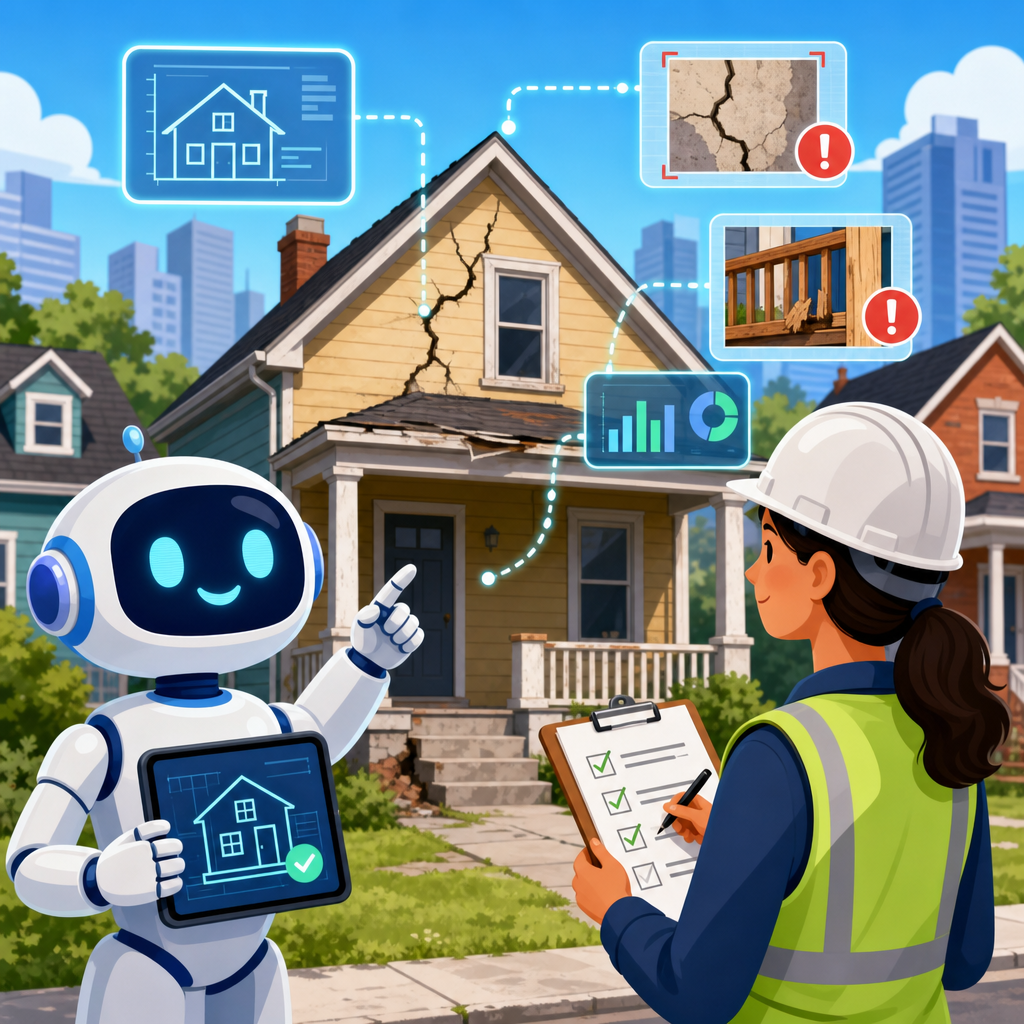
Can AI improve housing code enforcement? Yes, but only when agencies treat artificial intelligence as a decision-support tool rather than a replacement for inspectors, investigators, and due process. Housing code enforcement is the public function that identifies, documents, and compels correction of unsafe or substandard residential conditions, from mold and missing smoke alarms to illegal units, lead hazards, broken heat, and chronic water intrusion. AI in this context includes machine learning models that predict likely violations, natural language systems that classify complaints, computer vision tools that scan photos for visible hazards, and workflow automation that routes cases faster. I have worked with municipal data teams and compliance staff on inspection backlogs, and the pattern is consistent: the hard part is rarely finding more data; it is turning fragmented information into timely, defensible action. That is why this topic matters. Local governments face rising complaint volumes, aging housing stock, landlord-tenant tensions, and limited inspection budgets. Done well, AI can help agencies prioritize high-risk properties, shorten response times, and target proactive inspections before small issues become health emergencies. Done poorly, it can amplify bias, miss hidden hazards, and create legal risk. The practical question is not whether AI is impressive in theory. It is whether it can make code enforcement more accurate, fair, transparent, and efficient in the real world.
What AI can actually do in housing code enforcement
AI can improve housing code enforcement by helping agencies sort information, identify patterns, and allocate staff where risk is highest. The most mature use case is complaint triage. Many departments receive reports by phone, web forms, email, 311 apps, and handwritten intake notes. Natural language processing can normalize those descriptions, extract terms such as “no heat,” “sewage backup,” or “exposed wiring,” and assign a severity score based on health and safety rules. That gives supervisors a better first pass than a simple first-in, first-out queue. In cold-weather jurisdictions, for example, no-heat complaints can be automatically flagged for same-day review because heating failures violate habitability standards and create immediate risk for older adults, infants, and medically vulnerable tenants.
Another strong use case is predictive inspection. Agencies often hold years of parcel records, permit histories, tax delinquency files, prior violations, fire calls, utility shutoff notices, and tenant complaints. A machine learning model can combine these signals to estimate which buildings are most likely to contain serious violations. Cities already use risk-based inspection methods in restaurants and fire prevention; housing can apply the same logic, with safeguards. If a six-unit building has repeated leak complaints, unpaid water bills, open permits, and prior citations for pests, the probability of recurring violations is materially higher than for a well-maintained building with no complaint history. AI helps surface that pattern quickly across thousands of addresses.
Computer vision is useful, but only within limits. Inspectors and tenants increasingly submit photos and videos. Vision models can detect visible indicators such as cracked stairs, missing handrails, heavy mold staining, debris accumulation, or blocked egress. They cannot reliably infer everything that matters, including carbon monoxide leaks, hidden lead paint under newer coatings, or whether a landlord restored heat after a temporary repair. In practice, image analysis works best as an assistive layer that pre-tags evidence for review rather than as an automated finding. The legal significance of a housing violation still depends on jurisdiction-specific code language, observable facts, and human verification.
Workflow automation is less glamorous than prediction, but often produces the fastest operational gains. AI-enabled systems can draft notices using approved templates, recommend relevant code sections, schedule follow-up inspections based on statutory timelines, and alert staff when a case is nearing escalation thresholds. Agencies that measure results usually find that reducing administrative drag matters as much as improving prediction. When inspectors spend less time on repetitive documentation, they spend more time in the field where conditions are actually verified.
Where AI delivers the biggest operational benefits
The most credible gains appear in response speed, case prioritization, and proactive enforcement. Response speed improves because AI can classify incoming complaints in seconds and route urgent cases to the right unit. A common bottleneck in housing departments is not lack of intent but mixed signals in intake data. One tenant writes “apartment freezing,” another says “radiator dead,” and a third submits “no heat in kid room.” A language model tuned to local terminology can recognize those as one urgent category and trigger the same priority workflow. That consistency reduces avoidable delays.
Prioritization improves because AI can rank properties by probable risk rather than by who complained most recently or most forcefully. In many cities, complaint-driven systems overlook tenants who fear retaliation, do not speak English well, lack internet access, or distrust government. A risk model can identify buildings with recurring warning signs even when complaint counts are low. That matters in older multifamily stock where deferred maintenance compounds quietly. I have seen agencies uncover severe moisture damage, electrical hazards, and illegal basement occupancy at properties that generated surprisingly few formal complaints because tenants assumed reporting would not help.
Proactive enforcement is where AI can change outcomes, especially for public health hazards. Consider lead exposure. Housing agencies can combine pre-1978 construction data, previous lead cases, child blood lead surveillance where legally shareable, permit history, and turnover patterns to prioritize inspections and outreach. The same approach can support asthma prevention by flagging buildings with repeated mold, leaks, pest complaints, and poor ventilation indicators. These systems do not replace environmental testing or code interpretation, but they help direct scarce inspectors toward addresses where intervention is most likely to prevent harm.
AI also helps management see patterns that manual review misses. If a portfolio owner has scattered properties with similar unresolved violations, a portfolio-level dashboard can reveal systemic neglect. If one neighborhood shows a spike in illegal conversions after rent increases, predictive analytics can support targeted sweeps and education campaigns. If reinspection failure rates climb for a subset of contractors or management firms, departments can escalate earlier. Those are practical management gains, not science fiction.
| AI use case | Input data | Main benefit | Key limitation |
|---|---|---|---|
| Complaint triage | 311 calls, web forms, emails, intake notes | Faster routing of urgent health and safety cases | Depends on well-labeled local complaint data |
| Risk-based inspection | Violations, permits, tax records, utilities, fire calls | Targets proactive inspections to likely problem properties | Can inherit historical enforcement bias |
| Photo analysis | Tenant and inspector images | Speeds evidence review and tagging | Misses hidden or nonvisible hazards |
| Case workflow automation | Case files, deadlines, notice templates | Reduces administrative backlog | Needs strict legal and policy controls |
The data, standards, and systems required for reliable results
AI is only as useful as the records feeding it. Housing code enforcement data is notoriously messy. Parcel identifiers change, addresses are formatted inconsistently, ownership is hidden behind LLCs, and legacy systems split complaints, inspections, permits, and court actions across separate databases. Before any model performs well, agencies need solid data governance. That means address standardization using USPS or local parcel reference conventions, entity resolution to connect owners and management companies, date normalization, and clear case status definitions. Without that foundation, prediction becomes noise wrapped in confidence scores.
Reliable systems also need policy alignment. Local housing codes vary widely. One city may treat missing window screens as a minor maintenance issue; another may prioritize pest ingress risks. Some jurisdictions require notice and cure periods before penalties; others authorize emergency orders for imminent danger. AI outputs must map directly to the legal categories and timelines in force locally. In practice, the best implementations embed the municipal code, inspection checklists, and standard operating procedures into the workflow so staff can see why a recommendation was made and which rule it relates to.
Established frameworks matter here. The National Institute of Standards and Technology AI Risk Management Framework offers a practical structure for governing validity, reliability, accountability, transparency, privacy, and fairness. The International Association of Assessing Officers and code organizations provide standards for property data quality and field documentation that improve model inputs even if they were not written specifically for AI. Open311-style complaint schemas, parcel-based GIS systems, and modern case management tools such as Accela, Tyler EnerGov, or custom Salesforce implementations can all support better enforcement when configured carefully.
Validation cannot be an afterthought. Agencies should test models against holdout samples, compare recommendations with inspector findings, and track precision and recall for the specific violations that matter most, such as no heat, structural dangers, or occupancy issues. A high overall accuracy number can hide dangerous blind spots. If a model is excellent at identifying peeling paint but weak on imminent life-safety conditions, the headline metric is misleading. Good programs publish simple performance summaries and retrain models when housing conditions, reporting behavior, or code priorities change.
The risks: bias, legality, privacy, and overreliance
The strongest argument against uncritical AI adoption is that housing enforcement already operates in a politically sensitive environment. Historical complaint patterns can reflect unequal access to reporting, different landlord-tenant power dynamics, or prior over-policing of certain neighborhoods. If a model learns only from past enforcement actions, it may direct more inspections to places that were already scrutinized heavily, regardless of actual current risk. That is not a theoretical concern. Predictive systems in other public-sector settings have repeatedly shown how biased historical data can distort future decisions.
Legal defensibility is equally important. Housing code enforcement can lead to fines, court actions, repair orders, condemnation, or displacement if a building becomes temporarily uninhabitable. Agencies therefore need explainable outputs. Staff must be able to articulate why a property was selected for inspection, what evidence supported each finding, and how due process was preserved. Black-box models are a poor fit when residents, landlords, hearing officers, or judges may challenge a case record. Simpler models, clear rules engines, and transparent audit logs are often better than technically fancier systems.
Privacy cannot be ignored. Complaint files may contain health details, disability information, immigration concerns, phone recordings, interior photos, or children’s information. Combining housing, utility, court, and health-related data raises obvious governance questions. Agencies should minimize data collection, restrict access by role, document lawful use, and set retention limits. If outside vendors host the system, contracts should specify ownership, model training restrictions, breach notification terms, and deletion requirements. Public trust erodes quickly if residents believe filing a complaint exposes them to surveillance beyond the enforcement purpose.
There is also a practical risk of overreliance. Inspectors develop pattern recognition that data does not capture well: the smell of chronic dampness, signs of patchwork repairs hiding deeper defects, or the evasive behavior of repeat bad actors. AI can support those instincts, but it cannot fully replicate field judgment. The best departments treat model recommendations as one input among many, then create supervisory review checkpoints for high-stakes decisions.
How housing agencies should implement AI responsibly
A responsible rollout starts with a narrow problem statement. Instead of “use AI for code enforcement,” a department should define a testable objective such as reducing no-heat response times, identifying likely repeat offenders, or automating complaint categorization for multilingual intake. Narrow scopes make governance manageable and outcomes measurable. They also prevent the common failure mode where agencies buy a broad platform before clarifying what decision it is supposed to improve.
Next comes interdisciplinary design. Inspectors, tenant advocates, city attorneys, IT staff, records managers, and data scientists should shape the system together. Inspectors know which field observations predict serious violations. Attorneys understand statutory requirements and evidentiary standards. Advocates can identify where automated systems might disadvantage vulnerable tenants. When these groups collaborate early, the resulting tool is more likely to be operationally useful and publicly defensible.
Pilot programs should include a baseline and a counterfactual. If complaint triage is being automated, compare AI-assisted routing with prior manual routing over the same seasonal period. Measure time to first contact, time to inspection, serious violation detection rate, reinspection compliance, and resident satisfaction. For proactive inspection models, compare high-risk addresses selected by the model with a random sample and with addresses selected by experienced supervisors. This approach reveals whether the system truly adds value or simply formalizes what staff already know.
Human oversight must be explicit, not implied. Every recommendation should show confidence, key factors, and the option to override with reason codes. Overrides are not a failure; they are training data for improvement and a safeguard against automation bias. Agencies should also publish a plain-language policy describing what the system does, what it does not do, how complaints are handled, and how residents can seek review if they believe a decision was wrong. Transparency turns a potentially controversial technology into an accountable public service tool.
For cities considering next steps, the best move is simple: start with one high-value use case, build strong data practices, require human review, and measure outcomes honestly. AI can improve housing code enforcement, but only when it helps agencies protect residents faster, target risk more fairly, and document decisions more clearly. The goal is not futuristic automation. The goal is safer homes, better compliance, and a code enforcement system people can trust. If your department is exploring modernization, begin with the cases where delay causes the most harm, then build from proven results.
Frequently Asked Questions
Can AI actually improve housing code enforcement in a meaningful way?
Yes, AI can improve housing code enforcement when it is used to support, not replace, professional judgment. At its best, AI helps agencies sort through large volumes of information faster and more consistently than manual review alone. For example, machine learning tools can help identify patterns in complaint data, inspection histories, permit records, utility shutoff notices, emergency calls, and environmental risk indicators that may signal unsafe housing conditions. This can help enforcement teams prioritize cases involving the highest risk to health and safety, such as lead exposure, chronic lack of heat, severe water intrusion, electrical hazards, or buildings with repeated unresolved violations.
The key limitation is that housing code enforcement is not just a data exercise. It is a legal and public health function that requires inspection, documentation, notice, tenant protections, and due process. AI can flag properties for review, suggest where to allocate inspection resources, or identify trends across neighborhoods, but it cannot determine on its own whether a violation legally exists or what enforcement action is appropriate. Inspectors still need to verify conditions in person, agencies still need clear evidence, and residents still need fair treatment and an avenue to challenge decisions.
In practical terms, the biggest gains often come from operational efficiency and earlier intervention. Agencies may use AI to reduce backlogs, uncover repeat offenders, detect likely underreporting in high-risk areas, and coordinate inspections more intelligently. But meaningful improvement happens only when the technology is transparent, tested for accuracy, monitored for bias, and embedded in a system that keeps humans responsible for final decisions.
What kinds of housing code problems can AI help detect or prioritize?
AI is generally most useful for detecting risk signals and prioritizing likely problem properties rather than diagnosing every specific violation on its own. Agencies may use it to identify buildings that appear more likely to have serious code issues based on patterns in historical complaints, prior citations, age of housing stock, ownership history, tax delinquency, permit irregularities, fire incidents, utility data, hospital or public health correlations where lawful and appropriate, and repeat calls for service. This is especially helpful in situations where agencies have limited staff and cannot proactively inspect every property.
Common conditions that may be better prioritized through AI-assisted systems include missing smoke or carbon monoxide alarms, chronic mold and moisture issues, heat and hot water failures, structural deterioration, pest infestations, overcrowding, illegal conversions, repeated sewage backups, and possible lead or asthma-triggering hazards. In some jurisdictions, computer vision tools may also help review photos submitted by tenants or inspectors, although these tools should be treated cautiously because image quality, context, and environmental conditions can affect reliability.
That said, AI works best where there is a strong data foundation and a clear enforcement workflow. Some hazards are underreported because tenants fear retaliation, do not trust government, or lack language access. Others may not show up clearly in available records at all. For that reason, AI should be used to expand agency awareness, not narrow it. Effective programs combine predictive tools with community outreach, multilingual complaint systems, field inspections, and policies that protect tenants who report dangerous conditions.
What are the biggest risks of using AI in housing code enforcement?
The biggest risks involve bias, opacity, overreliance, and procedural unfairness. If an AI system is trained on historical enforcement data, it may reproduce past inequities. For example, if certain neighborhoods were historically inspected more heavily than others, the model may incorrectly learn that those areas are inherently more problematic, even when the apparent pattern mostly reflects prior enforcement practices rather than actual housing conditions. This can lead to feedback loops in which already-surveilled communities receive even more scrutiny while hazards elsewhere remain overlooked.
Another major risk is treating AI outputs as objective truth. Risk scores, property rankings, and automated flags can seem precise, but they are still predictions based on incomplete data and design choices made by people. If agencies cannot explain what data was used, how the system was validated, how often it produces false positives or false negatives, and how residents can challenge an error, the technology can undermine public trust and legal defensibility. Housing enforcement decisions affect landlords, tenants, and sometimes occupancy status, so agencies need especially careful safeguards.
There are also privacy and data governance concerns. Combining complaint records, public safety data, utility information, court records, or health-related indicators can create powerful tools, but agencies must ensure that data sharing is lawful, limited, secure, and relevant to legitimate enforcement goals. Strong programs address these risks through audits, bias testing, clear documentation, human review, public transparency, appeal mechanisms, and policies stating that AI recommendations do not substitute for inspections, evidence gathering, or due process.
Should AI ever replace housing inspectors or investigators?
No. AI should not replace housing inspectors, investigators, hearing officers, or the legal procedures that make enforcement fair and effective. Housing code enforcement depends on direct observation, professional expertise, tenant communication, photographic and written documentation, and a legally sound process for notices, compliance deadlines, reinspection, and appeals. Many housing conditions are context-dependent. A damaged wall in one unit may be cosmetic, while a similar condition elsewhere may indicate chronic water intrusion, structural failure, or hidden mold. Human inspectors are trained to interpret context in ways current AI systems cannot reliably match.
There is also a basic accountability issue. If an agency issues citations, imposes penalties, orders repairs, or initiates legal action, a responsible human decision-maker must stand behind that action. AI can help an inspector prepare for a visit, summarize prior complaints, identify likely repeat issues, or suggest comparable cases, but the official determination should still come from qualified personnel applying the law to verified facts. The same principle applies when an agency decides not to act. A failure to inspect or enforce can have serious consequences for tenant health and safety.
The most defensible approach is to use AI as decision support. That means the technology assists with triage, pattern recognition, scheduling, data review, and resource allocation, while humans conduct inspections, evaluate evidence, communicate with residents, and make final enforcement choices. This approach preserves the benefits of automation without abandoning professional judgment, legal standards, or public accountability.
What should agencies do to use AI responsibly in housing code enforcement?
Agencies should begin with a narrow, clearly defined use case tied to a real operational problem, such as prioritizing high-risk complaints, identifying repeat violators, or reducing inspection backlogs. Before deployment, they should establish what success looks like, what data will be used, how the model will be tested, and what legal and ethical guardrails apply. Responsible implementation requires strong data quality controls, since inaccurate address matching, incomplete complaint records, inconsistent violation coding, and outdated ownership information can all distort results. Agencies should also validate the system regularly against actual inspection outcomes rather than assuming that initial performance will hold over time.
Transparency is equally important. Staff need training on what the system does and does not do. Residents, advocates, and property owners should be able to understand in general terms how AI is used in enforcement workflows, what factors influence prioritization, and how errors can be corrected. Agencies should document human review procedures, maintain audit trails, test for disparate impact, and set explicit rules prohibiting automated final decisions on citations or penalties. Public reporting on model performance, complaint response times, inspection outcomes, and equity metrics can help build trust.
Finally, agencies should pair AI with broader housing justice and public health practices. Technology works better when complaint systems are accessible, tenant anti-retaliation protections are enforced, inspectors are adequately staffed, language access is available, and communities have confidence that reporting unsafe conditions will lead to fair action. In other words, AI can improve housing code enforcement, but only inside a well-designed enforcement system that values accuracy, accountability, equity, and due process.