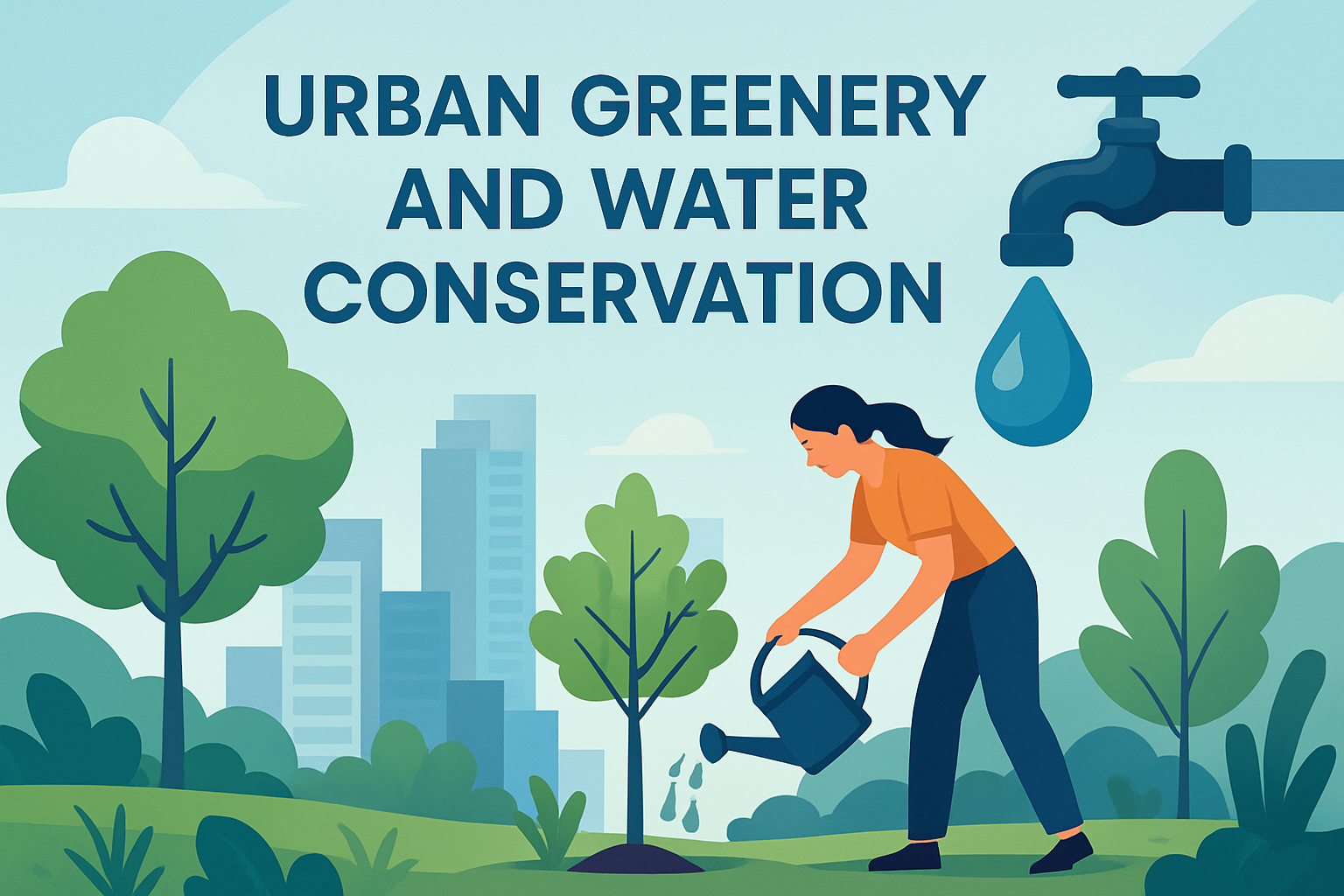
Urban greenery and water conservation, two seemingly distinct topics, are intertwined in ways that significantly impact urban sustainability and livability. Urban greenery refers to the presence of vegetation such as trees, shrubs, parks, and gardens in a cityscape. It’s a crucial component of urban planning and development because it offers numerous environmental, social, and economic benefits. Water conservation, on the other hand, involves the strategies and activities aimed at managing and reducing water usage to safeguard water resources for future needs. In the context of urban areas, these practices are essential due to increasing population density, climate change, and limited natural resources.
The intersection of urban greenery and water conservation matters more than ever as cities globally face rapid expansion. As urban areas develop, the demand for water escalates while available green spaces shrink, potentially exacerbating environmental issues such as heat islands, pollution, and biodiversity loss. Incorporating greenery into urban environments and managing water resources effectively can mitigate these challenges. Urban greenery acts as a natural coolant, improves air quality, and provides a habitat for wildlife. When integrated with water conservation strategies, it helps in sustainable urban development, leading to resilient communities able to thrive amid environmental pressures.
The Role of Green Infrastructure in Water Conservation
Green infrastructure is an essential component of urban planning that utilizes natural processes to manage water and create resilient environments. This approach includes a variety of tools and designs such as green roofs, permeable pavements, rain gardens, and urban forests that help to capture, filter, and utilize rainwater efficiently.
For instance, green roofs, which are layers of vegetation planted over a waterproofing system, offer significant benefits for water conservation. In New York City, the renowned High Line Park features a mile-and-a-half-long elevated greenway that not only serves as a community space but also helps manage stormwater. The vegetation absorbs rainfall, reducing runoff and relieving pressure on the city’s stormwater infrastructure.
Urban areas can benefit immensely from green infrastructure as it aids in reducing flood risks, filtering pollutants from rainwater, and replenishing groundwater supplies. This infrastructure aligns with natural water cycles and, when designed effectively, it enhances urban resilience and biodiversity, creating cooler and more enjoyable environments for city inhabitants.
Community Engagement in Urban Greenery and Water Conservation
Community involvement is a cornerstone of successful urban greenery and water conservation initiatives. Engaging residents in these activities not only fosters environmental stewardship but also ensures that local needs and preferences are met. Community gardens, for example, serve as a practical platform for residents to implement water-conscious gardening techniques while enjoying the benefits of locally grown produce.
A prime example is The People’s Garden initiative in Washington, D.C., which transforms unused spaces into productive community gardens. This initiative emphasizes water conservation through techniques such as drip irrigation, mulching, and rainwater harvesting. These practices drastically reduce water usage while maintaining flourishing garden plots, showcasing the potential of community-driven projects in promoting sustainability.
Such community projects reinforce public awareness and education about the importance of conserving water and maintaining urban greenery. Residents learn effective practices to reduce water usage and enhance their local environment, resulting in a collective effort toward urban sustainability.
Innovative Technologies for Sustainable Urban Greenery
Advancements in technology have opened new avenues for integrating urban greenery with water conservation measures. Smart irrigation systems and data-driven monitoring tools have revolutionized how cities manage water in public parks and green spaces. These technologies enhance efficiency and ensure that water is used strategically, adapting to real-time weather conditions and soil moisture levels.
For example, Singapore has implemented a Smart Water Grid that utilizes Internet of Things (IoT) technology to optimize water distribution and reduce wastage. These smart systems adjust irrigation based on data analytics, leading to efficient water management and thriving urban greenery.
Moreover, vertical gardens and living walls illustrate how urban greenery can be incorporated innovatively while addressing spatial constraints. These installations offer not only aesthetic benefits but also improve air quality and provide insulation. Technologies like hydroponics, which use a nutrient-rich water solution instead of soil, offer an efficient method of sustaining greenery with minimal water use.
Challenges and Solutions in Urban Greenery and Water Conservation
Despite the clear benefits, several challenges impede the integration of urban greenery with water conservation efforts. These challenges include limited space, financial constraints, and maintenance requirements. Overcoming these challenges requires innovative solutions and partnerships across sectors.
| Challenge | Solution |
|---|---|
| Limited Space | Vertical gardens and rooftop installations. |
| Financial Constraints | Public-private partnerships and government incentives. |
| Maintenance Issues | Automation using smart irrigation technologies. |
Effective urban planning should include a holistic approach that considers these challenges and devises comprehensive solutions. Policymakers should prioritize green infrastructure projects and provide incentives for sustainable development. Collaborations between government entities, private companies, and community organizations can help pool resources and expertise, fostering more robust and adaptable urban environments.
Case Study: Urban Greenery and Water Conservation in Action
The city of Melbourne, Australia, stands out as a leading example of how urban greenery and water conservation can be successfully integrated. The city’s Urban Forest Strategy aims to increase canopy cover to 40% by 2040 while focusing on sustainable water usage. By employing rainwater harvesting systems and using native, drought-resistant plant species, Melbourne has created a lush urban environment that withstands the dry Australian climate.
Melbourne’s green spaces are designed to maximize rainwater capture and minimize irrigation needs, proving the effectiveness of strategic planning. Notably, Fitzroy Gardens, a major city park, utilizes a subsurface irrigation system connected to a 5-million-liter rainwater tank. This system reduces reliance on potable water, promoting sustainability while ensuring the park remains a vibrant and welcoming space.
Urban initiatives such as Melbourne’s serve as a blueprint for cities worldwide looking to balance urban development with environmental responsibility. They demonstrate that comprehensive planning and prioritization of green infrastructure and water conservation can lead to thriving, sustainable urban environments.
Conclusion: Embracing a Sustainable Urban Future
Urban greenery and water conservation are crucial components of building sustainable cities that can weather environmental challenges and enhance the quality of life for urban populations. By integrating green infrastructure, encouraging community engagement, leveraging innovative technologies, and addressing potential challenges head-on, cities can develop resilient environments that offer substantial long-term benefits.
Key takeaways from implementing urban greenery and water conservation strategies include improved environmental quality, increased biodiversity, and enhanced social well-being. Additionally, these approaches lead to sustainable economic growth by reducing resource depletion and lowering energy consumption. While challenges exist, the rewards for overcoming them are significant, contributing to healthier, more livable cities.
For stakeholders in urban development, the next step is clear: prioritize and invest in holistic, collaborative approaches to expand urban greenery and enhance water conservation practices. Whether it’s through individual community projects or large-scale governmental initiatives, every effort counts in crafting a sustainable urban future.
Frequently Asked Questions
1. How does urban greenery contribute to water conservation?
Urban greenery, including trees, shrubs, parks, and gardens, plays a pivotal role in water conservation. When cities are adorned with greenery, plants and trees help in intercepting rainfall, which reduces surface runoff and enhances groundwater recharge. This means less water is lost to stormwater systems, which often channel it away rapidly, potentially causing flooding and erosion. The roots of these plants also help to stabilize the soil and allow more water to infiltrate the ground slowly, promoting natural filtration and contributing to improved water quality over time. Moreover, urban forests can offer shade and reduce the urban heat island effect, leading to less evaporation of water from lawns and gardens, thereby conserving water. These areas can serve as habitats for diverse species, further sustaining ecosystems that support natural water cycles.
2. What are the best practices for watering urban green spaces while conserving water?
To effectively water urban green spaces while saving water, employing smart irrigation techniques is essential. This includes using an irrigation system with timers and moisture sensors, enabling precise watering based on actual plant needs rather than a fixed schedule. Drip irrigation is highly effective in urban settings because it delivers water directly to the plant roots, minimizing waste. It’s also beneficial to water during cooler parts of the day, such as early morning or late afternoon, to reduce evaporation losses. Incorporating native and drought-tolerant plant species into urban greenery is another crucial practice, as these plants typically require less water due to their adaptation to local climate conditions. Mulching gardens and green areas with organic matter can help retain soil moisture and reduce the need for frequent watering.
3. How can urban greenery improve the quality of urban life beyond water conservation?
Urban greenery extends its benefits far beyond water conservation, significantly enhancing urban life. Firstly, it provides crucial environmental benefits, including improved air quality. Trees and plants absorb pollutants and carbon dioxide, releasing oxygen, which contributes to healthier air for city inhabitants. Green spaces are also essential for cooling urban environments, reducing the ‘urban heat island’ effect, where metropolitan areas become significantly warmer than their rural surroundings due to human activity. Socially, parks and gardens serve as recreational spaces where people can relax, exercise, and connect with nature, which positively impacts mental health and community well-being. Economically, the presence of lush, green environments can enhance property values and attract businesses, contributing to a thriving urban economy. Green spaces are vital for biodiversity as they provide habitats for numerous animal species, fostering urban ecosystems and increasing resilience to environmental changes.
4. What challenges exist in integrating urban greenery with water conservation efforts?
Integrating urban greenery with water conservation initiatives faces several challenges. One major issue is the lack of awareness and understanding of the benefits of this integration, both in the public sphere and among urban planners, which can lead to insufficient investment in green infrastructure. Funding constraints also pose a significant hurdle, as maintaining and expanding urban greenery requires ongoing financial support. There’s also the challenge of competition for land use in cities; with limited space, the priority often shifts to development projects that overlook green areas. Another difficulty is striking a balance between meeting the aesthetic and cultural expectations of urban residents while promoting sustainable practices that may not align with traditional landscaping preferences. Additionally, adapting existing urban landscapes to incorporate native and drought-resistant species involves overcoming resistance to change and ensuring that stakeholders support these initiatives.
5. What role do urban planners play in promoting urban greenery for sustainable water management?
Urban planners hold a fundamental role in promoting urban greenery as part of sustainable water management practices. Their expertise is crucial in designing cities where green spaces are strategically implemented to maximize benefits. This involves identifying areas where green roofs, parks, and green corridors can be established to aid water absorption and mitigate surface runoff. Planners must also consider zoning laws and policies that incentivize or mandate the inclusion of urban greenery in construction projects, ensuring that green principles are at the core of urban development. Collaborating with environmental scientists, engineers, and community stakeholders is essential for planners to integrate diverse knowledge and insights into creating resilient urban ecosystems adapted to water conservation. Furthermore, urban planners play a pivotal role in educating the public and decision-makers on the long-term economic and social benefits of investing in urban greenery, building a case for its incorporation into city planning from a holistic sustainability perspective.