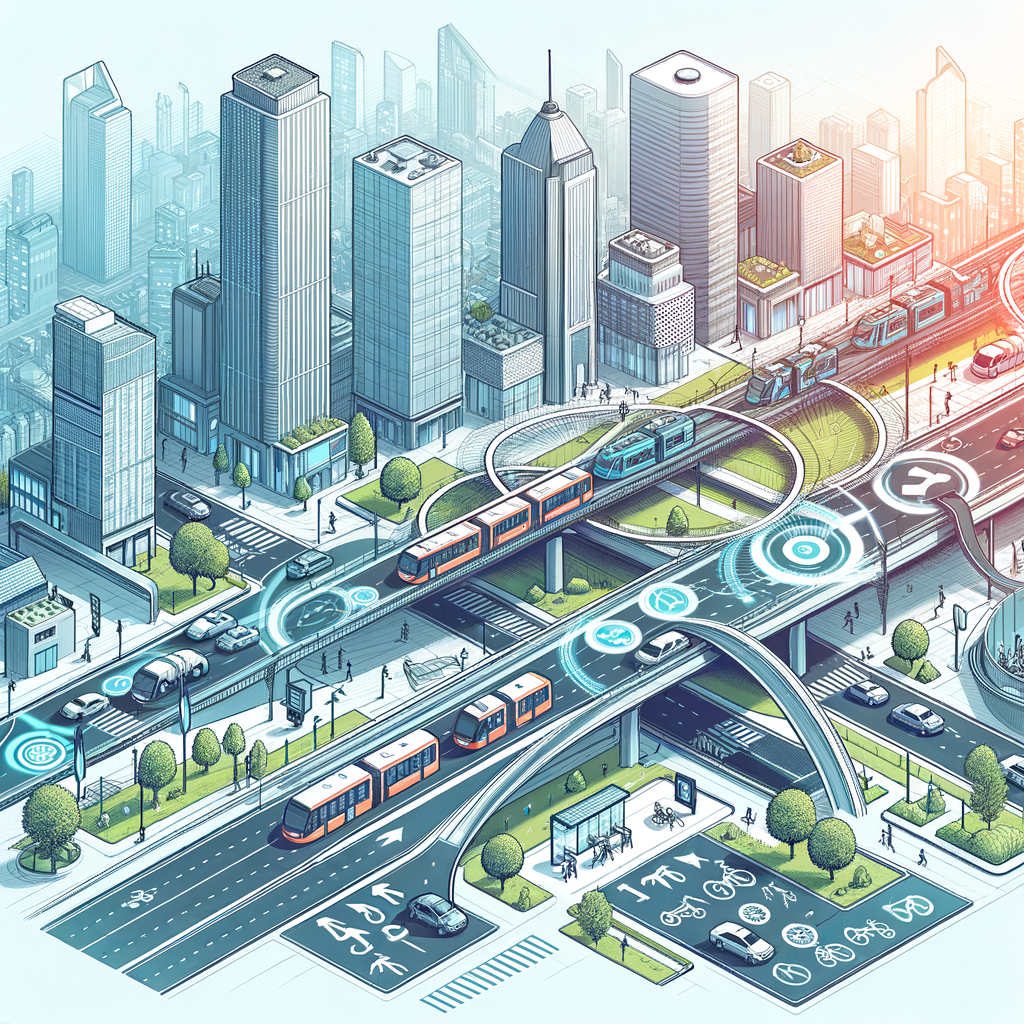
Transportation has long been a cornerstone of urban development, yet traditional modes have raised serious concerns about environmental sustainability, congestion, and accessibility. The concept of sustainable urban transportation addresses these issues and proposes solutions that are environmentally friendly, efficient, and inclusive. But why does this matter? As urban populations grow globally, the stress on current transport systems intensifies, leading to increased pollution, traffic congestion, and inequality in transit access. Embracing sustainable transportation is not merely beneficial but essential to improve the quality of life in urban areas, ensure environmental preservation, and foster economic growth. It embodies the principles of being economically viable, socially inclusive, and environmentally protective, creating a balanced approach to modern city living.
The Framework of Sustainable Urban Transportation
Sustainable urban transportation revolves around several fundamental principles. It incorporates the use of renewable energy, supports public transit, prioritizes pedestrian and cycling infrastructure, and leverages smart technology. Copenhagen, Denmark serves as a compelling example. As a pioneer in urban cycling, Copenhagen has more bicycles than cars, illustrating how effective bicycle infrastructure enhances urban mobility. The seamless integration of bike lanes with city planning not only reduces carbon emissions but promotes healthier lifestyles among its residents.
- Use of renewable energy in transportation
- Emphasis on public mass transit systems
- Infrastructure for pedestrians and cyclists
- Smart transportation technologies
These aspects ensure that transportation systems do not merely function but thrive, leading to reduced traffic congestion and improved air quality.
Public Mass Transit Systems: A Cornerstone of Sustainability
Public transport plays a vital role in sustainable urban transportation. By moving large numbers of people efficiently, transit systems minimize the individual carbon footprint and reduce traffic congestion. New York City’s subway system demonstrates this on a vast scale. With millions of daily riders, it significantly cuts down on the use of private vehicles, reducing greenhouse gas emissions. Investment in public transit infrastructure, such as the upgrading of systems to more modern, energy-efficient trains, supports long-term sustainability.
Integration of Renewable Energy
One of the key strategies in sustainable urban transportation is the shift towards renewable energy sources. Electric vehicles (EVs) are leading this transformation. Norway offers a striking example where over 54% of new car sales are electric. This is facilitated by government incentives and a robust charging infrastructure. Transitioning to EVs reduces the reliance on fossil fuels and decelerates harmful emissions. The ultimate goal is for electric mobility to be powered by renewable energy sources like wind and solar, creating a truly zero-emission system.
Pedestrianization and Cycling Infrastructure
Encouraging pedestrian and cycling initiatives are central to sustainable urban planning. Amsterdam exemplifies the effective implementation of cycling infrastructure, with extensive bike lanes and an inherent cycling culture. Pedestrian zones, like Barcelona’s “superblocks,” reduce vehicle traffic in select areas to promote walkability. These initiatives not only lower emissions but also foster an improved urban environment. They create vibrant public spaces, decrease vehicle-related accidents, and support local businesses by increasing foot traffic. Investing in such infrastructures leads to cities that are more equitable and environmentally friendly.
Adoption of Smart Urban Transport Technologies
Smart technology plays a transformative role in sustainable urban transportation. Integrated traffic management systems, real-time public transport updates, and shared mobility services like bike-sharing and ride-hailing are increasingly common. Singapore’s smart city model showcases this integration effectively. The city uses intelligent transport systems that provide real-time data to commuters and transit authorities to optimize traffic flow and reduce congestion. The deployment of smart grids and IoT (Internet of Things) technologies further enhances the efficiency and effectiveness of urban transport networks.
| Strategy | Examples | Benefits |
|---|---|---|
| Renewable Energy | Electric vehicles, solar buses | Reduces emissions, lowers fuel reliance |
| Public Transit Systems | Subways, buses | Decreases congestion, lowers carbon footprint |
| Smart Technologies | Real-time data, IoT devices | Optimizes transit efficiency, reduces delays |
| Cycling Infrastructure | Bike lanes, bike-sharing | Promotes health, reduces emissions |
The Role of Policy and Public Engagement
Policy-making and public engagement are fundamental to the success of sustainable urban transportation. Legislative measures, such as congestion pricing and fuel taxes, can incentivize the use of sustainable modes of transport. Public awareness campaigns also play a critical role in promoting behavioral shifts. London, for example, has implemented congestion charging zones that decrease car usage and reinvest funds into public transportation. Such policies demonstrate a commitment to reducing emissions and transforming urban living environments. Similarly, citizen participation in planning processes ensures the development of transportation networks that are accessible and meet community needs.
Challenges and Overcoming Barriers
Implementing sustainable transportation systems is not without challenges. Funding, political will, and public resistance can pose significant hurdles. Transitioning infrastructure requires substantial investment, often constrained by tight city budgets. Political hesitancy can slow initiatives due to complex regulatory requirements and competing priorities. Real-world examples include the struggle many U.S. cities face in expanding their public transit systems. Yet, strategic partnerships, public-private collaborations, and innovative funding mechanisms offer pathways to overcome these barriers. Ensuring continuous education and communication between policymakers and the public are paramount in achieving widespread adoption of sustainable practices.
Summarizing the Case for Sustainable Urban Transportation
The path toward sustainable urban transportation involves thoughtful integration of eco-friendly technologies, robust public infrastructures, and active community participation. The compounded benefits of sustainability—such as improved air quality, reduced traffic congestion, and enhanced economic opportunities—underscore the necessity of transitioning to sustainable transport systems. Cities around the world, from Copenhagen to Singapore, provide practical examples of how these strategies can be effectively implemented. Improving urban transit not only addresses environmental concerns but also serves as a critical component in creating interconnected, dynamic, and equitable societies.
Ultimately, the responsibility lies with city planners, policymakers, businesses, and citizens to champion the shift towards sustainable transportation. By fostering collaborative initiatives and adopting innovative solutions, urban centers can evolve into models of sustainability. To contribute to this transformation, immediate action is required. Consider supporting local policies promoting public transportation, investing in sustainable commuting options, or simply choosing to walk or bike whenever possible. As urban communities, we possess both the challenge and opportunity to redefine mobility and ensure a healthier, more sustainable future for generations to come.
Frequently Asked Questions
1. What is sustainable urban transportation?
Sustainable urban transportation refers to systems of moving people and goods around cities in a way that minimizes environmental impact, is socially equitable, and economically viable over the long term. Traditional transportation systems, relying heavily on fossil fuels, contribute significantly to air pollution, greenhouse gas emissions, and traffic congestion. Sustainable transportation, on the other hand, emphasizes the use of public transit, cycling, walking, and the incorporation of electric vehicles. It’s about redesigning transportation networks to be more efficient and accessible, ensuring clean air for everyone, and making cities more livable and resilient in the face of growing populations and climate change challenges.
2. Why is sustainable urban transportation important for the future?
As urban populations are projected to continue growing, sustainable urban transportation becomes increasingly important for reducing carbon emissions, decreasing air pollution, and alleviating traffic congestion. Cities are the largest contributors to greenhouse gases, and transportation is a key source of these emissions. By transitioning to a sustainable transport system, cities can lower their carbon footprint, protect public health, and fight climate change. Additionally, these systems often promote social equality by improving access to transport for all demographics, thus enhancing quality of life. Planning for sustainable transport ensures that cities can handle more inhabitants without sacrificing environmental standards or citizens’ well-being.
3. How can cities foster sustainable urban transportation?
Cities can promote sustainable transportation through several strategies. One effective approach is expanding and enhancing public transit networks to make them more appealing than private car use. This includes measures like increasing the frequency of service, improving infrastructure, and making transit affordable. Other tactics include developing comprehensive cycling lanes and pedestrian-friendly areas to encourage non-motorized forms of travel. Car-sharing schemes and incentives for electric vehicle use also play a crucial role. Beyond these, urban planning should integrate mixed-use developments so that amenities, jobs, and housing are closer together, reducing the need to travel long distances. Policies and investments in technology, such as smart traffic management systems, can also significantly contribute to efficient and sustainable transportation.
4. What role does technology play in sustainable urban transportation?
Technology is a cornerstone in advancing sustainable urban transportation. Innovations such as electric and hybrid vehicles are reducing reliance on fossil fuels, while autonomous vehicles promise to transform logistics and personal travel efficiency. Moreover, smart city technologies contribute significantly; these include advanced traffic and fleet management systems that reduce congestion and optimize routes in real time. Ride-sharing apps encourage carpooling, reducing the number of vehicles on the road. Bike and scooter-sharing systems have emerged as flexible, last-mile transport options, bridging gaps in existing transportation networks. Additionally, artificial intelligence and data analytics help in understanding travel patterns and planning more efficient public transport routes.
5. What are the main challenges in implementing sustainable urban transportation systems?
Implementing sustainable urban transportation systems is fraught with challenges. One of the main hurdles is the initial cost of infrastructure development, such as building new public transit lines or retrofitting streets for bike lanes. Another challenge is the resistance from the public and stakeholders who are accustomed to existing systems and may view changes as inconvenient or unnecessary. Policy and regulatory barriers can also slow the transition, particularly in regions heavily invested in traditional transport industries. Moreover, coordinating between various government levels and departments to create cohesive policies is often complex. Finally, ensuring that technological advancements are universally accessible and do not exacerbate social inequalities is a significant concern that must be addressed to create truly sustainable urban environments.