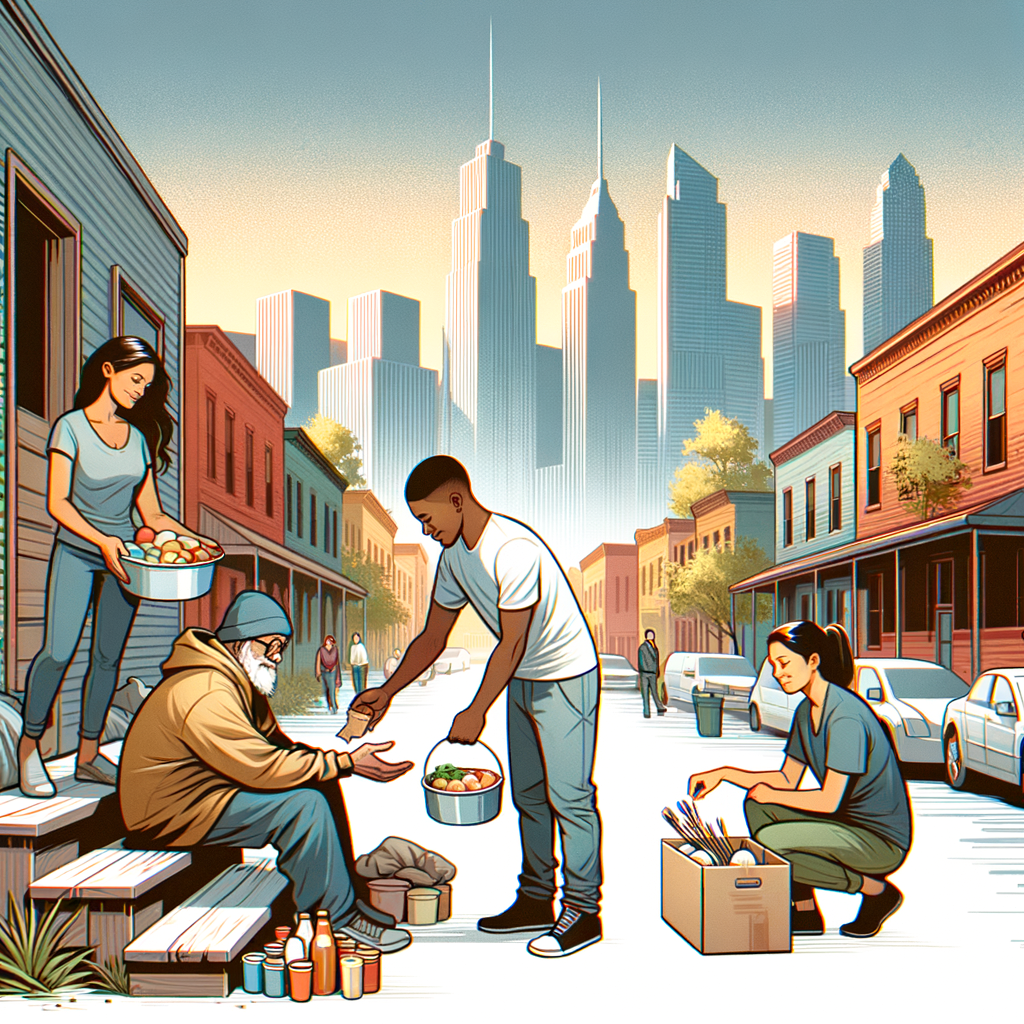
Urban poverty is a compelling global challenge that deserves urgent attention. As cities across the world expand at staggering rates, the divide between urban wealth and poverty becomes more pronounced. Defining urban poverty involves understanding a complex confluence of economic, social, and environmental factors that affect individuals living in metropolitan areas. It is often characterized by inadequate access to basic services, poor living conditions, and limited economic opportunities. Addressing urban poverty is crucial not only for the well-being of those directly affected but also for fostering sustainable urban development and stability. Ignoring this issue can lead to heightened social tensions, increased crime rates, and hindered economic growth. Therefore, implementing comprehensive approaches to combat urban poverty is necessary to ensure equitable growth and enhance the quality of life for all city dwellers.
Understanding the Complexities of Urban Poverty
Urban poverty is not simply the absence of financial resources; it’s a multi-dimensional issue encompassing a lack of access to basic necessities such as healthcare, education, and employment opportunities. In cities like Mumbai, India, the vast population of slum dwellers highlights the stark disparity between different socio-economic groups. In these environments, people often struggle with overcrowded living conditions, lack of sanitation, and limited access to basic services. For example, Dharavi, one of the largest slums in Mumbai, is home to approximately one million people living in less than three square kilometers with inadequate infrastructure.
This dense concentration of people in such poor conditions showcases the difficulty many urban areas face when trying to provide adequate services and infrastructure. The lack of affordable housing, compounded by increasing living costs, exacerbates this issue further and makes it difficult for low-income families to break free from the cycle of poverty. Understanding these complexities is crucial for forming effective policies that can make a meaningful impact.
Housing and Infrastructure Development
An essential component of addressing urban poverty is improving access to affordable and decent housing. Cities like Medellin, Colombia, have shown innovative approaches to tackling this challenge by implementing long-term, sustainable housing solutions. Medellin’s Integral Urban Project (PUI) offered improved housing and infrastructure developments in neglected neighborhood areas, reducing poverty and crime rates significantly.
The project included building new housing units and improving existing structures while simultaneously developing public spaces and infrastructure that connected impoverished areas with more affluent ones. This significantly improved living conditions and access to essential services, creating a more integrated community. Such efforts demonstrate how effective city planning and investment in public infrastructure can address housing shortages and contribute to reducing urban poverty.
Employment and Economic Opportunities
A critical factor in alleviating urban poverty is the creation of economic opportunities for the urban poor. Without access to stable employment, individuals and families can struggle to meet basic needs. Consider the example of Job Centers established in Brazil’s major cities. These centers provide vocational training and job placement services, empowering unemployed individuals with skills needed in the current job market.
Through targeted training programs that align job seekers with sectors where there is demand, these centers help decrease unemployment rates among the urban poor. Additionally, by encouraging small and medium-sized enterprises through financial incentives and support, cities can foster economic growth and create more opportunities for the disadvantaged. Achieving a vibrant economic environment where all have equal access to job opportunities is essential for reducing poverty levels.
Access to Quality Education
Education is one of the most potent tools for lifting individuals and communities out of poverty. Unfortunately, access to quality education in urban areas can often be inconsistent, affecting the future prospects of children growing up in impoverished environments. The Harlem Children’s Zone (HCZ) in New York City exemplifies this issue and provides a valuable model for addressing it.
The HCZ adopted a holistic approach by offering educational programs, social services, and community-building initiatives aimed at supporting children’s development from prenatal stages through college. This wrap-around approach ensures that children receive consistent support and opportunities, drastically improving their educational outcomes and future economic prospects. By investing in education, cities can break the cycle of poverty and create an upward trajectory for future generations.
Healthcare Accessibility and Nutrition
Access to healthcare is another significant aspect of urban poverty. Inadequate health services in urban slums can lead to poor health outcomes, which perpetuate the poverty cycle. The Salud Mesoamérica Initiative in Central America has successfully improved healthcare access for the poorest populations by reinforcing health systems and increasing investments in nutrition.
By implementing community-based health interventions and targeted nutrition programs, the initiative has managed to enhance healthcare access and improve the health of mothers and children in some of the poorest urban settings. Improved health contributes to higher productivity and lowers healthcare-related expenditures, therefore playing a pivotal role in poverty alleviation. Engaging communities actively in healthcare programs ensures that the services are responsive to their specific needs.
Fostering Community Engagement
Empowering communities to take an active role in poverty alleviation efforts is essential for sustainable development. Successful initiatives like Participatory Budgeting in Porto Alegre, Brazil, have underscored the effectiveness of involving local communities in decision-making processes. This approach allows residents to prioritize and decide on public spending, ensuring that resource allocation aligns with the community’s specific needs.
Encouraging such participatory governance models enables greater transparency, accountability, and community ownership of development projects. When people feel they have a say in shaping their communities, there is a sense of empowerment, which can be transformative in urban poverty reduction. Improving communication between city authorities and residents helps create solutions that are both innovative and community-focused.
| Component | Approach | Outcome |
|---|---|---|
| Housing | Improved housing projects, infrastructure development | Better living conditions, reduced crime rates |
| Employment | Job Centers, vocational training | Decreased unemployment, economic growth |
| Education | Holistic educational programs | Improved educational outcomes, future prospects |
| Healthcare | Community health interventions | Improved health, productivity |
Policy and Governance
Effective policy and governance are paramount in addressing urban poverty. Policy failures can often exacerbate the problem, whereas successful governance can bridge gaps and provide much-needed support and services to the underprivileged. For instance, Singapore’s Housing Development Board (HDB) illustrates how strong governance can transform urban living conditions through persistent investment in public housing and social policies.
From the 1960s onwards, Singapore pursued comprehensive urban planning strategies, complemented by effective policy implementation and governance, which ensured that residents had access to affordable and adequate housing. Today, over 80% of Singapore’s population lives in HDB flats, highlighting the success of the initiative. Similarly, well-governed policies addressing other facets of urban life can significantly reduce poverty levels.
Innovative Technologies
Technological advancement provides unique opportunities to combat urban poverty. From digital solutions that increase access to education and healthcare to innovative economic platforms that connect entrepreneurs to markets, technology is playing a crucial role in poverty reduction. Examples include mobile banking services like Kenya’s M-Pesa, which offers financial services to the unbanked, enhancing their economic opportunities.
Technology can also support smart city initiatives, linking urban areas more efficiently and providing residents with better access to information and services. By integrating technology into urban planning and poverty alleviation measures, cities can harness innovation to create more equitable environments. Bridging the digital divide is crucial to ensuring that technological benefits reach everyone, including the most disadvantaged.
Conclusion: The Path Forward
Addressing urban poverty demands multifaceted and comprehensive approaches. As explored, integrating housing initiatives, creating economic opportunities, enhancing access to education and healthcare, fostering community engagement, and leveraging technology present viable strategies for tackling this critical issue. Each effort underscores the necessity of collaboration among governments, private sectors, community organizations, and residents.
The impact of urban poverty extends beyond individuals, affecting entire societies’ well-being and growth potential. Therefore, urban leaders and policymakers must prioritize these strategies within their development agendas. By doing so, they not only uplift the underprivileged populations but also build cities characterized by sustainability and resilience.
As a reader, consider becoming actively engaged within your community, supporting or volunteering with organizations that tackle urban poverty. By understanding the challenges and contributing to solutions, you can play a part in creating a more equitable urban future.
Collectively, if all stakeholders commit to evidence-based, inclusive, and comprehensive approaches, it is possible to transform cities into hubs of opportunity, where every individual can thrive regardless of their socio-economic background. With concerted efforts, the vision of eradicating urban poverty can become a reality.
Frequently Asked Questions
1. What are the primary causes of urban poverty?
Urban poverty is a multifaceted issue that stems from a complex web of interrelated factors. One of the primary causes is economic inequality, where a stark disparity in income distribution exists within urban settings. As cities grow, this gap between the rich and the poor widens, largely due to uneven access to resources and opportunities. High unemployment rates in urban environments also fuel poverty, especially when job markets fail to provide equitable access for marginalized groups. Another crucial factor is the skyrocketing cost of living in cities, where housing, healthcare, education, and basic services are often unaffordable for low-income families. The migration from rural to urban areas, driven by the search for better livelihoods, exacerbates these issues as cities become overwhelmed with new residents, straining their resources. Additionally, systemic issues like inadequate urban planning and infrastructure, coupled with policies that favor wealthier populations, further entrench the cycle of poverty, making it challenging for those affected to break free.
2. How does urban poverty affect access to essential services?
Access to essential services in urban areas is significantly impacted by poverty, placing low-income families at a disadvantage compared to their wealthier counterparts. In many cities, essential services like clean water, sanitation, and electricity are either unaffordable or completely inaccessible to those living in poverty-stricken areas. Poor infrastructure in slums and informal settlements often means that even if these services are available, they are of substandard quality, which can lead to health risks and lower quality of life. Additionally, urban poverty severely restricts access to quality education and healthcare. Schools in impoverished areas often suffer from overcrowding, lack of resources, and inadequately trained teachers, impacting children’s capacity to succeed academically. Similarly, healthcare facilities are either too far away, expensive, or overburdened, preventing families from receiving timely and adequate medical attention. Without access to these critical services, the cycle of poverty persists, making it harder for individuals to improve their living conditions over time.
3. What are some comprehensive approaches to tackling urban poverty?
Tackling urban poverty requires comprehensive and integrated approaches that address its root causes while promoting sustainable development. One effective strategy is the implementation of inclusive economic policies that aim to create equitable job opportunities and reduce income disparities. This can include improving vocational training programs to increase skill levels among the urban poor, making them more competitive in the job market. Enhancing urban infrastructure is another critical approach. Investments in affordable housing, public transportation, and reliable public utilities can drastically improve living conditions and access to opportunities. Additionally, evidence-based urban planning can ensure that cities grow in a manner that is sustainable and inclusive. Social policies that aim to empower marginalized communities are also crucial. Implementing social protection programs, such as cash transfers and food security schemes, can provide immediate relief to those in need while fostering long-term economic resiliency. Moreover, grassroots community development efforts that involve residents in decision-making processes can ensure that interventions address specific local needs, amplifying their effectiveness.
4. How can urban poverty affect a city’s overall development and stability?
Urban poverty can significantly hinder a city’s development and stability in numerous ways. Economically, a high prevalence of poverty can stifle growth by damping consumer spending and reducing the talent pool available for local businesses, leading to decreased productivity and innovation. Socially, it contributes to increased crime rates and social unrest, as individuals who feel marginalized and disenfranchised often resort to illegal activities out of desperation or protest. This unrest can destabilize communities and deter both domestic and foreign investments. Environmentally, urban poverty often leads to unsustainable practices, such as over-exploitation of resources, because impoverished communities might prioritize immediate survival over long-term ecological health. The concentration of poverty in certain urban areas can also lead to the emergence of slums and informal settlements, which can be detrimental to health and safety standards, posing significant challenges to urban management. Ultimately, without addressing these issues, urban poverty can create a cycle that undermines efforts towards development, economic prosperity, and social cohesion in cities.
5. How important is community involvement in addressing urban poverty?
Community involvement is crucial in addressing urban poverty effectively. Empowering residents to actively participate in the identification of issues and the development of solutions ensures that interventions are relevant, culturally appropriate, and sustainable. Communities possess local knowledge and insights that are invaluable in crafting strategies that meet their specific needs. Additionally, when communities are involved, there is typically greater buy-in and ownership of the processes and initiatives, leading to higher rates of success and sustainability. Grassroots efforts often lead to innovative solutions that might not arise from top-down approaches, as they can directly address the unique challenges faced by residents. Furthermore, strengthened community networks provide support systems that can enhance resilience, helping individuals and families cope with poverty-related challenges. To facilitate this involvement, building partnerships between local governments, non-profits, and community organizations is essential, alongside providing platforms for dialogues and collaboration. By prioritizing community involvement, cities can harness collective action to combat urban poverty more effectively.