
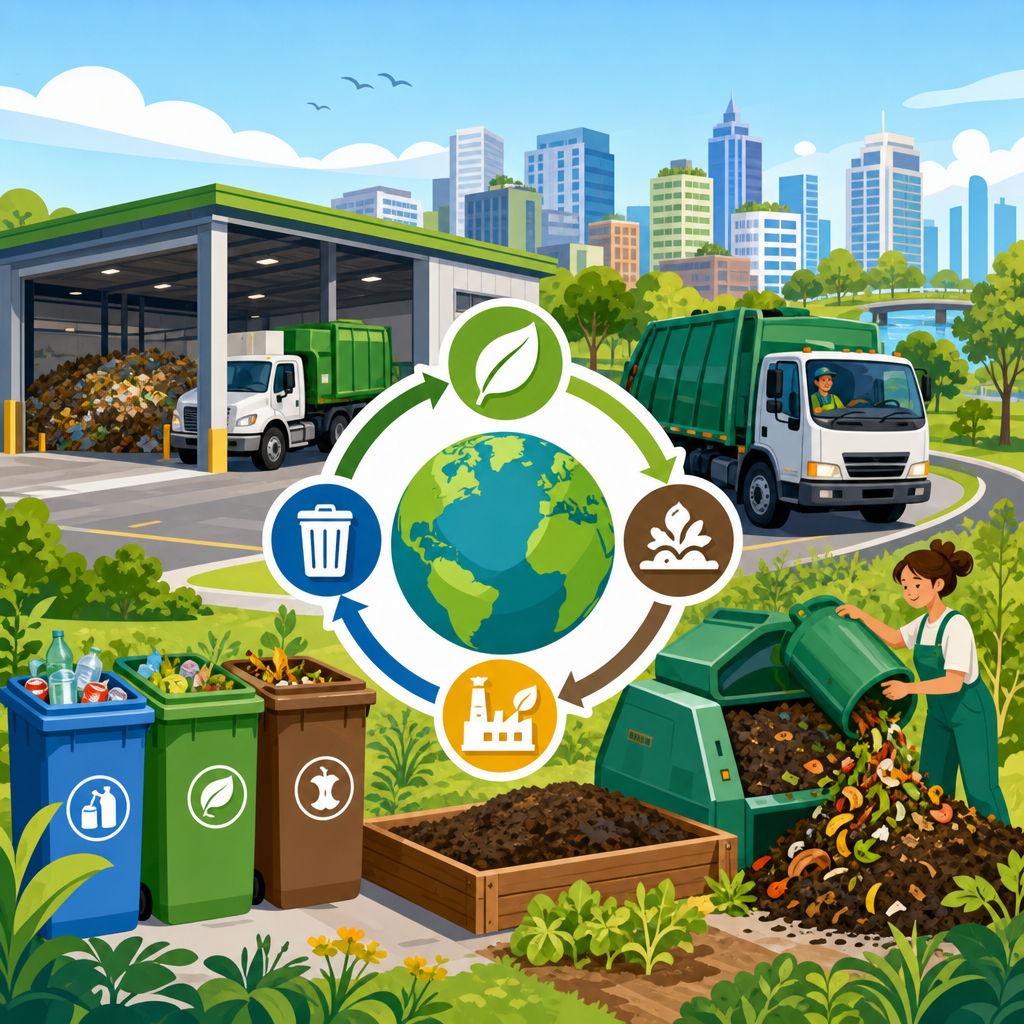
Urban waste infrastructure determines whether a city treats discarded material as a public health risk, a budget burden, or a recoverable resource. In practice, the system rests on transfer stations, organics processing, recycling networks, data systems, and policy rules that shape how material moves from curb to final destination. When planners discuss circularity, they mean designing this network so products, nutrients, and materials stay in productive use for as long as possible instead of being buried or burned after one short life. That shift matters because waste operations affect traffic, emissions, land use, sanitation, capital spending, and neighborhood equity every day.
I have worked with municipal solid waste planning teams where a single poorly located facility increased collection costs across an entire district, while a well-run transfer station cut truck miles, improved safety, and opened room for organics diversion. Those experiences make one point clear: waste infrastructure is not a back-of-house utility. It is a core urban system, comparable to water, streets, and transit. The quality of that system influences how clean public space feels, how resilient a city becomes during disruptions, and how realistically elected officials can meet climate goals without destabilizing service.
This hub article explains the essential components of urban waste infrastructure and how they connect. It defines transfer stations, source-separated organics, anaerobic digestion, composting, materials recovery, contamination control, and circular procurement in plain terms. It also shows why successful systems are built as coordinated networks rather than isolated projects. Cities that invest only in collection trucks without processing capacity hit bottlenecks. Cities that mandate separation without education see contamination. Cities that pursue zero waste slogans without financing plans struggle to sustain operations. Effective urban planning and policy align land use, contracts, rate structures, public behavior, and facility design.
The stakes are growing. Urban populations continue to rise, packaging streams are changing, food waste remains a large share of municipal discards, and landfill capacity is constrained in many regions. According to long-standing findings from the World Bank and national environmental agencies, waste generation increases with income and urbanization unless policy and infrastructure intervene. At the same time, methane from landfilled organics is a significant climate issue, and hauling material long distances increases cost exposure. Understanding transfer stations, organics systems, and circularity is therefore necessary for anyone shaping urban planning, public works, housing growth, or climate implementation.
Transfer Stations as the Backbone of Urban Waste Logistics
A transfer station is an intermediate facility where waste from small collection vehicles is consolidated into larger vehicles for transport to disposal or processing sites. In dense cities, this function is indispensable. Collection trucks are designed for frequent stops on local streets, not efficient long-haul travel. By unloading locally and returning quickly to routes, they spend more time collecting and less time driving to distant landfills, combustors, or recovery plants. That basic logistical shift reduces fleet hours, fuel use, labor costs, and traffic exposure. In constrained municipal budgets, those savings are often the difference between stable service and chronic overtime.
Transfer stations also shape the geography of sanitation. A badly designed station can create odor complaints, queueing, litter, and diesel impacts for nearby residents. A well-designed station uses enclosed tipping floors, negative air pressure, misting systems, wheel washes, sealed drainage, and traffic circulation plans to reduce nuisance and improve safety. Siting matters just as much as building technology. Good practice evaluates truck access to arterials, distance from schools and homes, flood risk, stormwater control, emergency access, and compatibility with industrial zoning. Environmental review should examine cumulative burdens, because many host communities already carry freight, warehouse, and utility infrastructure.
Modern transfer stations are more than dumping points. Increasingly, they include scales, contamination inspection areas, separate bays for recyclables and organics, public drop-off zones, battery and household hazardous waste collection, and digital reporting systems. Some municipalities integrate small reuse areas for salvageable goods or construction materials. From an operations perspective, the station is often the best point to gather data on tonnage, route efficiency, contamination rates, and destination performance. That data supports contract management, franchise oversight, and long-range capacity planning. Without accurate transfer station information, cities tend to plan using assumptions instead of measured material flows.
Resilience is another reason transfer stations matter. During storms, strikes, highway closures, or landfill outages, a city with flexible transfer capacity can reroute material and preserve service continuity. I have seen agencies avoid neighborhood collection failures simply because operators had spare trailer capacity and preapproved alternate destinations. Conversely, cities dependent on one distant disposal site are vulnerable to cascading disruption. Redundancy, contingency contracts, and interoperable public-private facilities are therefore not luxuries. They are core elements of urban resilience planning, especially for metropolitan regions where millions of residents generate waste daily and any service interruption quickly becomes a health and political crisis.
Organics Infrastructure: Composting, Digestion, and Contamination Control
Organics infrastructure handles food scraps, yard trimmings, soiled paper, and sometimes other biodegradable materials that would otherwise decompose in landfills and generate methane. Because organics often represent a substantial share of residential and commercial waste, separating them is one of the fastest ways to reduce disposal tonnage. The key methods are composting and anaerobic digestion. Composting uses oxygen to break down material into a stable soil amendment. Anaerobic digestion uses microbes in oxygen-free conditions to produce biogas and digestate. Both methods can recover value, but each requires disciplined feedstock management and reliable end markets.
Composting works best when the incoming stream is relatively clean and the operator can control carbon-to-nitrogen ratio, moisture, temperature, and curing time. Windrow systems need more land and are common where space is available. Aerated static pile and in-vessel systems require more capital but offer better odor control and faster processing, which suits urban or peri-urban locations. Anaerobic digestion is especially useful for wet food waste from institutions, supermarkets, and hospitality businesses. The captured biogas can be used for heat and power or upgraded to renewable natural gas, while digestate may be composted further depending on local standards and contaminant levels.
The hardest part of organics diversion is not technology. It is contamination. Plastic film, glass shards, produce stickers, batteries, and “compostable” packaging that does not match local processing conditions can ruin loads, damage equipment, and degrade final product quality. The U.S. Composting Council, many state regulators, and experienced operators all stress source control first. Clear rules on accepted materials, standardized cart colors where possible, targeted outreach to apartment buildings and restaurants, and load inspections are more effective than trying to sort contamination out later. In my experience, contamination drops fastest when cities pair education with visible enforcement and feedback to generators.
| System Element | Primary Function | Main Planning Need | Common Failure Point |
|---|---|---|---|
| Transfer station | Consolidates loads for long-haul transport | Efficient truck access and enclosed design | Queueing, odor, neighborhood conflict |
| Composting facility | Converts organics into soil amendment | Clean feedstock and end-market demand | Plastic contamination and odor control |
| Anaerobic digester | Produces biogas from wet organics | Steady high-moisture material supply | Poor preprocessing and unstable economics |
| Materials recovery facility | Sorts recyclables into marketable commodities | Equipment matched to local stream composition | Contamination and commodity price swings |
Successful organics programs also require market development. Compost needs buyers in landscaping, agriculture, erosion control, and municipal land restoration. Digesters need offtake agreements for energy or gas. Public procurement can help by specifying compost use in parks, street tree pits, green infrastructure, and construction site stabilization. This is where urban planning intersects directly with waste policy: a city that mandates food scrap separation but does not build or secure processing and end-use capacity simply shifts the problem down the chain. Lasting diversion comes from integrated system design, not from collection mandates alone.
From Disposal to Circularity: Designing Material Loops in Cities
Circularity in urban waste infrastructure means reducing extraction and disposal by keeping materials in use through prevention, reuse, repair, remanufacturing, and high-quality recycling. The concept sounds broad, but its urban application is concrete. It affects building codes, procurement standards, franchise contracts, public space design, logistics, and industrial land policy. A city moving toward circularity asks practical questions: Can construction debris be recovered locally? Can public agencies buy recycled-content products? Can reusable food service systems work in dense commercial districts? Can deconstruction replace demolition in selected cases? The answers determine whether waste reduction stays theoretical or becomes operational.
Recycling remains important, but circular systems prioritize waste prevention first because collection and processing cannot fully solve overconsumption or poor product design. Pay-as-you-throw pricing, packaging reduction requirements, refill systems, and right-to-repair policies all reduce material entering the waste stream. For cities, one of the most immediate opportunities is construction and demolition material recovery. Concrete, metals, asphalt, wood, doors, fixtures, and architectural elements can often be salvaged or recycled at scale when specifications, permits, and contractor expectations are aligned. Major cities including Portland, San Antonio, and parts of California have used deconstruction or recovery requirements to support both diversion and workforce development.
Public procurement is a powerful circular tool because municipalities buy enormous volumes of paper, furnishings, road materials, compost, fleet supplies, and building products. When agencies specify recycled content, durability, reparability, and take-back arrangements, they create dependable demand that helps private recovery markets mature. I have seen recycled glass struggle for years until local transportation and public works departments approved end uses in aggregate applications and streetscape projects. Similarly, compost markets strengthened when parks departments committed to annual purchases tied to soil health goals. Circularity becomes durable when city purchasing reinforces it, not when waste departments try to carry the agenda alone.
Digital tracking increasingly supports these loops. Smart scales, route software, contamination tagging, and facility reporting platforms allow managers to see material flow by sector and neighborhood. That visibility helps identify where organics collection underperforms, where commercial generators need enforcement, and where infrastructure investment will produce the highest diversion return. It also strengthens accountability. If a franchise hauler claims recovery rates that do not match transfer records or processor data, the discrepancy becomes visible. Data is not a substitute for policy, but without it, circularity claims are difficult to verify and even harder to improve in a disciplined, budget-conscious way.
Planning, Policy, and Equity in Waste Infrastructure Decisions
Waste infrastructure decisions are inseparable from urban planning and policy because facilities occupy land, generate truck trips, and distribute benefits and burdens unevenly. Historically, transfer stations, landfills, and heavy processing sites have often been concentrated in lower-income communities and communities of color. Any contemporary planning effort must confront that legacy directly. Equity is not achieved by avoiding all facilities; cities still need physical infrastructure. It is achieved by fair siting processes, cumulative impact analysis, modern emission controls, host community benefits, transparent monitoring, and regional burden sharing so one district does not absorb the entire system’s externalities.
Zoning plays a major role. Many cities have lost industrial land to residential and commercial pressure, making it harder to site organics processing, reuse warehouses, and transfer capacity close to waste sources. Pushing facilities farther outward may ease local opposition but often increases truck miles, cost, and emissions. Better planning protects suitable industrial land, separates incompatible uses through design standards and buffers, and streamlines permits for high-performing recovery infrastructure. State and national regulations also matter, including landfill methane rules, organics diversion mandates, compost quality standards, and producer responsibility frameworks for packaging and special materials such as paint, electronics, and batteries.
Financing and contracts determine whether policy survives beyond headlines. Capital-intensive projects may use municipal bonds, public-private partnerships, green banks, climate funds, or utility-style rate structures. Each option has tradeoffs around control, risk allocation, and long-term affordability. Contracts should specify contamination thresholds, performance reporting, destination transparency, contingency capacity, labor standards, and community protections. Weak contracts create perverse incentives, such as maximizing tonnage to disposal or understaffing contamination reduction. Strong agreements align payment with service quality and recovery outcomes. In every city where I have seen waste reform endure, the legal and financial architecture was as important as the engineering.
Public participation matters because behavior at the household and business level determines whether infrastructure works. Residents need simple sorting rules, multilingual outreach, and confidence that separated material actually goes where the city says it does. Businesses need technical assistance, especially restaurants, institutions, and multifamily property managers with limited space. Schools can reinforce habits, while inspectors and route audits provide corrective feedback. The most effective programs combine education, convenience, and enforcement rather than relying on any single lever. When people understand the purpose of the system and see consistent service, participation becomes normal. That is how circular infrastructure moves from pilot stage to citywide practice.
What a High-Performing Urban Waste System Looks Like
A high-performing urban waste system is coordinated, measurable, and adaptable. It has transfer stations sized to route geography, organics processing matched to feedstock, reliable recycling outlets, protected industrial land, transparent contracts, and clear public communication. It tracks tons, contamination, participation, truck miles, facility uptime, and end-market performance. It plans for emergencies and market shifts. It also recognizes tradeoffs: dense cities may need enclosed, higher-cost facilities; smaller cities may depend on regional partnerships; some materials are better reduced than recycled. The main lesson is straightforward. Waste infrastructure works when cities treat it as an integrated planning system. Use this hub to map your local network, identify gaps, and build policies that turn disposal management into circular urban service.
Frequently Asked Questions
What role do transfer stations play in urban waste infrastructure?
Transfer stations are a core operational link between neighborhood collection routes and the facilities that ultimately process or dispose of material. In dense urban areas, collection trucks are designed to navigate local streets efficiently, but they are not ideal for driving long distances to landfills, compost sites, anaerobic digesters, or materials recovery facilities. A transfer station solves that problem by serving as a consolidation point where waste and recyclables are unloaded, compacted if appropriate, and reloaded into larger vehicles for long-haul transport. This reduces fuel use, labor time, fleet wear, and congestion associated with sending small trucks across long routes.
Well-designed transfer stations do more than move material from one truck to another. They can support sorting, contamination screening, load inspection, and routing decisions that improve the performance of the entire waste system. For example, a city may use transfer stations to separate bulky waste, recover certain recyclables, or direct organics toward composting or digestion rather than disposal. Because they sit at a key logistics junction, transfer stations also generate valuable operational data about tonnage, contamination rates, and destination flows. In a circularity-focused system, that visibility matters. It helps cities understand what materials are still being lost, where infrastructure gaps exist, and how policy changes are affecting behavior. In short, transfer stations are not just waypoints; they are strategic control nodes that can make the whole system cleaner, cheaper, and more resource-efficient.
Why are organics programs so important for cities trying to improve circularity?
Organics programs matter because food scraps, yard trimmings, soiled paper, and other biodegradable materials often make up a large share of the urban waste stream. When those materials are buried in landfills, they generate methane, a potent greenhouse gas, and they represent a lost opportunity to recover nutrients, carbon, and energy. A circular system treats organics not as trash but as feedstock. Through composting, cities can turn organics into soil amendments that improve soil health, water retention, and landscape resilience. Through anaerobic digestion, they can produce biogas for energy and digestate that may be used in agricultural or land restoration applications, depending on quality and local regulations.
The value of organics diversion is practical as well as environmental. Removing wet, heavy material from the trash stream can reduce disposal costs, extend landfill life, and improve the quality of remaining recyclables by reducing leakage and contamination. Organics programs also connect urban waste infrastructure to broader city goals such as climate action, resilient food systems, public space maintenance, and cleaner neighborhoods. However, success depends on more than adding a green bin. Cities need collection design, processing capacity, contamination controls, education campaigns, and policies that align households, businesses, haulers, and processors. If those pieces work together, organics infrastructure becomes one of the clearest examples of circularity in action: nutrients are recovered, emissions are reduced, and material that was once discarded is put back to productive use.
How do recycling networks and data systems work together in a modern city waste system?
Recycling networks are only as effective as the information that guides them. On the physical side, a recycling network includes curbside collection, drop-off locations, transfer stations, materials recovery facilities, end markets, and transportation links between each stage. But moving material is only part of the challenge. Cities also need to know what is being collected, how clean it is, where contamination is occurring, which neighborhoods are participating, what processing capacity is available, and whether recovered materials actually reach viable end markets. That is where data systems become essential.
Modern waste data systems can track tonnage by route, material type, generator class, facility destination, and contamination level. They can help identify operational bottlenecks, improve route planning, and support targeted outreach in areas with low participation or high contamination. For policymakers, this data helps answer bigger questions: Are recycling mandates working? Is organics diversion increasing? Are transfer stations routing material efficiently? Is investment needed in local processing capacity rather than more collection? For the public, better reporting improves transparency and trust, especially when cities are trying to show that recycling is delivering real outcomes rather than simply shifting material around.
From a circularity perspective, data transforms waste management from a reactive service into a managed resource system. Instead of focusing only on how much trash is removed, cities can evaluate how much value is retained. That allows them to redesign contracts, refine accepted materials lists, invest in better sorting technology, and align infrastructure with actual material flows. In other words, recycling networks move materials, but data systems make those networks intelligent, accountable, and adaptable.
What policy rules most influence whether a city treats waste as a burden or a recoverable resource?
Policy rules shape the incentives, standards, and responsibilities that determine how material moves through the system. Collection mandates, landfill pricing, organics diversion requirements, contamination thresholds, procurement rules, zoning decisions, and extended producer responsibility policies all influence whether materials are discarded cheaply or recovered intentionally. For example, if landfill disposal remains inexpensive and convenient while composting or recycling requires extra effort and cost, recovery rates usually stagnate. If a city introduces mandatory organics separation, supports processing infrastructure, and enforces participation requirements, the economics and behavior begin to shift.
Procurement policy is especially important but often overlooked. Cities can stimulate circular markets by purchasing compost, recycled-content products, or reused construction materials, helping create reliable demand for recovered resources. Zoning and permitting rules also matter because infrastructure such as transfer stations, materials recovery facilities, and compost sites cannot operate effectively if they face constant siting barriers. In many regions, policy failure is not a lack of ambition but a mismatch between goals and enabling conditions. Cities may set diversion targets without building enough processing capacity, or they may promote recycling without addressing contamination, market volatility, or producer packaging choices.
Authoritative policy does not simply tell people to recycle more. It creates a system in which recovery is practical, measurable, and economically supported. That includes clear rules, predictable enforcement, good data, public education, and long-term infrastructure planning. When those elements are aligned, waste is no longer managed only as a sanitation problem. It becomes part of a broader urban resource strategy tied to climate, resilience, public health, and local economic development.
What does circularity actually look like in day-to-day urban waste operations?
In daily operations, circularity looks less like a slogan and more like a coordinated set of design and management choices. It starts with source separation, where residents and businesses place organics, recyclables, reusable materials, and residual waste into the right streams. Collection systems are then designed to keep those streams as clean as possible while moving them efficiently through the city. Transfer stations route material based on destination and quality. Recycling facilities recover paper, metals, plastics, and glass for manufacturing. Organics processors convert food and yard waste into compost or energy products. Reuse networks capture furniture, textiles, electronics, and construction materials before they become waste at all. The residual fraction that cannot currently be recovered is minimized rather than treated as the default outcome.
Circularity also shows up in upstream decisions. Cities influence product and material choices through purchasing standards, franchise agreements, event requirements, building codes, and collaboration with producers and institutions. A circular city is not only asking how to handle waste after disposal; it is asking how to reduce wasted material before it appears at the curb. That may include encouraging refill systems, designing for disassembly, requiring food waste prevention plans, or supporting local businesses that repair and remanufacture goods.
Most importantly, circularity is measurable. A city that is serious about it tracks diversion by material type, contamination trends, greenhouse gas impacts, infrastructure utilization, and market outcomes for recovered materials. It uses those findings to improve service design and policy over time. So, in practice, circularity is not a single facility or program. It is an operating model in which infrastructure, data, markets, and rules are all organized around keeping materials, nutrients, and products in productive use for as long as possible.


