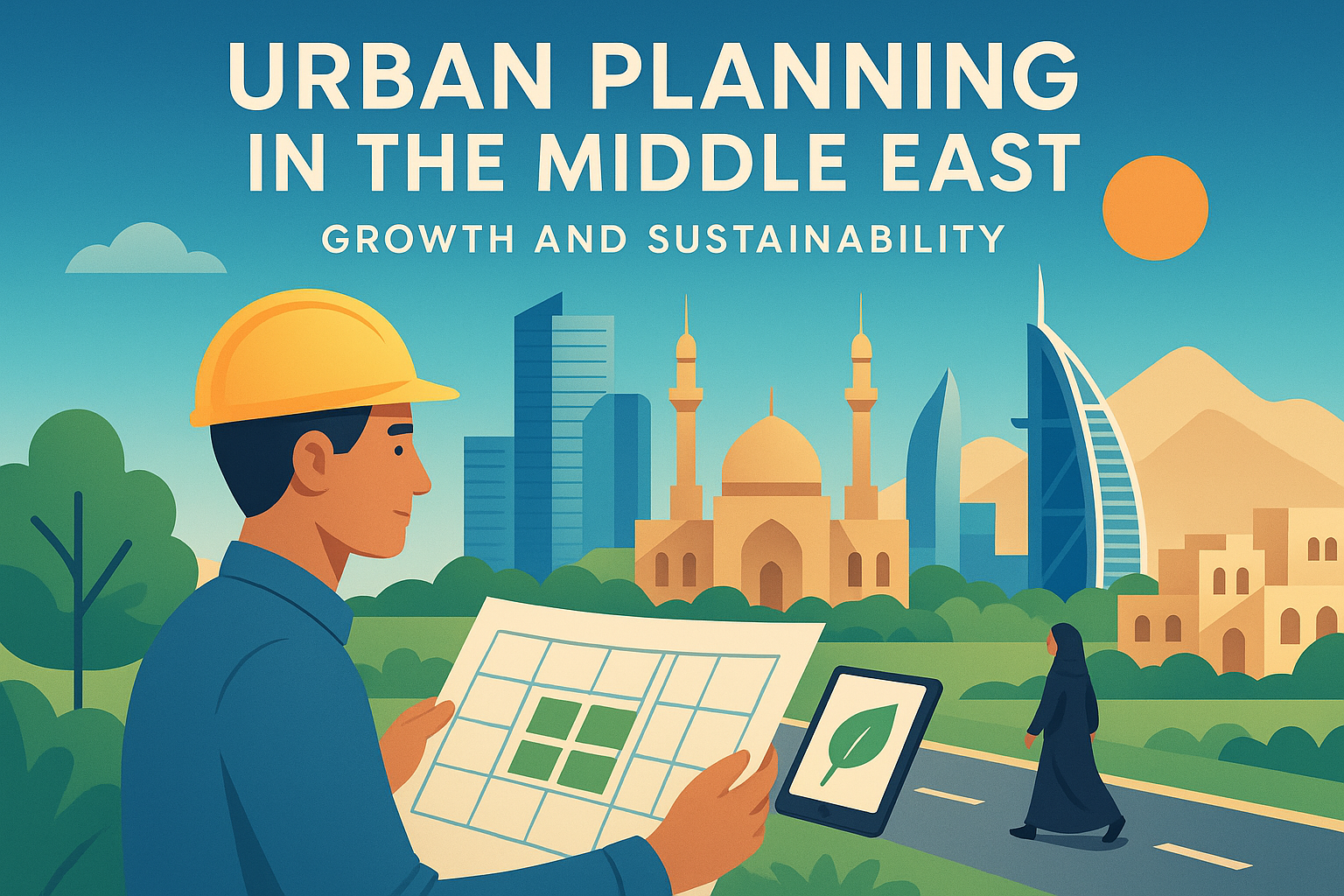
The Middle East, a region rich in history and culture, is experiencing rapid urbanization. As population figures surge and cities expand, the demand for effective urban planning increases. Urban planning, in essence, is the art and science of designing land use and infrastructure in urban spaces. This involves creating sustainable environments that cater to the needs of both current and future populations. Urban planning is pivotal because it directly affects economic growth, environmental sustainability, and the quality of life for inhabitants. With its unique challenges and opportunities, understanding urban planning in the Middle East is crucial for both regional and global stakeholders looking to foster sustainable growth and development. Addressing these concerns requires a strategic approach that not only accommodates rapid growth but also ensures sustainability for future generations.
The Challenge of Rapid Urbanization
Rapid urbanization is a prominent challenge facing the Middle East. With population dynamics changing rapidly, cities must expand their borders to accommodate increasing numbers of residents. This surge often leads to unplanned urban sprawl, overburdened infrastructure, and shortages in essential services like water, electricity, and waste management. An apt example is Cairo, Egypt, where the population continues to swell, creating immense pressure on its infrastructure. Cairo’s population density has resulted in traffic congestion, pollution, and inadequate housing. To rectify this, Cairo has initiated projects like New Cairo, a planned/oversized city aiming to relieve pressure on existing systems. While this is a step in the right direction, it highlights the need for comprehensive urban planning that envisages future growth sustainably. By employing forward-thinking strategies, urban planners can create resilient cities that efficiently manage resources and provide superior quality of life.
Incorporating Sustainability in Urban Development
Sustainability is a key factor in modern urban planning, and the Middle East is no exception. As cities grow, there’s a pressing need to ensure development does not come at the expense of the environment. Sustainable urban planning involves integrating green spaces, minimizing carbon footprints, and promoting eco-friendly transportation options. Masdar City in Abu Dhabi is a shining example of sustainable urban development. Designed to be a zero-carbon, zero-waste city, Masdar incorporates sustainable technologies and renewable energy resources, reducing its environmental impact significantly. It underscores the importance of ‘green architecture’ in urban planning—designs that use materials and technologies to conserve natural resources and create healthier environments. For the Middle East to tackle its sustainability challenges, adopting such models could serve as a beneficial blueprint for future projects.
Maintaining Cultural Heritage While Modernizing
Balancing modernization with the preservation of cultural heritage is another aspect of urban planning in the Middle East. With their rich cultural histories, Middle Eastern cities are tasked with modernizing infrastructure without compromising their unique historical identities. This is challenging, as the demand for modern amenities can sometimes overshadow the need to preserve cultural heritage. A good example is found in the city of Jerusalem, Israel, where strict building regulations have been established to maintain the ancient city’s distinct character while accommodating new development. In contrast, Dubai has managed to modernize rapidly while developing initiatives to preserve Emirates’ heritage, such as restoring historic districts like Al Fahidi Historical Neighborhood. Integrating heritage conservation into planning processes allows cities to celebrate their histories while advancing into the future.
| Aspect | Middle Eastern City | Approach Taken |
|---|---|---|
| Rapid Urbanization | Cairo, Egypt | Projects like New Cairo to reduce burden on infrastructure |
| Sustainability | Masdar City, Abu Dhabi | Zero-carbon, zero-waste design |
| Cultural Heritage | Dubai, UAE | Preservation of Al Fahidi Historical Neighborhood alongside urban development |
Economic Considerations in Urban Planning
Economic considerations are fundamental to urban planning strategies. Creating prosperous economies that support and attract international investments is crucial for the Middle Eastern cities aiming to position themselves as global hubs. Urban planners need to craft infrastructures that fuel economic activities, support businesses, and attract skilled workforce. For instance, Riyadh, Saudi Arabia, aims to become a leading global city through Vision 2030, an ambitious plan to diversify its economy by investing in infrastructure, technology, and human capital. Economic growth through urban planning not only improves local conditions but also bolsters a city’s global standing, making it a more attractive destination for trade and commerce. Prioritizing economic factors ensures that cities remain competitive, vibrant, and capable of sustaining their populations.
Integrating Smart Technologies
Incorporating smart technologies is rapidly transforming urban planning. By leveraging data analytics, IoT (Internet of Things), and AI (Artificial Intelligence), cities can optimize resources, enhance service delivery, and improve sustainability. Smart city initiatives are being implemented across the region to streamline urban management. A notable example is the smart city project in Riyadh, aiming to enhance digital infrastructure, improve mobility, and create efficient energy systems. This technological infusion redefines how cities tackle challenges and offers citizens seamless experiences. Through real-time data and automated systems, planners can more effectively address potential issues, ensuring cities remain safe, efficient, and enjoyable for all inhabitants. As smart urban planning becomes more prevalent, embracing innovative technological solutions can spearhead the future of Middle Eastern urban development.
Public Participation and Governance
Effective urban planning requires robust governance and active public participation. Decision-makers need to ensure that urban development considers the needs and desires of the population being served. Collaborative approaches involving stakeholders, from government bodies to citizens, lead to more inclusive and representative planning processes. In Istanbul, Turkey, public participation influences urban planning decisions, evidenced by various committees that engage communities in discussions about potential developments. This kind of engagement helps build trust, and better reflects community needs and expectations. Implementing sufficient governance frameworks and encouraging public participation in urban planning can lead to more sustainable and equitable urban environments. Calls for transparency, accountability, and public engagement are increasingly becoming standard practices, reinforcing the notion that cities are built for people and should thus reflect their voices.
Meeting the Challenges of Climate Change
Climate change poses significant challenges to urban planning in the Middle East, a region already grappling with harsh climatic conditions. As temperatures rise and extreme weather events become more frequent, planners are faced with the task of designing resilient cities that can withstand these challenges. In Doha, Qatar, innovative solutions such as cooling infrastructure, shade-giving architecture, and sustainable water management are being integrated into urban planning strategies. It highlights the importance of climate adaptation measures, which help cities remain habitable and vital in the face of changing environmental conditions. By focusing on long-term resilience, urban planners can mitigate the impact of climate change and ensure that cities thrive even in adverse conditions. Addressing climate concerns proactively can safeguard urban environments and protect their inhabitants from unforeseen climatic repercussions.
Conclusion and Call to Action
Urban planning in the Middle East sits at a critical juncture, confronting rapid growth and sustainability challenges. It’s a field that merges the diverse aspects of infrastructure, sustainability, culture, economics, technology, governance, and climate adaptation to create functional and thriving urban environments. The key to successful urban planning lies in understanding the unique needs and dynamics of Middle Eastern cities, using progressive strategies to design cities that support sustainable growth. Readers engaged in urban planning or interested in regional development should embrace a proactive mindset—explore contemporary planning methods, support local initiatives aiming to improve urban spaces, and adopt a sustainable outlook toward city development.
As we continue to shape urban landscapes, every action taken today will profoundly influence the cities of tomorrow. Let us commit to crafting sustainable, vibrant urban spaces that honor cultural heritage, leverage technology, and cater to economic opportunities while ensuring long-term resilience. By investing in strategic urban planning now, the Middle East can position itself as a leader in sustainable urban development, setting a benchmark for others to follow. These endeavors are not just regional imperatives but global ones that call for commitment, action, and collaboration to ensure prosperous urban futures.
Frequently Asked Questions
1. What are the key challenges facing urban planning in the Middle East?
Urban planning in the Middle East faces several unique and significant challenges. First, the rapid rate of urbanization often outpaces the ability to plan effectively, leading to overcrowding and strains on existing infrastructure. Cities in the region are growing at an unprecedented rate due to both natural population growth and migration, which can lead to haphazard development if not carefully managed. Another substantial challenge is managing the arid and semi-arid climates, which place additional stress on water resources and create a need for innovative water management solutions. The environmental conditions necessitate sustainable construction and planning strategies that are cost-effective and environmentally friendly. Additionally, political instability in parts of the region can hinder long-term planning and investment. Ground planning must incorporate flexibility to adapt to changes in political landscapes and economic conditions, fostering resilience against potential disruptions. Economic diversification is also crucial because many cities have traditionally relied on oil revenue, which is unsustainable as a long-term economic strategy. Diversifying economies will require an integration of different sectors in the urban design, such as tourism, technology, education, and healthcare. These challenges emphasize the importance of comprehensive, forward-thinking urban planning to create livable, resilient, and sustainable cities.
2. How can urban planning contribute to sustainability in the Middle East?
Urban planning is fundamental to achieving sustainability in the Middle East by promoting efficient resource use and environmentally friendly practices. Strategic urban planning can minimize waste by optimizing land use, ensuring that infrastructure supports ecological balance, and fostering sustainable communities. This can be achieved through developing green spaces, which not only improve air quality but also enhance the quality of life and social cohesion. Encouraging public transportation systems can significantly reduce carbon footprints by minimizing reliance on private vehicles. Effective zoning policies can help in creating mixed-use developments that reduce the need for long commutes, thereby saving energy and reducing emissions. Water conservation is particularly critical given the region’s aridity. Urban planners can integrate water-efficient technologies like desalination plants, greywater recycling, and rainwater harvesting into the urban framework to ensure long-term water sustainability. Energy-efficient building practices, such as using materials that minimize heat absorption and utilizing solar power, can also dramatically reduce energy consumption. Engaging communities in the planning process ensures that sustainability initiatives are well-received and practical, promoting stewardship and continual improvement in sustainability efforts. In essence, urban planning provides the roadmap for cities in the Middle East to achieve sustainable growth while balancing environmental, economic, and social needs.
3. What role does technology play in urban planning for Middle Eastern cities?
Technology is transforming urban planning in the Middle East by introducing smart city concepts that optimize city services and infrastructure. These technologies facilitate the collection and analysis of data to create more responsive and efficient urban environments. Smart technologies enable the integration of systems such as traffic management, public safety, and utilities, which enhances city functionality and residents’ quality of life. For example, implementing smart energy grids can improve energy distribution efficiency and adaptively manage power consumption based on real-time demand, particularly in response to peak loads. Traffic sensors and predictive analytics allow for real-time traffic management, reducing congestion and travel times, thereby lowering energy consumption and pollution levels. Geographic Information Systems (GIS) are another critical technological tool that supports urban planners in designing effective land use patterns and infrastructure projects. By utilizing this technology, planners can visualize spatial data, analyze geographic relationships, and simulate various urban development scenarios. Moreover, with the burgeoning interest in artificial intelligence and machine learning, there is potential for cities in the region to develop predictive models that can aid in making preemptive decisions to avert infrastructure failures or accommodate sudden demographic changes. Technology empowers urban planners to shift their focus from traditional planning towards dynamic, adaptable solutions informed by data-driven insights.
4. How do cultural and historical considerations impact urban planning in the Middle East?
Cultural and historical contexts play a vital role in shaping urban planning strategies in the Middle East. The region’s rich cultural heritage demands a sensitive approach to urban development that respects historical sites and traditional architecture while accommodating modern needs. Cities have layers of history that contribute to their identity, and urban planning must balance conservation with innovation. Preserving historical landmarks and integrating culturally significant architecture within new developments ensures that cityscapes maintain their unique character. This respect for history can be seen through preservation projects, such as redeveloping old market areas (souks), protecting archaeological sites, and maintaining traditional architectural styles alongside contemporary structures. Moreover, cultural practices and social norms influence urban design, including the layout of residential communities and social spaces. Urban planners in the region must consider social dynamics, such as familial structures and gender roles, to create inclusive spaces that reflect local values. Using culturally resonant materials and design philosophies encourages community acceptance and a sense of ownership, which are crucial for the success of urban projects. The consideration of cultural and historical factors helps to develop urban spaces that are not only functional but also spiritually and socially enriching for their inhabitants.
5. How is economic development intertwined with urban planning in the Middle East?
Economic development and urban planning are closely linked in the Middle East, as strategic planning can elevate economic growth while ensuring urban sustainability. Urban centers are engines of economic activity, housing a majority of the population and a concentration of businesses and industries. Effective urban planning can facilitate economic development by creating conditions conducive to business growth and innovation. By designing cities with efficient infrastructure, planners can enhance connectivity and accessibility, which are critical for attracting investment and fostering business operations. This includes transportation networks that ease the movement of goods and people, reliable utilities, and telecommunication infrastructures, which are indispensable for economic vibrancy in the modern economy. Mixed-use developments spur economic dynamism by allowing people to live, work, and innovate within the same vicinity, stimulating local markets and reducing commute times. Additionally, urban planning initiatives can focus on zoning policies that encourage economic diversification, especially in cities reliant on single industries such as oil. This can involve developing specialized zones for technology, finance, or tourism, each tailored to optimize business potential. Furthermore, creating public spaces and cultural venues can attract tourists and enhance the city’s attractiveness as a destination, adding to economic growth. Ultimately, a well-executed urban planning strategy can elevate a city’s quality of living, boost economic competitiveness, and ensure sustainable development for future generations.