

Urban planning and community resilience are intrinsically linked concepts that have become increasingly significant in the face of climate change, natural disasters, economic instability, and social upheaval. As urban populations continue to grow, the need for comprehensive and adaptive planning has never been more critical. But what exactly is community resilience, and how does urban planning impact it? Community resilience refers to the ability of a community to withstand, adapt to, and recover from adverse situations. Effective urban planning can significantly enhance this resilience by integrating sustainable practices, promoting social cohesion, and ensuring that infrastructure is robust and flexible enough to meet emerging challenges.
Urban resilience is not merely about fortifying buildings or constructing flood defenses; it encompasses a broad spectrum of factors including social, economic, and environmental dimensions. Resilient communities are those that can not only bounce back from setbacks but also evolve and thrive despite ongoing pressures. This is where urban planning policies come into play, offering a roadmap for sustainable growth and responsive adaptation.
The challenges faced by urban planners are multifaceted, ranging from managing urban sprawl to ensuring equitable access to resources and services. This article aims to explore best practices in urban planning and policy that can foster community resilience. It will cover key principles, strategies, real-world examples, and policy recommendations to provide a comprehensive guide to building resilient communities.
Principles of Urban Resilience
The foundation of any resilient community is built on several core principles that guide urban planning efforts. One of the primary principles is redundancy, which involves designing systems that have multiple pathways for functioning. For example, a resilient transportation network would have various modes of transport available, ensuring that if one mode fails, others can pick up the slack.
Another key principle is flexibility. Urban plans should be designed to adapt to changing circumstances. This means creating policies and infrastructure that can evolve as new challenges arise. Flexible zoning laws, adaptable public spaces, and multipurpose buildings are excellent examples of this principle in action.
Inclusivity and community engagement are also crucial. Resilient communities are those that are socially cohesive and inclusive. Planners should actively involve residents in the decision-making process, ensuring that the needs and preferences of all community members are considered. This can be achieved through public consultations, participatory planning sessions, and inclusive policy frameworks.
Lastly, sustainability is a cornerstone of resilience. Urban planning should focus on reducing environmental impacts and promoting sustainable practices. This includes everything from green building standards to the development of sustainable transportation systems and waste management practices. By prioritizing sustainability, communities can reduce vulnerability to environmental stresses and enhance their long-term resilience.
Strategies for Enhancing Community Resilience
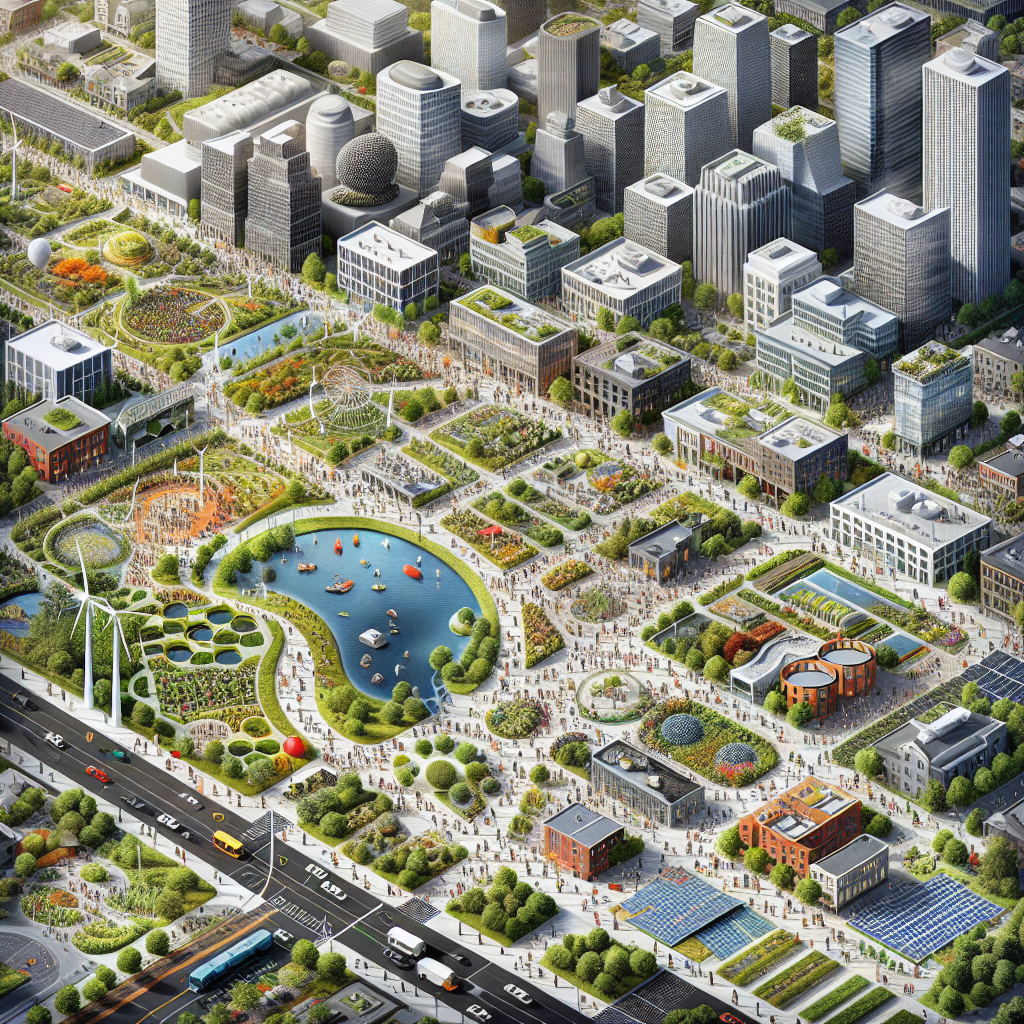
Several strategies can be employed to enhance community resilience through urban planning. One effective strategy is the development of green infrastructure. Green infrastructure includes parks, green roofs, urban forests, and other natural systems that provide ecological benefits and enhance the quality of urban life. These elements not only improve air quality and provide recreational spaces but also help in managing stormwater and reducing heat island effects.
Diversification of the local economy is another vital strategy. Resilient communities often have diverse economic bases that can withstand shocks such as the closure of a major employer or downturns in specific industries. Urban planners can facilitate economic diversification by supporting small businesses, fostering innovation, and creating policies that attract a variety of industries.
Strengthening social networks is also essential. Social resilience refers to the strength and cohesion of a community’s social fabric. Planners can enhance social networks by designing communal spaces, promoting local events, and supporting community organizations. Strong social networks are crucial during times of crisis, as they provide support and resources that can help individuals and communities recover more quickly.
Another important strategy is the integration of technology and data. Smart city initiatives can improve resilience by using data to monitor and manage urban systems more effectively. For example, real-time data on traffic flows can help manage congestion and reduce emissions, while data on energy usage can inform more efficient building practices. Technology can also be used for emergency response, providing timely information to residents and authorities during crises.
Case Studies in Urban Resilience
Numerous cities around the world have implemented successful strategies to enhance their resilience. For instance, Rotterdam in the Netherlands is renowned for its innovative approach to managing water and adapting to the impacts of climate change. The city has developed an extensive network of green roofs, water plazas, and underground water storage systems to manage excess rainwater and reduce flood risk. Rotterdam’s efforts demonstrate the importance of integrating natural systems into urban planning.
Another excellent example is Medellín, Colombia. In the face of significant social and economic challenges, the city implemented various urban planning initiatives focused on inclusivity and social cohesion. The development of the Metrocable, an aerial cable car system integrated with public transport, has improved access to education, employment, and services for residents in hilly and previously marginalized neighborhoods. This inclusive approach has significantly enhanced Medellín’s social and economic resilience.
Tokyo, Japan, provides a model for earthquake resilience. The city has implemented stringent building codes and retrofitting programs to ensure that structures can withstand seismic events. Tokyo also conducts regular earthquake drills and has developed a comprehensive emergency response system that includes early warning alerts and well-coordinated evacuation plans.
By studying these and other examples, urban planners can glean valuable insights into the best practices for enhancing community resilience. These case studies highlight the importance of a holistic approach that considers social, economic, and environmental factors in urban planning.
Policy Recommendations for Resilient Urban Planning
Effective policy frameworks are crucial for fostering urban resilience. Policymakers should prioritize the integration of resilience principles into zoning laws, building codes, and urban development plans. This includes enforcing standards that promote sustainable design and construction practices, such as energy-efficient buildings and the use of renewable materials.
Investing in public infrastructure is another key policy recommendation. Governments should allocate resources for the maintenance and upgrading of critical infrastructure, including transportation networks, water systems, and energy grids. This ensures that these systems remain robust and capable of functioning under stress.
Education and public awareness campaigns also play a vital role. By educating residents about resilience and involving them in planning processes, policymakers can build a culture of preparedness and proactive engagement. Public awareness campaigns can cover topics such as emergency preparedness, sustainable living practices, and the importance of social cohesion.
Furthermore, collaboration across sectors and levels of government is essential. Resilient urban planning requires a coordinated effort that involves various stakeholders, including government agencies, private sector partners, community organizations, and residents. Policymakers should facilitate partnerships and create platforms for collaboration to harness the collective expertise and resources of these diverse groups.
Challenges and Future Directions
Despite the progress made in urban resilience, several challenges remain. One significant challenge is securing adequate funding for resilience projects. Many resilience initiatives require substantial investment, and finding financial resources can be difficult, especially for smaller communities with limited budgets. Innovative financing mechanisms, such as public-private partnerships and resilience bonds, can help bridge this funding gap.
Another challenge is addressing social inequalities. Vulnerable populations, including low-income residents, minorities, and the elderly, are often disproportionately affected by crises. Urban planners must ensure that resilience strategies are inclusive and equitable, providing support and resources to those who need them most.
Climate change poses an ongoing challenge, with its impacts expected to intensify in the coming decades. Urban planners must continuously update and adapt their strategies to address emerging climate risks, such as rising sea levels, increased frequency of extreme weather events, and shifting ecological patterns. This requires ongoing research, monitoring, and flexibility in planning processes.
Lastly, building political will and public support can be challenging. Resilience projects often require long-term commitments and may not yield immediate visible results. Policymakers and planners must effectively communicate the benefits of resilience planning and demonstrate its value to gain public and political backing.
Looking to the future, advancements in technology and data analytics hold promise for enhancing urban resilience. Innovations such as artificial intelligence, blockchain, and the Internet of Things (IoT) offer new tools for monitoring, managing, and improving urban systems. As these technologies evolve, urban planners can leverage them to create smarter, more resilient cities.
Conclusion
Urban planning and community resilience are closely interconnected, and effective urban planning is essential for building resilient communities. By adhering to core principles such as redundancy, flexibility, inclusivity, and sustainability, urban planners can create environments that can withstand and adapt to various challenges. Implementing strategies such as green infrastructure, economic diversification, social network strengthening, and technology integration further enhances resilience.
Real-world examples from cities like Rotterdam, Medellín, and Tokyo provide valuable lessons on successful resilience practices. Policymakers play a critical role in establishing frameworks that support these efforts, including sustainable building codes, infrastructure investments, public awareness campaigns, and cross-sector collaboration.
Despite existing challenges, including funding constraints, social inequalities, and climate change, future advancements in technology and data analytics offer new opportunities for enhancing urban resilience. Urban planners and policymakers must remain vigilant, adaptive, and committed to fostering resilient communities.
By prioritizing urban resilience in planning processes, we can create cities that not only survive but also thrive in the face of adversity. The goal is to build communities that are not only physically robust but also socially cohesive, economically diverse, and environmentally sustainable, ensuring a better quality of life for all residents.
Frequently Asked Questions
1. What is community resilience and why is it important in urban planning?
Community resilience is the ability of a community to robustly endure, adapt to, and bounce back from adversity, be it climate change, natural disasters, economic turmoil, or social unrest. When we talk about urban planning, we usually refer to the thoughtful arrangement and regulation of urban spaces to create harmonious, efficient, and sustainable environments. Community resilience is a crucial element embedded within this planning because it ensures that cities not only thrive in the face of challenges but also continue to grow and prosper.
In the urban context, resilience is multifaceted. It involves infrastructure that can withstand shocks, social systems that provide support and resources to vulnerable populations, economic systems capable of rapid recovery, and governance structures that facilitate coordinated responses to crises. Increasingly, urban planners are realizing that a resilient community is not built solely on strong buildings or advanced technologies. Instead, it’s about fostering a sense of community, trust, and collaboration among residents, ensuring that when something goes wrong, everyone is prepared, adaptable, and ready to recover together. So, urban planning needs to be deeply interwoven with strategies for enhancing resilience at every level.
2. How can urban planners integrate resilience into their practices?
Integrating resilience into urban planning requires an approach that is both holistic and forward-thinking. Urban planners can start by conducting comprehensive risk assessments that identify potential vulnerabilities within a community. This could involve studying the geographic characteristics of an area, such as flood plains or areas prone to earthquakes, and understanding the socioeconomic contexts that might exacerbate vulnerabilities, like high-density housing areas or neglected public infrastructure.
Once risks are identified, urban plans can incorporate design and policy interventions to mitigate these risks. For example, planners can design green spaces that serve as flood buffers, build infrastructural systems that are flexible and adaptable, and establish building codes requiring materials and designs that can withstand local climatic conditions. Moreover, tapping into technology through smart city solutions can enhance real-time responses to emergencies.
Moreover, urban planners must engage communities in the planning process itself. Engaging with residents helps ensure that plans reflect the specific needs and values of the community and empowers people to take collective actions that enhance resilience. Regular workshops, public consultations, and collaborative projects can foster greater community participation and ownership over resilience-building efforts.
3. What role does infrastructure play in community resilience?
Infrastructure is one of the fundamental backbones of community resilience. It serves a crucial role in ensuring that urban areas can effectively absorb, adapt to, and recover from various shocks and stresses. Resilient infrastructure entails robustness, flexibility, redundancy, and a design that can cater to both present and future demands.
Resilient infrastructure can be tangible or intangible. Tangible infrastructure includes transport systems, water supplies, energy grids, communication networks, and housing. These systems need to be built to last and withstand both gradual stresses like climate change impacts, and sudden shocks like natural disasters. For instance, elevating roads and bridges in flood-prone regions, employing renewable energy solutions to reduce reliance on centralized power grids, and constructing buildings with sustainable and resilient materials are practical steps.
Intangible infrastructure, on the other hand, refers to the policy frameworks, regulations, and emergency response mechanisms that support the physical aspects. These are vital for coordination, resource mobilization, and ensuring swift recovery post-crisis. Together, these components form a resilient infrastructural network that maintains functionality and reduces the severity of disruption during adverse events.
4. How does community engagement influence resilience in urban planning?
Community engagement is a cornerstone for building resilience in urban planning. When communities are actively involved in the planning process, they’re more likely to devise and support solutions that truly reflect the needs, aspirations, and capabilities of its residents. Engagement encourages diverse perspectives and creativity, fostering innovative approaches tailored to address local challenges effectively.
Engaged communities play an active role in identifying risks, setting priorities, and crafting strategies that resonate with their social, cultural, and economic contexts. Through mechanisms such as community forums, participatory budgeting, and local partnerships, residents can take ownership of resilience-building measures, enhancing their commitment to maintaining and improving urban systems over time.
Additionally, informed communities are better prepared to respond to crises they may face. Engagement and education foster a culture of preparedness and self-reliance. People knowing what to expect and how to react can dramatically reduce the impacts of disasters. Moreover, community engagement builds social networks and trust, vital components for coordinated recovery and revitalization efforts after an event.
5. What are some innovative practices in urban planning that enhance community resilience?
Innovative practices in urban planning aimed at enhancing community resilience span a wide array of strategies, often integrating technological, environmental, and social components. One popular approach is adopting the concept of “smart cities,” which harness technologies like IoT devices, data analytics, and AI to optimize city services and predict potential disruptions before they occur, thus minimizing impacts.
Green infrastructure is another innovative practice. By creating urban landscapes that mimic natural systems, such as rain gardens, green roofs, and urban forests, cities can manage stormwater, reduce the urban heat island effect, and improve air quality. Such designs not only protect against environmental shocks but also promote sustainability and enhance livability.
Planners are also rethinking traditional energy solutions by advancing decentralization strategies, such as local microgrids powered by renewable energy sources. This reduces dependency on centralized networks and ensures a more reliable energy supply during failures. Similarly, the promotion of mixed-use developments encourages compact, walkable communities that support local economies and reduce the carbon footprint associated with transportation.
Socially, there is a push toward creating inclusive public spaces and promoting policies that prioritize equitable access to resources, ensuring that the benefits of urban development and risk mitigation are shared across all demographic groups. Encouraging community-led development projects can instill greater resilience and sustainability within cities, empowering residents and fortifying urban areas against the challenges of the 21st century.


