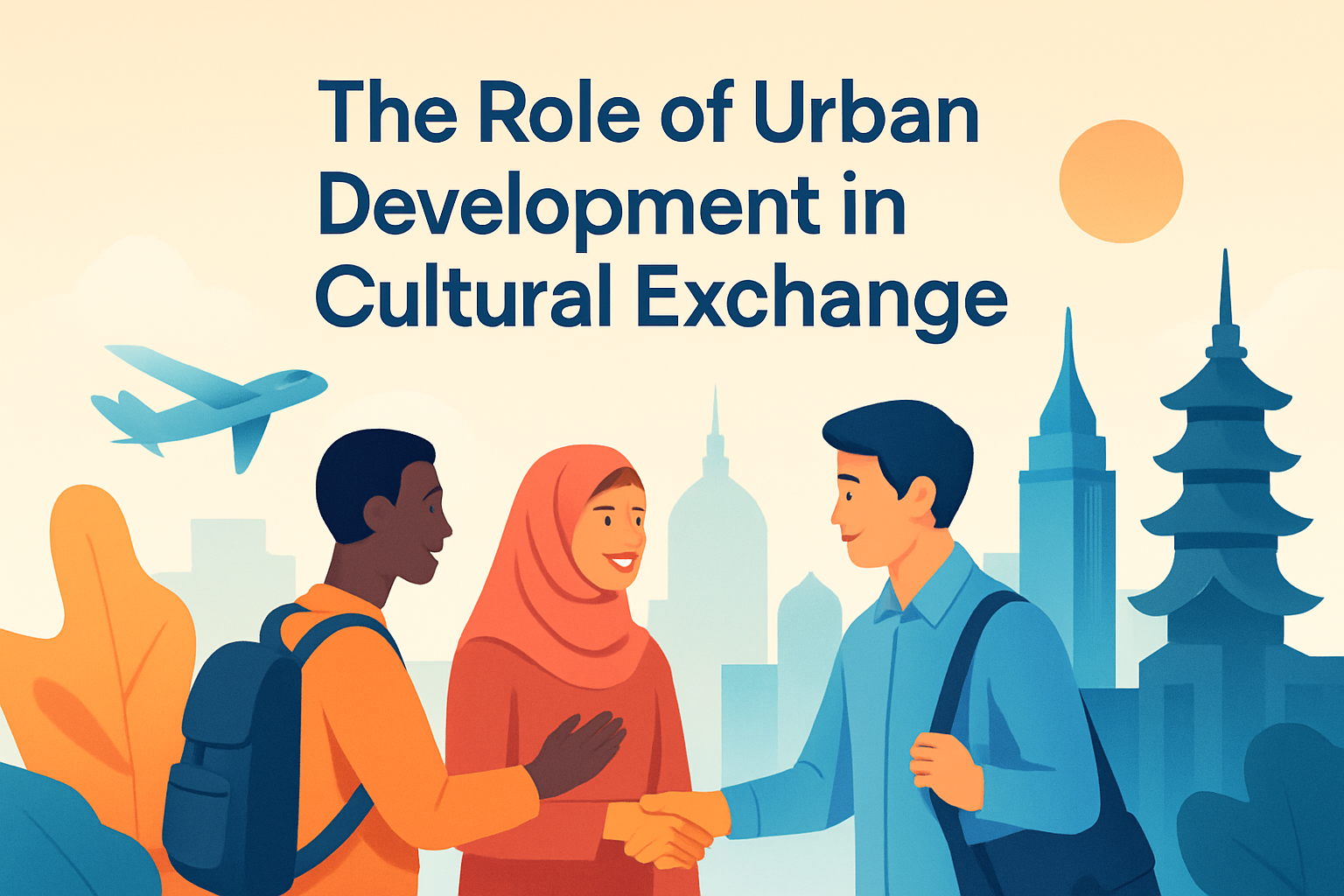
Urban development holds a position of great significance in today’s globally connected world. As cities evolve, they serve as melting pots for cultural diversity, birthing opportunities for the sharing, merging, and eventual evolution of various cultural norms and practices. This article delves deeply into how urban development plays a crucial role in facilitating cultural exchange by examining the mechanisms and impacts of this intercultural interaction within urban landscapes. At its core, urban development refers to the process by which cities grow and change, often involving infrastructure improvements, increased housing, and socio-economic transformation. Cultural exchange, on the other hand, speaks to the sharing of ideas, traditions, and social behaviors between different cultures. It holds a profound place in promoting understanding and peace among communities whilst contributing significantly to economic development and enriched social fabric. The importance of exploring the intersection between urban development and cultural exchange cannot be overstated. It provides insight into how urban spaces can promote inclusivity and innovation by serving as platforms for cultures to meet, interact, and flourish together.
Urban Development as a Catalyst for Cultural Exchange
In rapidly growing cities, urban development acts as a key catalyst for cultural exchange, influencing how individuals from diverse backgrounds come together. As cities develop, they typically become focal points for migration, attracting individuals seeking employment, educational opportunities, and improved living conditions. Such migration inevitably brings a medley of cultures into close proximity, encouraging cross-cultural interactions. A prominent example of this phenomenon can be observed in New York City, often touted as a model of coexistent diversity. As a hub of commerce, finance, and culture, New York has become home to various ethnic enclaves — think Chinatown, Little Italy, and Koreatown — where inhabitants celebrate their heritage while embracing aspects of the larger city culture. This dynamic fosters mutual respect and understanding, further nurturing an environment of vibrant cultural exchange.
The Role of Public Spaces in Urban Areas
Public spaces such as parks, squares, and community centers are designed as gathering spots, fostering a communal spirit and promoting cultural interactions. These locales function as the physical embodiment of a city’s commitment to inclusivity and community building. In cities like London, public spaces like Trafalgar Square and Hyde Park offer platforms for festivals, protests, and community events, drawing people from diverse cultural backgrounds together. Such spaces also serve as venues for cultural expression, providing an open stage for traditional music, dance, and art. In urban settings, public spaces are strategic foci for cultural expression and exchange, bridging the cultural gaps by enabling people from various backgrounds to share ideas and experiences collaboratively.
Promotion of Multilingualism and Cultural Education
Urban development often leads to the establishment of educational institutions that cater to a multicultural populace. Schools, universities, museums, and cultural centers introduce curricula designed to educate students about varied cultures, ultimately promoting cultural literacy and multilingualism. In Toronto, Canada, often hailed for its outstanding commitment to multiculturalism, the educational system incorporates a range of language programs and cultural studies that acknowledge and celebrate diversity. This strategy encourages students to adopt a global perspective, understanding and appreciating cultural nuances, which is essential for fostering a more connected and tolerant society. Moreover, cultural centers often organize workshops, seminars, and exhibits that reinforce the value of cultural knowledge and exchange.
Economic Impact of Cultural Exchange in Urban Development
Cultural exchange fundamentally influences the economic landscape of urban areas, driving innovation and providing new opportunities for growth. This exchange contributes to a robust economic environment by attracting tourists, fostering a rich marketplace for cultural goods, and inspiring creative industries. Consider Barcelona, which successfully leverages its rich architectural heritage and cultural vibrancy to boost tourism, drawing millions annually to immerse in its cultural offerings. The inflow of diverse populations nurtures an entrepreneurial spirit, with businesses ranging from ethnic restaurants to global tech firms, benefiting from a diverse talent pool, thereby stimulating economic growth. Below is a breakdown of key economic benefits stemming from urban-driven cultural exchange:
- Tourism Boost: Cultural landmarks and events attract global tourists, generating revenue.
- Creative Industries Growth: Cultural diversity feeds into creative sectors like music, art, and fashion.
- Expanding Markets: Diverse populations lead to varied consumer needs, broadening market opportunities.
- Innovation and Creativity: Intercultural interaction sparks new ideas and business models.
Challenges and Opportunities in Urban Cultural Exchange
While urban development facilitates cultural exchange, it also brings about challenges that need addressing to foster a harmonious living environment. Tensions may arise between different cultural communities, leading to potential conflicts that need careful management through policy and dialogue. Additionally, as cities expand, the risk of cultural homogenization becomes apparent, where unique cultural identities may feel overshadowed by dominant or international norms. However, these challenges also present opportunities for growth and improvement, prompting cities to develop innovative approaches towards cultural inclusivity and sustainable development. For instance, in cities such as Berlin, community-oriented projects focus on participatory urban planning and cultural preservation, ensuring that redevelopment projects respect and integrate local cultural identities.
Technology and the Future of Urban Cultural Exchange
Technological advancements present new avenues through which urban development can facilitate cultural exchange. Digital platforms and social media allow for instantaneous exchange of cultural content, bridging physical distances and offering avenues for cultural expression and sharing that were previously unthinkable. Smart cities incorporating digital infrastructure provide seamless integration and dissemination of cultural knowledge. An example of technology aiding cultural exchange can be seen in Amsterdam’s innovation hubs where co-working spaces equipped with digital connectivity support entrepreneurs from diverse backgrounds, fostering collaborative cross-cultural projects. As cities move towards smart urban paradigms, the role of technology becomes a cornerstone in propelling urban cultural exchange.
Sustaining Cultural Heritage within Urban Growth
As urban areas expand and modernize, maintaining cultural heritage becomes a pressing concern. Historic neighborhoods, traditional architecture, and ancestral customs face the risk of being overshadowed by rapid modernization. Conscious urban planning that cherishes cultural heritage ensures a balanced development approach, preserving the cultural fabric while introducing modern amenities. A notable example is Kyoto, Japan, where strict regulations and thoughtful urban planning safeguard its historical sites amidst urban development. Sustainable growth considers the delicate balance between honoring the past and embracing the future, creating a harmonious urban environment where cultural exchange thrives without sacrificing cultural heritage.
Summarizing the Role of Urban Development in Cultural Exchange
In summary, urban development serves as a vital mechanism for fostering cultural exchange by acting as a convergence point for diverse cultures worldwide. Through purposeful and inclusive urban planning, cities enable cultural interactions that offer social, educational, and economic benefits. Key takeaways underscore the importance of public spaces, education, and technological advancements in facilitating cultural exchange, while highlighting challenges that must be negotiated to ensure inclusive growth. To truly harness the potential of cultural exchange, cities must advocate for policies that balance urban growth with cultural preservation, ensuring a harmonious and enriching urban life for all. As readers, the opportunity to engage in local cultural festivals, support multicultural policies, or explore diverse cultural quarters within one’s city is a call to action, encouraging active participation in the cultural richness that urban development offers. The exchange of culture enriches our daily lives and expands our horizons, making our urban spaces not just places to live, but vibrant communities to thrive within.
Frequently Asked Questions
1. What is the connection between urban development and cultural exchange?
Urban development has a profound impact on cultural exchange. As cities develop and expand, they naturally become hubs of activity, attracting people from different backgrounds and cultures. The influx of diverse populations into urban areas fosters a unique environment where various cultural practices, beliefs, and ideas can interact and influence each other. This blend of cultures creates a dynamic and enriching atmosphere conducive to cultural exchange. As new infrastructure like transportation systems, housing, public spaces, and institutions are developed, they facilitate and encourage the movement and gathering of people, making it easier for cultures to mingle and interact. Over time, this leads to the creation of new cultural norms, hybrid cultural expressions, and a deeper understanding of diverse perspectives, demonstrating the vital role that urban development plays in the promotion and facilitation of cultural exchange.
2. How do public spaces in urban areas facilitate cultural exchange?
Public spaces are quintessential elements of urban areas that significantly contribute to cultural exchange. Parks, plazas, squares, and community centers serve as vital gathering points where people from various cultural backgrounds can come together, interact, and share experiences. These spaces offer a platform for cultural events, festivals, and performances that showcase different traditions, art forms, and customs, allowing for an exchange of culture on both formal and informal levels. Public spaces also provide a neutral ground for social interaction, encouraging dialogue and fostering a sense of community among diverse groups. Moreover, the design and accessibility of these spaces can enhance their role in cultural exchange. For instance, well-connects public spaces that are welcoming and inclusive encourage more engagement and interaction between individuals, thus facilitating a richer cultural mosaic within urban settings.
3. In what ways can urban development impact cultural diversity?
Urban development can have both positive and negative impacts on cultural diversity. On the positive side, as cities grow and attract a diverse population, they create environments where different cultures can coexist and influence each other. This can lead to the introduction of new ideas, cuisines, fashion, art, and customs, enriching the cultural fabric of the city. Urban development can also stimulate cultural revival by providing platforms and facilities that support cultural activities and practices, thereby preserving cultural heritage while encouraging innovation and sharing. However, on the negative side, unchecked urban development can sometimes lead to gentrification, which may displace long-standing communities and reduce cultural diversity. Rapid urbanization can also strain resources and infrastructure, which might create barriers to cultural exchange. Therefore, sustainable urban planning that considers the needs and contributions of diverse cultures is crucial in ensuring that the impact of development on cultural diversity is beneficial and inclusive.
4. How can architecture and urban design influence cultural exchange?
Architecture and urban design are critical components in shaping the nature and extent of cultural exchange within cities. Carefully planned and culturally sensitive architecture can reflect and celebrate the diversity of a city’s inhabitants, creating spaces that welcome and highlight different cultural expressions. For example, buildings that incorporate elements from various architectural traditions can become symbolic representations of multiculturalism, fostering pride and cross-cultural appreciation among residents and visitors alike. Urban design that emphasizes mixed-use development, walkability, and connectivity encourages spontaneous cultural interactions by making it easier for people to move around and gather. Moreover, designs that integrate public art, cultural references, and multilingual signage can enhance awareness and understanding of different cultures, thus promoting cultural dialogue. On the flip side, urban design that is monolithic or culturally homogenized might limit opportunities for cultural exchange by imposing a single narrative or aesthetic that overlooks the diversity of the urban populace.
5. What role do cultural institutions play in cultural exchange within urban areas?
Cultural institutions such as museums, theaters, galleries, and cultural centers are critical players in the process of cultural exchange within urban environments. These institutions often function as cultural epicenters, offering curated experiences that showcase diverse artistic and cultural expressions. They provide platforms for cultural dialogue through exhibitions, performances, lectures, and workshops, educating the public and fostering a deeper understanding of different cultures. By offering programs that engage with both grassroots and international cultural expressions, these institutions promote inclusivity and accessibility, allowing for a broad array of cultural voices to be heard and appreciated. Additionally, cultural institutions often collaborate with community groups, government bodies, and international partners to organize cultural exchange programs, thereby expanding the reach and impact of cultural practices beyond local boundaries. In essence, these institutions act as bridges that not only preserve cultural heritage but also innovate new cultural narratives, contributing to the dynamic cultural landscape of urban areas.