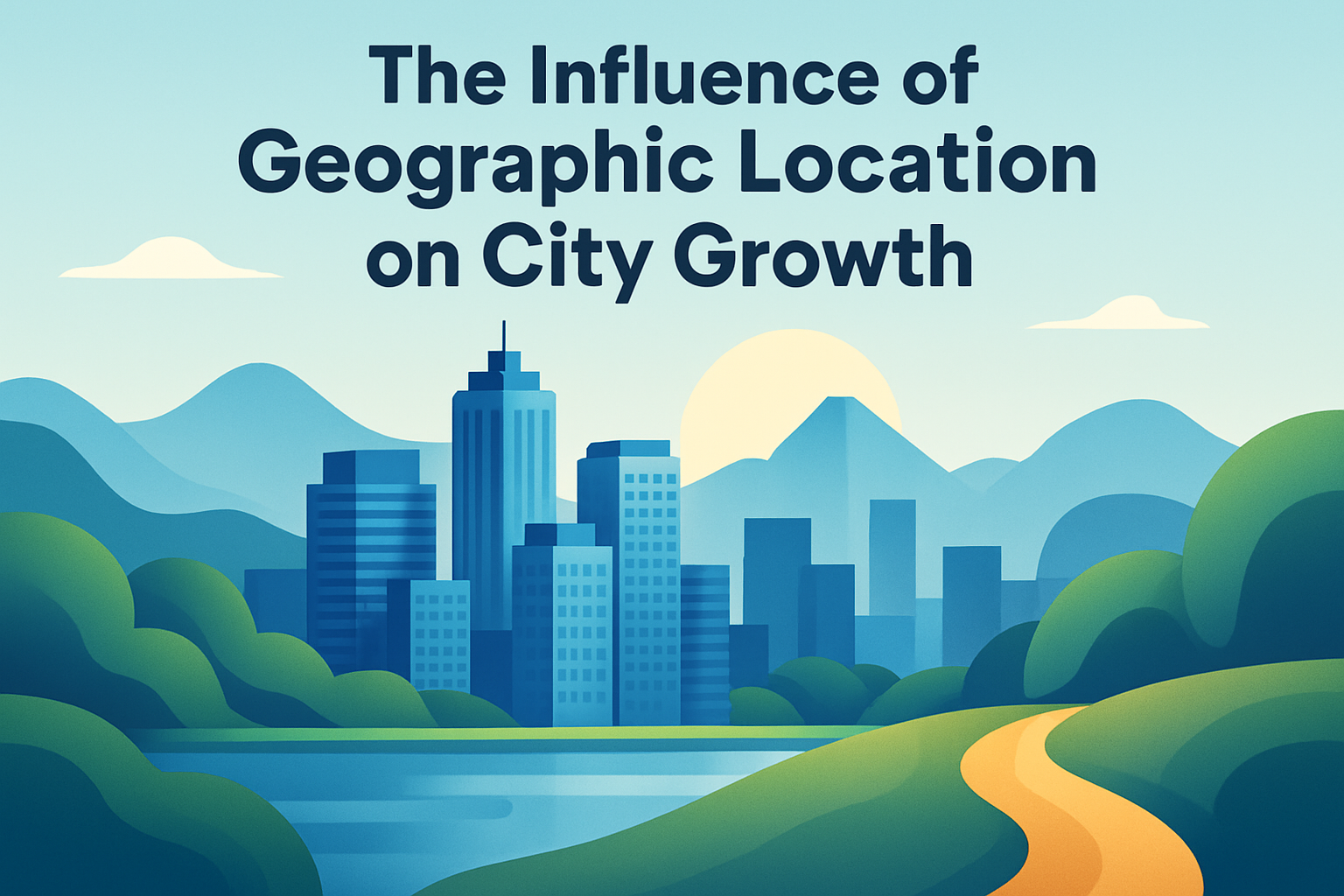
Geographic location plays a crucial role in the growth and development of cities. The geographical position of a city can influence its economic opportunities, population density, infrastructure development, and overall sustainability. In this article, we’ll explore how various geographic factors contribute to city growth and why these factors are significant in urban planning and policy-making.
To understand the impact of geographic location on city growth, it’s important to define key terms such as “geographic location,” which refers to the physical position of a city on the earth’s surface, including its latitude, longitude, climate, and topography. “City growth” encompasses population increase, economic development, and urban expansion. This topic matters because recognizing the influence of geographic location helps city planners and decision-makers implement strategies that support sustainable urban growth and improve the quality of life for residents. In a world where urbanization is rapidly increasing, understanding these dynamics is essential for addressing challenges such as overcrowding, resource allocation, and environmental conservation.
Access to Water Bodies and Economic Opportunities
Proximity to water bodies such as rivers, lakes, and oceans has historically been a major determinant of city growth. Cities located near water sources often have advantages in trade, transport, and access to natural resources. These water bodies serve as conduits for transportation, facilitating the movement of goods and people, which in turn spurs economic activity.
An illustrative example is the city of Rotterdam in the Netherlands. Situated along the banks of the Rhine River, Rotterdam’s strategic location has made it one of the largest ports in the world. This accessibility to water routes has not only encouraged trade but also attracted various industries, contributing to the city’s economic growth and development. As a result, Rotterdam has become a vital economic hub in Europe, benefiting from its geographic proximity to water.
Climate and Agricultural Productivity
Climate is another geographic factor that significantly impacts city growth. Regions with favorable climates—those that support agriculture—tend to develop more rapidly due to the steady provision of food resources. Cities in such areas can sustain larger populations, develop trade in agricultural products, and support diverse economic activities.
Consider the city of Cairo in Egypt. Located along the Nile River, Cairo enjoys a climate that supports agricultural productivity, which has historically sustained its large population. The fertile lands around the Nile, made rich by seasonal flooding, have allowed Cairo to grow into one of the most populous cities in Africa. The ease of agricultural production in this region has driven economic development and supported a diverse economy beyond agriculture, encompassing tourism, education, and manufacturing.
Topography and Infrastructure Development
Topography, or the physical features of a region, also influences city growth. Flat and accessible landscapes tend to support rapid infrastructure development. Conversely, regions characterized by rugged terrain or steep elevations may experience slower development due to the challenges posed by the geography, such as higher construction costs and limited accessibility.
The city of Milan in Italy serves as an example of how topography can influence urban growth. Milan is situated in the plains of Lombardy, a region characterized by flat terrain, which has facilitated the development of extensive transportation networks, including railways, roads, and airports. This infrastructure has enabled Milan to become an economic powerhouse in Italy, with robust manufacturing and service industries. Its flat geography has minimized construction challenges, promoting rapid urban growth and integration into the broader European economy.
Accessibility and Connectivity
Accessibility and connectivity refer to how easily people and goods can move in and out of a city. These factors are tightly linked to geographic location and play a significant role in determining growth. A city with high accessibility and connectivity can attract businesses, foster economic diversity, and support a higher quality of life.
A relevant example is the city of Denver, Colorado, in the United States. Located near the geographic center of the country, Denver serves as a major transportation hub. With connections to major highways and a well-established airport, the city has become a nexus for commerce and trade. This high degree of connectivity has attracted a diverse population, fueled economic opportunities, and supported consistent urban development. Denver’s geographic location thus continues to augment its appeal as a place for business and residence.
- Rotterdam: Benefits from proximity to river routes.
- Cairo: Gains from agricultural productivity aided by the Nile.
- Milan: Grows due to flat terrain facilitating infrastructure.
- Denver: Leverages central location for connectivity and commerce.
Navigating Geographic Limitations
It’s not only cities with apparent geographic advantages that can thrive. Some cities overcome geographic limitations through innovation and strategic planning. Technological advancements and effective urban policies can offset the challenges presented by less-than-ideal geographic locations.
Singapore exemplifies a city that has navigated geographic limitations to become a global city. Despite its small land area and lack of natural resources, Singapore’s strategic location along major sea routes in Southeast Asia has been pivotal to its growth. Leadership focused on becoming a global trade hub, investing in infrastructure, and fostering a business-friendly environment. Today, Singapore stands as a leading financial center, known for its efficient port and airport, as well as its high quality of life index. Through strategic foresight and policy adaptation, Singapore has transformed its geographic limitations into opportunities for growth and development.
Resilience in the Face of Natural Disasters
Some geographic locations are more prone to natural disasters such as earthquakes, floods, or hurricanes. The risk of these events requires cities to prioritize resilience planning to ensure sustainable growth. Implementing robust infrastructure and emergency response systems can mitigate the adverse impacts of such disasters and support city growth.
Tokyo, Japan, provides a noteworthy example of resilience in the face of natural disasters. Located in a seismically active region, Tokyo is susceptible to earthquakes. However, the city’s commitment to earthquake-proof infrastructure, evolving building codes, and proactive disaster management have enabled Tokyo to thrive as one of the most populous and economically vibrant cities in the world. This resilience planning has allowed Tokyo to continue growing despite the inherent risks associated with its geographic location, demonstrating the importance of addressing environmental challenges proactively.
Summary and Next Steps
Throughout this exploration of geographic location’s influence on city growth, several core takeaways emerge. First, the proximity to water bodies facilitates trade and economic development, as seen in cities like Rotterdam. Second, favorable climates enhance agricultural productivity and support population growth, as demonstrated by Cairo’s reliance on the Nile. Third, topography and accessibility govern infrastructure development and economic diversity, with Milan and Denver serving as examples. While geographic limitations can pose challenges, cities like Singapore showcase how strategic planning can overcome these barriers.
Understanding these factors benefits city planners, policymakers, and business leaders by highlighting critical considerations in the process of urban development. By acknowledging and addressing the advantages and constraints imposed by geography, stakeholders can foster sustainable and resilient city growth. Citizens can also gain insights into how geographic factors influence the social, economic, and environmental dynamics that shape their lives.
As a call to action, readers are encouraged to engage with urban planning initiatives and support policies prioritizing sustainable city growth. Whether participating in local government planning discussions or advocating for green infrastructure, everyone can contribute to fostering cities that maximize their geographic potential while minimizing associated risks. Together, we can navigate the challenges of urbanization and build cities that are resilient, vibrant, and sustainable.
Frequently Asked Questions
1. How does geographic location impact the economic opportunities of a city?
Geographic location can significantly influence a city’s economic opportunities by determining its accessibility to resources, transportation routes, and markets. A city situated at the crossroads of major trade routes, near a port, or along major highways is naturally positioned to become a commercial hub due to easier movement of goods, services, and labor. Coastal cities, for example, not only facilitate international trade through port facilities but also benefit from tourism industries. Additionally, geographic features like rivers or mineral resources can attract related industries and foster economic growth. These advantageous locations reduce transportation costs and attract both businesses and a skilled workforce, contributing to a thriving economy. Therefore, urban planners often consider geographic advantages when planning economic development strategies to leverage these natural assets effectively.
2. In what ways does geography influence population density in cities?
Geography plays a pivotal role in where people choose to live and how population density is distributed within a city. Cities that are geographically located in areas with a favorable climate, fertile land, and adequate water supply tend to support higher population densities due to the comfort and resources available. Conversely, harsh climates, such as extreme cold or arid conditions, often result in lower population densities as these environments can be difficult to inhabit without significant technological intervention. Additionally, cities located on plains or areas with flat terrain tend to be more densely populated because they are easier and cheaper to develop, lacking the construction challenges presented by hills or mountains. Urban planners must take these geographic factors into account when managing urban expansion and providing necessary services to a growing population.
3. What role does geographic location play in infrastructure development within a city?
Geographic location influences infrastructure development profoundly by determining the types of infrastructure required and its complexity. Cities in earthquake-prone zones, for instance, must invest in robust infrastructure designed to withstand seismic activity, which can be more costly and complex than building in stable environments. Similarly, areas that frequently experience flooding need advanced drainage and levee systems to protect urban developments. The natural layout of the land, such as mountains or rivers, can also dictate where and how infrastructure like roads, bridges, and public transport systems are constructed. In coastal cities, infrastructure must account for rising sea levels and potential storm surges. Urban planners must be acutely aware of geographic challenges and opportunities when designing infrastructure, ensuring sustainability and resiliency in their development projects.
4. How do geographic factors affect a city’s sustainability?
The sustainability of a city is heavily influenced by its geographic location, as it impacts resource availability and environmental resilience. Cities with access to abundant natural resources, such as clean water, timber, and fertile land, are better positioned to sustain their populations over time. However, over-exploitation of these resources can lead to degradation, requiring careful management and conservation strategies. Geographic factors such as climate influence energy needs and the feasibility of renewable energy sources; for example, sunny regions may benefit from solar energy, while windy areas can harness wind power. Additionally, geographic settings that are prone to natural disasters require resilient urban planning to avoid unsustainable cycles of damage and repair. Ensuring sustainability often involves balancing geographic advantages with the environmental stewardship required to maintain them for future generations.
5. Why is understanding geographic location important for urban planning and policy-making?
Understanding geographic location is crucial for urban planners and policymakers as they work to foster balanced and sustainable city growth. Geographic factors determine how cities expand, where resources are allocated, and what policies will be effective. Planners use geographic data to assess risks, identify growth opportunities, and develop strategies that enhance economic development while preserving natural environments. They must anticipate and mitigate potential challenges posed by their city’s unique location, such as susceptibility to natural disasters or limited natural resources. Policymakers rely on geographic considerations to draft regulations and initiatives that guide sustainable urban expansion, equitable access to resources, and resilient infrastructure development. This understanding enables decision-makers to create long-term strategies that promote economic prosperity, social inclusivity, and environmental sustainability.